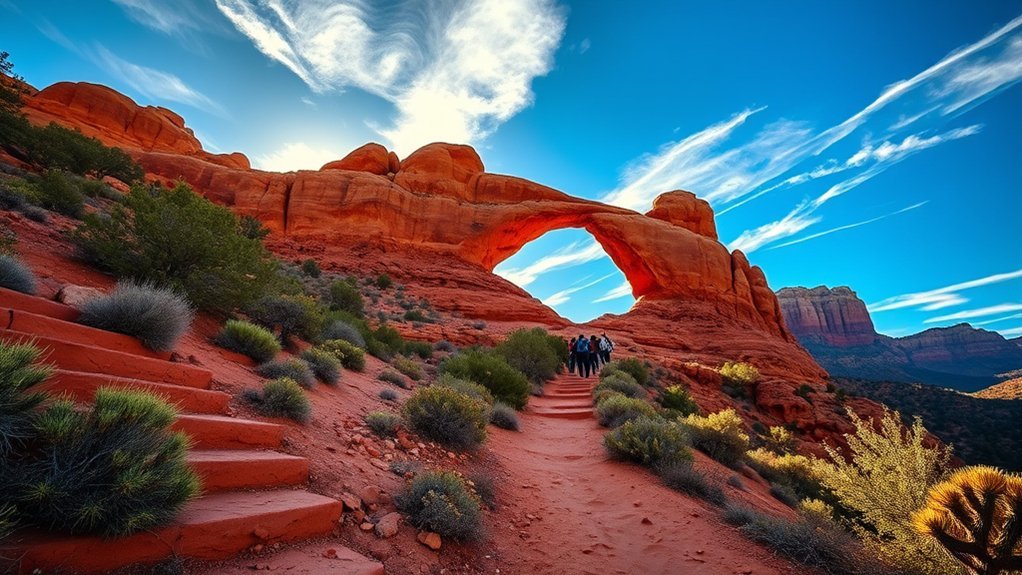
Some of the best day trips from Sedona are close enough to keep the drive relaxed while giving you a completely different experience. You can follow red-rock scenic roads, explore a historic copper-mining town, see centuries-old cliff dwellings, hike through a shaded creek canyon, or head toward Flagstaff for ponderosa forests and volcanic landscapes. The key is choosing one area and checking current park and road conditions before you leave.
Quick Answer
The best day trips from Sedona combine scenery, history, and manageable outdoor time. Drive SR 179 and Oak Creek Canyon, explore Jerome, visit Montezuma Castle, hike West Fork, or pair Walnut Canyon with Sunset Crater near Flagstaff. Check current closures first because wildfire impacts, monsoon flooding, snow, and limited parking can quickly change plans.
Key Takeaways
- Best easy scenic outing: combine the Red Rock Scenic Byway on SR 179 with part of the SR 89A Oak Creek Canyon drive.
- Best for history and food: spend a half or full day in Jerome and the Verde Valley.
- Best easy archaeology stop: Montezuma Castle has a short paved trail with excellent views of the cliff dwelling.
- Best shaded hike: West Fork Trail follows a separate trailhead north of Sedona and is not inside Slide Rock State Park.
- Best full-day contrast: combine Walnut Canyon’s cliff dwellings with Sunset Crater’s volcanic landscape near Flagstaff.
- Current 2026 alert: Slide Rock State Park’s Oak Creek swim area is closed until October 1, 2026. The park remains open for other permitted activities, including hiking and picnicking.
Current Alert: As of August 15, 2026, the Oak Creek swim area at Slide Rock State Park is closed until October 1 following the Pocket Fire and subsequent flooding, ash, sediment, and flash-flood concerns. Check the official Slide Rock State Park page before traveling because conditions and closure dates can change.
Choosing a Day Trip From Sedona
| Day Trip | Best For | Activity Level | Main Planning Issue |
| Red Rock Scenic Byway + Oak Creek Canyon | Scenery, overlooks, short walks | Easy | Traffic and busy pullouts |
| Jerome + Verde Valley | Mining history, galleries, food, wine | Easy to moderate | Steep streets and limited central parking |
| Montezuma Castle | Archaeology and an easy walk | Easy | Entrance fee and summer heat |
| Slide Rock + West Fork | Oak Creek scenery and hiking | Easy to moderate | Current closures and very limited parking |
| Walnut Canyon + Sunset Crater | Archaeology, forest, geology | Easy to strenuous depending on trail | Elevation, stairs, snow, and changing weather |
Red Rock Scenic Byway and Oak Creek Canyon Drive
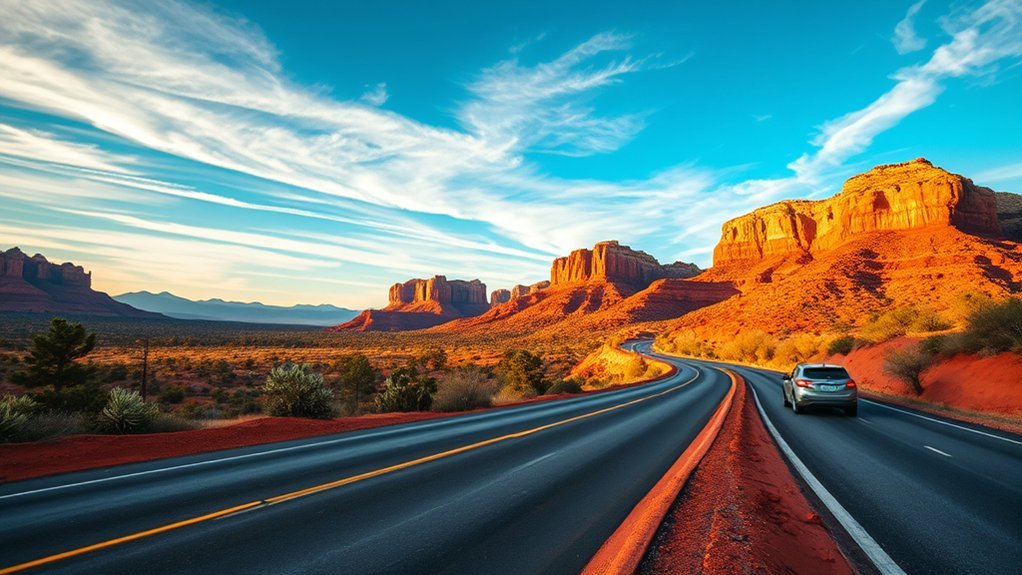
For an easy day with big views, combine two different scenic roads around Sedona. The Red Rock Scenic Byway is the federally designated 7.5-mile All-American Road along SR 179. The Federal Highway Administration says the drive itself takes about 20 minutes without stops, but the viewpoints, trail access, and surrounding red-rock scenery can easily fill several hours.
SR 179 approaches Sedona through dramatic red sandstone formations and gives you easy access to the Village of Oak Creek area, Bell Rock scenery, trailheads, and roadside viewpoints. Instead of rushing through, stop where parking is legal and enjoy shorter walks or overlooks.
North of Sedona, SR 89A follows the separate Sedona-Oak Creek Canyon Scenic Road. This route trades some of the open desert feel for canyon walls, forest shade, Oak Creek, picnic areas, and access to recreation sites such as Slide Rock and West Fork.
The road becomes winding as it climbs toward the Mogollon Rim and Flagstaff. Winter storms can leave parts of SR 89A slick, while summer monsoon storms can create localized flooding, rockfall, and rapidly changing conditions.
Pro Tip: Do not try to stop at every viewpoint on the same drive. Choose two or three stops in advance and keep a backup option because popular parking areas can fill early.
Jerome’s Historic Main Street and Verde Valley Views
The winding drive into Jerome leads to a mountainside town shaped by copper mining, steep streets, historic buildings, galleries, restaurants, and wide views across the Verde Valley. Rather than treating Jerome only as a quirky ghost town, spend time with the mining history that created it.
Jerome’s modern mining era began in the late 1800s, and copper production eventually turned the settlement into one of Arizona’s major mining communities. The Jerome State Historic Park occupies the Douglas Mansion and displays historic photographs, minerals, artifacts, mining equipment, and a model of the town’s underground workings.
After the museum, walk Main Street at an unhurried pace. The weathered storefronts, hillside architecture, galleries, and views are a major part of the experience. The slopes can be tiring for visitors with limited mobility, so use available parking and shuttle options when they fit your visit.
Jerome ghost tours can be entertaining in the evening, but treat supernatural stories as local lore unless a specific historical claim is independently documented. For a daytime trip, the town’s mining history provides more than enough substance.
You can also continue into the Verde Valley for tasting rooms and vineyards. The region has an established wine trail, but winery hours and reservation policies vary, so check individual businesses before arriving.
Montezuma Castle and the Verde Valley Ruins
Montezuma Castle National Monument is one of the easiest archaeology-focused day trips from Sedona. The main five-story masonry dwelling sits in a limestone alcove above Beaver Creek and contains about 20 rooms. The National Park Service explains that the structures visible here were built by ancestral Indigenous people whom archaeologists have long referred to as the Sinagua, with construction beginning around the 1100s.
A short paved loop leads through a shaded sycamore area and past views of the cliff dwelling. You can study masonry, small openings, the surrounding limestone walls, and the relationship between the settlement and the creek below.
Note: Visitors view the main Montezuma Castle cliff dwelling from the trail. Public tours inside the dwelling were discontinued in 1951 for safety and preservation, so do not plan on entering the rooms.
The National Park Service provides current entrance fees, hours, accessibility details, and alerts. Leashed pets are allowed on the monument’s trails, but pets must follow park rules and should never be left in hot vehicles.
If you want to expand the day, consider another Verde Valley cultural site instead of immediately returning to Sedona. Montezuma Well is a separate section of the same national monument, while Tuzigoot National Monument near Clarkdale preserves the remains of a hilltop pueblo. Either can add more context without pretending all Verde Valley archaeological sites tell exactly the same story.
- Observe craftsmanship: look closely at stacked masonry, openings, alcoves, and natural shade.
- Learn the context: use NPS interpretation to understand community life, agriculture, trade, and the wider Verde Valley.
- Feel the scale: compare the cliff dwelling with the canyon walls, creek corridor, and open valley.
- Respect preservation: remain on designated trails and never touch, climb on, or remove cultural material.
- Slow down: this is a place to learn rather than simply collect a photograph.
Slide Rock State Park and West Fork Oak Creek Hike
Slide Rock State Park and West Fork Trail No. 108 both sit in Oak Creek Canyon north of Sedona, but they are separate recreation sites with different entrances, rules, parking, and fees.
Slide Rock State Park
Slide Rock is built around the historic Pendley Homestead and Oak Creek’s famous natural sandstone slide. Under normal conditions, visitors come for the creek, short park trails, historic orchard area, picnic spaces, and the slippery natural water chute.
However, the Oak Creek swim area is closed until October 1, 2026 following the Pocket Fire and subsequent flooding and debris impacts. Arizona State Parks says hiking and picnic access remain available, subject to current park restrictions.
Parking is one of the biggest planning issues. The park does not offer ordinary advance entry reservations, and visitors cannot enter by walking in, bicycle, or drop-off. If the vehicle parking area is full, cars cannot line up along the highway or park driveway waiting for a space. Check the official park page before leaving Sedona.
Pet restrictions are also unusually strict: pets are not allowed anywhere in the park from May 1 through September 30 and are prohibited from the swim area year-round.
West Fork Trail No. 108
West Fork begins at the separate Call of the Canyon recreation site in Coconino National Forest. It follows the West Fork of Oak Creek through a narrow canyon with tall walls, tree cover, creek crossings, and long stretches of shade. This is the better choice when your priority is hiking rather than a short state-park visit.
The trail can be rocky and wet, and repeated creek crossings mean footwear with reliable traction is useful. The parking area is limited and operated under a recreation concession, so a parking or day-use fee may apply. Dogs are allowed but must remain on a leash, and owners must clean up after them. Check the Coconino National Forest West Fork page for current access and closure information.
Warning: Oak Creek Canyon is vulnerable to flash flooding, wildfire closures, falling rocks, and winter ice. Never enter a closed creek or trail area, and do not assume conditions are safe simply because the weather looks clear in Sedona.
Flagstaff’s Walnut Canyon and Sunset Crater Loop
A Flagstaff-area day trip gives you one of the strongest contrasts with Sedona. You move from red-rock desert scenery into higher-elevation ponderosa forest, ancient cliff dwellings, lava flows, and volcanic cinder terrain.
Walnut Canyon National Monument
Walnut Canyon National Monument protects cliff dwellings built by ancestral Indigenous communities roughly 900 years ago. The main choice is between the easier rim experience and the much more demanding Island Trail.
The Island Trail is about 0.9 mile round trip and descends roughly 240 stairs to pass approximately 25 cliff-dwelling rooms. It is short in mileage but can feel strenuous because you must climb those stairs again at an elevation much higher than Sedona. The National Park Service may close trails during snow, ice, or periods of high fire danger.
The 0.7-mile Rim Trail provides canyon views without the Island Trail’s large staircase. Leashed pets are allowed on the Rim Trail and in the parking area, but pets are not allowed on the Island Trail or inside the visitor center.
Sunset Crater Volcano National Monument
Continue to Sunset Crater Volcano National Monument for a landscape of lava, cinders, ponderosa pine, and volcanic geology. Rather than promising a climb up Sunset Crater itself, choose designated trails such as the Lava Flow area and other routes currently listed by the National Park Service.
Sunset Crater sits near 7,000 feet in elevation, so conditions can differ sharply from Sedona. Summer thunderstorms, strong winds, winter snow, freezing temperatures, and sudden weather changes are all possible. Bring layers even when Sedona feels warm.
Pet access is limited to designated areas and specified trails rather than all hiking routes. Check the official Sunset Crater Volcano National Monument website before choosing a trail.
- Explore Walnut Canyon’s cliff dwellings and consider how communities lived within the canyon landscape.
- Notice changing rock layers, soils, vegetation, and elevation as you move toward Flagstaff.
- Choose the Rim Trail instead of the Island Trail if 240 stairs are beyond your group’s comfort level.
- At Sunset Crater, stay on designated routes to protect fragile volcanic and archaeological resources.
- Carry water and layers because high-elevation weather can change much faster than conditions in Sedona.
Plan for Weather, Parking, and Closures
Northern Arizona rewards flexible travelers. Summer brings heat at lower elevations and monsoon thunderstorms that can produce flash flooding. Wildfires can close roads, trails, forests, or waterways with little warning. Winter brings snow and ice to Oak Creek Canyon and especially the higher Flagstaff-area destinations.
Parking can be just as important as weather. West Fork and Slide Rock are both popular and have finite vehicle capacity. Arriving early can help, but it does not override closures or special entry rules.
Carry more drinking water than you expect to use. Restrooms and drinking-water availability vary by site: developed parks and visitor centers generally offer better facilities than forest trailheads. Do not rely on finding potable water once you begin a hike.
The best Sedona day trip is not necessarily the one with the most stops. One scenic drive, one worthwhile walk, and enough time to enjoy the destination usually makes a better day than racing between five parking lots.
Frequently Asked Questions
Are dogs allowed on the listed trails and sites?
Pet rules vary. Montezuma Castle allows leashed pets on trails. West Fork requires dogs to remain leashed. Walnut Canyon permits leashed pets on the Rim Trail but not the Island Trail or inside the visitor center. Sunset Crater allows pets only in designated areas. Slide Rock prohibits pets throughout the park from May 1 through September 30 and in the swim area year-round. Always check the official site before traveling with a dog.
What restroom and drinking-water facilities are available?
Developed parks and national-monument visitor areas generally have restrooms, while trailheads can have more limited facilities. Slide Rock has modern restrooms, drinking-water facilities, and a park store, but amenities elsewhere vary. Carry your own drinking water instead of depending on a refill point at every stop.
Are any sites wheelchair or stroller accessible?
Yes, but accessibility differs by attraction. Montezuma Castle has a short paved loop and accessible visitor facilities. Many scenic overlooks and developed park areas are easier than hiking trails. Walnut Canyon’s Island Trail descends about 240 stairs and is not a wheelchair route. Check each official accessibility page if someone in your group has specific mobility requirements.
Do any locations require advance reservations or permits?
Most ordinary sightseeing described here does not require a special hiking permit, but entrance fees and parking fees may apply. Slide Rock does not offer ordinary advance entry reservations and can stop admitting vehicles when parking is full. West Fork uses limited trailhead parking. Special ranger-led hikes or programs at some national monuments may require advance registration, so check official event pages separately.
What seasonal weather and road closures should I expect?
Summer can bring extreme sun, thunderstorms, flash flooding, wildfire closures, and monsoon runoff. Winter can bring snow and ice to Oak Creek Canyon and Flagstaff-area roads and trails. High-elevation destinations such as Sunset Crater can also be much colder than Sedona. Check official park, forest, weather, and transportation alerts on the morning of your trip.
Can I visit Slide Rock and West Fork on the same day?
Yes, because both are in Oak Creek Canyon, but they use separate entrances and parking areas. West Fork works best when hiking is your priority, while Slide Rock is better for a shorter park visit. In 2026, remember that Slide Rock’s Oak Creek swim area is closed until October 1, so check current conditions before planning around water activities.
Is Walnut Canyon difficult to hike?
The Rim Trail is the easier option. The Island Trail is short at about 0.9 mile round trip, but it descends and then climbs roughly 240 stairs. The combination of stairs and higher elevation can make it strenuous for some visitors, especially anyone unaccustomed to elevation.
Conclusion
The best day trips from Sedona give you variety without turning the day into a race. Follow the Red Rock Scenic Byway and Oak Creek Canyon for classic scenery, explore Jerome for mining history and Verde Valley views, see the remarkable cliff dwelling at Montezuma Castle, hike the shaded West Fork of Oak Creek, or pair Walnut Canyon with Sunset Crater for archaeology and volcanic landscapes. Choose the trip that fits your group’s interests and abilities, then check current closures, weather, admission rules, and parking before you leave.
Sources
- Federal Highway Administration: Red Rock Scenic Byway — official byway designation, length, and basic driving information.
- Arizona State Parks: Slide Rock State Park — current closure alerts, hours, entrance rules, pet restrictions, parking, facilities, and fees.
- Coconino National Forest: West Fork Trail No. 108 — official West Fork trail, access, recreation, and pet information.
- National Park Service: Montezuma Castle National Monument — cliff-dwelling history, visitor information, trails, and preservation guidance.
- National Park Service: Walnut Canyon National Monument — Island Trail, Rim Trail, cliff dwellings, access, and current visitor information.
- National Park Service: Sunset Crater Volcano National Monument — volcanic landscape, designated trails, weather, pet rules, and current conditions.