Arizona packs an unusual range of experiences into one state: immense canyon country, red-rock trails, saguaro-filled desert, Indigenous homelands, historic Route 66 communities, mountain towns, museums, observatories, and spring-training ballparks. The best Arizona trip is not about racing between all 25 stops. Choose a region or two, match your activities to the season, and leave room for Arizona’s long driving distances and dramatic changes in elevation.
Quick Answer
The best things to do in Arizona include visiting the Grand Canyon, hiking around Sedona and Saguaro National Park, exploring Route 66, touring Indigenous cultural sites respectfully, seeing Antelope Canyon with an authorized guide, visiting Phoenix museums, stargazing in Flagstaff, and discovering historic towns such as Tombstone and Bisbee.
Key Takeaways
- Arizona is large, so group attractions by region instead of trying to cover the entire state in a short trip.
- Summer desert heat can make exposed hikes dangerous; start early, carry adequate water, and check official closures and weather alerts.
- Antelope Canyon requires an authorized guided tour, while visits to Hopi lands should follow tribal and village-specific rules.
- Grand Canyon, Sedona, Phoenix/Scottsdale, Tucson, Page, and Flagstaff each work well as bases for different types of Arizona trips.
- Book high-demand tours, lodging, rafting, balloon flights, and spring-training tickets in advance when your dates are fixed.
Plan Your Arizona Trip Before You Go
Arizona’s landscapes change dramatically with elevation. Phoenix, Scottsdale, Tucson, and much of the Sonoran Desert can be intensely hot in summer, while Flagstaff and the Grand Canyon rims sit thousands of feet higher and can be much cooler. Check the forecast for the exact destination rather than using one statewide temperature.
| Region or Base | Good For |
|---|---|
| Phoenix / Scottsdale | Museums, botanical gardens, art, spring training, desert scenery, and day trips |
| Sedona / Verde Valley | Red-rock hiking, scenic drives, wineries, and Verde Valley attractions |
| Flagstaff / Grand Canyon | Grand Canyon trips, Route 66, astronomy, forests, and cooler high-country weather |
| Page | Antelope Canyon, Horseshoe Bend, and Lake Powell-area scenery |
| Tucson | Saguaro National Park, Sonoran Desert wildlife, and desert museums |
| Southern Arizona | Tombstone, Bisbee, mining history, and historic towns |
Warning: Do not judge an Arizona hike only by mileage. Heat, elevation gain, exposed terrain, altitude, limited shade, and distance from help can turn a short trail into a serious outing. Check the managing agency’s current trail conditions before you leave and turn around before heat, fatigue, or weather becomes a problem.
Pro Tip: For a first Arizona road trip, pick two neighboring regions. Phoenix plus Sedona, Flagstaff plus the Grand Canyon, or Page plus the Grand Canyon are much more practical than trying to connect every major attraction in a few days.
Explore the Grand Canyon National Park
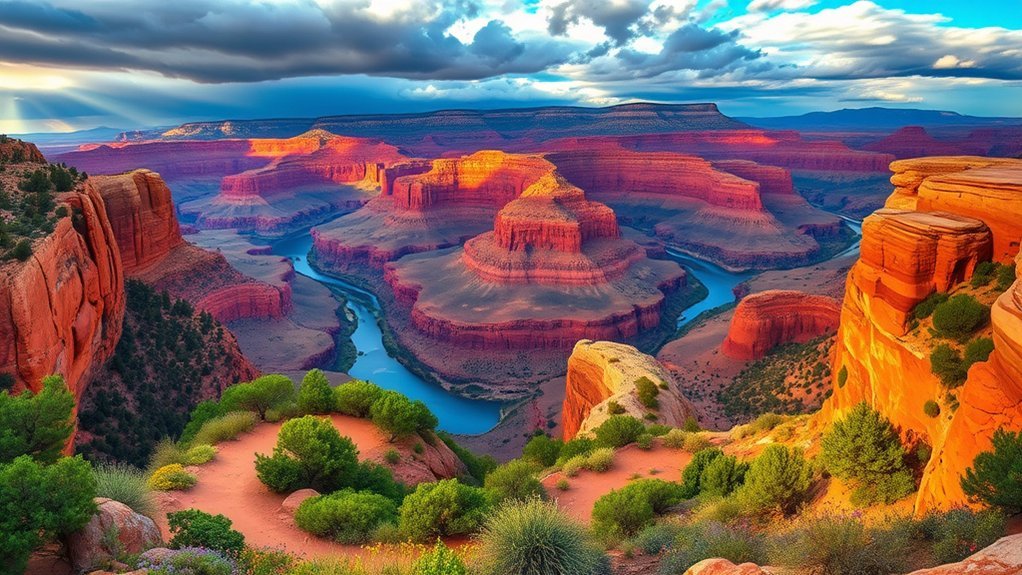
Grand Canyon National Park deserves its reputation as one of Arizona’s essential experiences. From the South Rim, overlooks reveal immense layers of rock cut by the Colorado River, and the view changes noticeably as the light shifts through the day.
You do not have to hike into the canyon to appreciate it. Rim viewpoints, sections of the Rim Trail, visitor facilities, ranger programs, and scenic overlooks make it possible to build a visit around your fitness and available time. Sunrise and sunset are popular, but clear midday views can also reveal remarkable detail deep in the canyon.
Hiking below the rim is a much bigger commitment than walking along it. The National Park Service warns that there are no easy trails into or out of the canyon and that summer heat becomes especially dangerous in the inner canyon. Review the park’s Hike Smart guidance before attempting a strenuous descent.
Rafting and overnight backcountry travel require additional planning. Commercial river operators handle logistics for guided trips, while private river and backcountry trips can involve permits. Check the park’s current permit and reservation information before building those activities into your itinerary.
Visit Sedona’s Red Rock Country
Sedona’s red-rock landscape is one of Arizona’s most recognizable settings. Sandstone formations rise above desert vegetation, and a large trail network makes the area appealing whether you want a viewpoint, a challenging hike, mountain biking, a scenic drive, or a quieter morning outdoors.
Stunning Scenic Views
Cathedral Rock and Bell Rock are among Sedona’s best-known formations, while roadside overlooks and trailheads provide many other perspectives. The Red Rock Scenic Byway gives you an introduction to the landscape without committing to a long hike, although traffic and trailhead parking can become busy during popular seasons.
Early morning and late afternoon often bring softer light and more comfortable temperatures. If a specific trail is important to you, check current parking, shuttle, weather, and trail information before leaving your lodging rather than assuming you can park directly at the trailhead.
Outdoor Adventure Activities
Hiking is only the beginning in Sedona. Mountain bikers use a network of technical desert trails, rock climbers tackle established routes, and commercial Jeep tours provide access to rougher backcountry roads without requiring you to drive them yourself.
Choose an activity that fits your experience. Red-rock trails can include slickrock, loose surfaces, exposure, and little shade. Carry water, protect yourself from the sun, and avoid starting a demanding hike during the hottest part of the day.
Spiritual Energy Vortexes
Sedona is also known for a spiritual and wellness culture centered on places commonly called vortex sites. Bell Rock, Cathedral Rock, Airport Mesa, and Boynton Canyon are often associated with these traditions. Some visitors use these places for meditation, yoga, reflection, or simply quiet time outdoors.
Claims about special energy or healing effects are matters of personal or spiritual belief rather than established scientific findings. You can still appreciate the experience as part of Sedona’s local culture while enjoying the landscape on its own terms.
Discover the Historic Route 66
Arizona preserves some of the most memorable stretches of Historic Route 66. The highway was established in 1926, making 2026 its centennial year. A Route 66 drive through Arizona connects historic downtowns, neon signs, roadside architecture, diners, trading-post history, and desert scenery.
Iconic Landmarks and Attractions
Kingman is a natural Route 66 stop and home to the Arizona Route 66 Museum. Farther east, Williams combines Route 66-era storefronts with its role as a gateway community for Grand Canyon visitors. Petrified Forest National Park is especially notable because the historic Route 66 alignment crossed what is now park land.
For official historical context and route ideas, see the National Park Service’s Route 66 in Arizona guide.
Scenic Roadside Stops
The fun of Route 66 is often in the stops between major destinations. Give yourself enough time to leave Interstate 40, walk through historic business districts, and explore roadside landmarks rather than treating the route as a high-speed transfer.
| Stop Name | Highlight |
|---|---|
| Arizona Route 66 Museum | Explore Route 66 and regional transportation history in Kingman |
| Wigwam Motel | See or stay in historic teepee-shaped motel rooms in Holbrook |
| Grand Canyon Caverns | Visit a longtime privately operated roadside attraction; confirm current tour availability before going |
Nostalgic Diner Experiences
Classic diners are part of Route 66’s appeal, but the experience is broader than burgers and milkshakes. Historic cafés, restored neon, old service stations, motels, murals, and local museums help explain how the highway shaped communities before Interstate 40 redirected most through traffic.
Stop where something catches your attention, but check business hours in advance in smaller communities. Some historic establishments operate limited or seasonal schedules.
Experience the Desert Botanical Garden
Phoenix’s Desert Botanical Garden is an excellent introduction to plants adapted to arid environments. Its trails showcase cacti, succulents, desert trees, seasonal flowers, and landscapes that help you recognize what you will see elsewhere in the Sonoran Desert.
| What You’ll Discover | Why It Matters |
|---|---|
| Diverse desert plant species | Learn how plants survive heat and limited rainfall |
| Sonoran Desert landscapes | See desert ecology in an accessible setting |
| Seasonal blooms | Experience how the garden changes through the year |
Summer visits require extra planning. The garden adjusts operations during extreme heat, so check current hours and trail access before arriving. Early mornings and evening programs can be much more comfortable than the middle of a hot day.
Hike in Saguaro National Park
Saguaro National Park protects two large areas of Sonoran Desert on opposite sides of Tucson. The giant saguaro cactus dominates many views, but hiking also reveals washes, mesquite, desert wildflowers, rocky foothills, wildlife, and high-country terrain on longer routes.
Iconic Cactus Landscapes
The park’s two districts offer different ways to experience saguaro country. Short walks work well if your main goal is photography and desert plants, while longer trails climb toward broader views and more rugged landscapes.
Do not underestimate desert conditions. Shade is limited on many routes, and temperatures can rise quickly. Carry enough water for your route, protect yourself from the sun, and check NPS alerts before hiking.
Diverse Hiking Trails
The National Park Service publishes current Saguaro hiking recommendations. These verified examples provide a better starting point than relying on generic trail lists:
| Trail Name | Distance | Good For |
|---|---|---|
| Freeman Homestead Trail | 1 mile | A short walk among large saguaros and historic homestead remains |
| Loma Verde Loop | 3.8 miles | Cactus forest, desert washes, and an overlook |
| Hope Camp and Ridgeview Trail | 2 miles | A climbing route with panoramic views |
| King Canyon / Gould Mine Loop | 2.4 miles | Rocky wash scenery and mining history |
| Tanque Verde Ridge Trail | Distance varies | A strenuous ridge hike with several possible turnaround points |
Tour the Heard Museum
The Heard Museum in Phoenix is one of the state’s most important places to learn through Indigenous art, history, and contemporary creative work. Its galleries include pottery, textiles, jewelry, paintings, sculpture, photography, and changing exhibitions.
Rather than treating Indigenous culture only as something from the past, the museum presents living artists and communities alongside historical material. Guided tours can add useful context, and the museum’s outdoor areas provide another way to experience the collection.
Check the current exhibition calendar and visitor policies before you go, particularly if you want to photograph exhibits or attend a special event.
Relax at Verde Hot Springs Near Camp Verde
Verde Hot Springs is a rustic Verde River-area destination associated with the remains of an early 20th-century hot-springs resort. It is better thought of as a remote Camp Verde-area excursion than as a normal attraction in downtown Cottonwood.
The pools and riverside setting can make the trip memorable, but access conditions matter. Roads can be rough, river conditions change, and remote desert travel requires more preparation than visiting a developed spa. Check current land-management information, weather, road conditions, and river conditions before attempting the trip.
Note: Warm mineral water may feel relaxing, but do not treat an undeveloped hot spring as medical therapy. Keep your head above untreated hot-spring water, avoid entering if conditions look unsafe, and follow current land-management guidance.
Wander Through Historic Tombstone
Tombstone is a living historic town rather than an abandoned ghost town, but its association with the American West remains central to its identity. The 1881 gunfight near the O.K. Corral, mining history, saloons, theaters, and preserved streets have made it one of southern Arizona’s best-known historical destinations.
Walk the historic district, visit the O.K. Corral area, and explore the Bird Cage Theatre or Tombstone Courthouse State Historic Park if their current hours fit your trip. Interpretive attractions range from museums to staged entertainment, so decide whether you want documented history, Western-themed shows, or a mix of both.
Enjoy the Views From Camelback Mountain
Camelback Mountain rises above the Phoenix area and offers wide views from its summit, but it should not be described as a casual city hike. The City of Phoenix rates both principal summit routes, Cholla Trail and Echo Canyon Trail, Extremely Difficult.
Cholla Trail is 1.5 miles one way with about 1,420 feet of elevation change. Echo Canyon is approximately 1.14 miles one way with about 1,400 feet of elevation change and includes steep, rocky sections where scrambling is required.
Both routes are exposed and offer little shade. Phoenix may also restrict trail access during dangerous heat, and maintenance projects can temporarily close routes.
Warning: Check the City of Phoenix Camelback Mountain page on the day of your hike for closures, heat restrictions, and parking information. If you are not prepared for steep scrambling, exposure, and rapid elevation gain, choose an easier Phoenix preserve trail instead.
Visit the Montezuma Castle National Monument
Montezuma Castle National Monument protects a remarkable multi-story cliff dwelling created by Indigenous people whom archaeologists historically called Sinagua. The name “Montezuma Castle” was applied much later and does not mean the Aztec ruler Montezuma lived there.
The main structure contains about 20 rooms and sits high in a limestone cliff. Visitors view it from the trail rather than entering the dwelling. A short loop passes beneath the cliff and through the riparian landscape along Beaver Creek.
Use the visitor center and NPS interpretation to learn about the people who lived in this region and the modern Tribal communities connected to it. That context makes the site much more meaningful than viewing the structure only as an architectural curiosity.
Explore Antelope Canyon
Antelope Canyon near Page is famous for narrow sandstone passages, flowing shapes, and changing light. It is also on Navajo Nation land, which means access is governed by Navajo Nation rules rather than the National Park Service.
| What to Expect | What to Know |
|---|---|
| Narrow sculpted sandstone | Access requires an authorized guided tour |
| Changing colors and light | Lighting varies by season, time, and weather |
| Popular photography conditions | Follow your operator’s current camera, bag, and safety rules |
You cannot simply hike into Antelope Canyon on your own. Navajo Nation Parks states that guides are mandatory for Antelope Canyon locations. Use its official list of Antelope Canyon tour operators to plan your visit.
Book early for high-demand dates, arrive according to your operator’s instructions, and follow all weather-related decisions. Slot canyons are vulnerable to flash flooding, so tours may be altered or canceled when conditions are unsafe.
Experience Native American Culture at Hopi Mesas
The Hopi Reservation is the homeland of a sovereign Tribal Nation with communities whose traditions, governance, ceremonies, art, and daily life are not simply tourist attractions. A respectful visit begins by learning the current rules directly from the Hopi Tribe and following instructions within individual villages.
Approach the Hopi Mesas as a guest in living communities: follow local rules, ask before photographing or recording, and never assume a ceremony or private space is open to visitors.
- Use authorized guidance: If you take a tour, choose a provider operating under applicable Hopi requirements.
- Respect village rules: Access and visitor expectations can differ by community.
- Protect cultural privacy: Do not photograph, film, record, or reproduce ceremonies or cultural material when it is prohibited.
- Support artists respectfully: Buying directly from Hopi artists can be a meaningful way to appreciate pottery, carving, weaving, jewelry, and other work without treating sacred traditions as souvenirs.
Cultural events and ceremonies should never be presented as guaranteed tourist programming. Attend only when an event is explicitly open to visitors and follow every posted or spoken instruction.
Go Wine Tasting in the Verde Valley
The Verde Valley has developed into one of Arizona’s best-known wine regions. Tasting rooms and vineyards around communities such as Cottonwood, Clarkdale, Jerome, and nearby areas make it easy to combine wine tasting with red-rock scenery and historic-town visits.
Instead of trying to visit as many tasting rooms as possible, choose a few and give yourself time to learn about the wines. Ask about Arizona-grown grapes, compare different styles, and pair tastings with food where available.
If everyone in your group wants to taste, use a designated driver or a tour/transportation service. Check tasting-room hours and reservation policies because smaller venues may not operate on the same schedule every day.
Discover the Beauty of Horseshoe Bend
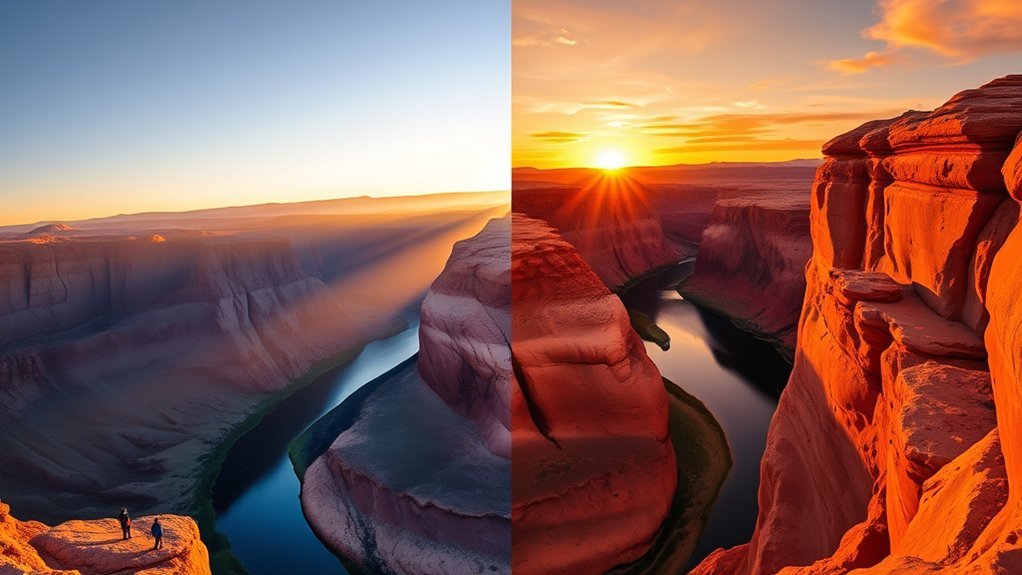
Horseshoe Bend near Page overlooks a sweeping curve of the Colorado River. The viewpoint is visually dramatic, but the walk is more straightforward than many older descriptions suggest.
According to the National Park Service, the overlook is reached by a 1.5-mile round-trip hardened path. Two shade structures sit along the route, but there is no shade at the overlook itself. The City of Page manages the parking area and charges its own parking fee.
- Carry water and use sun protection, especially in warm weather.
- Keep children and pets close near the rim.
- Do not assume the entire cliff edge is protected by railings.
- Allow extra time around sunrise and sunset when visitation can be heavy.
The most important safety concern is the exposed rim. Much of it drops roughly 1,000 feet to the river below, so stay well back from unprotected edges.
Take a Scenic Drive Through Oak Creek Canyon
Arizona State Route 89A between Sedona and Flagstaff climbs through Oak Creek Canyon, combining red-rock walls, forest, creekside scenery, and a noticeable change in elevation. It is one of the easiest ways to experience the transition between Sedona’s red rocks and northern Arizona’s higher country.
Use designated pullouts and recreation areas rather than stopping along unsafe road shoulders. Depending on the season, you may find picnic areas, hiking access, and creekside recreation along the corridor.
Traffic can be slow during busy weekends, holidays, fall-color periods, and popular Sedona travel seasons. Treat the drive itself as part of your day instead of assuming it will be a quick transfer between Sedona and Flagstaff.
Explore the Petrified Forest National Park
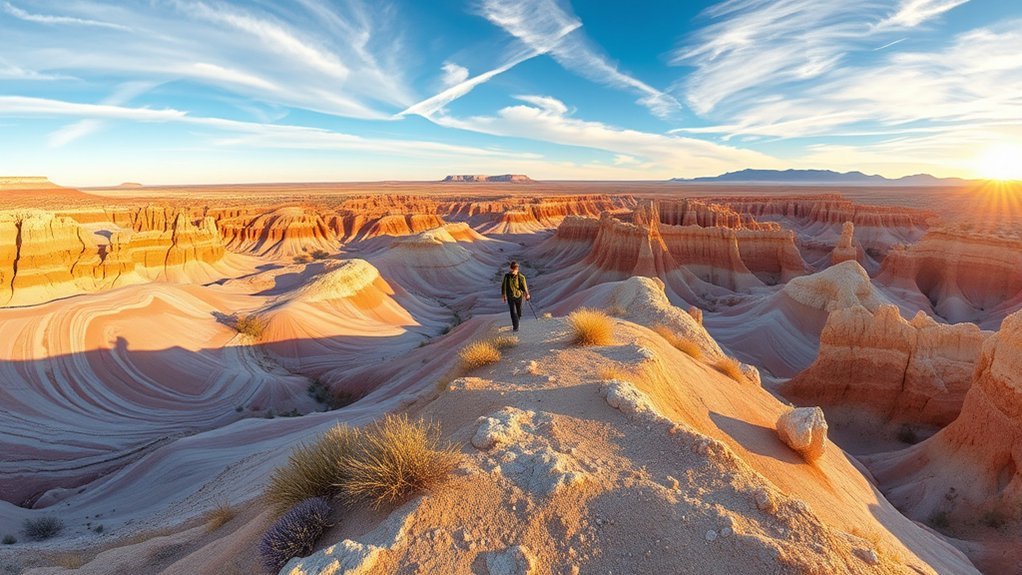
Petrified Forest National Park combines colorful badlands, grasslands, archaeological resources, historic Route 66 connections, and large concentrations of petrified wood. It is much more varied than its name suggests.
To make the most of your visit:
- Walk the Blue Mesa Trail for close views of colorful badland formations.
- Visit the Rainbow Forest Museum area to learn how ancient wood became petrified.
- Use the park road and overlooks to see how dramatically the landscape changes from one end of the park to the other.
- Look for the park’s Historic Route 66 interpretation if road-trip history interests you.
- Leave petrified wood, archaeological material, and other natural or cultural objects where you find them.
Give the park more time than a quick roadside stop. Driving from one end to the other while adding short walks and overlooks can fill a substantial part of a day.
Visit the Arizona-Sonora Desert Museum
The Arizona-Sonora Desert Museum near Tucson combines elements of a zoo, botanical garden, natural-history museum, aquarium, and art experience. Much of the visit takes place outdoors in landscapes designed around the Sonoran Desert.
You may see desert plants alongside animals such as mountain lions, javelinas, reptiles, birds, and other species associated with the region. Naturalistic exhibits make it easier to understand how plants, animals, geology, climate, and human history fit together.
Plan for at least a couple of hours and check current seasonal hours before leaving Tucson. During hot weather, an early start can make the outdoor portions much more comfortable.
Attend a Baseball Spring Training Game
Arizona’s Cactus League turns the Phoenix metropolitan area into a baseball hub before the regular MLB season. Fifteen Major League Baseball teams train in Arizona, giving fans many opportunities to see games in relatively compact ballparks.
Major League Teams
The Cactus League includes 15 MLB clubs spread among spring-training facilities around the Valley. Because several teams share ballparks, you can often build a trip around multiple games without changing hotels.
- Choose your priority team: Start with the club you most want to see.
- Compare ballparks: Each facility has a different atmosphere, food selection, seating layout, and surrounding area.
- Build in travel time: Phoenix-area distances and traffic still matter even though the Cactus League is geographically concentrated.
- Protect yourself from the sun: Day games can feel much warmer in exposed seating.
Fan Experience Highlights
Spring training is often more relaxed than a regular-season MLB game. Smaller venues can put you closer to batting practice, warm-ups, and player-development activity, although autographs and player interactions are never guaranteed.
Arrive early if you want time to explore the stadium, find your seats, and watch pre-game activity. Shade can be valuable during afternoon games, so look at the seating map rather than choosing purely by distance from the field.
Spring Training Schedule
Dates, opponents, game times, and ticket availability change every year. Use the official MLB Cactus League schedule when planning instead of relying on an old article or screenshot.
- Book popular matchups early: Weekend games and popular clubs can draw strong demand.
- Check start times: Day and evening games require different heat and clothing plans.
- Review stadium policies: Bag, parking, outside-food, and entry rules vary by facility.
- Leave schedule flexibility: Weather and operational changes can affect games.
Discover the Art Scene in Scottsdale
Scottsdale’s Arts District gives you an easy way to combine galleries, public art, museums, restaurants, and an evening walk through Old Town. Contemporary work, Southwestern art, sculpture, jewelry, photography, and international artists all appear within a relatively compact district.
The Scottsdale Gallery Association hosts its ArtWalk on most Thursday evenings, generally from 7 to 9 p.m., rather than once a month. Check the current Scottsdale ArtWalk calendar because special Gold Palette events and seasonal programming can use different hours.
The Scottsdale Museum of Contemporary Art is another useful stop if you prefer curated exhibitions over gallery browsing. Pairing the museum with an evening ArtWalk gives you two different views of the city’s creative scene.
Visit the Lowell Observatory in Flagstaff
Lowell Observatory turns Flagstaff’s clear high-country skies into an accessible astronomy experience. The historic observatory is associated with important astronomical research and now combines that legacy with public telescope viewing, exhibits, presentations, and educational programs.
- Telescope viewing: Observe available celestial targets when weather permits.
- Interactive exhibits: Learn about astronomy, space science, and the history of discovery.
- Guided experiences: Use staff programs to understand what you are seeing rather than simply looking through a telescope.
- Special programs: Check the current calendar for lectures and seasonal events.
Flagstaff is much higher and often much cooler than Phoenix. Bring layers for nighttime programs even when the low desert is warm. Telescope viewing is weather-dependent, so clouds, wind, or other conditions can affect what is available.
Take a Hot Air Balloon Ride Over Phoenix
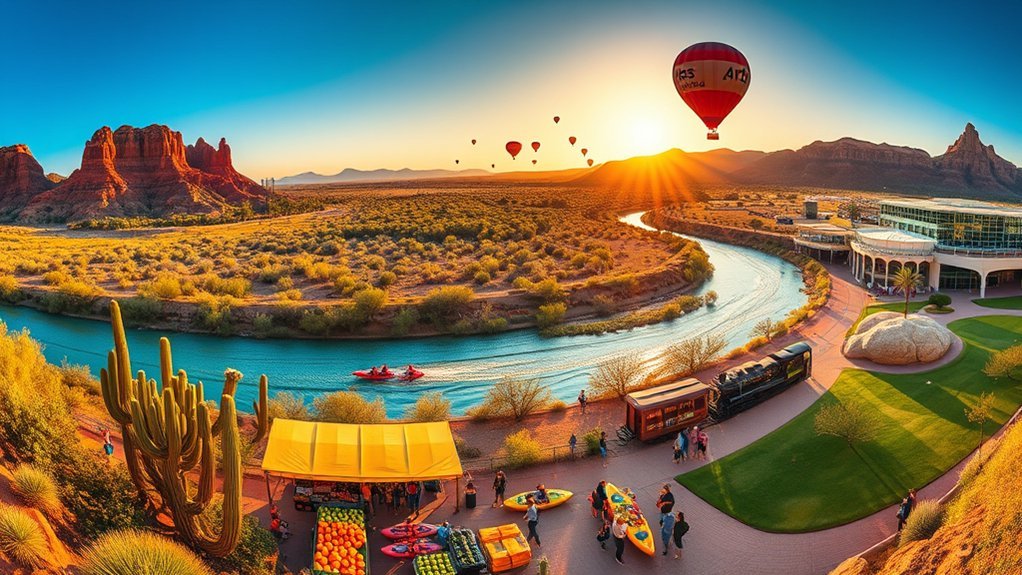
A hot-air-balloon flight provides a very different perspective on the Sonoran Desert, with broad views of desert washes, mountains, subdivisions, and open land. The experience is often peaceful rather than fast, with the balloon moving according to wind conditions.
Breathtaking Scenic Views
As the balloon gains altitude, the desert’s scale becomes easier to appreciate. Mountains frame the Phoenix basin, while the pattern of desert vegetation and washes is much clearer from above.
Bring a securely handled camera or phone if your operator allows it, wear closed-toe shoes, and follow the pilot’s instructions for boarding, landing, and movement inside the basket.
Sunrise or Sunset Experience
Sunrise departures are especially common because early-morning atmospheric conditions can be favorable for ballooning. Some operators may offer evening or sunset experiences depending on season and conditions.
Availability is always weather-dependent. Wind can delay, relocate, or cancel a flight, so do not schedule a balloon ride immediately before a flight home or another inflexible commitment.
Adventure and Thrill Seekers
The excitement of ballooning comes from height, open views, and the unusual sensation of drifting rather than speed. If you are nervous about heights, ask the operator about basket design, typical flight duration, landing procedures, and physical requirements before booking.
- Wear layers for changing morning temperatures.
- Choose a licensed commercial operator with clear safety procedures.
- Keep your schedule flexible for weather changes.
- Follow all landing-position instructions from the pilot.
Go Rafting on the Colorado River
Rafting the Colorado River through Grand Canyon country is one of Arizona’s major wilderness adventures, but it is not a single standardized “Class III and IV” outing. Rapids, trip lengths, river flows, boat types, and technical demands vary substantially.
For most visitors, a commercial guided trip is the most practical way to experience the river because outfitters handle boats, food, equipment, river logistics, and permits connected with their operations. Trips can range from shorter sections to multi-day expeditions through the canyon.
Private or noncommercial Grand Canyon river trips involve permits and substantial experience. Review the National Park Service’s current rafting information before deciding what kind of river trip fits your group.
Expect powerful water, remote conditions, temperature swings, sun exposure, and limited opportunities to leave the canyon. Choose a trip based on your physical ability and comfort with wilderness travel, not just the scenery.
Explore the Historic Town of Bisbee
Built into the Mule Mountains, Bisbee combines mining history, steep streets, historic architecture, galleries, independent shops, cafés, and a creative community. Its unusual topography makes simply walking around town part of the experience.
Bisbee works best when you combine its mining history with time to explore the modern town rather than treating it only as a preserved relic of the past.
- Copper Queen Mine: Check current tour schedules if you want to learn about Bisbee’s underground mining history.
- Bisbee Mining & Historical Museum: Use exhibits and archival material to understand how mining shaped the community.
- Art galleries and studios: Explore work from local and regional artists.
- Cafés and shops: Leave time for the small businesses tucked into the historic district.
Bisbee’s streets and stairs can be steep, so comfortable footwear helps. Parking in the historic center may also require more planning during events and busy weekends.
Visit the Musical Instrument Museum
Phoenix’s Musical Instrument Museum, commonly called MIM, explores music through instruments, recordings, exhibits, performances, and hands-on experiences from around the world.
Unique Instrument Collection
The museum’s current visitor information describes thousands of instruments in hundreds of exhibits representing every country in the world. That global organization is what makes MIM useful even if you do not already know much about musical instruments.
- Compare instruments used in different regions and traditions.
- Listen to audio and video associated with exhibits.
- Explore historical, traditional, popular, and contemporary music.
- Give yourself enough time; the museum is much larger than a single gallery.
Interactive Exhibits Experience
The Experience Gallery is especially good for visitors who want to do more than look at instruments. Hands-on opportunities let you try selected instruments and explore how different sounds are produced.
Other galleries rely more heavily on carefully presented instruments, recordings, and contextual material. The mix works well for families, musicians, and visitors who simply enjoy discovering unfamiliar music.
Cultural Music Exploration
MIM’s strongest feature is the way it connects an instrument with the people, place, and musical traditions around it. Instead of separating sound from culture, the exhibits use recordings and interpretation to show instruments being played.
- Use the museum’s audio system as you move through the galleries.
- Check for live concerts or demonstrations during your visit.
- Spend extra time in regions whose music is new to you.
- Visit temporary exhibitions if one overlaps with your interests.
Experience the Beauty of the Sonoran Desert at Night
The Sonoran Desert changes after sunset. Temperatures often ease, daytime visitors disappear, and nocturnal animals become more active. Away from strong city lights, the stars can also become a major part of the experience.
A night outing is safest when you use a designated trail, campground, park program, or guided experience rather than wandering into unfamiliar desert terrain. Carry a light, know your route, watch where you place your hands and feet, and respect wildlife rather than approaching or feeding it.
Night programs at parks, preserves, botanical sites, and astronomy-focused destinations can be an excellent option if you want interpretation along with the experience. Depending on the location and season, you may hear owls, insects, coyotes, or other desert wildlife even when you see very little movement.
For stargazing, allow your eyes time to adjust and use a dim red light when possible. The quieter pace makes a desert night a fitting contrast to Arizona’s busier daytime attractions.
Frequently Asked Questions
What is the best time to visit Arizona for outdoor activities?
There is no single best season for the entire state. Fall through spring is generally more comfortable for low-desert destinations such as Phoenix and Tucson, while higher-elevation areas around Flagstaff and the Grand Canyon can be cold or snowy in winter. Summer can work well in the high country, but exposed low-desert hiking may become dangerously hot.
Are there any unique local dishes to try in Arizona?
Yes. Depending on where you travel, you may encounter Indigenous foods and frybread-based dishes, Sonoran-style Mexican food, Sonoran hot dogs, regional chile dishes, and foods featuring desert ingredients such as prickly pear. Treat Indigenous food traditions as distinct community traditions rather than one generic “Arizona” cuisine, and support Native-owned businesses when possible.
What is the average temperature in Arizona throughout the year?
A single statewide average is not very useful because Arizona spans low desert, plateaus, forests, and high mountains. Phoenix can exceed 100°F during the hottest part of summer, while Flagstaff and the Grand Canyon rims are much cooler because of their elevation. Always check the forecast for your exact destination and elevation.
Can I find pet-friendly accommodations in Arizona?
Yes. Many Arizona hotels, vacation rentals, and campgrounds accept pets, but fees, size limits, breed policies, and the number of permitted animals vary. Attraction and trail rules also differ. Confirm both your lodging policy and each destination’s pet rules before traveling, especially in hot weather when leaving an animal in a vehicle is unsafe.
How do I navigate Arizona’s public transportation system?
Public transportation is most useful in Arizona’s larger cities. Phoenix-area visitors can use Valley Metro buses and light rail, while Tucson has Sun Tran services. Many national parks, tribal destinations, trailheads, and rural attractions are not practical to reach by regular public transit, so a rental car, shuttle, or organized tour is often necessary.
How many days do you need for an Arizona trip?
Three to five days is enough for one main region, such as Phoenix plus Sedona or Flagstaff plus the Grand Canyon. Seven to ten days gives you time to combine two or three regions without spending the entire trip driving. A broader statewide trip can easily justify two weeks or more.
Which Arizona attractions should I book in advance?
Book Antelope Canyon tours in advance because guided access is mandatory. It is also wise to reserve popular Grand Canyon lodging, commercial rafting trips, hot-air-balloon flights, high-demand spring-training games, and certain guided outdoor experiences once your travel dates are fixed. Always verify current booking rules directly with the park, tribe, venue, or operator.
Conclusion
Arizona rewards travelers who slow down enough to appreciate how different each part of the state can be. You can stand above the Grand Canyon, hike among Sedona’s red rocks, walk through a saguaro forest, follow Route 66 history, explore Indigenous art and culture respectfully, watch baseball in the desert, or look into the night sky from Flagstaff. Rather than trying to check off every attraction, choose the experiences that fit your season, interests, and physical ability, then build a realistic route around them.
Sources
- National Park Service — Grand Canyon Hike Smart — canyon hiking, heat, and trip-planning safety.
- National Park Service — Saguaro National Park Hiking Trail Recommendations — verified trail names, distances, and route descriptions.
- Navajo Nation Parks & Recreation — Antelope Canyon Tour Operators — mandatory guided-tour access and authorized operators.
- City of Phoenix — Camelback Mountain Trails — official trail difficulty, distance, elevation, closures, and safety information.
- The Hopi Tribe — official information for the Hopi Nation and visitors.
- National Park Service — Horseshoe Bend — trail distance, accessibility, parking, shade, and exposed-rim safety.