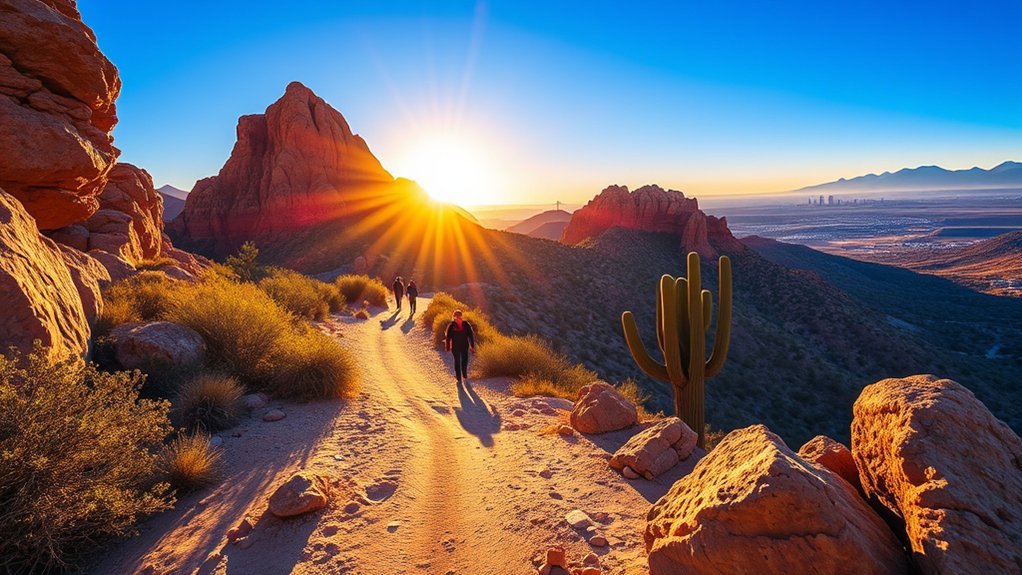
Rising 2,704 feet above Phoenix and the Paradise Valley desert floor, Camelback Mountain is one of the most iconic and demanding urban summit hikes in the United States. Featuring two distinct, extremely difficult routes—the technical Echo Canyon Trail and the ridgeline Cholla Trail—climbing Camelback requires proper route selection, disciplined heat management, and the right gear to ensure a safe, successful summit.
Quick Answer
Hiking Camelback Mountain involves choosing between the 1.2-mile Echo Canyon Trail (steeper, handrails, intense bouldering) and the 1.4-mile Cholla Trail (gradual scramble, exposed ridge). Both climb over 1,200 vertical feet and are rated extremely difficult. Start at sunrise, carry at least 2 to 4 liters of water, wear sticky rubber trail footwear, and never hike when temperatures exceed 100°F.
Key Takeaways
- Strict No Dogs Policy: Dogs are completely prohibited on all Camelback Mountain trails due to extreme heat and steep terrain.
- Extreme Difficulty: Both trails are rated Double Black Diamond; expect hand-over-foot rock scrambles and sheer drops near the summit.
- Heat Safety Closures: The City of Phoenix closes trailheads from 11:00 AM to 5:00 PM during National Weather Service Excessive Heat Warnings.
- Free Gated Parking: Parking lots at Echo Canyon and Cholla (Invergordon Rd) are free but typically fill up before sunrise on weekends.
- Hydration Rule: Carry a minimum of 2 to 4 liters of water per person and turn around when half your supply is consumed.
At a Glance
| Time Required | 2 to 3 hours round-trip |
| Difficulty | Extremely Difficult (Double Black Diamond / Class 2–3 Scramble) |
| Tools Needed | Grip trail shoes, 2–4L hydration pack, electrolyte packets, sun protection |
| Cost | Free (No permits or parking fees required) |
Trail Options and Difficulty Levels
Both primary routes ascending Camelback Mountain lead to the same panoramic 360-degree summit, but each presents distinct terrain and elevation challenges. Both trails are designated as Double Black Diamond by the City of Phoenix Parks and Recreation Department, meaning they involve steep ascents, exposed cliffs, and rugged rock scrambling.
Echo Canyon Trail: Measuring 1.2 miles one way (2.4 miles round-trip) with an elevation gain of 1,264 feet, Echo Canyon is the steeper and more technically intense route. The trail begins with steep stairs before transitioning into a handrail-assisted section over slick granite bedrock. The upper half consists of massive boulder fields where hikers must use both hands and feet to navigate up the mountain’s steep chute.
Cholla Trail: Spanning 1.4 miles one way (2.8 miles round-trip) with an elevation gain of 1,420 feet, Cholla offers a slightly more gradual grade through lower desert switchbacks. Following a trail realignment, hikers begin from a designated trailhead along Invergordon Road. The upper section traverses an exposed, rocky ridge with sheer drop-offs on either side, requiring careful foot placement and confident balance along loose sandstone ledges.
Warning: Camelback Mountain is not a casual walk. Falling on sandstone boulders or loose gravel can result in severe injury. If you suffer from vertigo or lack upper-body stability, do not attempt the upper boulder scrambles.
Best Times to Hike and Seasonal Tips
Timing your ascent around Sonoran Desert climate conditions is vital for safety. The prime hiking season runs from November through April, when daytime highs range comfortably between 65°F and 80°F. During these peak winter and spring months, trails are heavily trafficked, making early morning starts essential for beating the rush.
During the summer months (May through September), temperatures regularly exceed 105°F (40°C). Under the City of Phoenix Excessive Heat Trail Closure policy, trailheads are shut down between 11:00 AM and 5:00 PM on days when the National Weather Service issues an Excessive Heat Warning. If hiking during hot weather, start at first light (5:30 AM to 6:00 AM), stay hydrated, and complete your descent well before 9:00 AM.
“Desert heat is deceptive: direct sun exposure on exposed rock faces can elevate ambient surface temperatures by an additional 15°F to 20°F.”
Safety Precautions and Emergency Preparedness
Phoenix Fire Department first responders perform dozens of technical helicopter mountain rescues on Camelback Mountain each year, most commonly for heat exhaustion, dehydration, and fall injuries. Establishing safety controls before your ascent ensures you do not become a rescue statistic.
Always apply the one-third turnaround rule: when you have consumed one-third of your water supply, turn around and begin your descent, regardless of how close you are to the summit. The descent requires as much physical exertion and balance as the climb and accounts for the majority of slip-and-fall injuries.
Pro Tip: Keep your hands free during the scramble. Use a secure backpack or hydration pack rather than carrying water bottles in your hands so you can brace against rocks and use fixed handrails safely.
Save local emergency numbers in your mobile device, share your hiking itinerary with a contact off the mountain, and stay strictly on marked trails. Trail markers with painted numbers help rescue teams locate hikers quickly if emergency services are dispatched.
Essential Gear and What to Pack
Proper footwear is the single most critical gear choice for Camelback. Wear dedicated trail-running shoes or lightweight hiking boots with sticky rubber outsoles (such as Vibram or proprietary high-friction rubber) to maintain traction on polished granite and loose dirt.
- Water: 2 to 4 liters per person in a hands-free hydration bladder.
- Electrolytes: Liquid drops, chews, or powder packets to prevent hyponatremia.
- Sun Defense: Broad-spectrum SPF 50 sunscreen, UV-blocking polarized sunglasses, and a wide-brim performance hat.
- Grip Gloves: Lightweight, rubber-palm work or cycling gloves to protect hands against sharp sandstone and searing-hot metal railings.
- Navigation & Power: Fully charged smartphone with offline GPS maps downloaded, backed up by a compact power bank.
- Compact First-Aid Kit: Medical tape, blister bandages, antiseptic wipes, and tweezers for removing jumping cholla cactus spines.
Getting There, Parking, and Permit Information
Both trailheads are located within the Phoenix metropolitan area, accessible by car, taxi, or rideshare services like Uber and Lyft. No recreational permits or entry fees are required for day hikers.
Echo Canyon Trailhead: Located off East McDonald Drive at 4925 E McDonald Dr, Phoenix, AZ. The paved lot features approximately 135 spots, modern restrooms, and chilled water refill stations. The parking gates open at sunrise and close at sunset. The lot routinely fills to capacity by 6:00 AM on peak weekends; when full, park rangers turn cars away at the entrance gate.
Cholla Trailhead: Located at 5150 N Invergordon Rd, Paradise Valley, AZ. Parking is available along designated paved street spaces on Invergordon Road. Restrooms and drinking fountains are located at the trailhead staging area. Visitors must walk along the designated sidewalk path to reach the trail entry point.
Note: Parking on unauthorized side streets in Paradise Valley or Phoenix surrounding the mountain is strictly prohibited. Local police strictly enforce no-parking zones with heavy towing and fines.
Frequently Asked Questions
Are dogs allowed on Camelback Mountain trails?
No. Under Phoenix City Code § 24-54, dogs are strictly prohibited on both Echo Canyon and Cholla trails at Camelback Mountain. This ban is strictly enforced due to extreme heat hazards, sharp rock faces, and frequent pet heat exhaustion incidents. Bringing a dog onto the mountain will result in a municipal citation and fine.
Are there restrooms or water fountains on the trails?
Restrooms and chilled drinking water fountains are available at both the Echo Canyon and Cholla trailhead base areas. However, there are no restrooms, trash cans, or water sources anywhere along the trails or at the summit. You must carry all necessary water and pack out all waste.
Can I mountain bike or ride e-bikes on the trails?
No. Mountain bikes, electric bikes (e-bikes), and all motorized or wheeled vehicles are strictly prohibited on Camelback Mountain trails. The routes consist of narrow, vertical pedestrian scrambles unsuitable for cycling. Mountain biking is permitted on designated trails in nearby parks like the Phoenix Mountain Preserve (Dreamy Draw) or South Mountain Park.
Is stargazing or nighttime hiking permitted on the trails?
No. Camelback Mountain trails open at sunrise and close promptly at sunset (parking lot gates are locked at 7:00 PM). Night hiking and after-hours access are illegal and subject to trespassing citations. For authorized night hiking, visit Phoenix parks that offer lighted trails, such as North Mountain or Piestewa Peak lower trails during designated open hours.
Are guided tours or naturalist programs available?
Yes. City of Phoenix park rangers and seasonal volunteer trail ambassadors offer educational presentations and safety orientations at the base of Echo Canyon during peak winter and spring months. In addition, authorized commercial outdoor outfitters offer permitted guided summit hikes with experienced local guides.
Conclusion
Conquering Camelback Mountain offers one of the most rewarding physical challenges and scenic desert vistas in the American Southwest. Success on this rugged mountain comes down to disciplined preparation: selecting the route that fits your climbing experience, respecting desert weather extremes, carrying ample hydration, and wearing high-traction footwear. With safety protocols in place, you are ready to tackle the summit and enjoy sweeping views across the Valley of the Sun.
Sources
- City of Phoenix Parks and Recreation — Official trail maps, trailhead hours, and park regulations for Camelback Mountain.
- City of Phoenix Heat Safety Program — Municipal trail closure policies and extreme heat protocols.
- National Weather Service (Phoenix Forecast Office) — Regional weather alerts, Excessive Heat Warnings, and climate data.