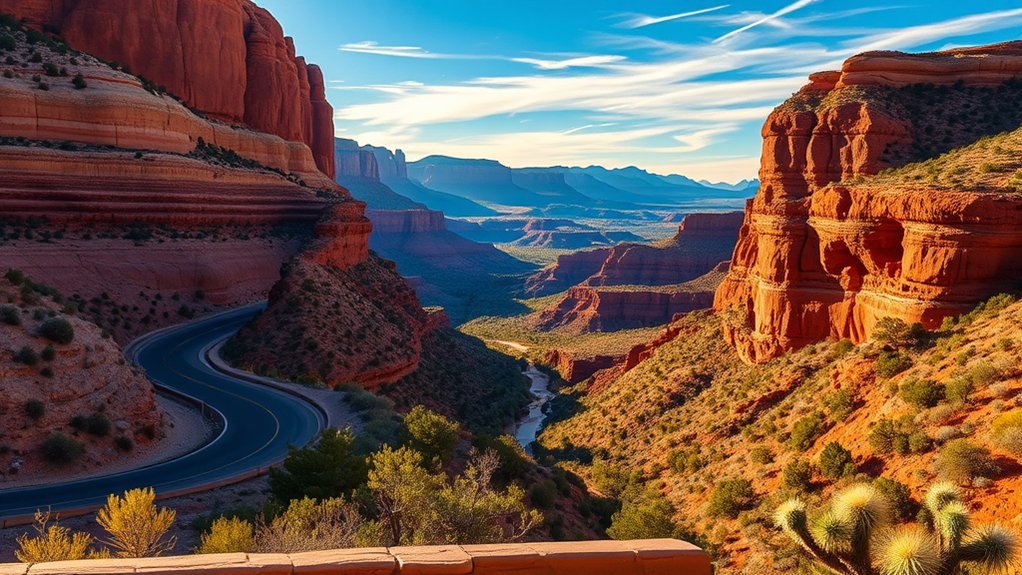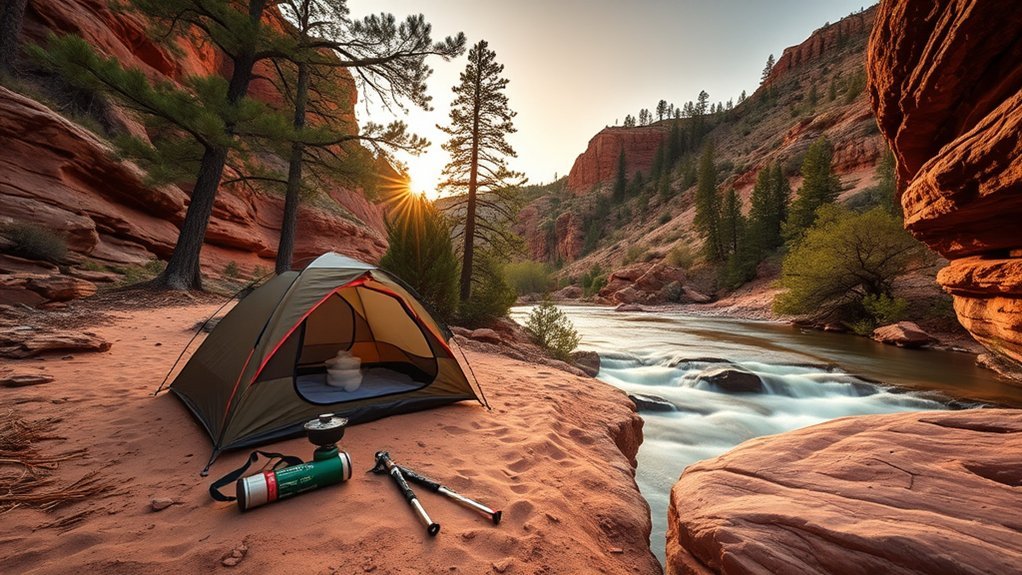
Slide Rock State Park’s 80-foot natural water slide and sandstone swimming chutes make it one of Arizona’s most iconic outdoor destinations. However, planning an overnight trip requires understanding a vital logistical fact: Slide Rock State Park is strictly a day-use park with no on-site campgrounds. To experience the slide and sleep under the stars, you will need to pair a day trip to the park with a campsite in the surrounding Coconino National Forest along Oak Creek Canyon. This comprehensive guide covers top nearby campgrounds, essential creek-traction gear, permit rules, and critical safety tips for a seamless Red Rock adventure.
Quick Answer
Slide Rock State Park is day-use only (no overnight camping inside park borders). Campers should book nearby U.S. Forest Service campgrounds along Highway 89A in Oak Creek Canyon—such as Cave Springs, Pine Flat, or Manzanita—via Recreation.gov up to 6 months in advance. Always pack high-friction water shoes and arrive by 8:00 AM during peak season to secure park entry.
Key Takeaways
- Day-Use Only: Slide Rock closes at dusk; all overnight stays occur at adjacent Coconino National Forest campgrounds or Sedona dispersed sites.
- Reservations Essential: Oak Creek Canyon USFS campgrounds fill months in advance between May and October.
- Footwear Matters: Algae-covered red sandstone is slick as ice; sturdy, grippy water shoes or neoprene booties prevent severe falls.
- Pet Restrictions: Leashed pets are permitted in upper park areas and Forest Service campgrounds, but are prohibited in the creek swim area.
Choosing Between Developed Campgrounds and Backcountry Sites in Oak Creek Canyon
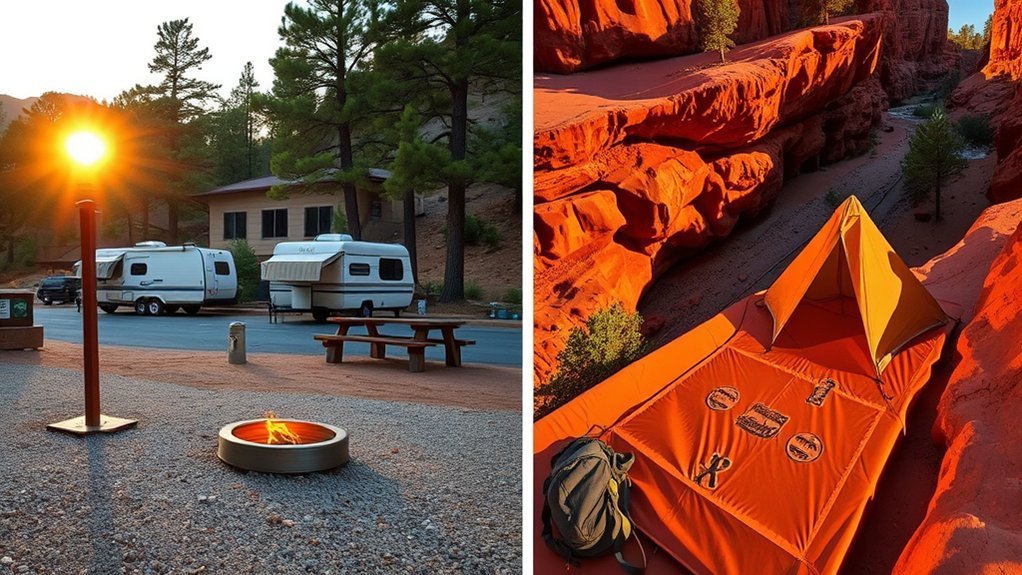
Because Slide Rock State Park does not permit overnight stays, your camping basecamp will be situated in the surrounding Coconino National Forest. Campers generally choose between developed U.S. Forest Service (USFS) canyon campgrounds and primitive dispersed camping on forest service lands outside the canyon corridor.
Developed USFS campgrounds along State Route 89A offer paved parking pads, vault toilets, potable water spigots, fire rings, and creek access within minutes of Slide Rock. The top three options include:
- Cave Springs Campground: Located just 5 miles north of Slide Rock, this is the largest facility in the canyon (84 sites), offering coin-operated token showers, shaded ponderosa pines, and tent/RV spaces.
- Pine Flat Campground: Positioned near the canyon’s natural spring water tap, featuring both creek-side and roadside sites with easy access for family camping.
- Manzanita Campground: A small, quiet, tent-only campground (19 sites) located south of the park, ideal for small groups seeking a peaceful environment right along Oak Creek.
If you prefer solitude, primitive dispersed camping is permitted in designated zones outside the Oak Creek Canyon corridor (such as along Forest Road 525 west of Sedona). Dispersed camping offers zero amenities—meaning you must pack in all drinking water, carry a portable human waste disposal system, and follow strict Leave No Trace ethics.
What to Pack for Comfort and Safety
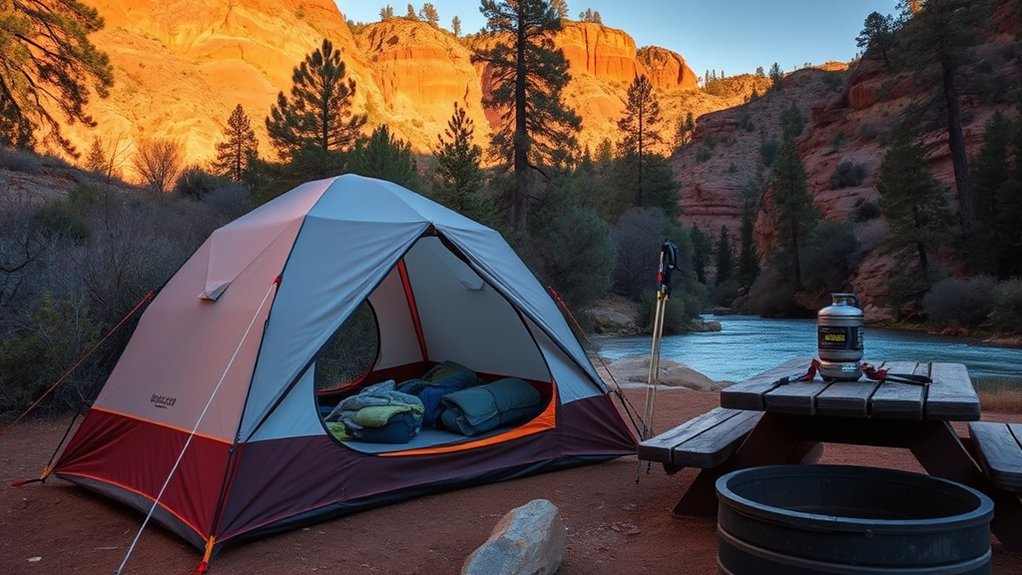
Camping in Oak Creek Canyon involves navigating crisp canyon nights and sun-drenched, rocky aquatic environments during the day. Layering and specialized footwear are essential components of your packing list.
Prioritize your gear around these core categories:
- Water & Stream Gear: Dedicated water shoes with sticky rubber outsoles (such as Vibram or stealth rubber), quick-dry swimwear, a heavy-duty dry bag, and extra towels. Avoid cheap flip-flops that slip off in creek currents.
- Shelter & Sleeping: A sturdy 3-season tent with rainfly, stakes rated for rocky soil, and a sleeping pad with an R-value of 2.5 or higher to buffer against cold canyon floor temperatures.
- Hydration & Cooking: At least 1 gallon of potable water per person per day (or a certified backpacking water filter for backcountry use) and a portable camp stove. Dehydration occurs rapidly in Arizona’s low-humidity climate.
- First Aid & Repair: Waterproof bandages, antiseptic wipes, blister pads, liquid skin for minor rock abrasions, tweezers, and multi-tools with duct tape for rapid gear fixes.
- Sun & Thermal Protection: UPF-rated sun hoodies, broad-spectrum reef-safe sunscreen, polarized sunglasses, and warm mid-layers (fleece or down jacket) for evenings when temperatures drop 20–30°F after sunset.
Pro Tip: Pack cut-resistant neoprene socks inside your water shoes. They protect your ankles and toes from bruising against hidden submerged sandstone boulders as you slide down the chute.
Water, Swimming, and Natural Rock Slides: Safety Tips
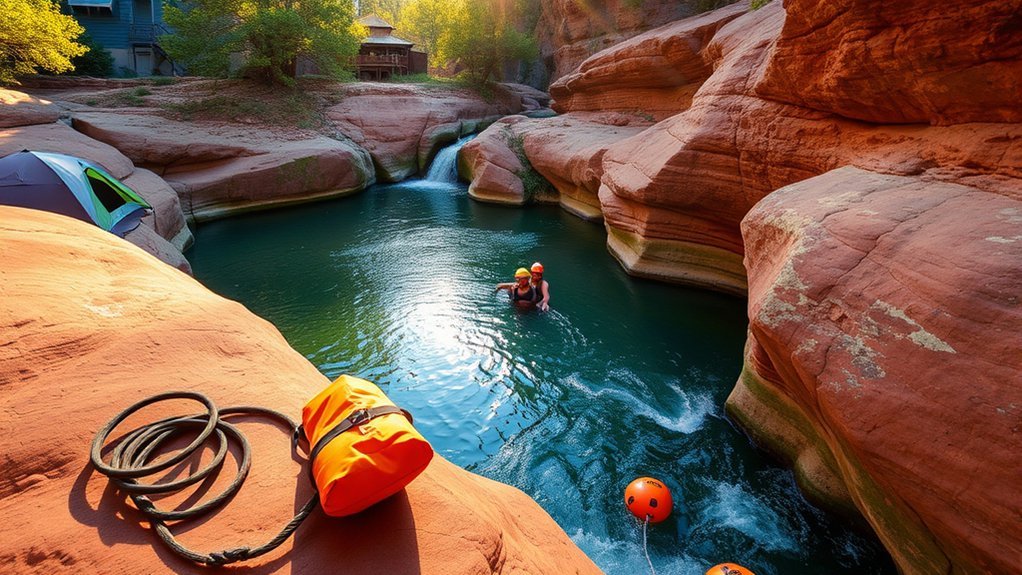
The natural water chute at Slide Rock is an 80-foot stretch of red sandstone coated with a slick layer of natural green algae. While exhilarating, the creek can present serious hazards if approached without proper caution.
Warning: Never dive or jump headfirst into Oak Creek. Water depths fluctuate drastically, and submerged bedrock shelves or shifting logs are impossible to gauge accurately from above. Severe spinal injuries have occurred from cliff jumping.
Follow these essential creek safety protocols:
- Scout Before Sliding: Walk alongside the slide first to inspect the current discharge rate, pool depth, and water clarity.
- Slide Feet-First: Keep your feet pointed downstream with your arms tucked close to your torso. Keep your chin tucked to protect the back of your head from rock impacts.
- Monitor Water Quality Alerts: The Arizona Department of Environmental Quality (ADEQ) tests Oak Creek regularly for E. coli bacteria. Check the park entrance board or official website for water advisories, especially after heavy rainstorms.
- Flash Flood Awareness: During the summer North American Monsoon season (July through September), severe thunderstorms upstream can send flash floods tearing through Oak Creek Canyon within minutes. If water turns brown, begins rising, or carries muddy debris, exit the creek bed immediately and seek higher ground.
- Children’s Safety: Currents in the lower pools can overpower weak swimmers. Equip non-swimmers and young children with a fitted USCG-approved life jacket.
Campsite Setup, Fires, and Leave No Trace Practices
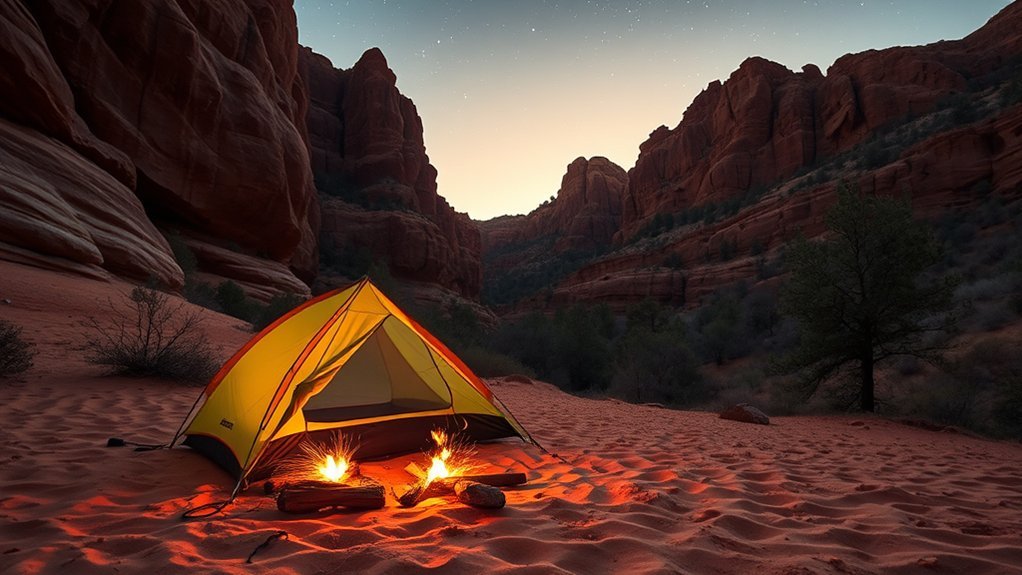
Oak Creek is a fragile riparian corridor surrounded by sensitive high-desert ecosystems. Whether at a developed USFS campground or in the backcountry, following strict conservation standards ensures the canyon remains pristine for wildlife and future visitors.
When pitching your campsite, adhere to these foundational practices:
- 200-Foot Rule: In dispersed backcountry areas, pitch tents and set up waste disposal zones at least 200 feet (about 70 adult paces) away from Oak Creek, secondary streams, and established trails.
- Wildlife & Bear Safety: Oak Creek Canyon is black bear and ringtail cat habitat. Store all food, scented toiletries, trash, and pet food inside locked, hard-sided vehicles or USFS-approved bear-resistant containers. Never keep food inside your tent.
- Fire Restrictions: Charcoal and wood fires are strictly prohibited within Slide Rock State Park day-use areas. At USFS campgrounds, campfires are allowed only in designated steel rings and are subject to seasonal Coconino National Forest Stage 1 or Stage 2 fire restrictions during dry conditions. Never leave a fire unattended, and drown coals completely until cool to the touch.
- Pack It In, Pack It Out: Carry out 100% of your trash, food packaging, and citrus peels. Do not discard apple cores or organic waste in the canyon, as it disrupts local wildlife foraging habits.
- Greywater Management: Use biodegradable, unscented soaps, and scatter strained wash water 200 feet away from natural waterways. Never wash dishes directly in Oak Creek.
Navigating Permits, Reservations, and Park Rules
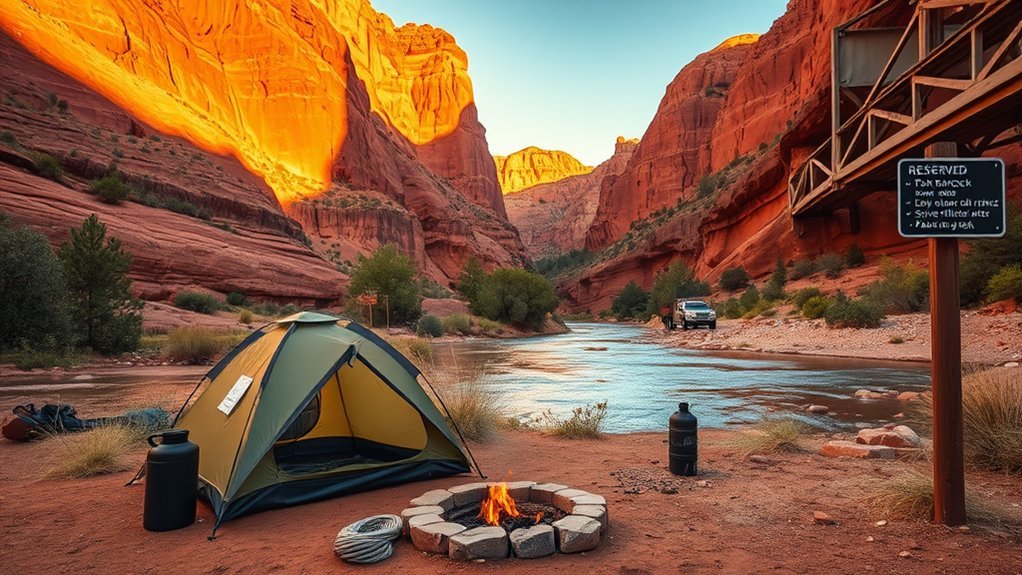
Managing passes and reservations for a Slide Rock trip requires understanding the distinct jurisdictions of Arizona State Parks (the day-use park) and the U.S. Forest Service (the surrounding canyon and campgrounds).
Permit Types & Costs
Because two separate management agencies operate in Oak Creek Canyon, make sure you budget for the correct entrance passes and campsite booking fees:
- Slide Rock State Park Day-Use Vehicle Fee: Charged per vehicle (up to 4 adults). Fees range from $20 per vehicle during off-peak winter weekdays up to $30–$35 per vehicle on summer weekends and holidays. Walk-in or bicycle entry is typically $3 to $5 per person.
- USFS Campground Fees: Developed campsites at Cave Springs, Pine Flat, or Manzanita cost approximately $24 to $35 per site, per night.
- Red Rock Pass: A separate USFS recreation pass ($5/day, $15/week) is required if you park at designated U.S. Forest Service trailheads outside the state park (e.g., West Fork Trail). Note: A Red Rock Pass is not valid for entry into Slide Rock State Park.
Camping Rules & Reservations
Campground sites along Oak Creek Canyon are in extremely high demand from April through October. All developed sites are booked through Recreation.gov, with reservation windows opening on a 6-month rolling basis.
Keep the following key regulations in mind:
- Quiet Hours: Enforced across all USFS campgrounds from 10:00 PM to 6:00 AM. Generator use is restricted to designated daytime hours.
- Length of Stay: Forest Service rules limit camping in the Oak Creek Canyon corridor to a maximum of 7 consecutive days within a 30-day period to prevent site monopolization.
- Pet Policies: Pets must remain on a 6-foot physical leash at all times in USFS campgrounds. At Slide Rock State Park, leashed pets are allowed in the historic apple orchard and paved picnic areas, but pets are strictly barred from entering the water, the slide, and the rocky creek banks for sanitary reasons.
Best Times to Visit, Weather Considerations, and Night Sky Viewing
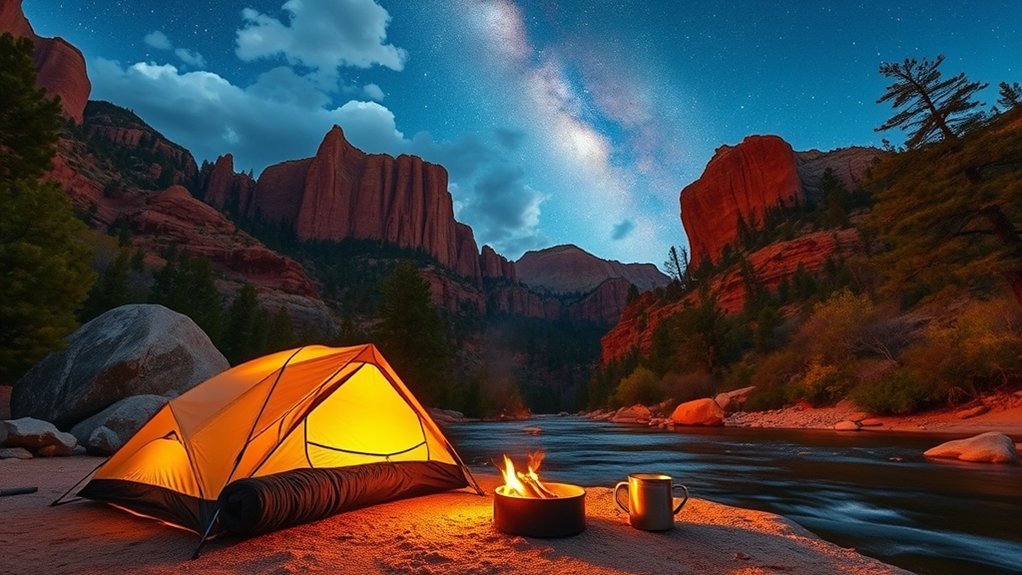
Oak Creek Canyon sits at an elevation of approximately 4,900 to 5,400 feet, making its microclimate noticeably cooler and wetter than nearby Phoenix and slightly distinct from Sedona’s town center.
Best Months to Go
Each season offers a distinctly different camping and creek-sliding dynamic:
- March–May (Spring): Crisp air, daytime highs around 65–75°F, blooming orchard trees, and rushing snowmelt. Creek water is bracingly cold (often below 55°F), making it better for hiking than extended swimming.
- June–August (Summer): Peak water-slide season with ambient temperatures reaching 85–95°F and refreshing 65–70°F water. Expect massive crowds, full parking lots by 8:30 AM, and afternoon monsoon storms in July and August.
- September–October (Fall): The premier shoulder season. Water remains warm enough for quick dips in September, crowds taper down, and the canyon’s bigtooth maples and oak trees display vibrant gold and crimson foliage by mid-October.
- November–February (Winter): Cold canyon nights with lows dipping below freezing (20–30°F) and occasional snowfall on red rock walls. Most USFS campgrounds close seasonally during winter, though select loops may remain open.
Weather and Night-Sky Tips
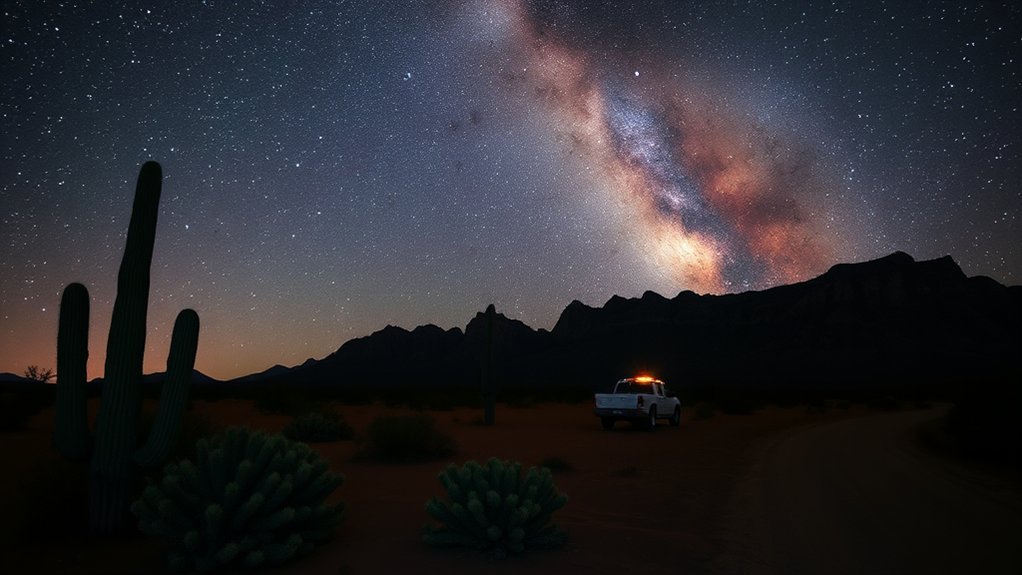
Sedona is an official designated International Dark Sky Community, meaning light pollution ordinances protect the night sky throughout the surrounding canyon. To maximize your night sky viewing:
- Plan Around the New Moon: Schedule your trip within a 4-day window of the new moon for unhindered views of the Milky Way arching over the canyon rim.
- Pack Red LED Lights: Standard white flashlights destroy night-adjusted vision (which takes 20–30 minutes to develop). Use red headlamp beams while navigating your campsite.
- Canyon Viewing Points: Deep within the canyon floor, steep canyon walls narrow the horizon. For panoramic astrophotography, take a short drive up Highway 89A to the Oak Creek Vista Overlook at the top of the canyon switchbacks.
Frequently Asked Questions
Can you camp inside Slide Rock State Park?
No. Slide Rock State Park is strictly a day-use park and closes at dusk every evening. Overnight camping is available nearby at Coconino National Forest campgrounds along Highway 89A (such as Cave Springs, Pine Flat, and Manzanita) or in designated dispersed forest zones.
Are campfires allowed year-round in Oak Creek Canyon campgrounds?
No. While campfires are permitted in established metal fire rings at developed Forest Service campgrounds during standard conditions, they are strictly prohibited during USFS Stage 1 or Stage 2 fire restrictions during periods of high wildfire risk. Campfires and charcoal grills are never allowed in the Slide Rock creek area.
Can you bring dogs to Slide Rock State Park and nearby campsites?
Yes, but with strict restrictions. Dogs on a 6-foot leash are welcome in developed USFS campgrounds and in the upper day-use areas (orchards and picnic zones) of Slide Rock State Park. However, dogs are strictly forbidden in the swimming area, creek bed, and sandstone slides at Slide Rock to protect water quality and public health.
Are there potable water refill stations at trailheads?
Potable drinking water is available at the Slide Rock State Park visitor plaza and at developed USFS campgrounds like Cave Springs and Pine Flat. However, backcountry trailheads and primitive dispersed camping areas do not have drinking water, requiring visitors to carry their own or use a certified water filtration system.
Is cell phone reception reliable in Oak Creek Canyon?
No. Due to the deep, narrow basalt and sandstone canyon walls along Highway 89A, cellular reception is notoriously spotty or completely unavailable throughout most of Oak Creek Canyon, including at Slide Rock and nearby campgrounds. Download offline GPS navigation maps and save your digital passes prior to entering the canyon.
Are group gatherings or events permitted at campsites?
Small family gatherings within posted campsite vehicle and occupant limits (typically 8 people per single site) are welcome. Larger organized group events or weddings require reserving designated group ramadas in advance through Arizona State Parks or securing a Special Use Permit through the Coconino National Forest Red Rock Ranger District.
Conclusion
Planning an overnight adventure around Slide Rock requires pairing the park’s day-use natural water chutes with a well-booked basecamp in the surrounding Coconino National Forest. By reserving your site at Cave Springs or Manzanita months in advance, gearing up with friction-soled water shoes, respecting flash flood risks, and adhering strictly to Leave No Trace principles, you will ensure a safe, memorable stay amid the red rocks and cool waters of Oak Creek Canyon.
Sources
- Arizona State Parks & Trails — Slide Rock State Park Overview & Day-Use Regulations — Official park hours, fee schedules, and swim area policies.
- U.S. Forest Service (USFS) — Coconino National Forest — Campground management, fire restriction alerts, and Red Rock Pass rules.
- Recreation.gov — Oak Creek Canyon Campgrounds — Official reservation portal for Cave Springs, Pine Flat, and Manzanita campgrounds.
- Arizona Department of Environmental Quality (ADEQ) — Oak Creek bacterial monitoring and watershed health programs.