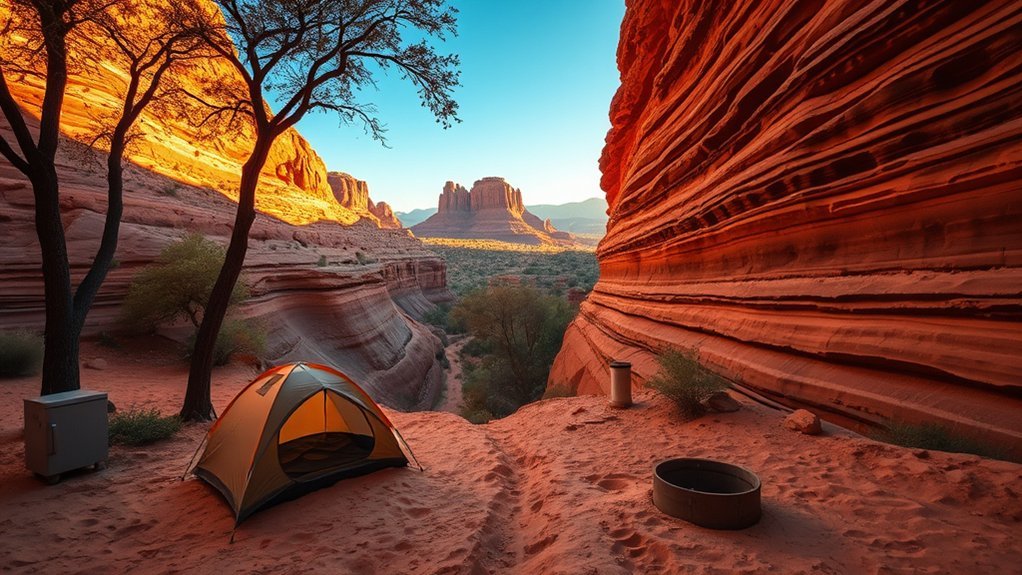
Planning to camp at Canyon de Chelly? This guide gives you the practical rules first: where you can camp, when you need a Navajo guide, how permits work, what the White House Trail status means, and what to pack for a respectful overnight near the canyon.
Canyon de Chelly Camping Guide: Campgrounds, Permits, and Guided Access
Camp near Canyon de Chelly at Cottonwood Campground or the private Spider Rock Campground. Rim drives are self-guided, but most canyon-floor travel requires an authorized Navajo guide and permit. NPS currently lists the White House Trail as open and free, but always confirm current conditions.
Key Takeaways for Canyon de Chelly Camping
- Rim drives and overlooks are self-guided, free, and open year-round under normal conditions.
- Most canyon-floor access requires an authorized Navajo guide and a backcountry permit.
- Cottonwood Campground is NNPR-managed, first-come, first-served for standard sites, and has no showers or RV hookups.
- The White House Overlook and Trail are currently listed by NPS as open and free, with possible fee or seasonal changes in the future.
- Independent at-large camping inside the canyon is not allowed. Use designated campgrounds or book an authorized guided overnight.
Why Canyon de Chelly Camping Is Different From a Standard Park Trip
Because Canyon de Chelly combines sandstone cliffs, living Navajo communities, and protected archaeological sites, camping here requires more care than a normal public-land trip. You are not only visiting a scenic canyon. You are entering a place where people live, work, guide, farm, and protect family land.
That is why most canyon-floor travel requires an authorized Navajo guide. The rule protects residents, cultural sites, and visitors. It also gives you better context because local guides can explain what you are seeing, where you may walk, and which places need privacy.
If you want a simple overnight, use Cottonwood Campground or Spider Rock Campground as your base. If you want to sleep deeper in the canyon, plan ahead with an authorized guided overnight and confirm permit handling before you pay.
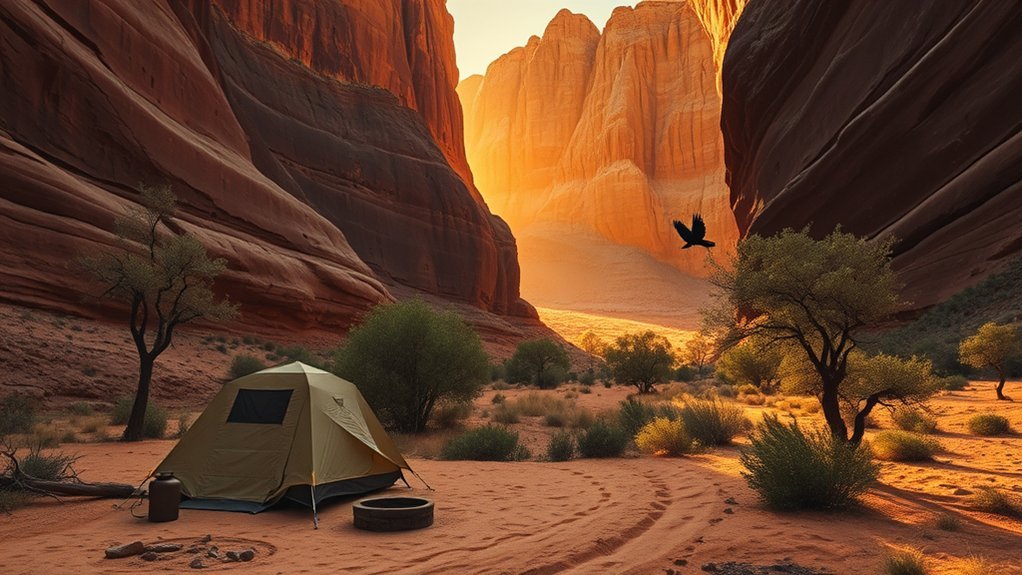
Best Time to Camp at Canyon de Chelly
For the most comfortable camping weather, plan your trip for spring or fall. Summer can bring heat, strong sun, and monsoon storms. Winter nights can feel very cold, and some services may be limited.
Check the local forecast before you leave Chinle. Rain can create flash-flood risk, rockfall hazards, muddy roads, and sudden waterfalls inside the canyon. Stay on paved roads when storms threaten, and avoid dirt routes unless your guide or local authority says conditions are safe.
| Season | Camping Conditions | Best Planning Tip |
|---|---|---|
| Spring | Mild days, cool nights, wind possible | Pack layers and check road conditions |
| Summer | Hot days, strong sun, monsoon storms possible | Start hikes early and carry extra water |
| Fall | Cooler, more stable camping weather | Book guides early during popular weeks |
| Winter | Cold nights and limited seasonal services | Bring a warmer sleep system and confirm campground details |
Canyon de Chelly Access Rules, Permits, and Fees
Rim drives are the easy self-guided option. You can drive to the paved North and South Rim overlooks without a guide, permit, or entrance fee under normal conditions. The overlooks are the best choice if you have limited time or want a simple scenic visit.
Most canyon-floor travel is different. Tours into the canyon by hiking, horseback, or vehicle require an authorized guide and a backcountry permit. Navajo Nation Parks & Recreation manages Cottonwood Campground and issues backcountry permits. Your guide or tour operator should explain how the permit is arranged before your trip.
For current campground rates, backcountry permit rules, tour operator lists, and seasonal notices, check NPS Canyon de Chelly Basic Information, NPS Fees & Passes, and Navajo Nation Parks & Recreation.
Products Worth Considering


Navajo Permit Basics
- Use designated campgrounds: Cottonwood Campground is managed by NNPR, and fees are collected by NNPR staff.
- Confirm guided-trip permits: For canyon tours or guided overnights, ask the operator how backcountry permits are handled.
- Respect closed or private areas: Rules protect residents, cultural places, livestock areas, and visitor safety.
- Do not assume rules stay the same: Call NNPR or check official pages before your arrival.
When You Need a Licensed Navajo Guide
Plan on hiring an authorized Navajo guide for most canyon-floor access. This includes many hikes, vehicle tours, horseback trips, and overnight routes. Book in advance from March through October, when demand is usually higher.
| Trip Type | What to Confirm | Why It Matters |
|---|---|---|
| Rim overlook visit | No guide needed under normal conditions | Best for quick visits and photography |
| Canyon-floor day tour | Authorized guide and permit handling | Required for most canyon-floor access |
| Guided overnight | Route, campsite, permit, meals, gear, and cancellation terms | Prevents access problems and unclear expectations |
| Horseback or vehicle tour | Operator registration, route, start time, and weather policy | Conditions can change quickly inside the canyon |
Where to Camp Near Canyon de Chelly
Most visitors should choose between Cottonwood Campground and the private Spider Rock Campground. Cottonwood is closest to the Welcome Center and official park logistics. Spider Rock is better if you want a quieter private campground setting with tent, RV, and hogan-style stays.
| Camping Option | Best For | Key Details to Confirm |
|---|---|---|
| Cottonwood Campground | Simple camping near the Welcome Center | First-come, first-served standard sites, no showers, no RV hookups, limited winter sites |
| Spider Rock Campground | Quieter private camping and hogan stays | Tent sites, RV sites, private facilities, payment rules, and reservation details |
| Guided canyon overnight | A deeper cultural and canyon-floor experience | Authorized guide, route, permit handling, meals, gear, and weather policy |
Before you go, call ahead or check official pages. Cottonwood Campground details and NNPR fees can change. Spider Rock Campground is private, so confirm current rates, payment options, shower access, hogan availability, and quiet-hour rules directly with the campground.
How to Book a Local Guide for Canyon Access
Choose an authorized Navajo guide before planning any canyon-floor hike, vehicle trip, horseback tour, or overnight route. Do not book only by price. A good guide should clearly explain the route, expected time, difficulty, cultural protocols, weather policy, and permit process.
Guide Selection Tips
- Verify authorization: Ask whether the guide or company is listed with Navajo Nation Parks & Recreation.
- Confirm the trip type: Day hike, vehicle tour, horseback tour, photography trip, or overnight route.
- Ask about permits: Confirm whether the operator arranges the required backcountry permit or tells you where to pay.
- Check logistics: Meeting point, start time, group size, restroom access, water needs, and cancellation policy.
- Respect cultural boundaries: Ask what you may photograph, where you may walk, and what areas are private.
Backcountry Camping Through Guided Overnight Tours
You cannot arrange an independent canyon-floor camping trip on your own. If you want to sleep beyond the developed campgrounds, book an authorized guided overnight. These trips may use hiking routes, vehicle-supported camps, or culturally focused itineraries.
You cannot camp independently inside Canyon de Chelly. For a canyon-floor overnight, book an authorized Navajo-guided trip and confirm permit handling before you go.
- Multi-day hiking trips: Best for travelers who want slower movement, more canyon time, and deeper context.
- Vehicle-supported camps: Better if you want to reach remote areas with less gear on your back.
- Cultural-focused overnights: Best if your main goal is learning, respectful listening, and local interpretation.
Ask your guide what gear you must bring. Do not assume tents, sleeping pads, meals, water, or cooking gear are included unless the operator says so in writing.
Self-Guided Rim Drives and the White House Trail
White House Overlook and Trail is the main self-guided hike into the canyon. NPS currently lists it as open and free. The hike is about 2.5 miles round trip and descends about 600 feet to the White House site. Bring water, a hat, sturdy shoes, and sun protection.
NPS also says the Navajo Nation may require a fee or operate the area seasonally in the future. Check the latest official status before you drive to the trailhead.
Rim Overlook Walks
The North and South Rim Drives are the easiest self-guided way to see Canyon de Chelly. Stop at overlooks such as Antelope House, Massacre Cave, and Spider Rock. Go early or late for cooler temperatures and better light.
Safety and Water
Carry more water than you think you need, especially in summer. Wear sturdy shoes, keep a paper map, and tell someone your route and return time. Avoid cliff edges, closed areas, and fragile desert soil. Do not enter the canyon during storm risk unless your authorized guide says conditions are safe.
Packing List and Safety Tips for Canyon Camping
Pack for heat, wind, cold nights, limited services, and sudden weather changes. Even if you camp near the rim, you should not rely only on cell service, GPS, or nearby stores.
| Category | What to Pack | Why You Need It |
|---|---|---|
| Water and food | Extra drinking water, electrolytes, snacks, simple meals | Heat, dry air, and limited services can catch visitors off guard |
| Shelter and sleep | Sturdy tent, warm sleep system, tarp, repair kit | Wind, cold nights, and summer storms can affect comfort |
| Safety | First-aid kit, headlamp, spare batteries, paper map | Cell service and GPS may not be reliable |
| Sun and weather | Hat, sunglasses, sunscreen, rain shell, layers | Conditions can shift between hot days and cold nights |
| Respectful travel | Trash bags, quiet camp habits, camera etiquette | You are visiting a living cultural landscape |
Practice Leave No Trace, pack out trash, and keep your campsite quiet. If you are unsure whether a road, photo, trail, or campsite is allowed, ask before acting.
Respectful Travel Practices and Cultural Etiquette
Because Canyon de Chelly sits within the Navajo Nation, treat your trip as a visit to a living homeland, not just a scenic park. Use designated campgrounds, hire an authorized guide for canyon-floor travel, and stay on approved roads and paths.
Ask before photographing people, homes, livestock areas, ceremonies, or private structures. Keep noise low near homes and campsites. Do not fly drones, climb on ruins, collect objects, disturb rock art, or enter closed areas.
Useful official resources: NPS Canyon de Chelly Basics, NPS FAQs, NPS Alerts & Conditions, and Navajo Nation Parks & Recreation.
FAQs About Canyon de Chelly Camping
Do you need a guide to go into the canyon?
Yes. Most canyon-floor travel requires an authorized Navajo guide and a backcountry permit. Rim drives and overlooks are self-guided and do not require a guide or permit under normal conditions.
Is the White House Trail open?
NPS currently lists the White House Overlook and Trail as open and free. The hike is about 2.5 miles round trip and descends about 600 feet. Future Navajo Nation operations may add fees or seasonal rules, so check before visiting.
Where can I camp near Canyon de Chelly?
Use Cottonwood Campground, managed by Navajo Nation Parks & Recreation, or the private Spider Rock Campground. Independent at-large camping inside the canyon is not allowed.
Do I need permits to camp?
Standard campground stays use campground fees. Canyon-floor tours and guided overnights require backcountry permits and an authorized guide. Confirm the current permit process with NNPR or your tour operator before booking.
Do I need reservations for Cottonwood Campground?
Cottonwood Campground standard sites are generally first-come, first-served. Group camping may require reservations. Call Navajo Nation Parks & Recreation before your trip to confirm nightly fees, site availability, and seasonal service changes.
Are showers or RV hookups available at Cottonwood Campground?
No. Cottonwood Campground does not have showers or RV hookups. It has restrooms, picnic tables, and grills. Services may be limited in winter, so confirm details before arrival.
Can I drive the rim roads without a permit?
Yes. The paved North and South Rim Drives are self-guided. Under normal conditions, you can visit the overlooks without an entrance fee, guide, or permit.
Can I drive off-road inside Canyon de Chelly?
No. Public recreational off-road driving is not allowed. Dirt roads on Navajo Nation land serve residents, homesites, and grazing areas. Arrange canyon access through an approved tour company.
Are pets allowed at Canyon de Chelly?
Pets on a leash are allowed at overlooks and in the campground. They are not allowed in the Welcome Center or on canyon tours. Call lodging or campground operators ahead if you travel with a pet.
What should I pack for Canyon de Chelly camping?
Bring extra drinking water, sun protection, sturdy shoes, warm layers, a first-aid kit, a headlamp, a paper map, food, trash bags, and weather protection. Summer storms and winter cold can both affect camping plans.