Camping in Glacier Bay National Park and Preserve gives you two very different ways to experience southeast Alaska: the free, walk-in Bartlett Cove Campground or a self-supported trip into the park’s remote wilderness. Both put you close to rainforest, shoreline, wildlife, and dramatic mountain scenery, but the planning requirements are very different. Permits, bear-safe food storage, tides, cool wet weather, and limited services all deserve attention before you leave.
Quick Answer
Camping in Glacier Bay means choosing between the free, walk-in Bartlett Cove Campground and true wilderness backcountry camping. From May 1 through September 30, permits are required, and backcountry campers must complete an annual in-person orientation. Expect cool, wet weather, bears, large tides, limited services, and no maintained trails in the wilderness.
Key Takeaways
- Bartlett Cove is Glacier Bay’s only developed campground. It is free, walk-in, and first come, first served.
- From May 1 through September 30, both Bartlett Cove and backcountry campers need permits; wilderness campers also need an annual in-person orientation.
- The Glacier Bay backcountry has no maintained trail network, so wilderness trips require stronger navigation and route-finding skills.
- Backcountry campsites should be at least 100 feet from fresh water, while food storage, cooking, and eating should be separated much farther from your tent.
- Cold rain, bears, rapidly changing marine conditions, strong tides, and limited communication make preparation essential.
At a Glance
| Camping Fee | No standard camping fee for Bartlett Cove or a standard Glacier Bay backcountry permit |
| Permit | Required May 1–September 30; backcountry users also complete an annual in-person orientation |
| Main Camping Season | Late May through early September; July is the peak visitor month |
| Difficulty | Bartlett Cove: accessible for prepared campers; backcountry: remote and demanding, with no maintained trails |
Overview of Campgrounds in Glacier Bay National Park
Glacier Bay does not have a network of developed campgrounds. The National Park Service maintains one developed camping area, Bartlett Cove Campground, while the rest of the camping experience is primarily wilderness backcountry travel.
Bartlett Cove Campground
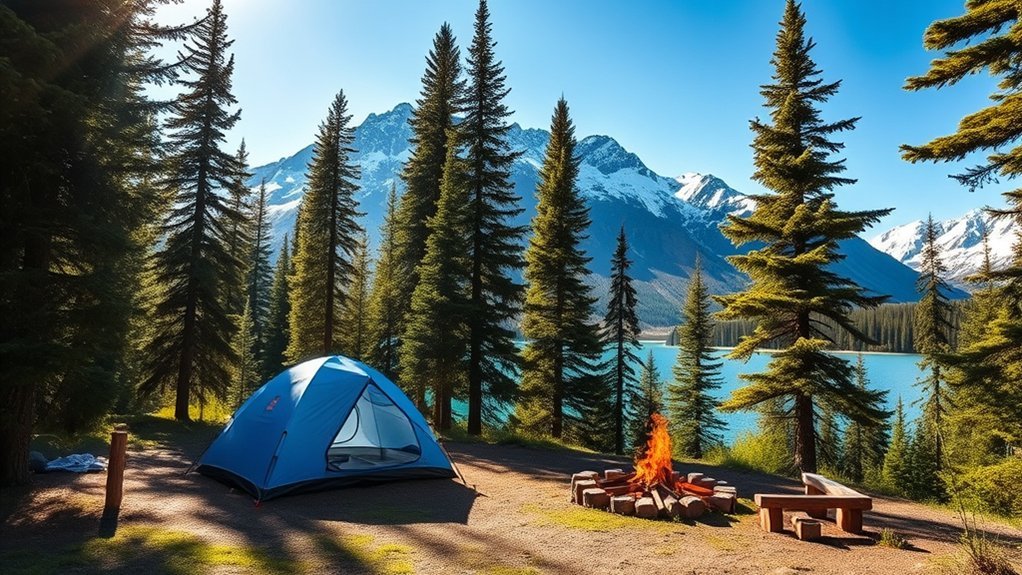
Bartlett Cove is the easiest option for most visitors. The campground sits about one-quarter mile south of the Bartlett Cove dock in a rainforest setting and is reached on foot. Camping is free, and advance campsite reservations are not accepted. Sites are available on a first-come, first-served basis.
The campground provides bear-resistant food-storage caches, composting toilets, a warming shelter, and access to a designated beach fire ring. Water and garbage facilities are available near the Visitor Information Station. Campers must store food and other scented items in the provided caches and may cook and eat only in the intertidal area designated by park guidance.
Bartlett Cove is still a primitive campground. There are no RV hookups, dump stations, drive-in campsites, or vehicle-camping areas in Glacier Bay. Sleeping in vehicles in park parking areas or along the park road is not permitted.
Campground stays are limited to 14 consecutive days, with a maximum of 30 days in a calendar year.
Backcountry Camping
If you want greater solitude, Glacier Bay’s wilderness offers an enormous backcountry. This is not a system of numbered campsites connected by maintained trails. The National Park Service notes that there are no maintained trails in the Glacier Bay backcountry. Dense alder, rocky shorelines, steep slopes, streams, and tides can make overland travel difficult or sometimes impractical.
Shorelines and gravel streambeds often provide the most practical routes. Kayaks are also a common way to travel between wilderness camping areas. Your campsite should be selected carefully on durable ground and positioned where it will not interfere with wildlife travel.
Camping Permits and Orientation
Current National Park Service camping guidance requires camping permits from May 1 through September 30.
Bartlett Cove Permit
Bartlett Cove campers obtain a free campground permit and complete a brief orientation through the Visitor Information Station near the public dock.
Backcountry Permit
All overnight backcountry users, including overnight kayakers, must obtain a free backcountry permit and complete the park’s annual backcountry orientation in person during the May 1–September 30 permit season.
For the 2026 season, the NPS lists backcountry orientations at 9:00 a.m. and 2:30 p.m. daily. Permit applications may be submitted shortly before arrival, but the permit itself still must be collected in person before leaving Bartlett Cove. The park currently states that there is no daily limit on standard backcountry permits.
Backcountry campers should also return or check in their permit after the trip. An overdue permit that has not been marked returned can trigger an emergency response.
Pro Tip: Visit the Visitor Information Station before departure even if you have already planned your route. Rangers can provide the latest information on wildlife closures, tides, weather, regulations, and route conditions.
Essential Backcountry Camping Tips
When you venture into the backcountry of Glacier Bay National Park, preparation is key. You should be capable of traveling without developed campsites, dependable cellular service, or quick access to outside help.
Choose Your Campsite Carefully
Follow Leave No Trace principles and use durable surfaces. Current NPS guidance says campsites should be at least 100 feet from fresh water sources. Avoid active salmon streams, obvious bear trails, heavy concentrations of bear sign, and places where your tent would block an animal’s shoreline travel route.
Glacier Bay’s wilderness group-size limit is generally 12 people.
Separate Food From Your Sleeping Area
Food management is especially important in bear country. Store food, garbage, toiletries, and other scented items in an approved bear-resistant container well away from your sleeping area. NPS Glacier Bay guidance calls for food storage and cooking areas to be about 100 yards from camp. Cooking and eating in the backcountry should take place in the intertidal zone where appropriate.
Free bear-resistant food canisters are available to registered backcountry users through the Visitor Information Station.
Treat Your Drinking Water
Fresh water is available in many parts of Glacier Bay but can be limited on islands. Clear-looking water is not automatically safe. Boil, filter, or chemically treat backcountry water to reduce the risk from organisms such as Giardia. Glacial sediment can also clog filters, so allowing cloudy water to settle before treatment may help.
Carry Real Navigation Tools
A map, appropriate marine charts for water travel, compass, and GPS or offline navigation device can all be useful. Do not assume a marked hiking trail will guide you through the wilderness. Glacier Bay’s backcountry is largely route-finding terrain.
Glacier Bay can experience tidal changes of roughly 25 feet, and some channels can develop strong currents, standing waves, tidal rips, and whirlpools.
Warning: Never select a shoreline campsite without understanding the tide. Water can rise far higher than the beach position you see at low tide. Cold rain, wind, cold water, and wet clothing also make hypothermia a year-round concern.
Wildlife Encounters and Safety Precautions
Glacier Bay supports both black bears and coastal brown bears, along with moose, sea otters, seals, whales, and many other species. Seeing wildlife can be a highlight of your trip, but an animal should never have to change its behavior because you approached too closely.
Bear Safety
Watch for bear tracks, scat, trails, feeding areas, and other signs. Make your presence known while moving through brush, travel with others when possible, and avoid surprising a bear at close range.
Do not approach bears for photographs. NPS research in Glacier Bay indicates that 100 yards should be treated as a minimum viewing distance for shoreline bears, and even greater space may be appropriate if an animal reacts to you.
If you unexpectedly encounter a bear, stay calm, identify yourself by talking in a normal voice, and do not run. Follow the current instructions provided during your Glacier Bay backcountry orientation because the right response can depend on the bear’s behavior and the circumstances.
Consider carrying bear spray in an immediately accessible location and know how to use it before entering the backcountry. Bear spray buried inside a backpack is of little use during a sudden encounter.
Moose Safety
Moose also require space. Glacier Bay’s NPS guidance recommends staying at least 25 meters away, and farther if the animal shows signs of agitation. Give cows with calves especially generous room. If a moose charges, unlike a bear encounter, seek cover behind a solid object and move away from its path.
Never feed wildlife, and keep food secured at all times. A clean camp protects both visitors and animals.
Recommended Hiking Trails and Activities
Developed hiking in Glacier Bay is concentrated around Bartlett Cove. The official NPS Glacier Bay hiking guide lists several worthwhile routes.
Forest Trail
The Forest Trail is an easy one-mile loop through temperate rainforest and beach environments. Most visitors take about 30 minutes to 1.5 hours. It is a good choice when you want a short introduction to Bartlett Cove.
Tlingit Trail
The Tlingit Trail runs about one-half mile one way along the shoreline near Glacier Bay Lodge. Along the route you can see Bartlett Cove views, cultural interpretation, a whale skeleton, and the Huna Tribal House area.
Bartlett River Trail
For a longer walk, the Bartlett River Trail is about four miles round trip and commonly takes four to five hours. It passes through forest and along an intertidal lagoon before reaching the Bartlett River estuary. Wildlife may be present, so stay alert and maintain safe distances.
Bartlett Lake Trail
The Bartlett Lake Trail is the more demanding developed-area option, at roughly eight miles round trip. NPS estimates about seven to eight hours. The route branches from the Bartlett River Trail and becomes less maintained as it crosses moraine terrain toward Bartlett Lake. Carry food, water, rain gear, and navigation information.
Explore the Shore Toward Point Gustavus
Instead of looking for a formal trail at “Gustavus Beach,” you can walk the shoreline south from Bartlett Cove. The distance is flexible, and a full-day outing can extend toward Point Gustavus, roughly six miles one way. Check the tide before committing to a long shoreline route.
Kayaking
Sea kayaking is one of Glacier Bay’s signature wilderness activities. Guided day and overnight trips may be available, while experienced paddlers can plan independent journeys subject to park permit and orientation requirements. Wildlife should always be viewed from a safe distance rather than approached closely.
Preparing for Your Glacier Bay Adventure
Glacier Bay’s maritime climate means you should prepare for cool temperatures and rain even during summer. According to the National Park Service weather guidance, typical summer daytime highs near sea level are about 50–60°F (10–15°C). April, May, and June are usually the driest months, while September and October tend to be wetter.
Pack layers rather than relying on one heavy garment. Your basic camping kit should include:
- Waterproof rain jacket and rain pants
- Warm wool or synthetic layers
- Warm hat and gloves
- Sturdy waterproof footwear
- Dry bags or waterproof protection for sleeping gear
- Map, compass, and appropriate charts for your route
- Water-treatment equipment
- First-aid supplies
- Bear-resistant food storage for backcountry trips
- Bear spray when appropriate
- Headlamp with spare power
- Repair kit for essential equipment
- Emergency communication equipment for remote travel
Plan for Limited Communication
Do not depend on your mobile phone in the Glacier Bay wilderness. NPS warns that cellular service is unavailable in much of the park. Backcountry travelers commonly carry satellite communicators, personal locator beacons, satellite phones, or handheld marine VHF radios depending on their route and experience.
Make sure another responsible person knows your route and expected return date. Your park permit also provides rangers with important trip information if you become overdue.
Understand How You Will Reach Bartlett Cove
Glacier Bay is not connected to the continental road system. Most independent visitors first reach the community of Gustavus by air or ferry and then travel by the local road to Bartlett Cove. Plan transportation for both yourself and your camping equipment before arrival.
Note: Backcountry closures can change because of bear activity, nesting birds, marine mammals, or other resource and safety concerns. Check current NPS camping advisories immediately before beginning your trip.
Best Time for Camping in Glacier Bay
The park’s main visitor season runs from roughly late May through early September, with July normally the busiest month. Most Glacier Bay backcountry users travel between May and August.
June through August remains a practical choice for many first-time campers because visitor services are operating and daylight is long. However, “summer” does not mean warm or dry. Rain, wind, fog, and temperatures in the 50s are normal possibilities.
Late spring can offer somewhat drier weather, while September brings fewer visitors but wetter conditions and declining seasonal services. Outside the main season, you need to be more self-sufficient because transportation and visitor services can be very limited.
Campfires, Pets, and Leave No Trace
Campfires
Campfires are not completely prohibited in Glacier Bay. At Bartlett Cove Campground, fires are limited to the designated campground beach fire ring. In the backcountry, the NPS directs campers to use appropriate intertidal areas for campfires and to follow all current restrictions.
A portable stove is usually the better option because it is faster, cleaner, and reduces impact. Never cut live vegetation for fuel, never burn trash, and check for temporary fire restrictions before your trip.
Pets
Glacier Bay has strict pet restrictions. According to the official NPS pet rules, pets are not permitted on park trails, beaches, or in the backcountry. That means a pet cannot accompany you on a normal Bartlett Cove camping or wilderness camping trip.
Pets are allowed only in a few specified developed locations, including the Bartlett Cove Public Use Dock, a limited beach section between designated docks, certain areas near park roads and parking lots, and aboard vessels on the water. Pets must remain restrained and cannot be left unattended.
Leave No Trace
Pack out everything you bring into the wilderness. Do not burn garbage. Keep your campsite compact, avoid damaging vegetation, leave natural and cultural objects where you find them, and give wildlife clear travel routes along the shore.
Frequently Asked Questions
Are campfires allowed in Glacier Bay National Park?
Yes, but only under applicable park rules. Bartlett Cove campers must use the designated campground beach fire ring. Backcountry campers should follow current NPS intertidal fire guidance and any temporary fire restrictions. A portable camp stove is usually the lowest-impact choice.
What permits are required for backcountry camping?
From May 1 through September 30, overnight backcountry users need a free Glacier Bay backcountry permit and must complete the annual backcountry orientation in person at the Visitor Information Station. Permits must be collected before departure and should be checked back in after the trip.
Is there a fee for camping at Glacier Bay?
No standard camping fee is currently charged for Bartlett Cove Campground, and the standard Glacier Bay backcountry camping permit is free. Commercial transportation, lodging, kayak rentals, guided trips, or other private services can have separate costs.
What are the best months for camping in Glacier Bay?
June through August is the most practical period for many visitors because seasonal services are operating and days are long. The broader main visitor season runs from late May through early September, with July typically the busiest month. Prepare for rain and cool temperatures during any summer trip.
Can I bring my pet camping in Glacier Bay National Park?
Not on a normal camping trip. Pets are prohibited on park trails, beaches, and in the backcountry. They are permitted only in a few specifically designated developed locations around Bartlett Cove and on vessels on the water, subject to restraint requirements.
Can I reserve a campsite at Bartlett Cove?
No. Bartlett Cove Campground does not accept advance campsite reservations. Camping is first come, first served. You should still complete the required campground permit process and can contact the Visitor Information Station about current availability.
Can I camp in an RV or sleep in my vehicle inside Glacier Bay?
No. Glacier Bay does not provide RV campsites, hookups, dump stations, or vehicle-camping areas. Sleeping in vehicles in park parking areas or along the park road is not permitted.
Conclusion
Camping in Glacier Bay National Park can range from a relatively simple night in the rainforest at Bartlett Cove to a demanding wilderness journey by kayak or on foot. The scenery is extraordinary, but successful trips depend on practical preparation rather than spontaneity alone.
Choose the camping style that matches your experience, complete the required permit and orientation process, prepare for cold rain and large tides, store food correctly, give wildlife generous space, and check current park advisories before you leave. With those basics covered, you can spend more of your trip enjoying Glacier Bay’s quiet shorelines, forests, mountains, and wildlife.
Sources
- National Park Service — Camping in Glacier Bay — current permits, orientation, backcountry camping, food storage, tides, closures, and safety guidance.
- National Park Service — Bartlett Cove Campground — campground access, facilities, first-come policy, food rules, stay limits, and RV restrictions.
- National Park Service — Glacier Bay Hiking — official Bartlett Cove hiking routes, distances, and estimated times.
- National Park Service — Glacier Bay Weather — summer temperatures, precipitation patterns, and weather hazards.
- National Park Service — Pets — current pet-access restrictions and permitted developed areas.
- National Park Service — Moose in Glacier Bay — moose viewing distance and encounter safety.