Camping in Kenai Fjords National Park gives you a chance to stay close to Exit Glacier or venture into the park’s remote coastal and inland backcountry. The key is knowing which camping options are actually available, what gear and food-storage rules apply, and how quickly weather and wildlife conditions can change.
Quick Answer
Kenai Fjords National Park has one frontcountry campground: the 12-site, walk-in, tent-only Exit Glacier Campground. Sites are first-come, first-served, with no camping fee or reservation. Backcountry camping is also allowed in much of the park, but remote coastal and glacier areas require careful planning, food storage, navigation, and weather preparation.
Key Takeaways
- Exit Glacier Campground is the park’s only frontcountry campground. It has 12 walk-in, tent-only sites.
- Camping is first-come, first-served. There are no camping reservations or camping fees.
- Bring your own water because the NPS currently reports the campground water pump out of order.
- Food preparation, cooking, and food storage are restricted to the central shelter at Exit Glacier Campground.
- Backcountry camping is more remote and requires stronger preparation for weather, wildlife, navigation, sanitation, and coastal hazards.
- Check current conditions before leaving because road, trail, weather, and facility conditions can change.
At a Glance
| Time Required | 1 night to 14 days at the frontcountry campground; backcountry trips vary. |
| Difficulty | Easy at the developed campground; moderate to very strenuous depending on the hike and backcountry route. |
| Tools Needed | Tent, sleeping system, food-storage equipment, water, navigation tools, rain gear, warm layers, first-aid supplies, and communication equipment. |
| Cost | No camping fee at Exit Glacier Campground and no camping reservation fee. Travel, equipment, food, and transportation costs are separate. |
Overview of Kenai Fjords National Park
Kenai Fjords National Park lies on the Kenai Peninsula in southern Alaska. The park combines glaciers, mountains, coastal fjords, forests, and marine habitat. Much of the park is remote and trail-less, so camping here can range from a relatively simple stay at Exit Glacier to a demanding backcountry trip reached by boat, kayak, air taxi, or on foot.
The park is divided broadly into the Exit Glacier area, coastal fjords, and Harding Icefield. Exit Glacier is the easiest part of the park to reach by road. The coastal and icefield areas require more planning and, in many cases, specialized transportation or wilderness skills.
Wildlife is another major part of the experience. Bears, moose, marine mammals, and birds live in or around the park. Give wildlife plenty of space, never feed animals, and keep food and garbage secured.
Note: Kenai Fjords is a remote Alaska park. Cell phone service is not available within the park, including the Exit Glacier area. Download maps and trip information before leaving service areas, and tell someone where you are going and when you expect to return.
Camping Options in Kenai Fjords
There is an important distinction between frontcountry camping and backcountry camping in Kenai Fjords. The park has one developed frontcountry campground, while much of the rest of the park is open to backcountry camping under park rules.
Exit Glacier Campground
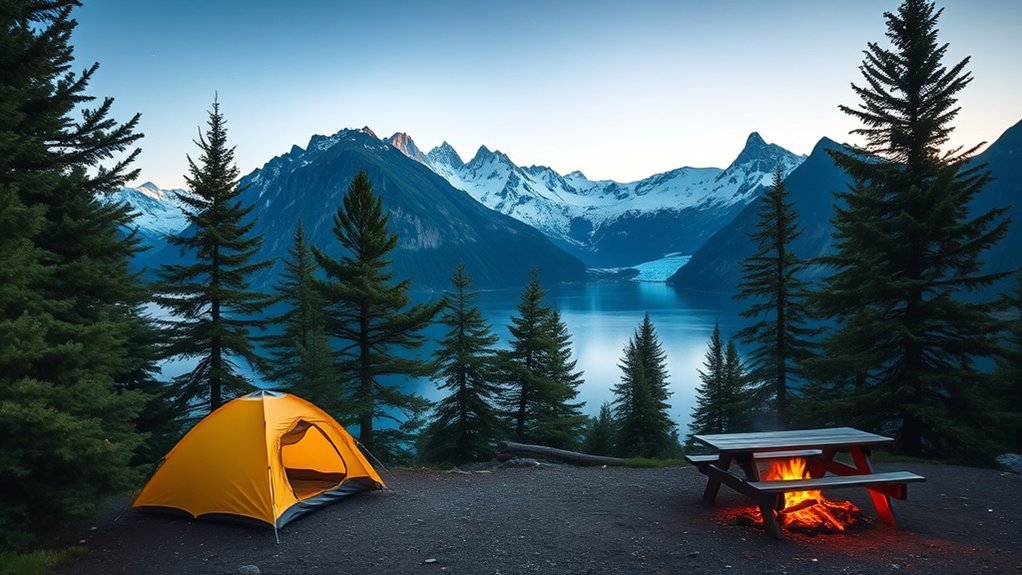
Exit Glacier Campground is the park’s only frontcountry campground. It has 12 walk-in, tent-only sites. Sites are first-come, first-served, and there is no camping fee or camping reservation system.
The campground has a 14-day stay limit. Each site can accommodate a maximum of two tents and/or eight people. You cannot sleep in an RV, camper, or other vehicle in the campground parking area, and overnight parking is not allowed elsewhere in the Exit Glacier area.
Two sites, numbers 1 and 12, are designated accessible sites. Their paths, the vault toilets, and the cooking area use crushed rock or asphalt.
The campground frequently fills by early evening during July and August. Because sites cannot be reserved, arriving earlier in the day is a better strategy than relying on a reservation.
Nearby Camping Outside the Park
If you need an RV site or want campground amenities that are not available inside Kenai Fjords, look at camping options around Seward and nearby Chugach National Forest lands. These are separate from Kenai Fjords National Park and have their own fees, rules, facilities, and reservation systems.
The original reference to a “Resurrection River Campground” as one of the park’s campgrounds is misleading. The Resurrection River area is associated with camping and recreation outside or near the park, but it should not be presented as a second NPS campground inside Kenai Fjords.
Backcountry Camping
Backcountry camping is allowed throughout much of Kenai Fjords National Park. However, it is not equivalent to staying at Exit Glacier Campground. Much of the backcountry is remote, steep, trail-less, exposed to severe weather, and difficult to reach.
NPS guidance states that backcountry camping is allowed throughout the park except within 500 feet of a public-use cabin and within one-eighth mile of a road or trail at Exit Glacier.
Coastal campers also need to plan around tides, surf, wind, marine conditions, wildlife, and tidewater glaciers. If a trip involves kayaking or a boat or air taxi, allow extra time for weather delays.
Campground Amenities and Facilities
Exit Glacier Campground provides basic facilities rather than resort-style camping. Plan for a simple wilderness campground with a central cooking and food-storage shelter.
Campsite Features Overview
The campground is walk-in and tent-only. A central shelter provides the designated area for food storage, cooking, and dining. Cooking and storing food at individual campsites is prohibited.
Vault or pit toilets are available. Do not expect campground showers or full-service RV facilities.
The campground normally has a drinking-water pump, but the NPS campground page currently reports that the pump has been out of order since May 20, 2026. Bring your own water for drinking and other needs, and check the current park information before your trip for any change in status.
Warning: Do not assume water is available at the campground. The NPS currently reports the campground pump out of order. Bring enough water for your group and verify current conditions before setting out.
Restroom and Shower Facilities
The campground has pit or vault toilets. The NPS does not list campground showers as a facility, so plan to camp without a shower during your stay.
This is a basic campground designed for visitors who want a convenient base near Exit Glacier rather than a full-service camping experience.
Accessibility and Parking Options
Sites 1 and 12 are designated accessible campsites. Their paths, the vault toilets, and the cooking area have crushed-rock or asphalt surfaces.
Parking is limited in the Exit Glacier area, especially during busy summer periods. Overnight parking is not allowed in the Exit Glacier parking lot. If you are camping, follow all signs and use the designated campground arrangements rather than treating the parking area as an overnight campsite.
Reservation Information and Tips
There is no need to book an Exit Glacier campsite months in advance because the campground does not accept reservations. Sites are first-come, first-served, and there is no camping fee.
The best strategy during busy summer periods is to arrive early enough to improve your chances of getting a site. July and August can be especially busy, and the campground may fill by early evening.
Before leaving Seward, check current road, weather, trail, and campground information. Conditions can change quickly in Alaska, and a plan that works on a clear morning may not work later in the day.
Do not rely on cell service for navigation or emergency planning. Download maps in advance and carry a backup navigation method.
Pro Tip: For a first-come, first-served campsite, build flexibility into your schedule. If Exit Glacier Campground is full, have a separate camping plan outside the park rather than assuming you can sleep in the parking area.
Important Camping Rules: Food, Fires, and Pets
Food Storage and Cooking
Proper food storage is mandatory throughout Kenai Fjords National Park. The goal is to prevent wildlife from getting human food and learning to associate campsites with food.
At Exit Glacier Campground, the rules are especially clear: food preparation, cooking, dining, and food storage must take place at the central campground shelter. Do not bring food to your individual tent site or store it there.
In the backcountry, use an appropriate bear-resistant food-storage method and keep food, garbage, and other attractants secured. Never leave food scraps or wrappers behind.
Campfire Rules
Campfires are allowed in Kenai Fjords, but only under the park’s rules. In the Exit Glacier area, fires are limited to the designated steel fire rings at the campground cooking shelter and picnic area.
For backcountry fires, NPS recommends minimizing fire impacts. Use only dead and down wood collected by hand, never bring firewood from home, and dismantle any backcountry fire ring before leaving. Along coastal beaches, fires should be built below the high-tide line when conditions and regulations allow, and a fire pan is strongly encouraged.
Always follow any current fire restrictions or burn bans that apply when you visit.
Pet Rules
Pets are subject to strict restrictions in Kenai Fjords National Park. Pets are allowed on the road to Exit Glacier and in the Exit Glacier Nature Center parking lot when properly restrained.
Pets are not allowed on park trails, in the park campground, in public-use cabins, or in the coastal backcountry. Service animals are treated differently under applicable rules.
Backcountry Camping Basics
Backcountry camping in Kenai Fjords requires more preparation than staying at Exit Glacier Campground. Much of the park is remote and trail-less, and coastal trips may depend on boats, kayaks, or air taxis.
The NPS warns that the backcountry is not a place for beginners without adequate preparation. Licensed outfitters can provide guided trips for visitors who need help with transportation, equipment, or wilderness skills.
Essential Gear Checklist
For a backcountry trip, choose equipment based on the route, season, weather, and method of travel. A basic checklist includes:
- Tent: Use a shelter suitable for Alaska’s wind and rain.
- Sleeping bag and pad: Bring a sleeping system rated for the expected conditions.
- Backpack: Choose one that can carry food, water, shelter, clothing, and safety equipment.
- Water treatment: Carry enough water and a reliable filter or other treatment method for appropriate water sources.
- Cooking system: Bring a stove, fuel, cookware, and a method for safely preparing meals.
- Rain gear and warm layers: Weather can change quickly.
- Navigation tools: Carry a map and compass and consider a GPS device with offline maps.
- First-aid kit: Include supplies appropriate for a remote trip.
- Headlamp: Carry a reliable light with spare batteries or another backup power source.
- Communication device: Because cell service is unavailable in the park, consider a satellite communicator or other suitable emergency communication device.
Navigation and Safety
Before entering the backcountry, make a detailed trip plan. Tell a responsible person where you are going, your expected return time, and how long they should wait before treating a delay as an emergency.
Do not depend on a phone signal. Carry offline maps, a physical map and compass, and backup power for electronic devices.
Weather is one of the main hazards. Storms can affect the coastal fjords at any time of year, and bad weather can delay boat or air-taxi pickups. Leave extra time in your schedule and have a backup plan.
For coastal camping, study the landing beach before setting up camp. Avoid beaches that could be exposed to high surf, and stay well away from tidewater glaciers. Calving ice can create powerful waves that reach shore unexpectedly.
Leave No Trace Principles
Leave No Trace practices are especially important in a remote park where fragile vegetation, wildlife habitat, and coastal areas can be slow to recover from damage.
- Plan Ahead: Check conditions, understand the route, and prepare for delays.
- Travel and Camp on Durable Surfaces: In the backcountry, NPS recommends camping on bare rock or snow where appropriate and using established sites when available.
- Dispose of Waste Properly: Pack out trash and follow current park rules for human waste.
- Leave What You Find: Do not damage vegetation or natural features.
- Minimize Campfire Impacts: Use a stove when practical and follow the park’s fire rules.
- Respect Wildlife: Store food properly and give animals plenty of room.
- Be Considerate: Keep campsites clean and avoid disturbing other visitors or wildlife.
Coastal Backcountry Camping
Coastal camping is one of the most distinctive ways to experience Kenai Fjords, but it requires careful planning. Much of the coastline has no roads or maintained trails, so visitors commonly rely on kayaks, boats, water taxis, or air taxis.
When selecting a beach campsite, consider tides, storm waves, driftwood lines, beach slope, nearby wildlife activity, and the location of tidewater glaciers.
The NPS advises visitors to avoid landing on beaches within two miles of a tidewater glacier because waves created by calving ice can sweep equipment or people away.
Food storage is mandatory in coastal backcountry areas. Keep food, garbage, and harvested fish secured using an appropriate bear-resistant method.
Human Waste and Sanitation
Sanitation rules matter in remote areas. Along coastal areas and in the Exit Glacier area, NPS guidance requires human waste to be packed out rather than left in the intertidal zone. Follow current park instructions for waste disposal before your trip.
Pack out toilet paper and all other hygiene products. Do not burn or bury garbage.
Essential Gear for Backcountry Adventures
The exact equipment list depends on the trip, but these categories cover the main needs:
| Gear Type | Purpose |
|---|---|
| Backpack | Carry shelter, food, clothing, water, and safety equipment |
| Tent | Protect against rain, wind, and cold |
| Sleeping Bag and Pad | Provide insulation and comfort at camp |
| Stove and Fuel | Prepare meals and hot drinks |
| Water and Treatment System | Provide safe drinking water |
| Navigation Equipment | Help maintain your route when visibility or conditions change |
| First Aid Kit | Treat minor injuries and stabilize problems until help is available |
| Communication Device | Provide an emergency communication option where cell service is unavailable |
For trips onto the Harding Icefield itself, ordinary camping equipment is not enough. Glacier travel requires specialized knowledge and equipment, including appropriate glacier-travel and crevasse-rescue skills.
Wildlife Safety in Kenai Fjords
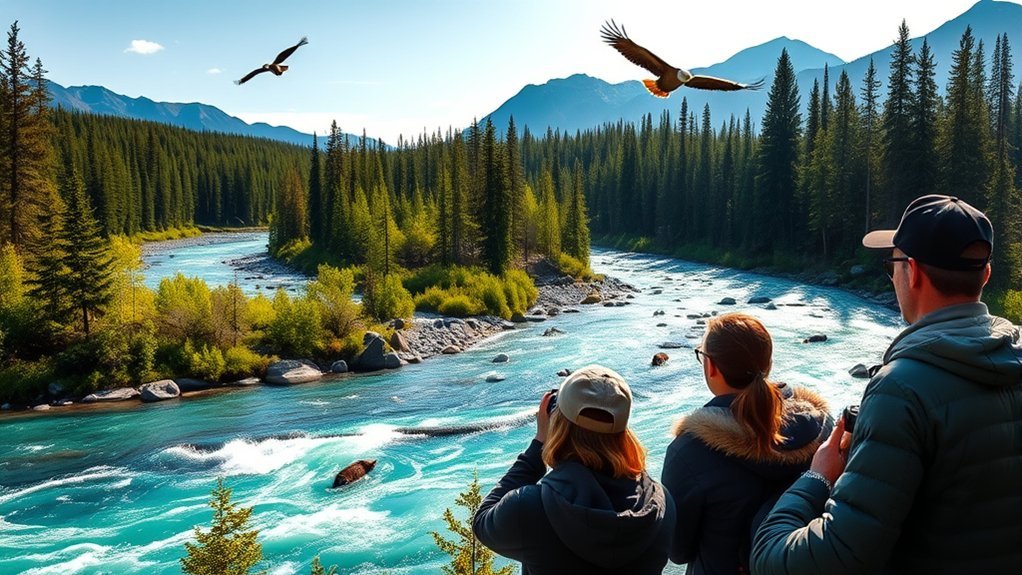
Kenai Fjords is home to bears, moose, marine mammals, and many other wild animals. Keep your distance and never approach or follow wildlife.
If your presence changes an animal’s behavior, you are too close. Give wildlife room to move away.
- Stay alert: Watch for wildlife and avoid surprising animals in dense vegetation or around food sources.
- Keep your distance: NPS recommends staying at least 300 yards from bears and at least 25 yards from other animals, dens, and nests. A general minimum of 100 yards applies to marine mammals.
- Keep camps clean: Cook and eat only where permitted and store food securely.
- Do not feed wildlife: Feeding animals or allowing them to obtain human food can create dangerous behavior.
- Give bears an escape route: Never crowd a bear or block its path.
- Carry bear spray: If you carry it, keep it immediately accessible and learn how to use it before you need it.
Warning: Never run from a bear. If a bear knows you are there, speak normally and move away slowly without turning your back. If a bear charges or makes contact, follow the National Park Service’s species- and situation-specific bear-safety guidance rather than relying on a single generic response.
What to Do if You Encounter a Bear
If a bear has not noticed you, leave it undisturbed. If it has noticed you, talk to it in a normal voice and slowly move away. Do not run and do not turn your back.
If a bear follows you, stop and hold your ground. If it gets closer, become more assertive and make noise. If it charges, stand your ground; many charges do not result in contact.
Bear spray can be an effective non-lethal deterrent when used correctly. Keep it readily accessible rather than buried inside a backpack, and know how to use it before entering bear country.
If a bear makes contact, the appropriate response depends on the circumstances and species. NPS guidance advises fighting back during a predatory black-bear attack, while a defensive brown-bear attack generally calls for playing dead. If an attack continues, fight back aggressively.
Best Hiking Trails in the Park
Kenai Fjords has a relatively small maintained trail network compared with its enormous backcountry. The NPS identifies the connected Exit Glacier trails and the Harding Icefield Trail as the park’s maintained trails.
Exit Glacier Trails
The Exit Glacier area has several shorter trails starting near the Nature Center and parking area. The Glacier View Loop Trail provides an accessible one-mile loop with views toward Exit Glacier. The Glacier Overlook Trail is more strenuous and provides another viewpoint of the glacier.
These trails are useful for campers who want to see Exit Glacier without committing to a full-day mountain hike.
Harding Icefield Trail
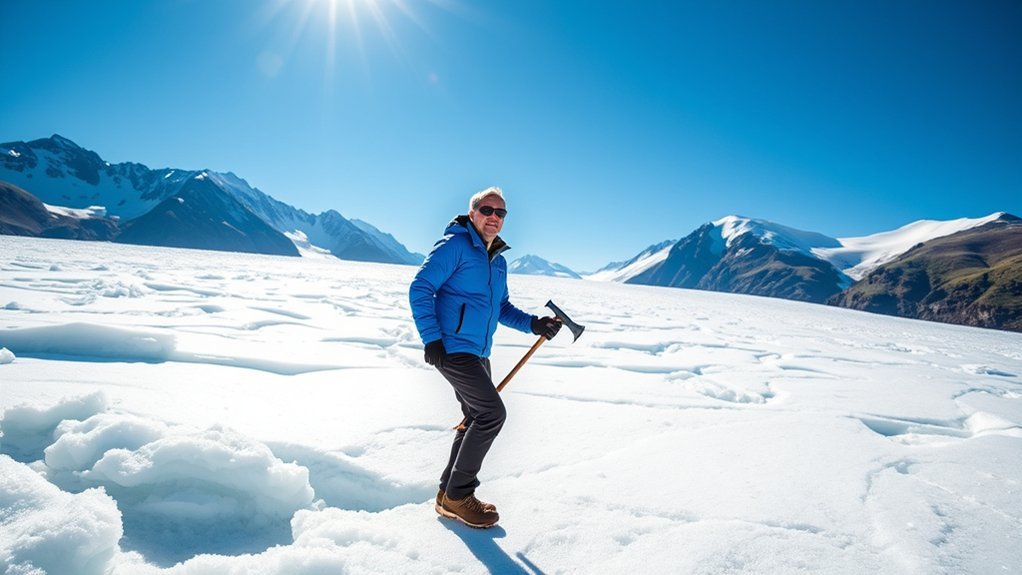
The Harding Icefield Trail is a strenuous hike of about 7.8 miles round trip. NPS recommends allowing at least 6–8 hours for the hike. The route climbs steeply from the Exit Glacier valley toward views of the Harding Icefield.
Snow can remain on upper sections into early summer, and avalanche hazards can occur. Storms, high winds, strong sunlight, and sudden temperature changes are also possible.
Bring warm clothing, rain gear, sturdy footwear, sunglasses, sunscreen, and plenty of water. NPS recommends at least two liters of water per person or a suitable filter.
Navigation and Map Resources
Reliable navigation is essential once you leave the developed Exit Glacier area. Do not assume your phone will provide a connection or live map data.
- Topographic maps: Use them to understand elevation, terrain, and route options.
- Compass: Carry a physical compass and know how to use it.
- GPS: A handheld GPS can provide useful position information, but it should not be your only navigation method.
- Offline maps: Download maps before entering areas without service.
- Trip plan: Leave your route and expected return time with a responsible person.
Check the National Park Service’s current conditions and alerts before leaving. Road access, trail conditions, weather, and facility status can change.
Leave No Trace Principles in the Wilderness
Responsible camping is especially important in Kenai Fjords because the park contains fragile coastal and alpine environments. Use established sites where available and avoid damaging vegetation.
| Principle | Action | Impact |
|---|---|---|
| Plan Ahead | Research weather, tides, routes, access, and current rules | Reduces avoidable risks and environmental damage |
| Use Durable Surfaces | Camp on suitable rock, snow, beaches, or established sites | Protects fragile vegetation |
| Pack It In, Pack It Out | Remove all trash, food waste, and packaging | Protects wildlife and water |
| Respect Wildlife | Observe from a safe distance and secure food | Reduces stress and dangerous wildlife encounters |
| Minimize Fire Impacts | Use designated fire rings or a fire pan where appropriate | Reduces scars and fire-related damage |
When to Visit Kenai Fjords for Camping
The main camping and hiking season is generally centered on the warmer months, but conditions vary significantly by location and elevation. Summer provides the easiest access to the Exit Glacier area and better opportunities for hiking and coastal trips, while snow and winter conditions can affect roads and trails outside the main season.
Do not choose dates based only on average weather. Check the park’s current road, trail, campground, and weather information immediately before your trip.
The Harding Icefield Trail can retain snow into early summer, and avalanche hazards may remain. Coastal trips also depend heavily on marine weather and sea conditions.
How to Plan a Camping Trip in Kenai Fjords
- Choose your camping style: Decide between the developed Exit Glacier Campground and a remote backcountry trip.
- Check current conditions: Review park alerts, road access, campground information, and trail conditions.
- Plan transportation: For Exit Glacier, use the road access. For coastal backcountry trips, arrange appropriate boat, kayak, water-taxi, or air-taxi transportation.
- Prepare food storage: Follow the park’s bear-resistant food-storage rules and never store food at individual Exit Glacier campsites.
- Pack for changing weather: Bring rain gear, warm layers, sturdy footwear, navigation tools, first aid, water, and backup communication.
- Prepare for limited communications: Download maps and tell someone your route and expected return time.
- Follow Leave No Trace practices: Protect vegetation, pack out trash, manage human waste correctly, and give wildlife plenty of space.
Frequently Asked Questions
What are the best times of year to visit Kenai Fjords?
The main hiking and camping season is during the warmer months, but conditions vary. Summer generally provides the easiest access to Exit Glacier and the best opportunity for many hiking and coastal activities. Always check current conditions before traveling because snow, weather, road access, and trail conditions can change.
Are campfires allowed in Kenai Fjords National Park?
Yes, but restrictions apply. In the Exit Glacier area, campfires are limited to designated steel fire rings at the campground cooking shelter and picnic area. Backcountry fires must follow park rules, and using a stove is encouraged to reduce impacts.
Can I bring my pet camping in Kenai Fjords?
Pets are allowed only in limited areas, including the road to Exit Glacier and the Exit Glacier Nature Center parking lot when properly restrained. Pets are not allowed on park trails, in the park campground, public-use cabins, or coastal backcountry. Service animals have separate access rules.
What should I do if I encounter a bear?
Do not run. If the bear has not noticed you, avoid disturbing it. If it knows you are present, speak normally and move away slowly without turning your back. Give it plenty of space. If a bear charges or makes contact, follow the National Park Service’s detailed bear-safety guidance for the situation and species.
Are there fees or reservations for backcountry camping?
The NPS states that no permits or reservations are required to access the park, camp in campgrounds, or stay in the backcountry. Public-use cabins are different and require reservations. Transportation, equipment, food, and commercial services can still involve separate costs.
Can I camp in an RV at Kenai Fjords National Park?
No. Kenai Fjords National Park does not have RV campsites, and overnight stays are not permitted in the Exit Glacier parking lot. Campers who need RV facilities should use suitable camping options outside the park.
Is drinking water available at Exit Glacier Campground?
The campground has a drinking-water pump, but the NPS currently reports that the pump is out of order. Bring your own water and check the current campground information before your trip for an updated status.
Conclusion
Camping in Kenai Fjords National Park can be simple at Exit Glacier or highly demanding in the remote backcountry. The most important step is matching your trip to the conditions and rules. Exit Glacier Campground offers 12 first-come, first-served tent sites, while backcountry camping requires much more preparation for weather, wildlife, navigation, transportation, and sanitation.
Bring enough water, secure your food, respect wildlife, follow fire restrictions, and check current park conditions before leaving. With realistic planning and the right equipment, you can enjoy the glaciers, forests, coastline, and hiking opportunities while protecting the wilderness around you.
Sources
- National Park Service — Camping — campground inventory, camping rules, fees, food storage, fires, RV restrictions, and backcountry camping.
- National Park Service — Campgrounds — current campground facilities, accessibility, first-come camping, and the 2026 water-pump status.
- National Park Service — Wildlife Safety — wildlife distances, food practices, and general wildlife safety.
- National Park Service — Bear Safety — bear encounters, bear spray, food precautions, and responses to charges or attacks.
- National Park Service — Backcountry — remote camping, coastal hazards, trip planning, weather, and transportation considerations.
- National Park Service — Harding Icefield Trail — trail distance, difficulty, timing, snow, avalanche hazards, and equipment recommendations.