Camping at Petrified Forest National Park takes more planning than a normal campground stay. The park has no developed campgrounds, so overnight stays inside the park mean backcountry camping in designated zones with a free permit. You’ll need your own water, a fuel stove, solid navigation, and a low-impact plan before you leave the visitor center.
Quick Answer
You can camp inside Petrified Forest National Park only in designated backcountry zones with a free permit. The park does not have developed campgrounds, so RVs, showers, and hookups sit outside the park, with Holbrook KOA as a nearby option. Plan to carry at least one gallon of water per person per day, use a fuel stove, and follow Leave No Trace rules.
Key Takeaways
- Petrified Forest National Park has no developed campgrounds inside the park.
- Backcountry camping requires a free permit from a visitor center before your trip begins.
- You must camp only in one of the park’s designated backcountry zones.
- You need to carry your own water because backcountry water sources are not reliable.
- Open fires are not allowed, so bring a fuel stove for cooking.
What to Know Before You Go

Before you go, plan for a self-sufficient backcountry trip. Petrified Forest National Park has no developed campgrounds inside the park, so you’ll need a free permit from the Painted Desert Visitor Center or Rainbow Forest Museum. You must camp only in one of five designated zones, and group size limits may apply.
You’ll also need to protect the land while you camp. Pack out trash, leave petrified wood and fossils where you find them, and keep your campsite low impact. Bury human waste properly, or follow any current park instructions given with your permit.
No open fires are allowed in the backcountry. Bring a reliable fuel stove, enough fuel, and at least one gallon of water per person per day. Desert weather can change fast, so pack sun protection, warm layers, and wind-ready shelter.
Warning: Do not rely on finding water in the backcountry, and do not start your trip without enough water for your group.
Where to Sleep: Nearby Campgrounds and RV Options

If you don’t plan to sleep in the park’s backcountry, choose a campground or RV park outside the park. Holbrook KOA sits near the town of Holbrook and works well as a simple base for day trips. You can find RV hookups, showers, and other basic services there.
Other nearby camping options may include sites in Apache-Sitgreaves National Forest or Canyon de Chelly National Monument. These areas can offer a different style of trip, but rules, permits, and road access can change by location. Check the managing agency before you drive out.
If you later choose backcountry camping inside Petrified Forest, get your permit before you enter the overnight area. Camping is allowed only in designated zones, such as the Black Forest area in Zone 2. Bring at least one gallon of water per person per day because the backcountry has no dependable potable water.
Backcountry Camping Zones and Permit Process
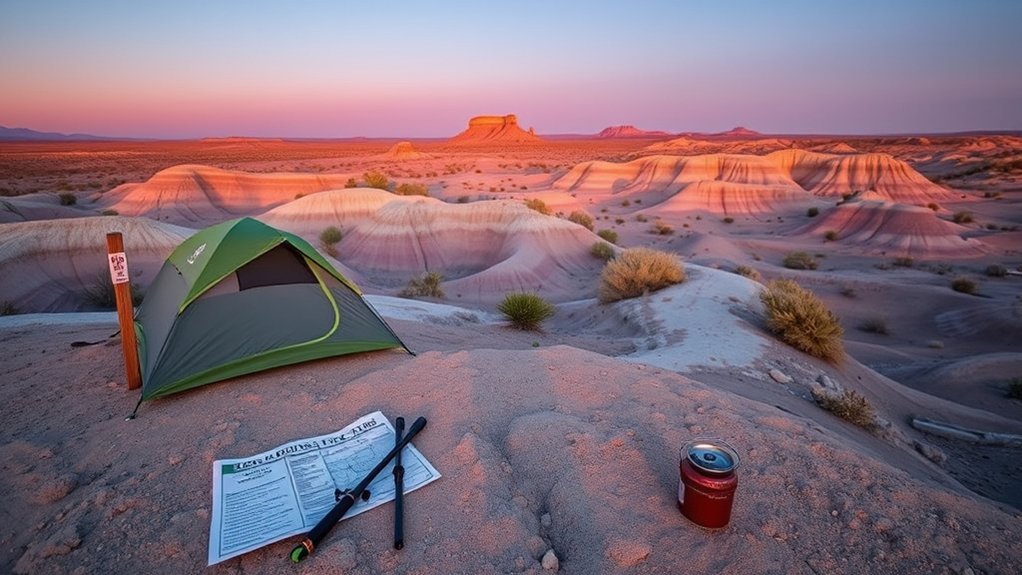
To camp in the park’s wilderness areas, pick up a free permit at the Painted Desert Visitor Center or Rainbow Forest Museum. Get it at least one hour before the visitor center closes. This gives staff enough time to explain the rules, routes, and zone limits.
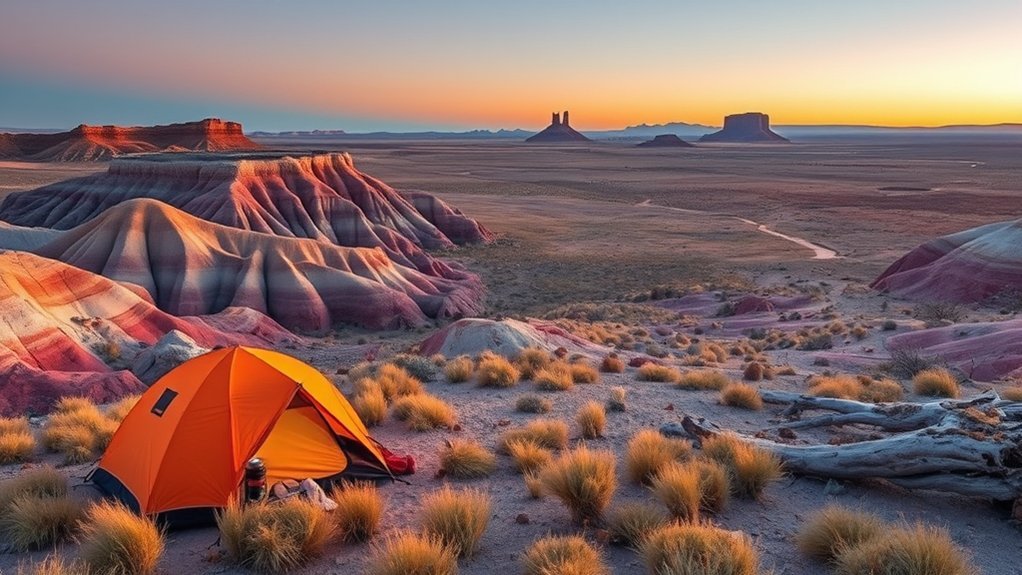
The wilderness area covers more than 50,000 acres and includes five camping zones. Zone 2 near the Black Forest is a popular choice because it offers broad views and a wilder feel. Your permit will ask for your intended zone, group details, and trip plan.
Follow the park’s zone rules closely. In the northern section, you may need to remain north of Lithodendron Wash, depending on your route and permit guidance. Carry a map, confirm your zone boundaries, and ask staff about any closures or alerts before you leave.
Note: Permit rules can change, so confirm zone access and closing times at the visitor center before your trip.
Essential Gear and Safety Tips for Desert Camping
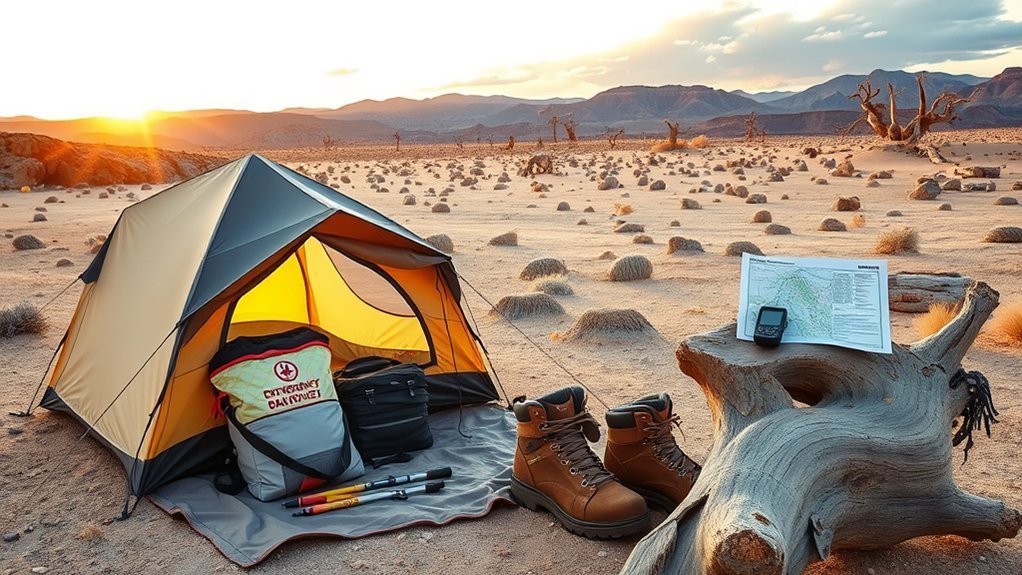
Water, cell service, and shade can be limited in Petrified Forest’s backcountry. Pack your gear around those limits, not around comfort. A short checklist helps you avoid the most common mistakes.
- Carry at least one gallon of water per person per day.
- Bring a fuel stove, windscreen, and enough fuel for every meal.
- Pack layered clothing for hot days, cold nights, and strong wind.
- Use a detailed map, compass, and GPS for route finding.
- Bring sun protection, a headlamp, and a basic first-aid kit.
- Secure your shelter and loose gear before wind picks up.
Don’t depend on your phone as your only navigation tool. Cell service can drop in open desert areas, and batteries drain faster in heat or cold. Carry backup power and know how to read your map before you start walking.
Best Times, Trails, and Scenic Campsite Picks
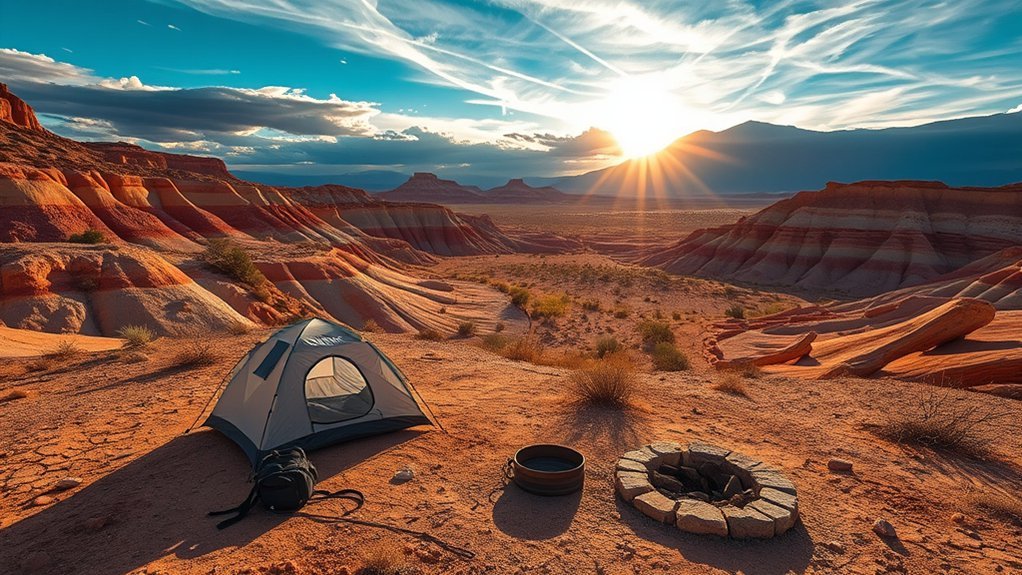
Spring and fall usually offer the most comfortable weather for camping near Petrified Forest National Park. These seasons can bring milder days and cooler nights, which makes hiking and sleeping easier. Summer heat and winter cold can make backcountry trips harder.
For day hikes before or after your overnight trip, consider Blue Mesa and Crystal Forest. These trails show the park’s colorful badlands, petrified wood, and open desert views. They also work well for beginners and families who want shorter routes.
For a scenic backcountry night, Zone 2 near the Black Forest remains a strong choice for many campers. Pick a safe site that protects fragile ground, avoids washes, and gives your group enough space. Balance solitude with safety, especially if this is your first desert overnight trip.
Pro tip: Start early, finish route finding before dark, and save sunset for camp instead of navigation.
Leave No Trace Rules for Petrified Forest Camping
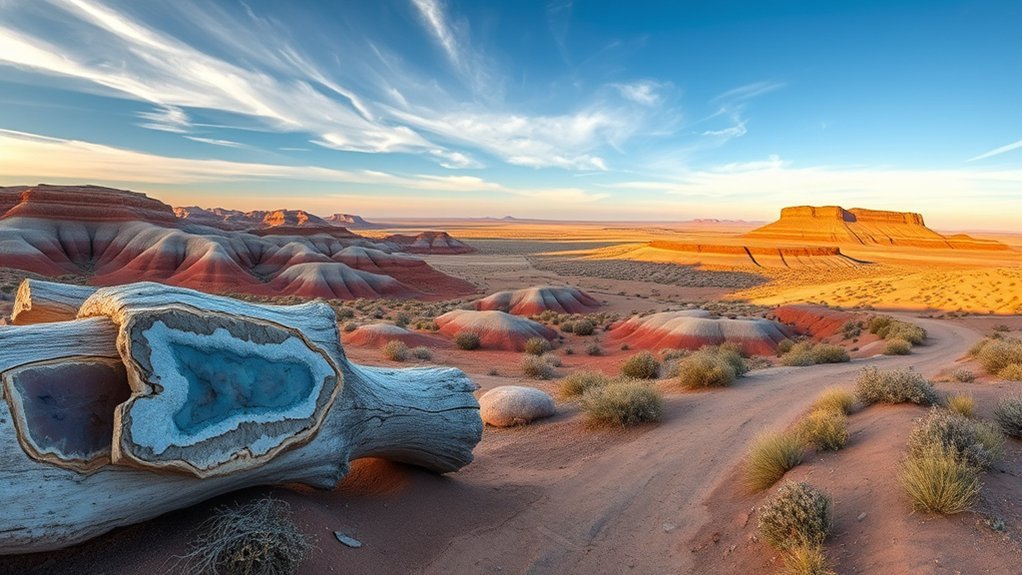
Petrified Forest protects fossils, petrified wood, desert soil, and cultural resources. Your choices matter because the landscape can take a long time to recover from damage. Keep your camp small, avoid fragile surfaces, and leave natural objects untouched.
Pack out all trash, food scraps, and hygiene waste when required. Do not carve rocks, move petrified wood, or collect artifacts. If you find something interesting, take a photo and leave it in place for the next visitor.
Frequently Asked Questions
Where can you camp when visiting Petrified Forest National Park?
You can camp outside the park at nearby private campgrounds, RV parks, or public lands that allow camping. Inside the park, you can only camp in designated backcountry zones with a free permit. The park does not offer developed campgrounds with hookups, showers, or tent pads.
What is the difference between camping and backcountry camping?
Regular camping often means you stay near your vehicle, toilets, water, and marked campsites. Backcountry camping means you hike away from developed services and carry what you need. At Petrified Forest, that includes water, shelter, food, navigation, and a fuel stove.
Can you backcountry camp in national forests?
Yes, many national forests allow backcountry or dispersed camping, but each forest sets its own rules. You may need to follow limits on fires, group size, road access, and stay length. Check the local forest office before you camp.
How much time do you need at Petrified Forest National Park?
Plan at least one full day if you want to drive the park road, stop at viewpoints, and hike short trails. Add a second day if you want to backcountry camp without rushing. More time also helps if weather, heat, or wind slows your plan.
Do you need a permit to camp in Petrified Forest?
Yes, you need a free permit for overnight backcountry camping inside Petrified Forest National Park. Pick it up at the Painted Desert Visitor Center or Rainbow Forest Museum before your trip. Get it early enough to review current rules with park staff.
Conclusion
Petrified Forest camping rewards careful planning more than last-minute packing. Choose a nearby developed campground if you want comfort, or get a free permit if you want a quiet backcountry night. Carry enough water, use a fuel stove, respect zone rules, and leave every fossil where it belongs.
Your next step is simple: decide whether you want services or solitude before you build the rest of your plan. With the right gear and a low-impact mindset, you can enjoy the desert safely and help protect it for future visitors.