Chillon Castle Viewpoint Photography Tips
Last updated: May 23, 2026
Chillon Castle is one of the most photogenic historic sites on Lake Geneva, but a strong photo needs more than pointing your camera at the castle. You need the right viewpoint, soft light, steady framing, and respect for the site rules.
This guide shows you how to photograph Chillon Castle viewpoint with better gear choices, stronger compositions, natural editing, and responsible visitor behavior. Use it before you visit, while you scout the lakeside paths, and when you edit your final images.
Quick Answer
For the best Chillon Castle viewpoint photos, visit early morning or late afternoon, scout several lakeside angles, use a wide-angle lens for the castle and lake, and switch to a telephoto or macro-style shot for architectural details. Keep edits natural, avoid blocking other visitors, and check official site rules before any professional, drone, or commercial shoot.
Key Takeaways
- Choose gear based on your shooting style, not only image quality. A smartphone works for casual travel photos, while a mirrorless or DSLR camera gives you more lens control.
- Use a wide-angle lens for full castle and lake views, a standard zoom for flexible travel framing, and a telephoto lens for towers, windows, stonework, and distant mountain layers.
- Scout more than one Chillon Castle viewpoint before you start shooting. The castle looks different from the lakefront, side paths, nearby elevated spots, and across the water.
- Plan your main outdoor shots around early morning or late afternoon light. These times usually give softer shadows, warmer tones, and better texture on the castle walls.
- Use composition tools like leading lines, foreground layers, symmetry, and frame-within-a-frame techniques to create photos that feel planned instead of random.
- Capture both wide scenes and small details. Doors, carvings, stone textures, windows, and reflections help tell the visual story of the site.
- Edit with restraint. Improve exposure, contrast, white balance, and sharpness, but keep the castle, lake, and sky looking believable.
- Respect all posted rules. Chillon Castle requires advance authorization for professional photography, filming, drone footage, and commercial use, so check the official rules before planning those shoots.
Before You Shoot: Know the Chillon Castle Viewpoint
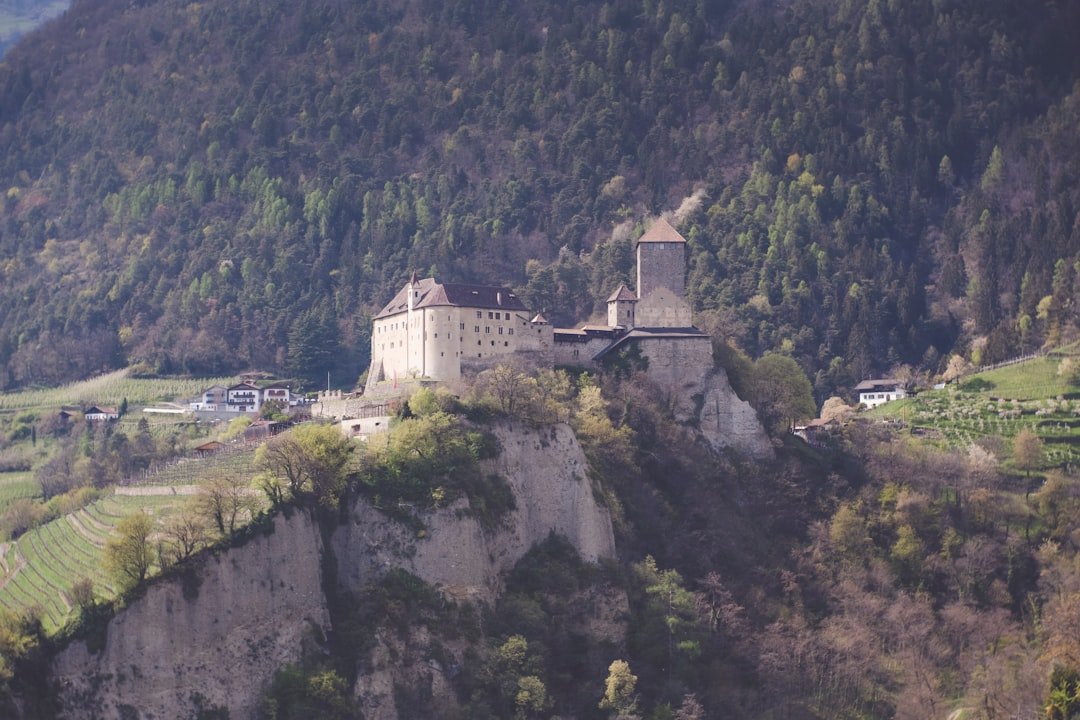
The phrase “Chillon Castle viewpoint” usually refers to the best viewing areas around Chillon Castle, not one single platform. The castle sits by Lake Geneva in Veytaux, near Montreux, so your strongest photos may come from the lakeside path, a side angle, a lower shoreline position, or a wider view that includes the water and mountains.
Before you set up your first shot, walk around the area and study how the castle relates to the lake, sky, mountain backdrop, paths, boats, and visitor movement. This short scouting step helps you avoid the same flat tourist photo that many people take from the first open space they see.
Check the official Chillon Castle visit page before you go because opening times, ticket details, and access notes can change. For site rules, review the official Chillon Castle rules page, especially if you plan professional photography, filming, drone footage, or commercial image use.
Choosing the Right Camera Gear for Chillon Castle
Selecting the right equipment is a basic step in historic site photography. Your camera choice affects sharpness, low-light performance, lens options, and how quickly you can react when the light changes.
A modern smartphone can work well for casual Chillon Castle viewpoint photos, especially if it has optical zoom, good image stabilization, and a high-resolution main camera. It also keeps your setup light, which helps when you walk around the lakefront or shoot during a short visit.
If you want more creative control, use a DSLR or mirrorless camera with interchangeable lenses. This setup lets you move from wide architecture shots to tight stone details without relying only on digital zoom.
| Gear | Best Use at Chillon Castle | Practical Tip |
|---|---|---|
| Smartphone | Fast travel photos, social media shots, and simple lakefront views | Use optical zoom when available and tap to expose for the castle walls |
| Wide-angle lens | Full castle, Lake Geneva, sky, and mountain background | Keep the camera level to avoid leaning walls |
| Standard zoom lens | Flexible framing while walking around the site | Start wide, then zoom in to remove distractions |
| Telephoto lens | Towers, windows, stone details, and compressed mountain layers | Use a faster shutter speed to avoid motion blur |
| Tripod | Low-light shots, long exposures, and carefully framed compositions | Check site rules before using it in restricted or crowded areas |
A sturdy tripod can improve sharpness in low light and can support long-exposure photography around water or moving clouds. Use it carefully, avoid blocking paths, and confirm that tripods are allowed where you plan to shoot.
Finding the Best Vantage Points
Identifying the right vantage point is essential for strong Chillon Castle photography. The position you choose changes the story in your image. A front-facing photo may show the castle clearly, while a side view can show how it sits beside the lake and mountains.
Do not stop at the first obvious viewing area. Walk the nearby lakefront, look for lower angles near the water, and check whether trees, paths, railings, boats, or arches can help frame the castle. Even a small shift left or right can remove clutter and make the photo feel cleaner.
A historic castle may look more dramatic from across a body of water because the lake gives the building scale and breathing room. A nearby elevated angle can also help if you want to show the layout of the castle and its relationship with the surrounding landscape.
Simple Scouting Checklist
- Take one wide test shot from the first open viewpoint.
- Walk along the lakefront and look for cleaner side angles.
- Check the background for poles, signs, people, and harsh reflections.
- Look for foreground elements, such as stones, grass, flowers, railings, or water edges.
- Return to the strongest angle when the light improves.
Timing also affects your viewpoint choice. Early morning and late afternoon light can create longer shadows, warmer tones, and stronger texture on the walls. In autumn, foliage may add color. In winter, clouds and snow can give the scene a quieter, more dramatic mood.
Understanding Lighting Conditions
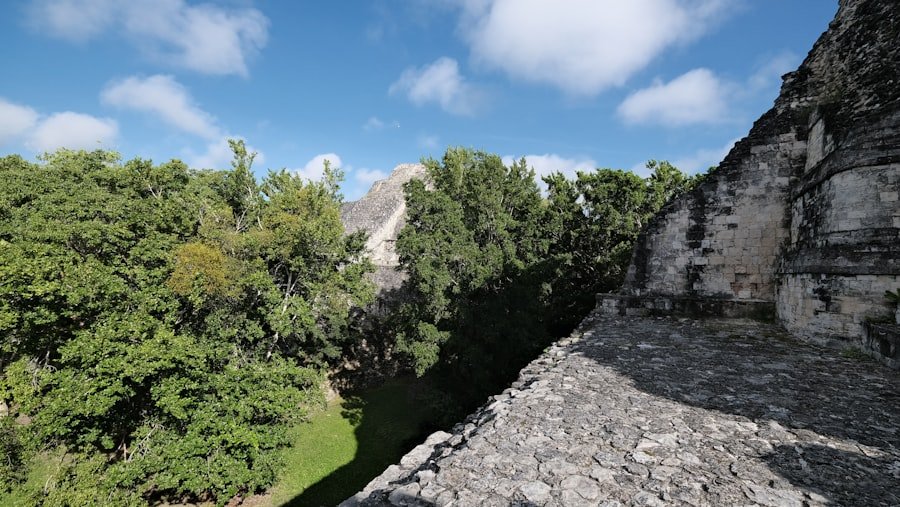
Light shapes the mood, color, texture, and depth of your Chillon Castle photos. Natural light changes throughout the day, so you need to decide whether you want a soft, calm image or a stronger, high-contrast travel photo.
The golden hour, shortly after sunrise and before sunset, usually gives soft light that works well for outdoor castle photography. This light can bring out wall texture, soften shadows, and make the lake and sky feel more balanced.
Midday sun can create bright highlights and deep shadows that hide stone detail. When you shoot at midday, expose for the castle walls, use shade where possible, and take a few different exposures if your camera allows it.
Bracketing can help when the bright sky and darker castle walls compete in the same frame. Take one normal exposure, one darker exposure for the sky, and one brighter exposure for the shadows. Later, choose the best single image or blend carefully if that matches your editing style.
Key Takeaway
Soft side light usually works better than harsh overhead light for Chillon Castle. If you can only visit at midday, focus on tighter details, shaded compositions, and clean framing instead of forcing a dramatic wide landscape shot.
Composing Your Shots
| Technique | Definition | Chillon Castle Example |
|---|---|---|
| Rule of Thirds | Place the main subject along a third line or intersection instead of the center | Place the castle on the left third and leave lake or mountain space on the right |
| Leading Lines | Use lines that guide the viewer’s eye toward the subject | Use a path, railing, shoreline, or bridge line to lead toward the castle |
| Frame within a Frame | Use an object in the scene to frame the main subject | Shoot through an arch, window shape, tree gap, or railing opening |
| Foreground Layering | Add a front element to create depth | Include flowers, grass, rocks, or lake ripples in the front of the frame |
Composition guides the viewer’s eye through the photo. When you photograph Chillon Castle, use composition to show what matters first: the castle shape, the lake setting, the mountain background, or a small architectural detail.
The rule of thirds helps you avoid a stiff centered frame. Place a tower, doorway, or main wall along one of the third lines, then use the open space around it to show the lake or sky.
Leading lines also work well around historic sites. Pathways, railings, shorelines, bridge lines, and wall edges can guide the viewer toward the castle.
After you frame the scene, check the edges of the image. Remove distracting signs, bright objects, and cut-off people where possible. A clean edge often makes the whole photo look more professional.
Capturing the Details
Wide shots show the scale of Chillon Castle, but detail shots show its character. Close photos of stone textures, doorways, windows, carvings, arches, stairs, and shadows can make your gallery feel more complete.
These details help viewers understand that the site is not only a scenic landmark. It is a historic structure with materials, craft, age, and atmosphere. A single stone wall, worn step, or window shape can tell a quieter story than a wide postcard-style image.
You do not always need a dedicated macro lens. A standard zoom or smartphone close-up mode can work if you keep the camera steady, tap to focus, and avoid getting so close that the image loses sharpness.
Use shallow depth of field when the background distracts from your subject. Focus on the carved detail, handle, texture, or window edge, then let the background fall slightly out of focus. This keeps attention on the detail while still showing the historic setting.
Detail Shots to Add to Your Photo Set
- Stone wall textures and weathered surfaces
- Arches, windows, doorways, and handles
- Shadows falling across walls or stairs
- Reflections in Lake Geneva near the castle
- Small human-scale details that show size and age
Utilizing Different Angles
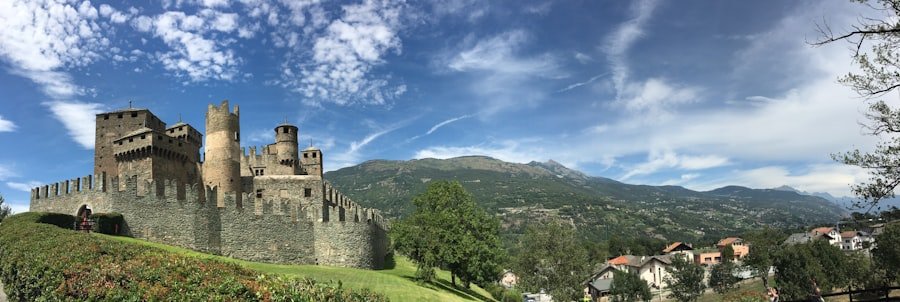
Different angles can turn a simple castle photo into a stronger travel image. Instead of shooting everything from eye level, crouch lower, step to the side, or look for a higher position where you can show the castle layout.
Low-angle shots can make towers and walls feel taller and more dramatic. Keep the camera level when you want straight architecture, or tilt carefully when you want a more energetic frame.
High-angle shots can show how the castle sits beside the lake and paths. This angle works especially well when you want context rather than only the building itself.
Unusual angles can also help your photo stand apart from standard tourist shots. Shoot through an archway, include a railing as a leading line, or place the lake in the foreground to create depth.
Practical Example
Start with a wide lakefront photo, then take three variations from the same area: one low angle with the castle above the horizon, one side angle with the shoreline leading into the frame, and one tighter telephoto shot of a tower or window. This gives you variety without needing a long walk.
A Simple Chillon Castle Photo Plan for Beginners
If you feel unsure where to start, follow a short shot plan instead of taking random photos. This approach helps you leave with a balanced set of images.
- Start with the establishing shot. Capture the castle, lake, and surrounding landscape in one wide frame.
- Move to a side viewpoint. Look for a cleaner angle with fewer visitors and more depth.
- Add a vertical composition. Use the height of the towers, walls, or sky to create a strong phone-friendly image.
- Capture three details. Choose one texture, one window or arch, and one shadow or reflection.
- Finish with a mood shot. Use soft light, water, clouds, or silhouettes to create a final image with atmosphere.
Tips for Editing Your Photos
Post-processing helps you refine your Chillon Castle photos after the shoot. Tools like Adobe Lightroom, Photoshop, Capture One, Snapseed, and mobile editing apps can improve exposure, contrast, white balance, saturation, and sharpness.
Start with exposure and white balance. If the stone walls look too dark, raise shadows slightly. If the sky looks too bright, reduce highlights. Keep the lake and castle colors natural so the image still feels faithful to the place.
Cropping can strengthen composition. Remove distractions from the edges, straighten the horizon, and give the castle enough space to breathe. Avoid cropping so tightly that the image loses its Lake Geneva context.
Keep saturation under control. A small boost can help dull colors, but heavy saturation can make the lake, sky, and stonework look fake. Historic site photos usually feel stronger when the edit looks clean, natural, and believable.
Basic Editing Order
- Straighten the horizon and correct obvious tilt.
- Adjust exposure, highlights, and shadows.
- Set a natural white balance.
- Add modest contrast and clarity if the image looks flat.
- Crop distractions from the edges.
- Sharpen lightly for web or social media export.
Respecting the Historic Site
When you photograph Chillon Castle, treat the site as a cultural landmark first and a photo location second. Your photos should not disturb the building, staff, exhibits, other visitors, or protected areas.
Follow posted signs, stay out of restricted areas, and avoid touching fragile surfaces. Some historic sites limit tripods, flash, drones, or commercial shoots to protect visitors, artifacts, and the site itself.
Chillon Castle states that professional photography, filming, drone footage, and recordings for radio or television broadcasts need advance authorization from management. The official rules also say requests must be sent in writing at least two months in advance.
Commercial use of Chillon Castle’s name and certain viewpoint images may also involve trademark rules. Check the official rules and photography information before planning any paid, branded, promotional, or drone-based shoot.
Respect other visitors as you work. Keep pathways clear, avoid blocking popular viewpoints for long periods, and wait patiently for clean frames instead of pushing into someone else’s space.
FAQs
What is the Chillon Castle viewpoint?
The Chillon Castle viewpoint refers to the best viewing areas around Chillon Castle in Switzerland where you can photograph the castle, Lake Geneva, and the nearby mountain scenery. It is better to treat it as a set of possible angles rather than one fixed photo spot.
What are some photography tips for capturing the Chillon Castle viewpoint?
Visit during soft light, scout several lakeside angles, and use a wide-angle lens for the full castle and lake view. Add variety with detail shots, vertical frames, reflections, leading lines, and side angles that reduce crowds and distractions.
Are there any specific photography restrictions at the Chillon Castle viewpoint?
Casual visitor photos are usually possible in many areas, but always follow posted signs and staff instructions. Chillon Castle requires advance authorization for professional photography, filming, drone footage, broadcast recording, and commercial use, so check the official rules before planning those shoots.
What are the best times of day to visit the Chillon Castle viewpoint for photography?
Early morning and late afternoon usually offer the best photography light. These times give softer shadows, warmer tones, and better wall texture than harsh midday sun. They may also help you avoid some crowding, depending on season and visitor volume.
What lens is best for Chillon Castle photos?
A wide-angle lens works best for the full castle, Lake Geneva, and mountain background. A standard zoom gives you flexibility while walking. A telephoto lens helps you isolate towers, windows, wall textures, and distant mountain layers behind the castle.
Can beginners take good Chillon Castle photos with a phone?
Yes. A modern smartphone can take strong Chillon Castle photos if you use good light, clean framing, and steady hands. Tap to focus on the castle, avoid digital zoom when possible, and use the phone’s optical zoom or main lens for better image quality.
How do you avoid crowds in Chillon Castle viewpoint photos?
Arrive early, choose side angles, and wait for short gaps between visitor groups. You can also use tighter framing, foreground elements, or lakefront viewpoints to keep attention on the castle instead of the crowd.
Should you use HDR or bracketing for Chillon Castle photography?
HDR or exposure bracketing can help when the sky looks very bright and the castle walls look dark. Use it lightly. The goal is to recover detail in highlights and shadows without creating an unnatural, over-processed image.
How should you edit Chillon Castle photos?
Edit with restraint. Straighten the horizon, balance exposure, reduce harsh highlights, lift dark shadows slightly, and keep colors natural. Avoid heavy saturation or extreme contrast because historic site photos usually look better when they feel accurate and believable.
Can you use Chillon Castle photos commercially?
Do not assume commercial use is allowed without permission. Chillon Castle notes that professional photography, filming, drone footage, and commercial use may require advance authorization. Check the official rules and contact the castle before using images in paid or branded projects.