Pet-friendly travel in Switzerland can be surprisingly straightforward, especially if you are travelling with a dog. Public transport accepts dogs widely, many hotels welcome pets, and mountain regions offer excellent walking routes. However, entry rules, fares, leash requirements, protected areas, and individual business policies can vary, so good planning matters.
Quick Answer
Switzerland is generally practical for travelling with pets, particularly dogs. Small dogs can travel free on much of the public transport network when carried correctly, larger dogs normally need a ticket, and many walking areas allow dogs. However, some protected areas, including Swiss National Park, prohibit dogs completely.
Last checked: October 1, 2026. Dates and figures were verified against official sources.
Key Takeaways
- Dogs, cats, and ferrets generally need identification, a valid rabies vaccination, and the correct travel documents to enter Switzerland.
- On Swiss public transport, dogs up to 30 cm at the shoulder can usually travel free when kept in a suitable carrier under the seat.
- Larger dogs generally need a second-class half-fare ticket or an appropriate Dog Pass.
- Dog rules vary by canton, municipality, hotel, restaurant, trail, and protected area.
- Swiss National Park is an important exception: dogs are not permitted there, even on a leash.
Pet Entry Requirements for Switzerland
Before planning hotels and hikes, make sure your pet can legally enter Switzerland. Requirements depend on the animal, where you are travelling from, rabies risk, and whether the journey qualifies as a private non-commercial movement.
According to the Federal Food Safety and Veterinary Office rules for travelling with dogs, cats, and ferrets, animals arriving from the EU generally need three things: a microchip, a valid rabies vaccination, and a recognized pet passport.
A first rabies vaccination normally becomes valid 21 days after vaccination and must be given after the animal is microchipped. Special rules apply to very young animals and animals that cannot be vaccinated for medical reasons.
Travelling From a Non-EU Country
Requirements are more detailed when you arrive from a third country. Switzerland classifies countries according to rabies risk, and the required documents depend on that classification.
Animals arriving from third countries must be microchipped before the rabies vaccination and have valid supporting documents. If the country is considered a higher rabies risk, an approved rabies antibody blood test and waiting period may also be required.
Travellers entering from a third country must undergo the required entry control and may need to present the animal at the red customs exit. Direct air travel from a rabies-risk country can involve additional authorization.
Warning: Do not rely only on airline rules. A pet can meet an airline’s requirements and still fail Swiss border requirements if its microchip, rabies vaccination, blood test, certificate, or timing is incorrect.
Dog Registration and Local Rules
Switzerland also regulates dog ownership and animal welfare. Federal guidance says dogs must receive sufficient human contact and daily outdoor exercise appropriate to their needs.
The Swiss federal guidance on animals also explains that cantons may have their own dog legislation, including rules affecting particular breeds. This is why a rule that applies in one city or canton should not automatically be assumed to apply everywhere else.
Pet-Friendly Accommodations in Switzerland
Pet-friendly accommodation is available across Switzerland, from city hotels to mountain lodges and vacation rentals. The important detail is that “pets allowed” does not always mean the same thing: fees, size limits, room restrictions, and access to restaurants or common areas may differ.
Before booking, confirm whether the property accepts your type and number of pets, the nightly fee, and whether pets may be left alone in the room. Also ask whether food bowls, bedding, cleaning services, dog walking, or pet-sitting are actually included rather than assuming they are.
Badrutt’s Palace Hotel in St. Moritz is one verified example. Its current pet policy states that pets are welcome in guest rooms, Le Grand Hall, and Chesa Veglia. The listed supplement is CHF 55 per pet per day, excluding food.
Hotel des Balances is another accommodation mentioned in the original guide. One important correction is its location: Hotel des Balances is in Lucerne, not Geneva. Its position in Lucerne’s Old Town also puts guests close to riverside walking routes.
Pro Tip: When comparing pet-friendly hotels, check the pet fee and access rules before comparing room prices. A cheaper room can cost more overall if the property adds a large nightly pet charge.
Exploring Pet-Friendly Attractions in Switzerland
Switzerland offers lakeside promenades, mountain villages, walking trails, and outdoor viewpoints where travelling with a dog can work very well. The main limitation is that nature reserves and wildlife-sensitive zones may impose stricter rules than ordinary walking areas.

Lake Geneva
Lake Geneva is a useful destination for travellers with dogs because long sections of waterfront can be explored on foot, while scheduled boats connect communities around the lake. Individual parks, beaches, gardens, and swimming areas can still have their own dog restrictions.
Dogs can also travel on CGN boats. The official CGN passenger information says dogs are accepted on board. Dogs generally need a second-class half-fare ticket, while dogs no more than 30 cm at the shoulder travel free when carried in a suitable basket or transport bag.
Aletsch Region
The Aletsch area provides mountain walking with views toward the Great Aletsch Glacier. Dogs can use many routes, but leash and transport rules can apply.
For example, the official Aletsch Arena guidance states that dogs must remain on a leash on its winter walking routes. The region has 72 km of winter walking trails, giving dog owners several options without taking pets onto ski pistes.
Swiss National Park Is Not Dog-Friendly
Swiss National Park is a major exception to Switzerland’s generally accommodating reputation. Dogs are completely prohibited inside the park, even when kept on a leash.
The Swiss National Park protection regulations also require visitors to stay on marked paths and state that the park is closed in winter. If your itinerary includes the park, arrange a different activity for your dog rather than arriving at the entrance expecting leash access.
Pet-Friendly Transportation Options in Switzerland
Switzerland’s public transport system makes travelling with a dog relatively simple once you understand the fare rules. Trains, many buses and trams, boats, and PostBus services are covered by broadly consistent national ticket arrangements.
| Transportation Option | Pet Policy | Practical Detail |
|---|---|---|
| Swiss public transport | Dogs up to 30 cm at the shoulder travel free when kept in a suitable carrier under the seat. Other dogs generally need a second-class half-fare ticket or Dog Pass. | The dog should stay under the seat and must not block the aisle. |
| Dog Day Pass | CHF 25 through December 12, 2026; CHF 27 from December 13, 2026. | Valid on trains, boats, PostBus routes, and most urban public transport within the covered network. |
| Lake Geneva CGN boats | Dogs generally need a second-class half-fare ticket; dogs up to 30 cm in a suitable carrier travel free. | Dogs are accepted on CGN boats. |
| Taxis | Pet acceptance depends on the individual taxi operator. | Tell the operator you have a pet when arranging the ride. |
Travelling by Train, Tram, and Bus
The SBB rules for travelling with dogs state that dogs travelling outside a carrier generally pay the second-class half fare or the applicable minimum fare.
The important exception is a small dog with a shoulder height of up to 30 cm. If it remains in an animal-friendly transport box, basket, or similar container placed under the seat, it can travel as hand luggage without a separate ticket.
If you remove the dog from the carrier during the trip, the normal dog ticket requirement applies. These small-animal rules also cover cats, rabbits, birds, and similar tame animals of the permitted size when properly contained.
For frequent travel, SBB also offers monthly and yearly Dog Pass products. For occasional sightseeing, the Dog Day Pass is often easier because it covers a full day across much of the national public transport network.
Travelling by Car
Driving gives you more flexibility for rural accommodation and hiking areas, but the animal must not distract or endanger the driver. A secure carrier, appropriate restraint, or suitable vehicle barrier can help keep the animal and passengers safer.
Never leave a pet in a parked vehicle when temperatures could become dangerous. Even in mountain regions, a closed car can heat rapidly in sunshine.
Pet-Friendly Dining in Switzerland
Many Swiss cafés and restaurants accommodate dogs, especially where outdoor seating is available. However, pet access is a business decision in many situations, so one restaurant’s policy does not tell you what the restaurant next door allows.
In cities such as Zurich and Lucerne, you will often see dogs resting beside their owners at cafés. Outdoor terraces can be especially convenient because there is usually more room to keep a dog away from busy service areas.
Café Sprüngli in Zurich has long been cited as a dog-friendly option with a terrace where patrons can sit with their dogs. Policies can change, so this particular claim is one to reconfirm before making a special journey.
Mountain huts and alpine restaurants may also welcome dogs, making them useful rest stops during a long walk. Keep the dog close, prevent it from approaching other diners, and avoid allowing it onto chairs or benches unless the establishment explicitly permits that.
Pet-Friendly Outdoor Activities in Switzerland
Walking is the easiest outdoor activity to plan with a dog in Switzerland. The country has extensive mountain paths, forest walks, lakeside routes, and winter walking trails, but wildlife areas and livestock pastures require extra care.

Hiking With Your Dog
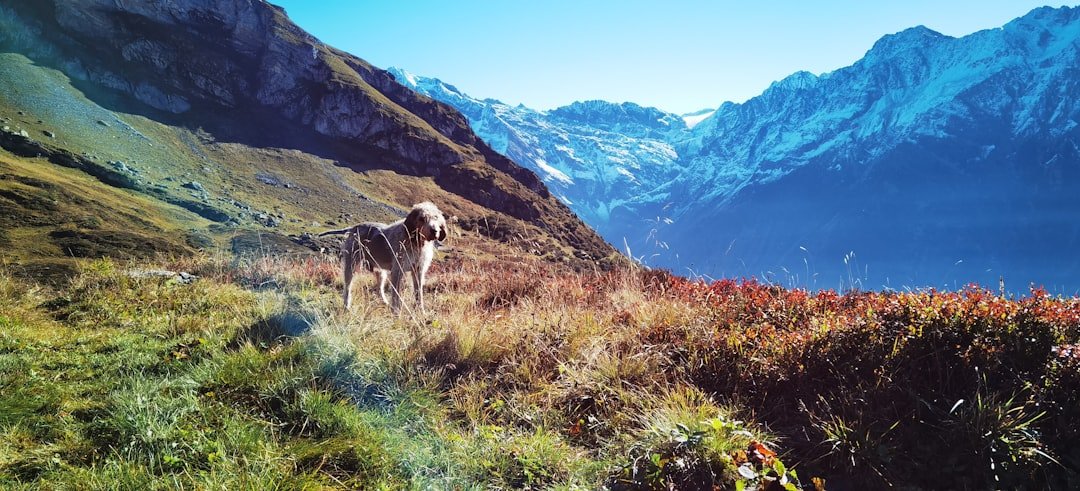
Many Swiss hiking routes can be enjoyed with dogs, but there is no single nationwide rule saying every trail is dog-friendly. Restrictions can come from protected-area rules, cantonal law, wildlife protection, livestock management, or local signage.
Carry water for your dog, use a leash whenever local rules or conditions require it, and give cattle and other livestock plenty of space. In mountain areas, a leash also helps prevent a dog from chasing wildlife or running onto exposed terrain.
Winter Fun With Your Pet
Winter hiking is generally a more practical dog activity than taking a pet onto ski slopes. Prepared snow-walking trails allow you to enjoy alpine scenery without mixing your dog with fast-moving skiers.
The Aletsch Arena winter-walking guidance lists 72 km of winter walking trails and requires dogs to remain on a leash. Dogs measuring 30 cm or more at the shoulder require a half-price ticket on the relevant cable cars, while smaller dogs in suitable carriers travel free.
Summer Water Activities
Lakes and rivers can offer welcome relief during warm weather, but dog access is not universal. Public swimming facilities, protected shores, wildlife zones, and individual municipalities may prohibit dogs even when the surrounding waterfront is open to them.
Where swimming is allowed, choose calm access points and avoid strong currents, boat traffic, fishing areas, and crowded beaches. Do not assume that a dog-friendly walking path automatically means the adjacent water is approved for dogs.
Pet-Friendly Etiquette and Local Rules
Responsible behaviour is especially important because dog rules can change from one municipality to another. Carry waste bags, remove waste immediately, keep your dog under reliable control, and follow every posted leash or exclusion sign.
Some towns require dogs to be leashed in central areas, parks, playground surroundings, stations, or public transport areas. Wildlife seasons can also bring temporary restrictions on certain trails or countryside areas.
Do not assume that every public park permits off-leash exercise. Look for local signs and designated exercise areas instead.
Note: Breed restrictions, leash rules, and other dog regulations can differ by canton. Travellers staying for an extended period should pay particular attention to the rules for the canton where they will be based.
Pet-Friendly Healthcare and Veterinary Services in Switzerland
Veterinary care is widely available in Swiss cities and towns, and larger population centres have clinics that provide emergency and specialist services. Carrying your pet’s medical information makes an unexpected visit much easier.
Keep a copy of the rabies certificate, microchip number, vaccination history, medications, allergies, and your regular veterinarian’s contact details. If your pet has a chronic condition, bring enough prescribed medication for the journey plus a reasonable contingency supply permitted by your veterinarian.
If an animal becomes seriously ill, has breathing difficulty, suffers a major injury, eats a suspected toxin, or shows signs of heat illness, seek veterinary help rather than waiting for the problem to resolve during the trip.
Pet-Friendly Shopping and Supplies in Switzerland
Basic pet supplies are easy to find in larger Swiss communities. Chains such as Fressnapf and Qualipet sell food, treats, leads, bowls, carriers, bedding, and other everyday products.
Bring enough of any prescription food or highly specialized diet to cover the journey. Changing food suddenly during a trip can upset some animals, particularly when travel itself is already stressful.
Local markets may also sell pet treats and accessories. Check ingredients carefully if your pet has allergies or dietary restrictions.
If you prepare food at home, remember that human recipes are not automatically nutritionally suitable for animals. The site’s existing delicious homemade cottage cheese recipe, for example, should be treated as a human-food recipe rather than veterinary feeding guidance.
Tips for Traveling With Pets in Switzerland
A smooth Swiss trip starts with documents and transport planning rather than packing toys at the last minute. Work through the legal requirements first, then accommodation, transport, and daily activities.
- Confirm the entry route. Work out whether you are arriving from the EU, a lower-risk third country, or a rabies-risk country.
- Check the microchip before travel. The identification details should match the animal’s paperwork.
- Verify rabies timing. A first rabies vaccination normally needs the required waiting period before travel.
- Carry original documents. Keep the pet passport, veterinary certificate, vaccination information, and any required laboratory documents accessible during the journey.
- Choose accommodation with a written pet policy. Check fees, room restrictions, and where the pet may go inside the property.
- Plan dog fares before boarding. Decide whether individual half-fare tickets or a Dog Day Pass makes more sense for your itinerary.
- Pack familiar items. A normal bed, blanket, toy, food, water bowl, leash, carrier, and waste bags can reduce stress.
- Save veterinary details. Keep your pet’s health information and medication instructions with you.
Pet-Friendly Events and Festivals in Switzerland
Switzerland has dog shows, training events, breed-club activities, and specialist pet fairs throughout the year. Unlike an ordinary street festival, these events may have specific vaccination, registration, entry, or dog-handling rules.
A current example is the International Dog Show at Palexpo in Geneva, scheduled for October 2–4, 2026. Palexpo says the event will bring together nearly 5,000 dogs representing about 180 breeds, with free admission for visitors.
If you plan to take your own dog to a pet event rather than simply attend as a visitor, read the event’s animal-entry conditions separately. Competition registration and ordinary visitor admission may follow different rules.
Frequently Asked Questions
Is Switzerland pet-friendly for tourists?
Yes, Switzerland can be very practical for tourists travelling with pets, especially dogs. Public transport accepts dogs widely, pet-friendly accommodation is common, and many outdoor areas can be explored with them. The main challenge is that local leash rules, protected areas, hotels, and restaurants can have different policies.
What documents does a dog need to enter Switzerland?
A dog generally needs approved identification, a valid rabies vaccination, and the travel document required for its country of origin. Dogs arriving from the EU normally use a recognized pet passport. Third-country requirements vary according to rabies risk and can include a veterinary certificate, antibody test, waiting period, or additional authorization.
Can dogs travel on Swiss trains?
Yes, dogs can travel on Swiss trains. Dogs up to 30 cm at the shoulder travel free when they remain in a suitable carrier under the seat. Dogs travelling outside a carrier generally require a second-class half-fare ticket or an applicable Dog Pass.
How much is the SBB Dog Day Pass?
The SBB Dog Day Pass costs CHF 25 through December 12, 2026. SBB states that the price will increase to CHF 27 from December 13, 2026. The pass covers a full day on participating trains, boats, PostBus routes, and most urban public transport services.
Are dogs allowed in Swiss National Park?
No, dogs are not allowed in Swiss National Park. The prohibition applies even when the dog is kept on a leash. Travellers with dogs should choose another walking area rather than planning to enter the park with their pet.
Can dogs ride on boats on Lake Geneva?
Yes, CGN accepts dogs on its Lake Geneva boats. Dogs generally need a second-class half-fare ticket, while dogs no more than 30 cm at the shoulder travel free when carried in a suitable basket or transport bag.
Sources
- Federal Food Safety and Veterinary Office: Swiss entry requirements for dogs, cats, and ferrets, including microchips, rabies vaccination, travel documents, and third-country rules.
- Swiss Federal Department of Foreign Affairs: animal welfare, dog registration, and cantonal dog-law guidance.
- Swiss Federal Railways: dog tickets, free carriage for small dogs, and public transport rules.
- Badrutt’s Palace Hotel: current pet access and accommodation supplement.
- CGN: dog fares and carriage rules on Lake Geneva boats.
- Swiss National Park: dog prohibition and park protection regulations.
- Aletsch Arena: winter walking distance, leash requirements, and dog cable-car fares.
- Palexpo: dates, scale, opening information, and admission for the 2026 International Dog Show.