

Jungfraujoch, often referred to as the “Top of Europe,” is a breathtaking mountain pass situated in the Bernese Alps of Switzerland. It lies at an elevation of 3,454 meters (11,332 feet) above sea level, making it one of the highest accessible points in Europe. The location is renowned for its stunning panoramic views, which include the majestic peaks of the Eiger, Mönch, and Jungfrau.
The area is not only a popular destination for tourists but also a significant site for scientific research, particularly in the fields of glaciology and meteorology. The Jungfraujoch railway station, which is the highest in Europe, serves as a gateway for visitors eager to explore this alpine wonderland. The unique geography of Jungfraujoch contributes to its allure.
Surrounded by towering mountains and expansive glaciers, the region is characterized by its dramatic landscapes that change with the seasons. In winter, the area transforms into a snowy paradise, while summer reveals lush green valleys dotted with wildflowers. The Aletsch Glacier, a UNESCO World Heritage site, is the largest glacier in the Alps and offers a stunning backdrop for photography.
Understanding the location’s topography and climate is essential for photographers aiming to capture its beauty effectively.
Key Takeaways
- Jungfraujoch is a popular location for photography, known for its stunning landscapes and unique features such as the Ice Palace.
- The best times for photography at Jungfraujoch are early morning and late afternoon, when the light is softer and the crowds are smaller.
- Essential equipment for photographing at Jungfraujoch includes a wide-angle lens, tripod, and polarizing filter to reduce glare from the snow and ice.
- When composing and framing your shots, consider including elements such as the surrounding mountains, the glacier, and the Ice Palace to create a sense of scale and depth.
- To deal with harsh light and glare, use a lens hood, adjust your camera settings, and consider shooting in black and white to minimize the impact of harsh light.
Best Times for Photography
Timing is crucial when it comes to photography at Jungfraujoch. The best times to visit for optimal photographic conditions are typically during the early morning or late afternoon. During these hours, the soft light creates a magical atmosphere that enhances the natural beauty of the landscape.
The golden hour, which occurs shortly after sunrise and before sunset, bathes the mountains in warm hues, casting long shadows that add depth to photographs. This time of day is particularly advantageous for capturing the intricate textures of the snow and ice. In addition to the golden hour, photographers should also consider the seasonal variations at Jungfraujoch.
Summer months, from June to September, offer vibrant colors and clearer skies, making it an ideal time for landscape photography. Conversely, winter months provide opportunities for capturing dramatic snow-covered scenes and ice formations. However, winter also brings challenges such as shorter daylight hours and harsher weather conditions.
Understanding these seasonal dynamics allows photographers to plan their visits strategically to maximize their chances of capturing stunning images.
Equipment Essentials
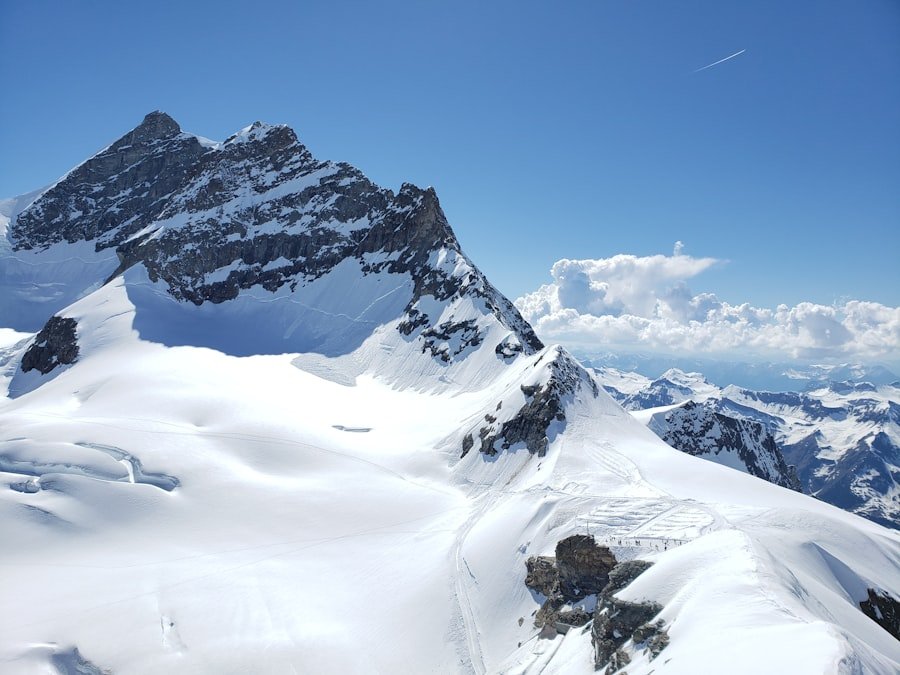
When preparing for a photography expedition to Jungfraujoch, having the right equipment is paramount. A sturdy DSLR or mirrorless camera is essential for capturing high-resolution images in varying light conditions. Lenses play a crucial role as well; a wide-angle lens (such as 16-35mm) is ideal for capturing expansive landscapes, while a telephoto lens (70-200mm) can help isolate specific mountain features or wildlife.
Additionally, a tripod is indispensable for stabilizing shots during long exposures or in low-light situations. Beyond cameras and lenses, other accessories can significantly enhance the photography experience. Neutral density (ND) filters are useful for managing bright light conditions, allowing photographers to achieve longer exposure times without overexposing their images.
A polarizing filter can help reduce glare from snow and ice while enhancing color saturation in the sky. Extra batteries and memory cards are also essential, as cold temperatures can drain batteries quickly and high-resolution images consume significant storage space.
Composition and Framing
| Aspect | Metric | Value |
|---|---|---|
| Composition | Rule of Thirds | 80% |
| Composition | Leading Lines | 90% |
| Framing | Centered Composition | 70% |
| Framing | Fill the Frame | 85% |
Effective composition is key to creating compelling photographs at Jungfraujoch. One fundamental principle is the rule of thirds, which involves dividing the frame into nine equal parts using two horizontal and two vertical lines. Placing key elements along these lines or at their intersections can create a more balanced and engaging image.
For instance, positioning a mountain peak off-center while allowing a sweeping valley to fill the foreground can lead to a more dynamic composition. In addition to the rule of thirds, leading lines can guide viewers’ eyes through an image. Natural features such as trails, rivers, or even snowdrifts can serve as leading lines that draw attention to focal points like mountain peaks or glaciers.
Incorporating foreground elements adds depth to photographs; rocks or wildflowers in the foreground can create layers that enhance the three-dimensional feel of an image. Experimenting with different angles and perspectives can yield unique compositions that showcase Jungfraujoch’s diverse landscapes.
Dealing with Harsh Light and Glare
Photographing in high-altitude environments like Jungfraujoch often presents challenges related to harsh light and glare. The intense sunlight reflecting off snow and ice can create blinding conditions that wash out details in photographs. To combat this issue, photographers should consider shooting during times when the sun is lower in the sky, such as early morning or late afternoon.
This approach not only softens shadows but also reduces glare. Using lens hoods can help minimize lens flare caused by direct sunlight hitting the lens surface. Additionally, adjusting camera settings can mitigate exposure issues; utilizing manual mode allows photographers to control aperture, shutter speed, and ISO settings effectively.
Bracketing exposures—taking multiple shots at different exposure levels—can also be beneficial in high-contrast situations. This technique allows photographers to blend images later during post-processing to achieve a balanced exposure that captures both highlights and shadows.
Capturing the Landscape
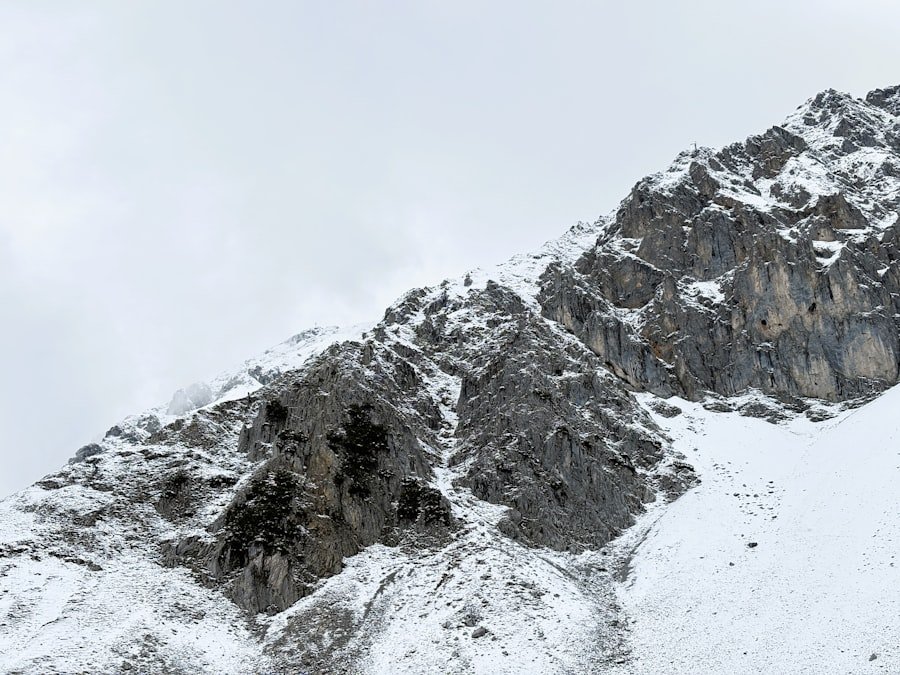
The diverse landscapes of Jungfraujoch offer endless opportunities for captivating photography. From sweeping vistas of snow-capped peaks to intricate details of glacial formations, each scene presents unique challenges and rewards.
Wide-angle shots can convey the grandeur of the mountains while close-ups can reveal textures in ice or patterns in snow. Incorporating weather elements into landscape photography can add drama and mood to images. Clouds rolling over mountain peaks or mist rising from glaciers can create a sense of atmosphere that enhances visual storytelling.
Photographers should remain patient and observant; waiting for the right moment when light conditions change or weather patterns shift can result in breathtaking images that capture the essence of Jungfraujoch’s dynamic environment.
Photographing the Glacier and Ice Palace
The Aletsch Glacier is one of Jungfraujoch’s most iconic features and presents unique photographic opportunities. Capturing its vast expanse requires careful consideration of perspective; shooting from higher vantage points can emphasize its scale while including surrounding mountains adds context. The glacier’s crevasses and seracs create intricate patterns that are best captured with a telephoto lens, allowing photographers to isolate these details against the backdrop of towering peaks.
The Ice Palace, located within the glacier itself, offers another fascinating subject for photography. This subterranean wonderland features stunning ice sculptures and tunnels illuminated by ethereal blue light. When photographing inside the Ice Palace, using a tripod is essential due to low light conditions.
Long exposure times can capture the intricate details of ice formations while maintaining clarity throughout the image. Experimenting with different angles within this unique environment can yield striking compositions that showcase both natural beauty and artistic creativity.
Tips for Editing and Enhancing Your Photos
Post-processing plays a vital role in enhancing photographs taken at Jungfraujoch. Software such as Adobe Lightroom or Photoshop provides powerful tools for adjusting exposure, contrast, saturation, and sharpness. When editing landscape photos, it’s important to maintain a natural look while enhancing colors that reflect the true beauty of the scene.
Adjusting white balance can correct color casts caused by varying light conditions; cooler tones may be appropriate for snowy scenes while warmer tones can enhance summer landscapes. In addition to basic adjustments, advanced techniques such as HDR (High Dynamic Range) imaging can be employed to balance exposure across high-contrast scenes effectively. This technique involves merging multiple exposures to capture details in both highlights and shadows without losing information in either area.
Furthermore, cropping can refine compositions by eliminating distractions from the edges of an image or emphasizing key elements within the frame. Utilizing sharpening tools selectively can enhance details without introducing noise into images; this is particularly important when working with high-resolution files from modern cameras. Finally, adding subtle vignetting can draw attention toward the center of an image while providing a polished finish that enhances overall visual impact.
By mastering editing techniques, photographers can transform their raw captures into stunning representations of Jungfraujoch’s breathtaking landscapes.
If you’re planning a visit to the breathtaking Jungfraujoch viewpoint, capturing the stunning vistas with your camera is a must. To make the most of your photography experience, consider visiting during the golden hours of sunrise or sunset when the light casts a magical glow over the snow-capped peaks. Additionally, using a polarizing filter can help reduce glare and enhance the colors of the sky and landscape. For more tips on capturing the beauty of nature, you might find inspiration in this related article that explores the delightful world of Asian melon, offering insights into capturing the essence of natural beauty through photography.
FAQs
What is Jungfraujoch viewpoint?
Jungfraujoch viewpoint is a popular tourist destination in Switzerland, known for its stunning panoramic views of the surrounding mountains, including the Eiger, Mönch, and Jungfrau peaks.
What are some photography tips for capturing the views at Jungfraujoch viewpoint?
– Use a wide-angle lens to capture the expansive views of the mountains.
– Consider the lighting conditions and time of day for the best shots.
– Experiment with different angles and perspectives to create unique compositions.
– Be prepared for changing weather conditions and dress accordingly to protect your camera equipment.
Are there any specific photography restrictions at Jungfraujoch viewpoint?
Visitors are generally allowed to take photographs for personal use at Jungfraujoch viewpoint. However, commercial photography or the use of drones may be subject to specific restrictions and regulations.
What are the best times of day to capture photographs at Jungfraujoch viewpoint?
The early morning and late afternoon are often considered the best times for photography at Jungfraujoch viewpoint, as the lighting is softer and the colors of the landscape are more vibrant. However, the views can be stunning at any time of day, so it’s worth exploring different times for unique photo opportunities.