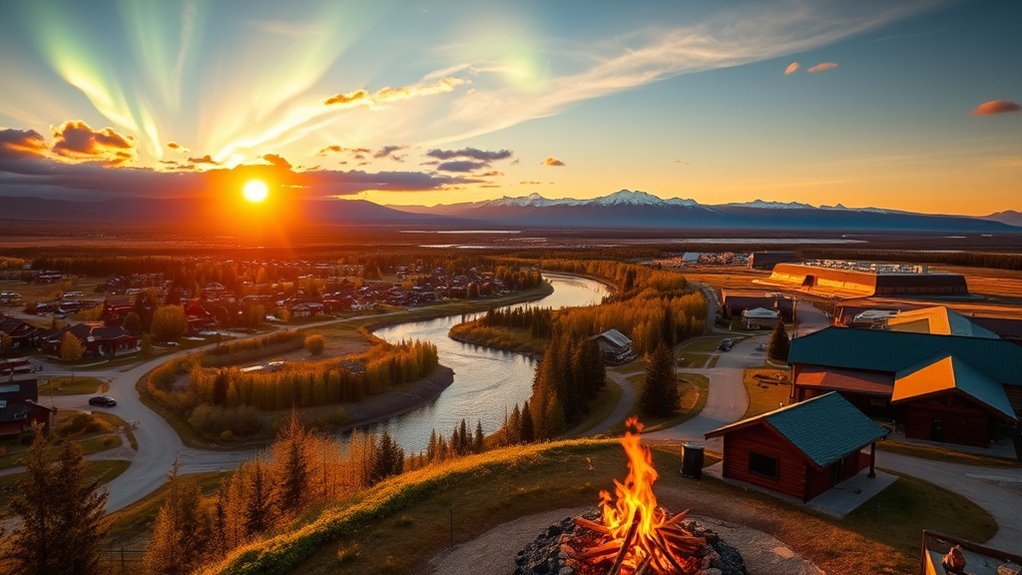
Fairbanks gives you two very different Alaska experiences depending on when you visit. Dark nights bring opportunities to see the Northern Lights, while the long days of late spring and summer are better for hiking, wildlife viewing, museums, river activities, and road trips. A good Fairbanks trip combines the city’s cultural attractions with at least one excursion into Interior Alaska.
Quick Answer
Fairbanks is best planned around your season: visit August 21 to April 21 for dark-sky aurora opportunities, or late spring and summer for long daylight, hiking, and river activities. Allow at least two to three days for the city, and longer if you want Chena Hot Springs or Denali.
Key Takeaways
- Fairbanks’ official Aurora Season runs from August 21 through April 21, but clear, dark skies and auroral activity are still required.
- The University of Alaska Museum of the North, Pioneer Park, and the Morris Thompson Cultural and Visitors Center are strong choices for understanding Interior Alaska.
- Chena Hot Springs Resort is a popular excursion, but its outdoor hot springs lake is restricted to guests age 18 and older.
- A rental car gives you the most flexibility for distant attractions, while MACS Transit serves much of the urban Fairbanks area.
- Winter visitors should check weather and Alaska 511 road conditions before driving outside the city.
Plan Your Fairbanks Trip
For a first visit, plan at least two or three full days in Fairbanks. That gives you enough time for the University of Alaska Museum of the North, local history and cultural attractions, one outdoor activity, and an evening reserved for aurora viewing when you visit during Aurora Season.
Four or five days makes the trip more relaxed and gives you time for Chena Hot Springs, Creamer’s Field, Pioneer Park, winter recreation, or a second and third night of aurora hunting. A week works better if you also want a long excursion such as Denali National Park.
A rental car is usually the easiest option if you plan to visit attractions outside the urban area. The Fairbanks North Star Borough’s MACS Transit system serves much of urban Fairbanks, including routes connecting areas such as the airport, UAF, Pioneer Park, and downtown. Route frequencies and schedules can change, so check the current timetable before depending on the bus for a time-sensitive activity.
Pro Tip: If seeing the aurora is a major reason for your trip, schedule several nights in Fairbanks rather than depending on one evening. Clouds, daylight, and auroral activity can all affect visibility.
Exploring the Northern Lights
The Northern Lights, or Aurora Borealis, are one of the main reasons travelers visit Fairbanks. The official Fairbanks Aurora Season runs from August 21 through April 21, when the sky becomes dark enough for practical nighttime viewing.
Auroras occur above the region throughout the year, but Fairbanks’ bright summer nights make them difficult or impossible to see during the Midnight Sun period. Even during Aurora Season, a display is never guaranteed. You need a combination of darkness, sufficiently clear skies, and auroral activity.
Before heading out, check a current aurora forecast and local weather. Moving away from bright city lights can improve visibility, but you do not always need to travel far from Fairbanks when activity is strong.
Dress for the actual overnight temperature rather than the daytime forecast. In winter, that may mean thermal base layers, insulating mid-layers, an appropriate winter coat, insulated boots, mittens or gloves, a warm hat, and face protection.
Warning: Aurora viewing often involves nighttime winter driving. Check current weather and Alaska 511 road conditions before leaving town. Do not stop in active traffic lanes or park where your vehicle creates a hazard.
Must-Visit Attractions in Fairbanks
Fairbanks combines natural attractions, museums, Gold Rush history, Alaska Native culture, and easy access to Interior Alaska. First-time visitors can build a strong itinerary around the Northern Lights, University of Alaska Museum of the North, Chena Hot Springs Resort, Pioneer Park, and downtown cultural attractions.
Northern Lights Viewing Locations
Several areas around Fairbanks are commonly used for aurora viewing. Murphy Dome provides an elevated viewpoint about 25 miles from Fairbanks, while Chena Lake Recreation Area near North Pole can provide open views and, before freeze-up, aurora reflections on the water.
The Chena River State Recreation Area also provides darker surroundings along Chena Hot Springs Road. Remember that more remote locations can have limited cell service and more difficult winter driving conditions.
Explore Fairbanks recommends extra caution on elevated roads such as Murphy Dome and notes that all-wheel drive or four-wheel drive can be useful in snowy conditions. If you are uncomfortable driving on snow or ice after dark, a guided aurora tour is a practical alternative.
For photography, bring a camera or phone that allows longer exposures, a stable tripod, spare batteries, and gloves that still let you operate your equipment. Cold temperatures can drain batteries quickly.
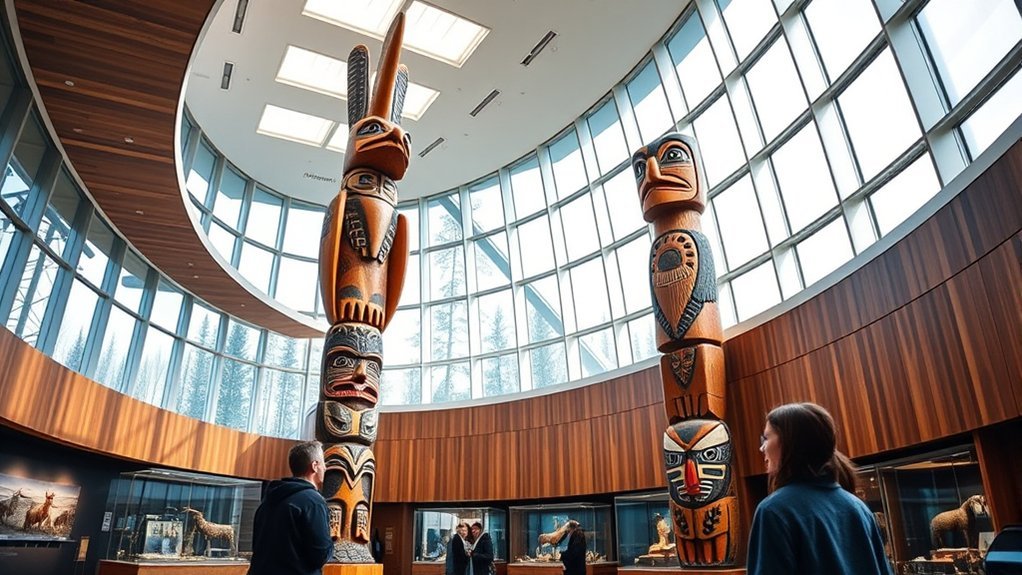
University of Alaska Museum of the North
The University of Alaska Museum of the North on the University of Alaska Fairbanks campus is one of the best places to get context for the rest of your trip.
| Exhibit Area | What You Can Explore |
|---|---|
| Gallery of Alaska | Alaska’s natural and cultural history across major ecological regions |
| Rose Berry Alaska Art Gallery | Alaska art ranging from traditional objects to contemporary work |
| Research Collections | Exhibits connected to archaeology, wildlife, earth sciences, ethnology, art, and other museum research |
The museum’s collections include millions of artifacts and specimens. Highlights include Alaska Native objects, wildlife and fossil material, Alaska art, gold, and exhibits that explain how researchers study the state’s natural and cultural history.
Allow enough time to explore rather than treating the museum as a quick photo stop. Current hours, admission, exhibitions, and special programs can change seasonally, so check the museum’s official site before your visit.
Chena Hot Springs Resort
Chena Hot Springs Resort combines geothermal soaking with activities that change by season. Visitors can use the pool facilities, explore the surrounding area, and visit the resort’s Aurora Ice Museum.
The Aurora Ice Museum is maintained as a year-round ice environment and contains illuminated ice sculptures, an ice bar, and other carved features. Tour times, admission prices, minimum ages, and policies can change, so check current availability before making the drive.
Winter activities can include aurora viewing, snowmobiling, and other guided excursions, while warmer months offer different outdoor activities.
Note: Chena Hot Springs Resort states that its outdoor hot springs lake is restricted to guests age 18 and older. Families can review the resort’s current pool-house rules and access options before visiting.
Outdoor Adventures and Activities
Fairbanks offers outdoor recreation in every season. Summer and early fall are popular for hiking, biking, wildlife viewing, and river activities. Winter brings cross-country skiing, snowshoeing, dog mushing, snowmobiling, and other snow-based recreation.
Conditions can change quickly in Interior Alaska. Carry water, appropriate clothing, and navigation information, and check current trail or road conditions before traveling beyond developed areas.
Hiking Trails Exploration
The Angel Rocks Trail in Chena River State Recreation Area is a well-known option east of Fairbanks. Alaska State Parks lists it as a 3.5-mile round-trip trail that generally takes about two to three hours. It passes through forest before climbing toward rocky formations and higher viewpoints.
The broader Chena River State Recreation Area contains additional trails ranging from shorter outings to longer backcountry routes. Alaska State Parks advises hikers to carry water, wear suitable footwear, prepare for rapidly changing weather, and tell someone where they are going.
Closer to town, Creamer’s Field Migratory Waterfowl Refuge provides wildlife viewing through fields, wetlands, and boreal forest. It is especially valuable for birdwatching during migration periods.
Check current refuge notices before choosing a route. As of August 2026, the refuge’s visitor information lists the Boreal Forest Trail as closed, while other areas remain available for compatible public recreation.
Winter Sports Opportunities
Winter changes the Fairbanks trail system completely. Birch Hill Recreation Area is a major local destination for cross-country skiing, with a maintained Nordic ski trail system used for both recreation and races.
Snowshoeing is another approachable way to explore quieter forest areas. Dog mushing gives visitors a closer look at an activity with deep roots in Interior Alaska, and guided snowmobile experiences are also available through local operators.
Choose an activity that matches your cold-weather experience. Temperatures, daylight, snow depth, and trail conditions can change quickly, so check current operating information rather than relying on a fixed seasonal schedule.
Cultural Experiences and Local Traditions
Fairbanks’ history includes Alaska Native cultures, the Gold Rush, river transportation, dog mushing, military history, and the growth of a modern Interior Alaska community.
The Morris Thompson Cultural and Visitors Center is a useful first stop for learning about Interior Alaska. The center recognizes the Dena people whose traditional lands include the Fairbanks area and presents cultural and regional information in partnership with local organizations.
The Fairbanks Community Museum offers another look at local history, including exhibits connected to early Fairbanks, the Gold Rush, major local events, and dog mushing.
In late winter, the World Ice Art Championships bring large-scale ice sculpture competitions to Fairbanks. Dates change each year, so check Ice Alaska’s current calendar before planning a trip around the event.
During the growing season, the Tanana Valley Farmers Market is another way to see locally grown food and locally produced goods. Market dates and participating vendors are seasonal.
When learning about Alaska Native traditions, choose museums, cultural centers, Native organizations, artists, and programs that present their own histories and contemporary experiences rather than treating Native culture as a staged attraction.
Suggested Itineraries for Different Durations
Your ideal itinerary depends heavily on the season. Aurora travelers need free evenings, while summer visitors can use the long daylight hours for more outdoor activities.
Build your Fairbanks itinerary around one major activity per half day, then leave your aurora evenings flexible enough to respond to weather and sky conditions.
Two-Day Fairbanks Itinerary
Day 1: Start at the Morris Thompson Cultural and Visitors Center, explore downtown, and visit Pioneer Park or the Fairbanks Community Museum. During Aurora Season, keep the evening available for Northern Lights viewing.
Day 2: Visit the University of Alaska Museum of the North. Spend the afternoon at Creamer’s Field, another nearby attraction, or a winter activity. If conditions were poor the previous night, try aurora viewing again.
Four-Day Fairbanks Itinerary
Days 1-2: Follow the two-day city itinerary.
Day 3: Make a day trip to Chena Hot Springs Resort. Combine soaking with the Aurora Ice Museum or another seasonal activity.
Day 4: Choose outdoor recreation such as Angel Rocks Trail in suitable hiking conditions, Birch Hill in winter, dog mushing, or additional cultural attractions in Fairbanks.
One-Week Fairbanks Itinerary
With a full week, spread the main Fairbanks attractions across several days instead of rushing. Add Pioneer Park, local history museums, more time at the Museum of the North, a dog sledding or winter recreation experience, and wildlife viewing at Creamer’s Field.
You can also consider Denali National Park as a long excursion. The park entrance is about 120 miles south of Fairbanks, so a same-day trip involves roughly four hours of driving before time spent inside the park.
Summer access within Denali is regulated. Private vehicles are generally limited to the first 15 miles of the Denali Park Road during the summer bus season. In summer 2026, the National Park Service also reports that the road remains closed at Mile 43 because of the Pretty Rocks landslide. Check current park conditions and bus operations before departure.
If you prefer a slower trip, spend the extra day in Fairbanks rather than forcing Denali into a rushed schedule.
Tips for Traveling in Fairbanks
A little planning makes Fairbanks much easier to explore. Distances can be longer than they appear on a city-focused itinerary, temperatures vary sharply by season, and some outdoor attractions have limited cell service.
| Tip | What to Do | Why It Matters |
|---|---|---|
| Dress in Layers | Match clothing to the forecast and planned activity | Interior Alaska temperatures can change significantly |
| Taste Local Food | Try Alaska seafood and locally made specialties when available | Adds a regional element to your trip |
| Connect with Locals | Ask museum staff, visitor-center specialists, and guides for current advice | Local conditions and seasonal openings change |
| Check Road Conditions | Review Alaska 511 before longer winter drives | Snow, ice, visibility, and closures can affect travel |
| Verify Hours | Check attraction and restaurant websites before leaving | Many Fairbanks businesses use seasonal schedules |
Rental cars provide the greatest flexibility for Chena Hot Springs Road, aurora viewpoints, trailheads, and other destinations beyond central Fairbanks. Public transit is useful within the urban area but should not be treated as a substitute for a car on every itinerary.
Best Times to Visit Fairbanks
The best time to visit Fairbanks depends on the experience you want most.
- Aurora Season, August 21-April 21: Choose this period if seeing the Northern Lights is a priority. Early autumn can combine dark nights with unfrozen landscapes, while winter provides snow-based activities and a classic cold-weather setting.
- Deep winter, roughly December-March: Expect very cold weather, snow activities, and long periods of darkness. Good clothing and winter-driving preparation are essential.
- Midnight Sun Season, April 22-August 20: Long daylight supports hiking, sightseeing, road trips, and late-evening outdoor activities.
- May 17-July 27: Explore Fairbanks describes this as approximately 70 straight days when the sun remains above the horizon, producing the area’s famous 24-hour sunlight.
- Late summer and early fall: This transition period can combine autumn color with the return of dark enough nights for aurora viewing after August 21.
Shoulder seasons can also mean reduced hours or changing operating schedules. Check the attractions most important to you before booking around a specific activity.
Dining and Nightlife Options
Fairbanks has restaurants ranging from casual breakfast spots and cafes to dinner restaurants serving seafood, steaks, and other Alaska-influenced dishes.
The Pump House Restaurant & Saloon is a long-running option on the Chena River and remains known for seafood and riverfront dining. Because Fairbanks restaurants may use seasonal or limited weekly hours, check the restaurant’s current schedule before making a special trip.
Fairbanks also has breweries, distilleries, pubs, tasting rooms, and venues that host live entertainment. Current local breweries include businesses highlighted by Explore Fairbanks, while food trucks and rotating events can add variety during warmer months.
If nightlife matters to you, check that evening’s event calendar rather than assuming every bar or music venue operates late every night. Fairbanks’ evening scene is smaller and more seasonal than that of a major metropolitan city.
Unique Souvenirs and Shopping Spots
Look for souvenirs that connect directly to Alaska rather than generic items that could have been purchased anywhere. Local artwork, books, photography, handmade crafts, and regionally produced foods are good places to start.
- Local art galleries and artist shops: Fairbanks has galleries and seasonal artist markets where you can look for paintings, prints, jewelry, carvings, and handmade work by Alaska artists.
- Alaska Native artwork: When authenticity matters, look for documentation and the State of Alaska’s Silver Hand program. The Silver Hand seal identifies qualifying original artwork made in Alaska by an Alaska Native artist.
- Pioneer Park: During its summer season, Pioneer Park includes shops and local artisans alongside museums and activities.
- Fairbanks Community Museum: Its gift offerings can complement a visit focused on local history and dog mushing.
The original recommendation to rely on a business called “The Gold Rush Company” cannot be supported by a current authoritative Fairbanks source, so it is better to shop through currently operating galleries, museums, artist markets, and established retailers.
If you are purchasing valuable jewelry, precious metals, ivory, or culturally significant artwork, ask the seller about the maker, material, legal status, origin, and any documentation that accompanies the piece.
Frequently Asked Questions
What is the best way to get around Fairbanks?
A rental car offers the most flexibility, especially for aurora viewpoints, Chena Hot Springs, trailheads, and other destinations outside central Fairbanks. MACS Transit serves much of the urban area and can work for selected city attractions. Taxis and shuttles are additional options.
Are there any local customs or etiquette to be aware of?
Treat residents, Alaska Native cultures, wildlife, and public lands respectfully. Follow posted rules, keep a safe distance from wildlife, pack out your waste on trails, and use cultural institutions or Native-led sources when learning about Alaska Native traditions.
Is it safe to travel to Fairbanks during winter?
Winter travel is common, but extreme cold, snow, ice, limited daylight, and changing road conditions require preparation. Wear proper cold-weather clothing, keep your vehicle appropriately equipped, check Alaska 511 before longer drives, and adjust plans when conditions deteriorate.
What type of clothing should I pack for Fairbanks?
Pack for the season and your planned activities. Winter travelers typically need thermal base layers, insulation, a winter coat, warm boots, gloves or mittens, a hat, and face protection. Summer visitors should still bring layers and rain protection because temperatures can change.
Are there any health or safety concerns for travelers in Fairbanks?
The biggest practical concerns include extreme cold, icy roads, rapidly changing outdoor conditions, and wildlife. Carry suitable clothing and water, follow trail guidance, keep your distance from animals, and avoid taking unnecessary risks in remote areas with limited cell service.
When can you see the Northern Lights in Fairbanks?
Fairbanks’ official Aurora Season runs from August 21 through April 21. Actual viewing still depends on darkness, clear enough skies, and auroral activity, so no particular night is guaranteed.
How many days should I spend in Fairbanks?
Two to three full days cover the main city attractions at a reasonable pace. Four or five days are better if you want Chena Hot Springs, outdoor activities, and several aurora-viewing nights. Allow close to a week if you also want a long Denali excursion.
Sources
- Explore Fairbanks: Aurora Season — official Fairbanks aurora-viewing season and planning guidance.
- University of Alaska Museum of the North — official museum name, visitor information, collections, and exhibits.
- Chena Hot Springs Resort — current hot-springs access information and age restrictions.
- Alaska State Parks: Chena River State Recreation Area — Angel Rocks Trail details and hiking-safety guidance.
- Alaska Department of Fish and Game: Creamer’s Field — refuge information, wildlife viewing, and recreation.
- National Park Service: Denali Current Conditions — current Denali Park Road access and 2026 operating conditions.
Conclusion
Fairbanks rewards travelers who plan around the season rather than trying to fit the same itinerary into every month. Aurora Season offers dark skies, winter recreation, and opportunities to see the Northern Lights, while the long days of spring and summer open more time for hiking, wildlife viewing, museums, and road trips.
Start with the University of Alaska Museum of the North and Fairbanks’ cultural attractions, then add experiences such as Chena Hot Springs, Creamer’s Field, dog mushing, hiking, or a carefully planned Denali excursion. Check current weather, road conditions, trail notices, and operating hours before each major outing, and you will be better prepared for the distances and fast-changing conditions that make Interior Alaska distinctive.