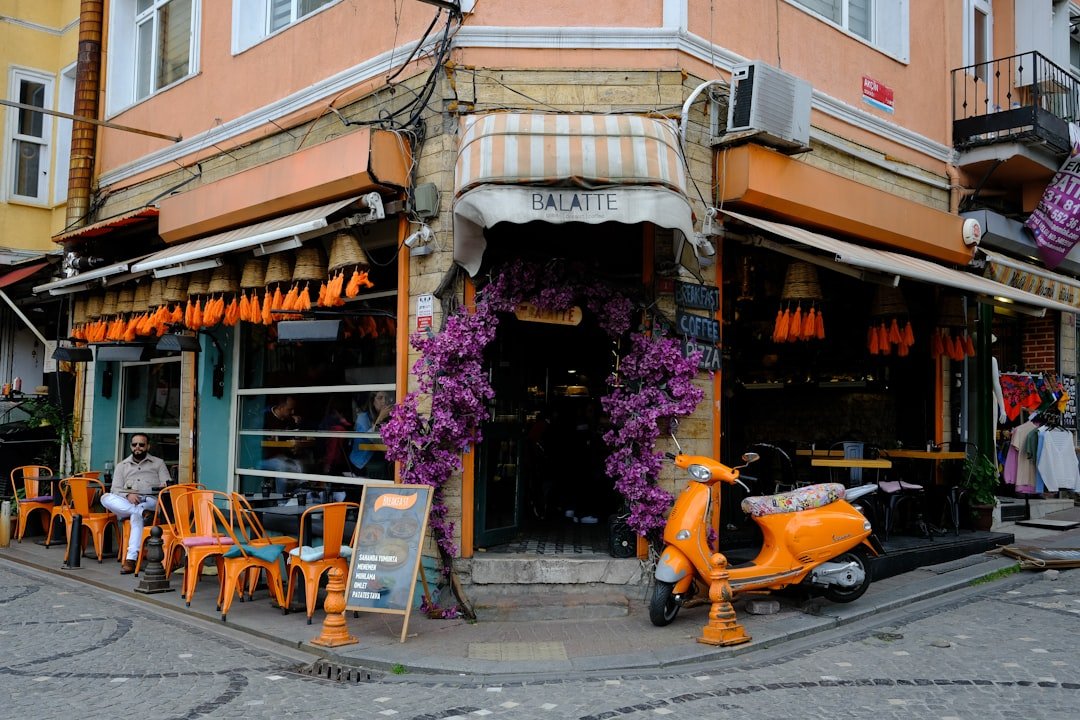
Cihangir is one of Istanbul’s best-known central neighborhoods, but its history is more complicated than the usual description of an old Ottoman artists’ quarter. The district takes its name from Şehzade Cihangir, a son of Sultan Süleyman I and Hürrem Sultan. A mosque dedicated to the prince established the name in the 16th century, while the neighborhood itself developed more gradually over the centuries that followed.
Quick Answer
Cihangir’s recorded neighborhood history is rooted mainly in the Ottoman period. The first mosque dedicated to Şehzade Cihangir was completed in 1559–60. Settlement expanded from the 17th century, apartment construction grew in the 19th, and Cihangir later passed through cosmopolitan, declining, bohemian, and gentrifying phases.
Key Takeaways
- Cihangir is named after Şehzade Cihangir, the son of Sultan Süleyman I and Hürrem Sultan.
- The first Cihangir Mosque was completed in 1559–60, but the building visible today largely reflects an 1890 reconstruction.
- Recognizable residential development expanded from the 17th century and accelerated during the 19th century.
- Fires, masonry apartment construction, demographic change, and later Art Deco and early modernist architecture all reshaped Cihangir.
- The neighborhood’s modern bohemian reputation and gentrification are primarily late-20th- and early-21st-century developments.
Note: The wider hills around today’s Cihangir belonged to Istanbul’s much older Byzantine-era landscape, but evidence for Cihangir as a recognizable residential neighborhood becomes much clearer in the Ottoman period. It is therefore safer to describe the neighborhood itself as primarily Ottoman in origin rather than claim an established Byzantine Cihangir quarter.
Cihangir History Timeline
| 1553 | Şehzade Cihangir dies at the age of 22. The neighborhood would later take his name. |
| 1559–60 | The first Cihangir Mosque, commissioned by Sultan Süleyman I and designed by Mimar Sinan, is completed. |
| 17th century onward | Residential settlement becomes more visible on the slopes above Tophane and Fındıklı. |
| 19th century | Apartment construction expands. Muslim, non-Muslim, and Levantine residents contribute to an increasingly cosmopolitan neighborhood. |
| 1890 | Cihangir Mosque is rebuilt under Sultan Abdülhamid II after repeated fires had damaged earlier versions. |
| After 1925 | Art Deco and early modernist buildings increasingly join the neighborhood’s older Neoclassical architecture. |
| 1940s–1960s | Political and demographic upheavals contribute to the departure of many long-established non-Muslim residents. |
| Late 20th century onward | Artists, writers, actors, journalists, and other new residents help build Cihangir’s bohemian reputation, followed by sustained gentrification. |
Cihangir in the Ottoman Empire
The most important starting point in Cihangir’s recorded history is Şehzade Cihangir. He was the son of Sultan Süleyman I, commonly known in English as Suleiman the Magnificent, and Hürrem Sultan. Cihangir died in 1553 at the age of 22.
Sultan Süleyman commissioned a mosque in his son’s memory on the hillside above Fındıklı. According to the TDV İslâm Ansiklopedisi, the original mosque was built by Mimar Sinan and completed in 1559–60. Because the mosque carried the prince’s name, the surrounding area gradually became known as Cihangir.
The name itself comes from the Persian-derived word cihangir, commonly translated as “world conqueror” or “conqueror of the world.” The historical connection is therefore to the prince and the mosque dedicated to him, rather than to a military conquest that occurred in the neighborhood.
It is important, however, not to imagine the Cihangir of the 1550s as the dense apartment neighborhood visitors see today. A Turkish Academy of Sciences architectural inventory identifies clearer settlement growth from the 17th century. Contemporary images and later records show housing gradually climbing the slopes above Tophane.
As Istanbul expanded, Cihangir’s elevated position overlooking parts of the Bosphorus and Marmara made the hillside attractive for residential development. The neighborhood evolved alongside nearby Tophane, Fındıklı, Kabataş, Taksim, Galata, and Pera rather than developing in isolation.
How the 19th Century Changed Cihangir
The 19th century was especially important. Apartment construction spread through Cihangir as similar urban changes transformed Galata and Pera. Research on the neighborhood’s surviving buildings shows that multi-storey masonry apartments were associated particularly with non-Muslim and Levantine residents, while many Muslim households continued to live in more traditional wooden houses.
This mixture made Cihangir part of the cosmopolitan social world of late Ottoman Beyoğlu. Greeks, Armenians, Jews, Levantines, Turks, and other Muslim and non-Muslim residents all formed part of the wider district’s social history.
Much of Cihangir’s familiar streetscape is younger than its Ottoman name: repeated fires and 19th- and early-20th-century rebuilding helped replace wooden housing with the masonry apartment blocks seen today.
Cihangir in the 20th Century
The 20th century changed Cihangir more dramatically than the original article suggests. The transformation cannot be explained simply by World War I or the creation of the Republic of Turkey in 1923. The neighborhood experienced several overlapping architectural, political, demographic, and economic shifts.
Fires were one important force. Istanbul’s official fire records document destructive fires affecting Cihangir and surrounding districts during the Ottoman and early modern periods. Such disasters encouraged the replacement of vulnerable wooden buildings with brick and masonry construction.
The neighborhood’s human geography also changed. A Boğaziçi University study of Cihangir’s modern history highlights several events that contributed to the departure of long-established non-Muslim residents, especially Greeks. These included the 1942 Wealth Tax, the September 6–7 events of 1955, and the 1964 decree that forced many Greek nationals to leave Turkey.
As established households departed, other residents arrived. Internal migration changed Beyoğlu and Cihangir, and the neighborhood went through periods of declining prestige and lower property values. This later made centrally located housing more accessible to artists, writers, performers, students, and others who were drawn to the area but could not afford Istanbul’s more expensive districts.
By the later decades of the 20th century, this mix helped establish the bohemian reputation now strongly associated with Cihangir. Cafés, informal meeting places, cultural networks, and the neighborhood’s central location strengthened its appeal to creative communities.
Cihangir in Literature and Art
Cihangir’s place in Istanbul’s literary imagination is real, but it is better documented through specific works than through broad claims that the area had always been an artistic center.
Orhan Pamuk provides one clear example. His memoir and city portrait Istanbul: Memories and the City includes a chapter titled “Another House Cihangir.” Pamuk’s writing uses neighborhoods, apartments, streets, family memories, and changing urban landscapes to explore Istanbul’s identity, decline, modernization, and sense of place.
Cihangir also became associated with actors, filmmakers, journalists, visual artists, and writers during the later 20th century. Its relatively central location, older apartment stock, and proximity to Beyoğlu’s theaters, cinemas, publishing world, restaurants, and nightlife made it attractive to people working in cultural industries.
This connection between place and creative life helped reinforce the neighborhood’s public image. Cihangir was no longer understood only as a historic residential quarter. It also became shorthand for a particular urban lifestyle: central, walkable, socially mixed, culturally active, and somewhat unconventional.
Cihangir Today: Urban Development and Gentrification
Cihangir’s modern transformation is commonly discussed through the idea of gentrification. This means more than renovating old buildings. Gentrification generally describes a process in which investment and higher-income residents enter an older urban neighborhood, property values rise, businesses change, and some existing residents or activities may be displaced.
Cihangir is one of Istanbul’s most frequently studied examples. Research published in İDEALKENT examined how gentrification affected the neighborhood’s commercial identity, while a later Urban Studies paper on Cihangir treated gentrification as a continuing process shaped by Istanbul’s wider urban development.
As older apartments were renovated and Cihangir’s cultural reputation grew, the neighborhood attracted new investment and higher-income residents. Cafés, restaurants, design-oriented businesses, and other establishments increasingly became part of its commercial landscape.
These changes can preserve buildings and support local businesses, but they can also create pressure. Higher property values and rents may make it harder for long-term residents or small businesses to remain. For that reason, Cihangir’s gentrification should not be described simply as either improvement or decline. It involves benefits, losses, and competing ideas about who the neighborhood is for.
Note: Gentrification in Cihangir did not begin only in the last few years. Researchers have examined the neighborhood as an Istanbul gentrification case for decades, so it is more accurate to describe the process as long-running rather than newly emerging.
Cihangir’s Architectural Heritage
Cihangir’s architecture records several different stages of Istanbul’s urban history. The neighborhood should not be reduced to a collection of untouched 16th-century Ottoman mansions. Much of the architecture visible today developed considerably later.
Cihangir Mosque
Cihangir Mosque is the neighborhood’s most important historical landmark because it gave the district its name. The original mosque commissioned by Sultan Süleyman was completed in 1559–60 and was associated with Mimar Sinan.
That original building did not survive unchanged. Historical sources record repeated fires and rebuilding. The present mosque was reconstructed in 1890 during the reign of Sultan Abdülhamid II. It therefore carries the history of the 16th-century foundation while also reflecting a much later architectural phase.
Neoclassical Apartments
During the 19th century, masonry construction became increasingly important, particularly after fires exposed the risks of densely built wooden neighborhoods. Neoclassical architecture became one of the characteristic styles of Cihangir’s apartment buildings.
These buildings often created a more urban streetscape than earlier detached wooden houses. Multi-storey façades, regular window arrangements, balconies, bay windows, and decorative masonry helped form the appearance now associated with historic Cihangir.
Art Deco and Early Modernism
After roughly 1925, architectural research identifies stronger Art Deco and early modernist influences. These styles added another layer to Cihangir rather than replacing everything that came before.
The result is an architectural mixture: late Ottoman urban development, Neoclassical apartment buildings, early Republican Art Deco details, modernist structures, and later renovations all exist within the same neighborhood.
Cihangir’s Cultural and Social Scene
Cihangir’s cultural reputation developed from the people who lived there as much as from its buildings. During the later 20th century, the neighborhood became increasingly associated with writers, actors, artists, filmmakers, journalists, students, and expatriates.
Cafés became important social spaces. Rather than functioning only as tourist businesses, many acted as neighborhood meeting points where people worked, talked, read, and exchanged ideas. Bookshops, galleries, restaurants, studios, and nearby Beyoğlu cultural institutions added to this environment.
The neighborhood’s narrow streets and dense apartment pattern also create a different social experience from Istanbul’s more suburban districts. Daily life often unfolds at street level, with small shops, cafés, apartment entrances, pedestrians, and public spaces close together.
This does not mean Cihangir has remained unchanged or that every street still reflects its earlier bohemian period. Commercialization and rising property values have altered parts of the local economy. Even so, the association between Cihangir and Istanbul’s creative communities remains an important part of the neighborhood’s identity.
Cihangir’s Role in Istanbul’s Contemporary Identity
Cihangir is useful for understanding Istanbul because several layers of the city’s history meet in a relatively small area. Its name comes from a 16th-century Ottoman prince. Its residential fabric expanded in later Ottoman centuries. Fires encouraged masonry rebuilding. Cosmopolitan communities shaped the neighborhood in the 19th and early 20th centuries. Republican-era political and demographic changes altered that population, while artists and new residents later gave Cihangir another identity.
The neighborhood also shows how historic districts continue to change rather than becoming frozen museum pieces. Renovation can save neglected buildings. New businesses can revive streets. At the same time, rising costs can displace residents and businesses that helped create the neighborhood’s appeal in the first place.
That tension helps explain why Cihangir remains significant in discussions about Istanbul’s urban future. Its history is not a simple journey from an Ottoman elite quarter to a fashionable modern neighborhood. It is a history of settlement, rebuilding, migration, demographic loss, cultural reinvention, and gentrification.
For a separate cultural-history topic, the site also has an article on the delightful world of Asian melon. It explores food traditions rather than Istanbul neighborhood history, so it is best treated as optional further reading.
Sources
- TDV İslâm Ansiklopedisi — Cihangir Camii — supports the history of Şehzade Cihangir, the original 1559–60 mosque, repeated fires, and the 1890 reconstruction.
- Turkish Academy of Sciences Journal of Cultural Inventory — Cihangir Historical Buildings Inventory — supports the settlement chronology and the neighborhood’s Neoclassical, Art Deco, and early modernist architecture.
- Boğaziçi University — A Historical Panorama of an Istanbul Neighborhood: Cihangir — supports the neighborhood’s cosmopolitan history and major Republican-era demographic changes.
- İDEALKENT — The Influence of Gentrification on Retail Premises Identity in Cihangir — supports the discussion of gentrification and commercial change.
- Urban Studies — Assembling Gentrification in Istanbul: The Cihangir Neighbourhood of Beyoğlu — supports the interpretation of gentrification as an ongoing urban process.
Frequently Asked Questions
What is the history of Cihangir?
Cihangir is a neighborhood in Istanbul’s Beyoğlu district whose identifiable history is rooted mainly in the Ottoman period. Its name comes from Şehzade Cihangir and the mosque built in his memory in the 16th century. Residential settlement expanded from the 17th century, followed by major urban, architectural, demographic, and cultural changes in the 19th and 20th centuries.
How did Cihangir get its name?
The neighborhood is named after Şehzade Cihangir, the son of Sultan Süleyman I and Hürrem Sultan. After the prince died in 1553, Süleyman commissioned a mosque in his memory. The mosque was completed in 1559–60, and the surrounding area gradually became known by Cihangir’s name.
Does Cihangir date back to the Byzantine era?
The wider area around modern Cihangir formed part of Byzantine-era Istanbul’s landscape, but evidence for Cihangir as a recognizable residential neighborhood is much clearer from the Ottoman period. Research identifies settlement growth particularly from the 17th century onward.
When was Cihangir Mosque built?
The original Cihangir Mosque was completed in 1559–60 and was built by Mimar Sinan for Sultan Süleyman I. It suffered repeated fires and was rebuilt several times. The present mosque largely reflects the reconstruction completed in 1890 during the reign of Sultan Abdülhamid II.
What are some historical landmarks and architectural features in Cihangir?
Cihangir Mosque is the neighborhood’s most important namesake landmark. The surrounding streets also contain late Ottoman and early Republican apartment buildings, including examples influenced by Neoclassicism, Art Deco, and early modernism.
How did Cihangir change during the 20th century?
Cihangir experienced major demographic and economic changes. Long-established non-Muslim communities declined after events including the 1942 Wealth Tax, the September 1955 violence, and the 1964 expulsion of many Greek nationals. Later periods of lower property values attracted new residents, including artists and cultural workers, before gentrification increased investment and housing costs.
Why is Cihangir known as a bohemian neighborhood?
During the later 20th century, Cihangir attracted writers, actors, artists, journalists, students, filmmakers, expatriates, and other residents drawn to its central location and older apartment stock. Their social and cultural networks helped give the neighborhood its modern bohemian reputation.
What is the significance of Cihangir today?
Cihangir remains important because it combines several layers of Istanbul’s history in one neighborhood. Its mosque recalls the Ottoman court, its apartments reflect late Ottoman and early Republican urban development, its cultural reputation reflects the 20th century, and its gentrification illustrates the pressures facing historic inner-city neighborhoods today.