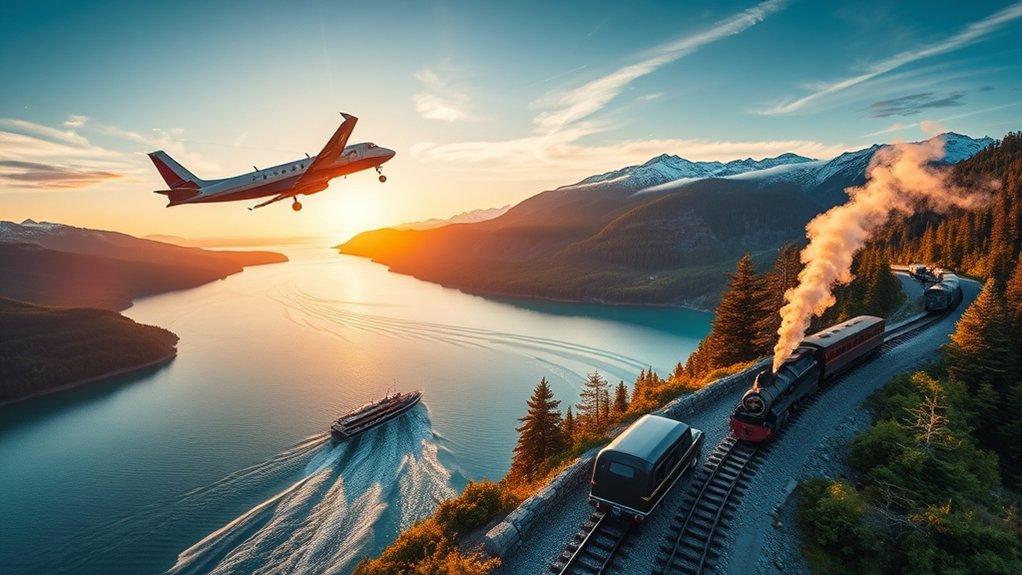
Getting around Alaska takes more planning than traveling through most states because roads do not connect every region or community. The right choice depends on where you are going, the season, your budget, and how much flexibility you need. Most visitors combine two or more options, such as flying into Anchorage, taking a train or rental car to the Kenai Peninsula or Denali, and using ferries or regional flights in Southeast Alaska.
Quick Answer
The best way to get around Alaska is usually a mix: fly between distant or roadless regions, drive for flexible trips in Southcentral and Interior Alaska, ride the train along a few scenic corridors, and use ferries in Southeast and coastal areas. Build extra time into your itinerary for weather and seasonal schedule changes.
Key Takeaways
- No single transportation system reaches every part of Alaska, so plan the trip by region rather than assuming every destination is connected by road.
- Planes reach distant and roadless communities fastest, but weather can disrupt regional flights and air taxis.
- Rental cars and RVs offer the most freedom on the road system, while trains provide scenic service on specific Southcentral and Interior routes.
- The Alaska Marine Highway serves coastal communities, but sailings may be infrequent and vehicle space should be reserved early.
- Check official schedules, road conditions, baggage rules, permits, and cancellation policies before paying for connecting reservations.
Choosing the Best Way to Get Around Alaska
Start with the places you want to visit, then look at the connections between them. Anchorage is a useful hub for Southcentral Alaska, the Kenai Peninsula, Denali, and many regional flights. Fairbanks is the main Interior hub. Juneau, Ketchikan, Sitka, and many other Southeast communities are reached primarily by air or water because they are not connected to Alaska’s main highway system.
| Transportation | Best For | Main Limitation |
|---|---|---|
| Commercial or regional flight | Long distances and roadless communities | Weather delays, baggage limits, and higher fares on some routes |
| Air taxi or bush plane | Remote lodges, backcountry areas, fishing sites, and flightseeing | Cost, weather dependence, and strict weight limits |
| Rental car or RV | Flexible travel on the connected highway system | Cannot reach roadless regions; some rental contracts restrict gravel roads |
| Train | Scenic trips between Anchorage, Seward, Whittier, Denali, and Fairbanks | Limited corridors and reduced winter service |
| State ferry | Southeast Alaska and other coastal communities, with or without a vehicle | Infrequent or seasonal sailings and limited vehicle space |
| Bus, shuttle, or motorcoach | Cities, cruise transfers, major visitor corridors, and national parks | Fixed schedules and limited coverage outside popular routes |
| Water taxi | Remote coastal trailheads, cabins, islands, and fishing locations | Advance booking, weather limits, and operator-specific service areas |
In Alaska, the best transportation plan is usually a connected itinerary—not one vehicle or ticket for the entire trip.
Exploring Alaska by Air
Flying is often the fastest—and sometimes the only practical—way to reach Alaska’s roadless regions. Large airports such as Anchorage, Fairbanks, and Juneau connect with smaller regional hubs, while local carriers continue to communities that do not have highway access.
Scheduled Commercial and Regional Flights
Scheduled flights work well when you need to travel between distant regions or Southeast communities such as Juneau, Sitka, and Ketchikan. They save considerable time compared with combining long drives and ferry sailings. However, smaller regional flights may use aircraft with tighter baggage and weight limits than major airlines.
Check whether separate tickets require you to collect and recheck baggage. Avoid a tight same-day connection to a cruise, ferry, international flight, or prepaid remote tour. Weather can delay smaller regional flights even when the weather at your starting airport looks clear.
Bush Planes, Air Taxis, and Flightseeing
Bush planes and air taxis reach remote lodges, villages, backcountry airstrips, lakes, gravel bars, fishing areas, and trail access points. Depending on the aircraft and destination, a plane may use wheels, floats, or skis. Flightseeing can also provide views of glaciers, mountains, braided rivers, coastlines, and wildlife habitat that cannot be seen from a highway.
Ask the operator about the aircraft, pilot qualifications, passenger and baggage weight limits, weather policy, minimum passenger requirement, cancellation terms, and return-flight plan. Soft-sided luggage is often easier to load than hard cases, but the operator’s rules control.
Warning: Do not schedule a bush-plane or water-taxi return immediately before your flight home. Weather can delay pickup, so keep essential medicine, warm layers, food, and enough schedule flexibility for an unplanned wait.
Scenic Rail Journeys Through Alaska
Rail travel combines transportation with sightseeing, but Alaska’s passenger railway follows specific corridors rather than serving the whole state. It is most useful for travelers connecting destinations along the Anchorage–Fairbanks line or traveling from Anchorage toward Seward or Whittier.
Alaska Railroad Routes
The Alaska Railroad’s official schedule lists several passenger services:
- Denali Star: Anchorage, Wasilla, Talkeetna, Denali, and Fairbanks.
- Coastal Classic: Anchorage, Girdwood, and Seward, including views along Turnagain Arm.
- Glacier Discovery: Service toward Girdwood, Whittier, Portage, Spencer, and Grandview on scheduled operating days.
- Aurora Winter Train: Limited winter service between Anchorage and Fairbanks, generally operating far less frequently than summer trains.
The Coastal Classic route offers views of mountains, forests, wetlands, and coastal scenery. Wildlife sightings are possible, but they are never guaranteed. Amenities vary by train and service class. Depending on the booking, passengers may have access to large windows, dome seating, meal service, or an outdoor viewing area.
White Pass and Yukon Route
The White Pass and Yukon Route operates from Skagway and climbs through steep mountain terrain associated with the Klondike Gold Rush. Passengers may see valleys, rivers, waterfalls, historic structures, and seasonal wildflowers. It is a separate railway from the Alaska Railroad and is commonly used as a scenic excursion rather than transportation across the state.
Some departures approach or cross the international border. Check the exact itinerary and identification requirements before booking, especially if the trip enters Canada.
Rail Seasons, Reservations, and Comfort
Summer provides the broadest selection of routes and departures, along with long daylight hours. Fall can bring colorful tundra and foliage, but many summer services end around mid-September. Winter offers snow-covered scenery on a much smaller passenger schedule.
Reserve popular summer departures early, particularly if your train must connect with a cruise, lodge stay, or national-park reservation. Confirm baggage transfer arrangements because luggage procedures can differ by station and itinerary.
Navigating Alaska by Ferry and Water Taxi
Ferries and water taxis are essential in parts of coastal Alaska. They can connect roadless towns, islands, ports, trailheads, cabins, and recreation areas, but the two services work differently.
Alaska Marine Highway System
The Alaska Marine Highway System schedule lists state-ferry service between participating coastal communities. Depending on the vessel and sailing, passengers may travel as walk-ons or reserve space for a motorcycle, car, RV, or trailer.
When taking a vehicle, provide its complete length, including trailers, bike racks, rear cargo carriers, and other attachments. Larger vehicles may require telephone booking. Vehicle space and cabins can sell out, and passengers must follow the check-in time assigned to their departure port.
Ferry trips are not always fast. A sailing may take several hours or include overnight travel, and service to a community may operate only on selected days. Verify the complete seasonal timetable before reserving hotels or tours.
Passenger Ferries and Water Taxis
Private passenger ferries may provide direct transportation on selected routes, while high-speed vessels can reduce travel time where that service is offered. These boats do not necessarily carry vehicles, so check the operator’s rules rather than relying on a general ferry description.
Water taxis offer more personalized access to remote fishing sites, islands, coastal towns, cabins, and trailheads. They normally use reserved pickup times rather than unrestricted hop-on, hop-off service. Confirm the pickup location, latest return time, passenger minimum, baggage allowance, cancellation policy, and emergency plan.
| Water-Taxi Feature | What to Expect |
|---|---|
| Access | Direct service to locations within the operator’s service area |
| Flexibility | Reserved or chartered travel, subject to vessel availability and weather |
| Scenery | Close coastal views, with possible wildlife sightings |
| Planning Need | A confirmed pickup plan and enough supplies for a weather delay |
Road-Tripping Alaska by Car or RV
A car or RV provides the most flexibility within Alaska’s connected road system. Popular routes include the Seward Highway, Sterling Highway, Parks Highway, Richardson Highway, and Glenn Highway. Driving lets you stop at viewpoints, trailheads, small communities, and wildlife-viewing areas at your own pace.
- Plan the whole route: Measure travel time by realistic driving hours, not only mileage. Construction, wildlife, weather, gravel, and sightseeing stops can slow you down.
- Check the rental agreement: Some companies prohibit their vehicles on specific gravel or remote roads, including parts of the Dalton, Denali, and McCarthy roads.
- Fuel early: Services can be far apart, and some businesses operate seasonally or have limited hours.
- Carry basic supplies: Bring water, food, warm clothing, a flashlight, a tire-pressure gauge, and the emergency equipment appropriate for the season.
- Download maps: Mobile coverage can disappear between towns, so keep offline maps and written reservation details.
- Check conditions: Review Alaska 511 before long drives and again when weather changes.
RVs provide transportation and lodging together, but they require additional planning. Confirm campground availability, dump stations, fuel access, tunnel or ferry dimensions, generator rules, and whether roadside assistance covers the full route.
Pro Tip: Before accepting a rental vehicle, photograph every side, inspect the tires and windshield, and obtain written approval for any gravel or remote road on your itinerary. A verbal assurance may not override the rental contract.
Public Transportation, Motorcoaches, and Park Shuttles
Urban public transportation can reduce the need for a car, especially for part of a stay, but it does not connect the entire state. Anchorage and Juneau have local bus systems, and other communities may offer buses, taxis, hotel shuttles, or seasonal visitor transportation.
- Local buses: Useful for selected neighborhoods, shopping areas, and attractions. Check the current route, operating days, evening frequency, fare method, and luggage policy.
- Taxis and rideshares: Flexible in larger communities, but supply can be limited late at night, during major events, and outside central areas.
- Motorcoaches and vans: Seasonal services may connect airports, cruise ports, hotels, Denali, Seward, Whittier, and other popular visitor destinations.
- Hotel and cruise transfers: Convenient for fixed arrival and departure times, but reservations and luggage limits may apply.
- Park buses: Some national parks restrict private vehicles or use buses to manage access.
Denali National Park is an important example. Private-vehicle access on the park road is limited during the main season. Because of the Pretty Rocks landslide, the National Park Service states that 2026 transit buses travel only to Mile 43 of the 92-mile road. Conditions and operating limits can change, so check the park’s current page before booking.
Coastal ferries may connect nearby communities, but they should not be treated as ordinary urban buses. Sailing frequency, terminals, fares, and reservations are separate from local transit systems.
Cycling and Hiking as Local Transportation
Cycling and hiking offer a close view of Alaska’s scenery but are generally local activities rather than practical ways to travel between distant regions. The Tony Knowles Coastal Trail in Anchorage is suitable for recreation and access to several city areas. Denali and other parks also offer cycling and hiking opportunities under park-specific rules.
Carry water, food, layers, rain protection, navigation, and wildlife-safety equipment appropriate for the area. Let someone know your route and return time. Do not approach moose, bears, or other wildlife, and learn how to carry and use bear spray before entering bear country.
Road cyclists should expect narrow shoulders, fast traffic, gravel, changing weather, and long gaps between services on some routes. Use lights and reflective clothing, and verify whether buses, trains, ferries, or air taxis can transport your bicycle. For example, bicycle capacity on Denali transit buses is limited and should be reserved.
Seasonal Transportation Considerations
Transportation availability changes substantially through the year. The dates below are general planning periods, not guarantees for every region.
- Peak summer, June through August: The broadest selection of trains, ferries, tours, motorcoaches, rental vehicles, and park services usually operates during this period. Demand and prices are also highest.
- Late spring and early fall: May and September can bring fewer crowds, but some services have not opened yet or begin closing around mid-September. Snow and freezing conditions remain possible.
- Late fall and winter: Winter supports northern-lights trips, skiing, snowmobiling, and snowy scenery, but passenger rail, ferry, road, and tour schedules may be reduced. Storms and limited daylight can complicate connections.
- Spring: Conditions vary greatly by region and elevation. Roads may be wet or icy, trails can be muddy or snow-covered, and many summer services remain closed.
Long summer daylight gives you more time for scenery and stops, but it should not encourage an overly long driving day. Fatigue remains dangerous even when the sun is still above the horizon.
Note: Alaska’s weather and daylight vary sharply by latitude, coast, elevation, and month. Check conditions for each destination instead of relying on one statewide forecast.
Tips for Planning Your Alaska Transportation
Book Constrained Services First
Reserve the hardest connections before filling in the rest of the trip. These commonly include ferry vehicle space, cabins, popular summer trains, rental cars, RVs, Denali buses, cruise transfers, and air taxis. Schedules change, so verify that each connection is operating on your chosen date before booking a nonrefundable hotel.
Build in Weather Buffers
Avoid stacking a small-plane flight, water taxi, ferry, and major flight on the same day. Keep at least one flexible period before a cruise departure, international flight, or other connection that would be expensive to miss.
Prepare for Limited Service and Communication
Download maps, confirmations, terminal addresses, and emergency contacts. Carry a charging cable and power bank. If you are going far beyond normal mobile coverage, discuss a satellite messenger or other communication plan with an experienced outfitter.
Check Accessibility, Car Seats, and Luggage
Contact each operator before booking if you use a wheelchair, mobility device, child safety seat, bicycle, large camera case, or unusually heavy luggage. Accessible seating, lifts, secure storage, and assistance procedures vary among trains, ferries, buses, and smaller aircraft. Alaska’s child-restraint laws still apply where relevant.
Choose Accommodation Near the Correct Terminal
When searching for lodging, use the exact airport, ferry terminal, railway depot, or motorcoach pickup point—not only the city name. A property that appears nearby on a map may require a taxi, cross water, or be difficult to reach before an early departure. Ask whether the hotel’s shuttle runs at your arrival time and can carry all your luggage.
| Planning Step | What to Do |
|---|---|
| Research Routes | Confirm that roads, flights, trains, ferries, and shuttles actually connect your destinations. |
| Book in Advance | Secure limited-capacity transportation and accommodation early for peak summer dates. |
| Pack Smart | Bring layers, rain protection, essential medicine, offline information, and activity-specific gear. |
| Stay Flexible | Leave room for weather delays, road work, wildlife stops, and schedule changes. |
| Use Local Knowledge | Confirm current conditions with visitor centers, park staff, terminal agents, lodging hosts, and licensed operators. |
Frequently Asked Questions
What is the best time to visit Alaska for easier transportation?
June through August usually offers the widest choice of trains, ferries, tours, rental vehicles, park buses, and visitor services. May and September may be quieter, but schedules are less consistent. Winter is better for northern lights and snow activities, although transportation choices and daylight are more limited.
Are travel permits or reservations required in Alaska?
You do not need a general permit merely to travel within Alaska, but specific places and activities may require entrance passes, backcountry permits, campground reservations, bus tickets, fishing or hunting licenses, or permission to cross private or Alaska Native land. Driving through Canada also requires proper border documents. Check every park, land manager, and operator on your itinerary.
How do I find accommodation near a transportation hub?
Search using the exact airport, ferry terminal, railway depot, or shuttle pickup address. Check the actual road route and travel time, then confirm whether the property offers a shuttle during your arrival or departure window. Book early for cruise days and peak summer dates.
Can I rent a car in remote areas of Alaska?
Rental cars are available in many hubs, but choices can be limited in smaller communities. A car cannot reach roadless locations, and some rental companies prohibit travel on named gravel or remote roads. Get route approval in writing and check insurance, tire coverage, roadside assistance, mileage limits, and after-hours return procedures.
What are the best apps and websites for navigating Alaska?
Use Alaska 511 for current state-road conditions and closures, plus offline map downloads for areas without mobile service. Check the Alaska Marine Highway and Alaska Railroad websites for official schedules. Use the relevant airline, local transit agency, park, or tour operator for live operational information because a general map app may not reflect seasonal service changes.
Can I visit Alaska without renting a car?
Yes. A car-free trip can combine flights, Alaska Railroad service, ferries, motorcoaches, cruise transfers, local buses, taxis, and guided tours. It works best along established visitor corridors and in coastal communities. Compare schedules carefully because a missed connection may not have another departure that day.
How much connection time should I allow?
Allow more time than you would in a large city, especially when connecting from a ferry, regional aircraft, bush plane, or water taxi. Avoid a same-day connection to a cruise or expensive long-distance flight when weather could strand you. Follow each carrier’s check-in rules and add an overnight buffer when missing the next service would seriously disrupt the trip.
Sources
- Alaska Marine Highway System Schedules — current ferry routes, departure dates, and reservation planning.
- Alaska Marine Highway Travel Policies — vehicle, check-in, boarding, and passenger requirements.
- Alaska Railroad Train Schedules — official summer and winter passenger routes and operating dates.
- Alaska 511 — current highway conditions, closures, incidents, and travel information.
- National Park Service: Denali Transit Buses — park-road access, reservations, bicycle space, and current bus limits.
- Travel Alaska Road-Trip Guidance — fuel planning, rental-car restrictions, and remote-road preparation.