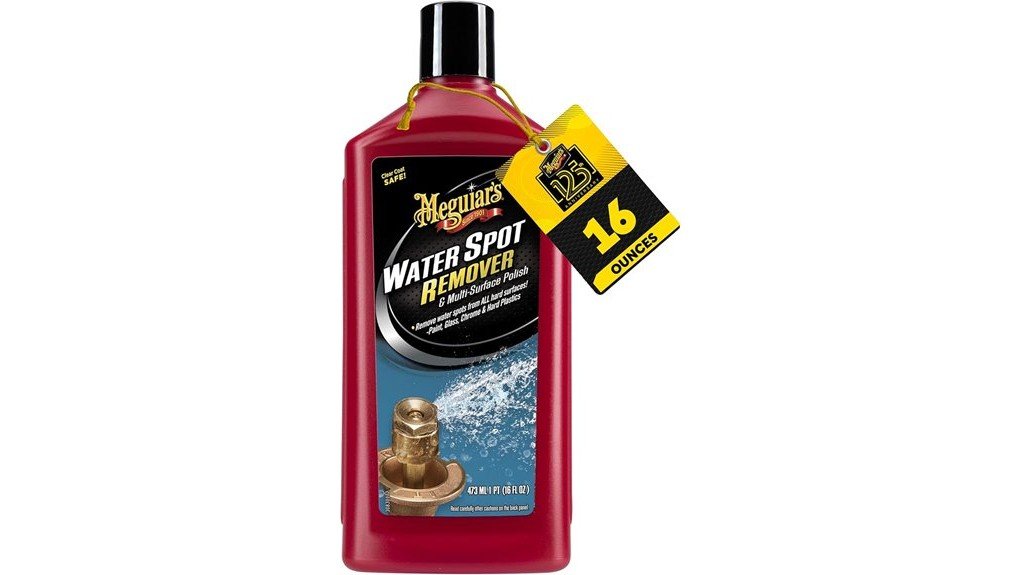
Water spots can remain visible even after you wash and dry your vehicle, especially when hard water has dried on the paint or glass. Meguiar’s Water Spot Remover A3714 gives you a way to polish away light to moderate marks without starting with a heavy compound. It works across several glossy exterior surfaces and can be applied by hand or with a dual-action polisher. This review explains where it works well, how to use it safely, and when the damage may be too deep for this product alone.
Quick Verdict
Rating: 8/10, recommended with caveats
Best For: Vehicle owners treating light to moderate water spots on glossy paint, exterior glass, chrome, hard plastic, or metal trim.
Bottom Line: Meguiar’s A3714 combines water-spot removal with mild polishing, so it can improve clarity while you clean the affected surface. It is not designed to repair deep mineral etching, and matte, satin, or flat finishes should be avoided.
Key Specifications
| Specification | Detail |
|---|---|
| Brand | Meguiar’s |
| Model | A3714 |
| ASIN | B009OBVS2K |
| Product type | Automotive water-spot remover and mild polish |
| Item form | Cream |
| Linked package | 16 fl oz, pack of 1 |
| Compatible surfaces | Glossy paint, clear coat, exterior glass, chrome, hard plastic, and metal surfaces |
| Finish restriction | Not for flat, matte, or satin finishes |
| Application | By hand with a suitable applicator or microfiber cloth, or with a dual-action polisher |
| Formula format | Ready to use |
| Main benefit | Removes water-spot marks while lightly polishing to improve gloss and clarity |
| Package note | The linked Amazon listing identifies a 16 fl oz bottle. Check the current listing and bottle size before ordering because manufacturer pages may display different package labeling. |
What Is Meguiar’s Water Spot Remover?
Meguiar’s Water Spot Remover A3714 is a ready-to-use automotive detailing cream made for marks left behind when mineral-rich water dries on a hard surface. These marks often appear after sprinkler spray, rain, an incomplete drying job, or repeated exposure to hard wash water.
The formula serves two purposes. It removes surface deposits and provides a mild polishing action that can improve gloss and clarity. This makes it different from a basic spray glass cleaner, which may clean dirt but usually does not correct water-spot marks that have bonded to the surface.
You can use it on compatible glossy paint, clear coat, exterior glass, chrome, hard exterior plastic, and metal. You should not use it on flat, matte, or satin finishes because polishing may change their appearance.
Who Should Buy It?
Best For
- Car owners dealing with light or moderate mineral spots on glossy exterior surfaces.
- Detailers who want the choice of controlled hand application or faster dual-action polishing.
- Buyers who need one product for paint, exterior glass, chrome, hard plastic, and metal trim.
Skip If
- Your vehicle has a matte, satin, or flat finish.
- The marks are deep etching that remains after the surface deposits have been removed.
- You need a simple spray-on cleaner that requires no polishing or working time.
Before You Buy: Water spots and etched paint are not the same problem. This product can remove deposits and light marks, but deep etching may require a stronger correction process or professional detailing.
Understanding Water Spots and the Damage They Cause
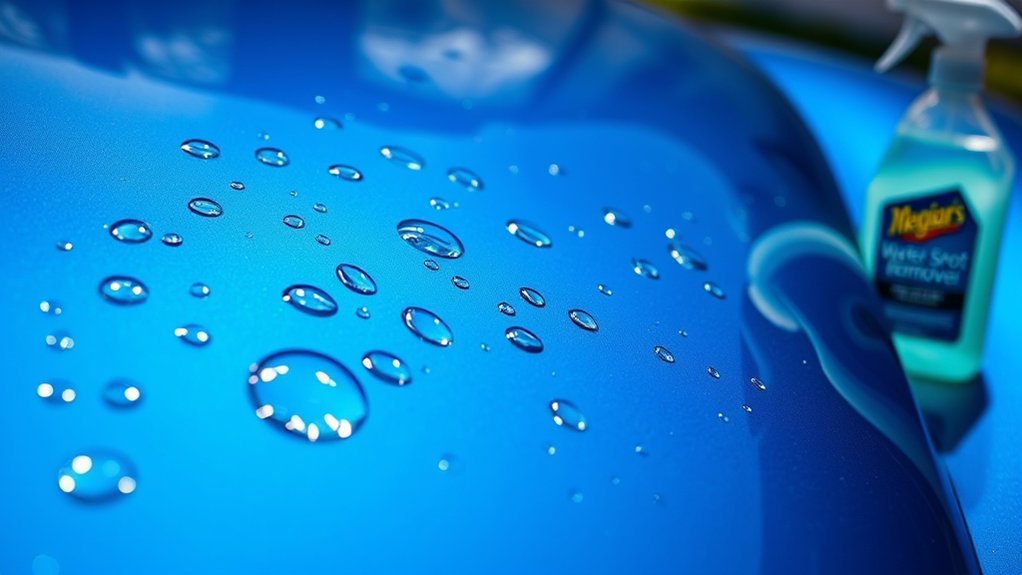
Water spots form when water evaporates and leaves minerals behind. A fresh deposit may sit on top of the surface and respond to cleaning or light polishing. A neglected spot can remain long enough to mark or etch the paint or glass beneath it.
These marks are especially noticeable on dark paint, windshields, chrome trim, and other reflective surfaces. Washing alone may not remove them once the minerals have bonded to the finish.
You can reduce future spotting by washing in the shade, drying the vehicle before water evaporates, and avoiding sprinkler overspray. A wax, sealant, or compatible paint protectant can also make routine cleaning easier, but it cannot guarantee that new spots will never form.
How the Formula Removes Water Spots
Meguiar’s A3714 uses polishing action to work on deposits and visible marks rather than acting like a simple wipe-on cleaner. As you work the cream over the surface, it helps remove the material that creates the cloudy rings or outlines associated with dried water.
The mild polishing action can also improve surface clarity and gloss. This is useful when the affected area looks dull after repeated exposure to hard water. The tradeoff is that you must use the product carefully and only on finishes that are suitable for polishing.
Surface Compatibility and Finish Safety
Glossy Paint and Clear Coat
Glossy automotive paint is the product’s main use case. Work on a clean surface and treat a small section at a time. Do not continue rubbing one area aggressively after the spot has improved, because unnecessary polishing removes more material than needed.
Exterior Glass
You can use the remover on exterior automotive glass where mineral marks have resisted normal glass cleaning. Keep it away from interior tint film unless the tint manufacturer specifically approves the use of polishing products.
Chrome, Hard Plastic, and Metal
The formula can also be used on compatible chrome, hard exterior plastic, and metal surfaces. These materials can vary in finish and condition, so a small hidden test area is sensible before treating a large or highly visible section.
Matte, Satin, and Flat Finishes
Do not use the product on matte, satin, or flat paint. Polishing may create a shiny patch that no longer matches the surrounding finish. Use a cleaner approved by the vehicle or finish manufacturer instead.
Hand Application vs. Dual-Action Polishing
| Method | Best Use | Main Tradeoff |
|---|---|---|
| Hand application | Small spots, edges, trim, and buyers who want precise control | Requires more time and physical effort on large areas |
| Dual-action polisher | Larger painted sections and faster, more even coverage | Requires suitable equipment and careful technique |
Hand application is the safer starting point when you have only a few marks or are working around trim. A dual-action polisher becomes more useful when spotting covers a hood, roof, or another broad panel.
A machine does not guarantee that deep marks will disappear. It simply lets you work the product more evenly and efficiently. Start with the least aggressive method that can solve the problem.
How It Performs in Real Use
Fresh Spots After Washing
Newer marks caused by water drying after a wash are the most suitable target. Once the vehicle is clean and dry, a small amount worked over the affected area may improve the finish within one application.
Older Hard-Water Deposits
Older deposits may need several controlled passes. Inspect the area after each pass instead of applying heavy pressure continuously. If the surface feels clean but the outline remains visible, you may be looking at etching rather than a removable deposit.
Windshields and Exterior Glass
The product can help with mineral spotting that remains after ordinary glass cleaner. You still need to remove all residue and inspect the glass in different lighting. Any remaining haze can affect visibility, especially at night or in rain.
Chrome and Exterior Trim
Small chrome and metal sections are easy to treat by hand because you can control where the product goes. Hard plastic trim also falls within the stated compatibility, but weathered, coated, or delicate trim should always be tested first.
How to Use It Correctly
- Wash the vehicle first. Remove dirt and loose grit that could scratch the surface during polishing.
- Dry the area completely. This lets you see the actual spotting and prevents fresh water from diluting the product.
- Test a hidden section. Confirm that the finish remains even and that the product removes cleanly.
- Apply a small amount. Put the cream on a clean applicator, microfiber cloth, or suitable polishing pad.
- Work a small area. Use controlled, overlapping motions rather than treating an entire panel at once.
- Wipe away the residue. Use a separate clean microfiber towel and inspect the finish.
- Repeat only when needed. A second controlled pass is better than applying excessive pressure during the first pass.
- Add protection afterward if desired. Once the finish is clean, a compatible wax or sealant can help with future maintenance.
Pro Tip: Mark the edge of the affected area with a small piece of painter’s tape placed nearby. This helps you judge whether each pass is improving the spot instead of polishing a larger area than necessary.
Compatibility and Safety
This is a polishing detailing product, so you should follow the bottle directions and use it only on suitable automotive surfaces. Keep your applicator and towels clean because trapped dirt can cause new marks while you work.
Avoid contact with interior tint film, soft interior plastic, matte paint, satin wraps, and any surface whose manufacturer warns against polishing. When you are unsure about a coating, wrap, repaint, or specialty finish, ask the installer or manufacturer before applying the product.
Stop if the treated area changes gloss, develops haze, or reacts differently from the surrounding finish. Severe etching, damaged clear coat, cracked paint, or heavily weathered trim may need professional inspection rather than repeated polishing.
Pros and Cons
Pros
- Works on several glossy exterior surfaces, including paint, glass, chrome, hard plastic, and metal.
- Combines water-spot removal with mild polishing for improved gloss and clarity.
- Can be applied by hand for control or with a dual-action polisher for larger areas.
- Safe for compatible clear coats and glossy painted finishes when used as directed.
- Ready-to-use cream requires no mixing or dilution.
Cons
- Deep mineral etching may remain after the surface deposit has been removed.
- Not suitable for flat, matte, or satin finishes.
- Older spots may require repeated passes and careful inspection.
Is It Worth the Price?
Meguiar’s A3714 offers strong value when you need one ready-to-use product for water spots across several glossy exterior surfaces. You do not have to buy separate products for paint, chrome, hard plastic, metal, and exterior glass when the marks are within this formula’s correction range.
You get the most value when the spotting is light to moderate and you already have clean microfiber towels or a suitable polishing setup. It is less cost-effective when the visible marks are deep etching, since you may still need a compound, dedicated glass polish, or professional correction.
Because package labeling can vary between current product pages, check the bottle size and package count shown on the live listing before you place an order.
How It Compares to Alternatives
Chemical Guys Heavy Duty Water Spot Remover and 3D Eraser Gel are worth comparing when you prefer a gel-style formula aimed at mineral deposits. Meguiar’s A3714 makes more sense when you want a familiar automotive polish format that can be used on several glossy exterior surfaces.
For a job limited mainly to automotive glass, Griot’s Garage Glass Polish may offer a more glass-focused approach. The best choice depends on the affected surface, the severity of the marks, and whether you want a general exterior product or a specialized cleaner.
Frequently Asked Questions
Is Meguiar’s Water Spot Remover safe for clear coat?
Yes, it is intended for compatible clear coats and glossy painted surfaces. Use it as directed, begin with a test spot, and avoid excessive pressure or repeated polishing after the mark has improved.
Will it remove deeply etched water spots?
It may improve light marks, but deep etching can remain after the mineral deposit is gone. Severe defects may require a more aggressive correction method or help from a professional detailer.
Can I use it on a windshield?
Yes, the product is intended for exterior automotive glass. Wipe away all residue and inspect the glass carefully so no haze remains in your viewing area.
Is it safe for tinted windows?
Use it only on compatible exterior glass. Do not apply it directly to interior tint film unless the tint manufacturer confirms that polishing products are safe for that film.
Can I apply it without a polishing machine?
Yes. Hand application gives you better control on small spots, edges, chrome, and trim. A dual-action polisher mainly helps you cover larger areas more quickly and evenly.
Can I use it on matte paint or a satin wrap?
No. The polishing action may create an uneven glossy area on flat, matte, or satin finishes. Choose a cleaner approved for that specific paint or wrap instead.
Does it prevent new water spots?
Its main job is to remove existing marks and improve surface clarity. Drying your vehicle promptly and applying a compatible wax or sealant afterward can make future maintenance easier.
Can I use it on a motorcycle?
You can use it on compatible glossy painted panels, exterior glass, chrome, hard plastic, and metal motorcycle surfaces. Avoid matte finishes and test a hidden area before treating a visible section.
The Bottom Line
Meguiar’s Water Spot Remover A3714 is a practical choice for light to moderate water spots on glossy automotive paint, exterior glass, chrome, hard plastic, and metal. Buy it when you want flexible hand or machine application with mild polishing, but skip it for matte finishes or defects that have etched deeply into the surface.
Ready to Buy?
Check the latest package details and product information before you decide.