Zurich, Switzerland’s largest city, combines a compact historic center with major art museums, Lake Zurich, excellent public transportation, and an easy-to-reach nightlife district. You can see a surprising amount in one day, but the route works best when you plan around museum and church opening times instead of simply moving from attraction to attraction.
Quick Answer
To see Zurich in one day, start in the Old Town, visit Grossmünster and Fraumünster, spend about 75 minutes at Kunsthaus Zurich, have a Swiss lunch, walk or cruise Lake Zurich, then visit the National Museum before closing. Finish at Lindenhof and Zurich West. On Mondays, replace both museums with outdoor stops.
Key Takeaways
- A realistic Zurich 1-day itinerary starts around 8:30 a.m. and saves the museums for their opening hours.
- Kunsthaus Zurich and the Swiss National Museum are normally closed on Mondays, so Monday visitors need a different plan.
- Old Town, Lake Zurich, Lindenhof, and Zurich West can all fit comfortably into the same day.
- Uetliberg is best treated as a substitute for one or two city stops, not an extra attraction after an already full itinerary.
- As of September 2026, construction affects direct S10 service between Zürich HB and Selnau, so Uetliberg visitors should check the current connection before leaving.
Plan Your Zurich 1-Day Itinerary Before You Start
The schedule below is designed for a Tuesday through Saturday visit. Sunday still works, but the two major Old Town churches open later after services. Monday requires a museum-free version because both Kunsthaus Zurich and the Swiss National Museum normally close that day.
| 8:30–10:00 | Walk Bahnhofstrasse, the Limmat riverfront, and the lanes of Old Town. |
| 10:00–10:50 | Visit Grossmünster and Fraumünster. Skip the tower climb if you want more museum time. |
| 11:00–12:15 | See the highlights of Kunsthaus Zurich rather than attempting the entire collection. |
| 12:30–1:30 | Eat a traditional Swiss lunch in or near Old Town. |
| 1:40–2:45 | Walk the Lake Zurich promenade or take a short cruise if the timetable lines up with your day. |
| 3:10–4:40 | Visit the Swiss National Museum. On Thursday you have more flexibility because it stays open later. |
| 5:00–5:30 | Return to Lindenhof for river and Old Town views. |
| 6:00 onward | Dinner, drinks, and optional nightlife in Zurich West. |
Getting Around Zurich
Zurich’s trams, buses, trains, and boats make a car unnecessary for this itinerary. Most central attractions are also close enough to combine walking with occasional public transport.
As of September 2026, a second-class ZVV 24-hour ticket covering one to two fare zones costs CHF 9.40. Zurich city zone 110 counts as two zones for fare calculations. Check the current ZVV fare information before travel if you are going beyond the city center.
The Zürich Card currently costs CHF 29 for 24 hours for an adult and includes unlimited second-class public transportation within its covered area plus free or discounted admission at many attractions. It can make sense if you plan to use public transport heavily and visit several included museums or attractions; otherwise, an ordinary ZVV ticket can be cheaper.
Note: This is a deliberately full itinerary. If you prefer slow travel, choose either Kunsthaus Zurich or the Swiss National Museum instead of trying to explore both in depth.
Morning: Exploring Old Town
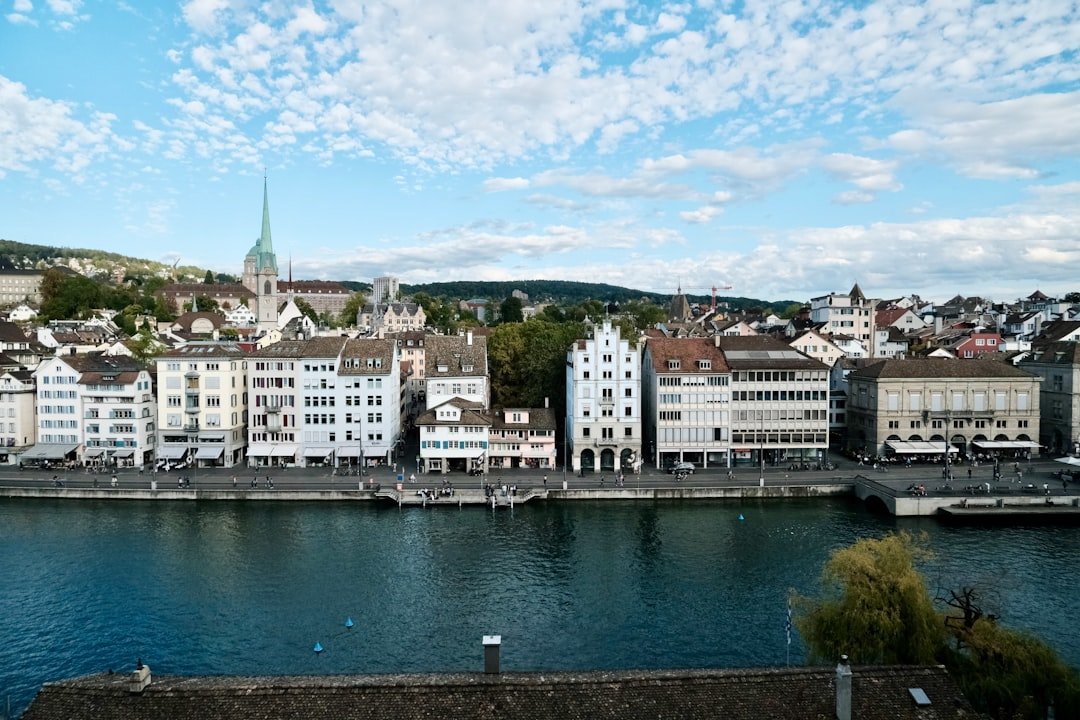
Begin your day in Zurich’s historic center, which spreads across both sides of the Limmat River. From Zürich Hauptbahnhof, walk down Bahnhofstrasse before turning into the smaller lanes of the Old Town. Early morning is a good time to appreciate the streets before the main attractions become busy.
Discover Hidden Gems
Zurich’s Old Town is more useful than a checklist of monuments. Walk through narrow streets and small squares, look at the historic guild houses along the river, and allow yourself a few short detours into quieter lanes. Shops, cafés, fountains, and centuries-old buildings sit within a compact area, so you can cover a lot without rushing between distant neighborhoods.
If you want a structured introduction, Zürich Tourism’s official Old Town walking tour takes about two hours and passes highlights such as Bahnhofstrasse, Lindenhof, and Grossmünster. For this one-day itinerary, however, a self-guided walk gives you more control over your museum schedule.
Iconic Landmarks
Grossmünster, with its two prominent towers, is one of Zurich’s best-known landmarks. The Charlemagne connection belongs to local legend rather than a simple documented founding date, so it is better understood as part of Zurich’s traditional story. The church also contains a Romanesque crypt, choir windows by Augusto Giacometti, and stained glass by Sigmar Polke.
If you want a higher viewpoint, the Karlsturm tower can be climbed by 187 stairs. As of September 2026, admission to the tower is CHF 5 for adults. Keep in mind that renovation work is taking place at Grossmünster between 2025 and 2029, so parts of the site or its surroundings may look different during your visit. Check current Grossmünster visitor information before relying on a specific area being accessible.
Across the river, Fraumünster is famous for its stained-glass works, including five windows and a rosette created by Marc Chagall in the 1970s. As of September 2026, standard visitor hours are generally from 10:00 a.m., while Sunday access begins after the church service. Check the current Fraumünster visitor details if your day falls on a Sunday or holiday.
A Peaceful Oasis
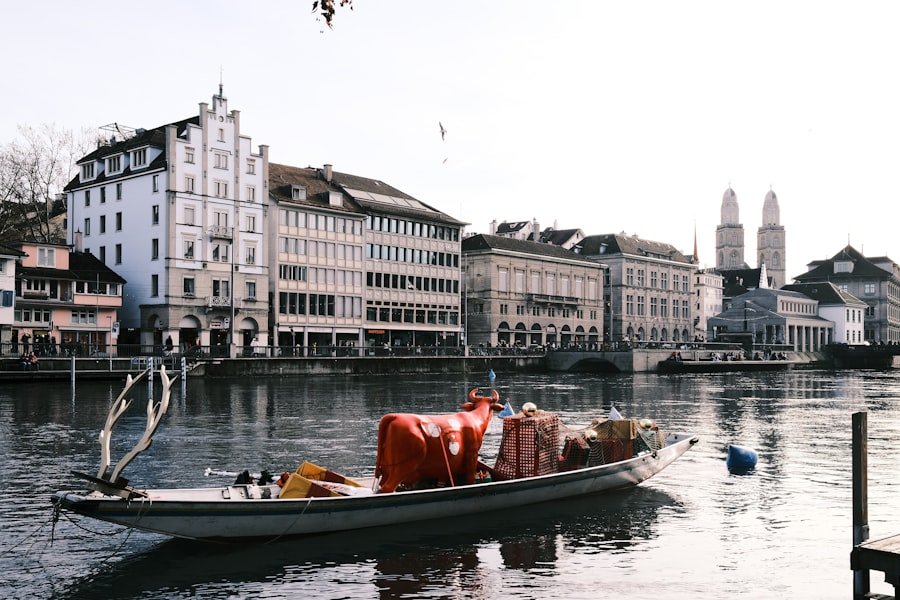
Lindenhof sits above the Old Town and gives you a free view across the Limmat toward Grossmünster, City Hall, the university district, and surrounding rooftops. You can stop briefly here in the morning, but this itinerary saves the longer break for late afternoon when you have finished the two museum stops.
Visit to Kunsthaus Zurich
After the Old Town churches, walk to Kunsthaus Zurich. Switzerland’s largest art museum brings together more than 800 years of art history, from the Middle Ages to contemporary work. Its holdings include painting, sculpture, installation, photography, video, digital work, and works on paper.
Highlights include an important Alberto Giacometti collection as well as works by Claude Monet, Vincent van Gogh, Pablo Picasso, Marc Chagall, Edvard Munch, Andy Warhol, and many other major artists. Because you only have one day in Zurich, use the museum map or visitor guide to choose a few galleries instead of attempting every room.
As of September 2026, Kunsthaus Zurich normally opens Tuesday to Wednesday and Friday to Sunday from 10:00 a.m. to 6:00 p.m., Thursday from 10:00 a.m. to 8:00 p.m., and closes Monday. The regular collection and small exhibitions currently cost CHF 24 for adults, while admission to the collection and small exhibitions is free on Wednesdays. Verify current details on the official Kunsthaus visitor page.
Pro Tip: Give Kunsthaus about 60–90 minutes on a one-day itinerary. If art is your main reason for visiting Zurich, spend longer here and skip the National Museum later.
Kunsthaus Zurich spans more than 800 years of art history, so a focused highlights visit is far more realistic than trying to see the whole museum in one day.
Lunch at a Traditional Swiss Restaurant
After the museum, return toward Old Town for lunch. Swiss cuisine is filling, so this is not the place to order three heavy specialties just because you only have one day in the country. Choose one dish you genuinely want to try and keep about an hour for the meal.
| Cheese fondue | Melted Swiss cheese served communally, usually with bread for dipping. Recipes vary by restaurant. |
| Raclette | Melted raclette cheese served with accompaniments such as potatoes or pickles, depending on the restaurant. |
| Zürcher Geschnetzeltes | A Zurich specialty of sliced veal in a creamy sauce, commonly paired with rösti. |
| Rösti | A crisp potato dish that works as a side or, depending on the preparation, a meal in its own right. |
Swiss Chuchi in the Old Town is one established option that currently lists several fondue variations, raclette, and Zurich-style ragout with rösti. Menu prices can change, so use the current restaurant menu rather than relying on a generic “average price” for Swiss food.
If you want something lighter, choose a smaller lunch and save room for dinner in Zurich West. Local wine or beer can accompany the meal, but it is entirely optional; water and non-alcoholic choices are widely available as well.
Afternoon: Stroll Along Lake Zurich
After lunch, head toward Bürkliplatz and the Lake Zurich promenade. This is the easiest part of the day to shorten or lengthen depending on your museum priorities.
If the weather is pleasant, walk along the waterfront and use the benches and park areas for a short rest. You will often see locals jogging, cycling, picnicking, or simply spending time beside the water. Continue toward Zürichhorn if you want a longer walk.
The Chinese Garden near Zürichhorn is a quieter option. It was given to Zurich by its Chinese sister city, Kunming, and contains a pond, pavilions, and landscaped grounds. Opening is seasonal, so check the current Chinese Garden information before walking there specifically for a visit.
Walk or Take a Lake Cruise?
A cruise is a good alternative when you would rather sit than walk. The official Lake Zurich Navigation Company operates several round trips. In the main summer schedule, options include a roughly 60-minute mini cruise and a roughly 90-minute short cruise; service is reduced in spring, fall, and winter.
Because departures are timetable-dependent, do not force a cruise into the itinerary if it means arriving late at the National Museum. Check current Lake Zurich cruise information first. Renting a paddleboat can also be enjoyable in suitable weather, but it is better for a slower itinerary than this museum-heavy plan.
Visit to Swiss National Museum
The Swiss National Museum, or Landesmuseum Zürich, stands beside Zürich Hauptbahnhof, making it a convenient final major sightseeing stop before the evening. The historic museum building was designed by Gustav Gull, while a modern extension by Christ & Gantenbein opened in 2016.
Discovering Switzerland’s Cultural Heritage
The museum’s overall collection contains more than 870,000 objects divided among 14 collection groups. These range from archaeology and historic manuscripts to ceramics, glass, textiles, fashion, technology, weapons, photography, and objects documenting recent Swiss history.
Do not confuse that broad collection with the permanent History of Switzerland exhibition. That exhibition focuses on roughly 550 years of Swiss development, from the 15th century into the 21st century. It explores political institutions, identity, borders, social change, and Switzerland’s development into a modern federal state.
Exploring Swiss Craftsmanship and Design
The museum is especially useful for seeing objects rather than only reading timelines. Its holdings include textiles and clothing, ceramics, glass, metalwork, craft and trade equipment, technology, photographs, and many other examples of Swiss material culture.
If you are visiting with children or you simply prefer interactive displays, look for the museum’s current family-oriented and multimedia exhibitions rather than spending your entire visit in chronological galleries.
Temporary Exhibitions and Unique Experiences
Temporary exhibitions change throughout the year, so check the official program shortly before your visit. As of September 2026, the museum normally opens Tuesday and Wednesday from 10:00 a.m. to 5:00 p.m., Thursday from 10:00 a.m. to 7:00 p.m., Friday through Sunday from 10:00 a.m. to 5:00 p.m., and closes Monday. See the official National Museum visitor information for current hours.
Pro Tip: If you reach the museum after about 4:00 p.m. on a normal 5:00 p.m. closing day, choose one permanent exhibition rather than trying to rush the entire building.
Relaxing Break at Lindenhof Hill
After the museum, walk back toward Lindenhof for a slower half hour. This elevated square overlooks the Limmat, Old Town, Grossmünster, City Hall, and the university district.
Lindenhof also carries several layers of history. A Roman fort stood here in the 4th century, and a royal palace was built on the site in the 9th century by a grandson of Charlemagne. The area later continued to serve as a gathering place for Zurich residents.
Today it is a free public viewpoint where you may see locals playing chess or meeting beneath the trees. After hours of churches, museums, and walking, that simplicity is part of its appeal.
Evening: Dinner and Drinks at Zurich West
For the evening, take public transport to Zürich-West. Once dominated by industrial activity, the district now contains restaurants, bars, shops, galleries, design businesses, and cultural venues in and around former factory areas.
Frau Gerolds Garten, near the Prime Tower, is a well-known casual choice. Zürich Tourism describes it as an urban beer garden with fresh, seasonal cuisine, small shops, art, and events. Its setup changes with the seasons, including a winter garden and fondue-focused areas during colder months.
If you prefer a sit-down meal in a more polished setting, Zurich West also has restaurants ranging from Swiss and Central European cooking to French and Mediterranean food. Reservations are sensible for popular restaurants on busy evenings.
Experience Zurich’s Nightlife
You can finish your Zurich itinerary with one drink or continue late into the night. Zurich’s nightlife is spread across Zürich-West, Langstrasse, and the central districts, so choose a venue based on the atmosphere you actually want rather than trying to visit several places.
Club Zukunft is a long-running music-focused club on Dienerstrasse. Programming changes from night to night, so check its current calendar instead of assuming a specific music style will be playing when you visit.
For a quieter evening with a skyline view, Clouds Bar & Bistro sits on the 35th floor of the Prime Tower and offers panoramic views across Zurich. If you want something more casual, Les Halles is a lively restaurant, bar, gourmet shop, and meeting place known for moules-frites; it is not a rooftop bar.
Live music, club nights, and themed events vary by date. Check the venue calendar on the day of your visit before crossing the city for one specific event.
Optional Swap: Uetliberg Mountain
Uetliberg gives you a very different version of Zurich. At 871 meters above sea level, Zurich’s local mountain offers views over the city, Lake Zurich, and the Alps on clear days, along with walking and hiking routes.
For a one-day visit, however, Uetliberg should replace part of the museum-heavy itinerary rather than be added after everything else. A good option is to skip one or both museums and spend roughly three to four hours on the mountain trip, including transportation, the walk from the station, viewpoint time, and your return.
The summit area can be reached from Uetliberg station followed by a short uphill walk. Hiking trails extend farther from the summit if you have more time.
September 2026 Transport Note: Construction currently affects the Uetlibergbahn S10. The underground SZU station at Zürich HB is closed, and the S10 operates only as far into central Zurich as Selnau. From Zürich HB, use the signed walk or tram connection to Selnau and check the current timetable before departure. The reopening of the HB section is expected in December 2026, but the exact date may change.
Current construction updates are available from SZU and the official Zürich Tourism Uetliberg page.
If Your One Day in Zurich Falls on a Monday
Monday requires a different plan because both Kunsthaus Zurich and the Swiss National Museum normally close. Fortunately, the day does not have to feel empty.
Spend more time walking both sides of Old Town, visit Grossmünster and Fraumünster during their visitor hours, explore Bahnhofstrasse, walk the Lake Zurich promenade, take a lake cruise when seasonal schedules allow, spend time at Lindenhof, and finish in Zurich West.
Uetliberg can also work particularly well on a Monday because you are not sacrificing museum time. During the current 2026 S10 construction period, simply allow extra time for the connection through Selnau.
How Much Can You Realistically See in One Day?
One day is enough for a strong introduction to Zurich, but not for an in-depth visit to every attraction. If you are a first-time visitor, prioritize three things: Old Town, one major cultural attraction, and either Lake Zurich or Uetliberg. Dinner in Zurich West then gives you a look at a very different side of the city.
If you follow the full schedule in this guide, both museums should be treated as highlights visits. If you love art, choose Kunsthaus and skip the National Museum. If Swiss history interests you more, shorten Kunsthaus or leave it for another trip.
Wear comfortable shoes because Old Town includes cobblestones and slopes. The Grossmünster tower requires 187 stairs, so skip the climb if stairs are difficult or if you need to protect your energy for the rest of the day. Zurich’s trams make it easy to reduce the amount of walking between neighborhoods.
Conclusion and Final Thoughts
Zurich works especially well for a one-day visit because its historic center, museums, lakefront, rail station, and evening districts are relatively close together. The key is not trying to spend equal time everywhere.
Start with Old Town, choose your museum priorities, enjoy a traditional Swiss lunch, leave enough time for the lake, and watch the National Museum closing time. Lindenhof provides an easy late-afternoon break before Zurich West shifts the day from sightseeing to dinner and nightlife.
Uetliberg adds one of the region’s best viewpoints, but it deserves enough time to enjoy rather than being squeezed into an already full schedule. Treat it as an alternative route, especially on Mondays or when mountain scenery matters more to you than museums.
If you enjoy recreating simple dairy dishes after your trip, this homemade cottage cheese recipe is an optional at-home cooking idea. It is not a traditional Zurich dining stop, so use the restaurant recommendations above for your actual one-day itinerary.
Frequently Asked Questions
What is the best way to get around Zurich in 1 day?
Combine walking with Zurich’s trams, buses, and trains. Old Town is compact enough to explore on foot, while public transport saves time when moving to the lakefront or Zurich West. A ZVV 24-hour ticket is useful if you expect to make several journeys.
What are the must-see attractions in Zurich for a 1-day itinerary?
For a first visit, prioritize Old Town, Grossmünster, Fraumünster, Lake Zurich, and Lindenhof. Add either Kunsthaus Zurich or the Swiss National Museum if museums interest you. Bahnhofstrasse is easy to include because it connects Zürich HB with the central sightseeing area.
Where can I find the best views of Zurich in one day?
Lindenhof gives you an easy free view over the Old Town and Limmat. The Grossmünster Karlsturm provides a higher city viewpoint after a 187-step climb. For a wider panorama of Zurich, the lake, and the Alps, make Uetliberg your main half-day alternative.
What are good dining options for a 1-day visit to Zurich?
Old Town is convenient for traditional Swiss food such as fondue, raclette, rösti, or Zürcher Geschnetzeltes. Zurich West works well for dinner because it offers many different restaurant and bar styles. Langstrasse is another option for international food. Street-food festivals can be enjoyable when they coincide with your dates, but they are events rather than dependable year-round lunch stops.
Is it possible to visit a museum or art gallery in Zurich in 1 day?
Yes. Kunsthaus Zurich and the Swiss National Museum are both practical additions to a one-day itinerary from Tuesday through Sunday. For a relaxed day, choose one. If you visit both, limit yourself to selected galleries or exhibitions and watch the National Museum’s earlier closing time on most days.
Is one day enough for Zurich?
One day is enough to see the main central sights and get a good first impression of Zurich. It is not enough to explore both major museums thoroughly, take a long lake cruise, hike Uetliberg, and enjoy every neighborhood. Choose your priorities before you start.
What should I do in Zurich on a Monday?
Because Kunsthaus Zurich and the Swiss National Museum normally close on Mondays, focus on Old Town, the churches, Bahnhofstrasse, Lake Zurich, Lindenhof, Zurich West, and possibly Uetliberg. Check individual attraction hours before traveling because holidays and special events can change normal schedules.
Is the Zürich Card worth buying for one day?
It can be worth it if you plan to use public transportation repeatedly and take advantage of included or discounted attractions. As of September 2026, the adult 24-hour Zürich Card costs CHF 29. If you only need central public transport and plan few paid attractions, a standard ZVV ticket may cost less.
Sources
- Zürich Tourism: 1, 2 or 3 Days in Zurich — official guidance on one-day sightseeing priorities.
- ZVV: 24-Hour Tickets — current public-transport validity and fares.
- Kunsthaus Zürich: Plan Your Visit — current museum hours, admission, and visitor information.
- Swiss National Museum: Visitor Information — current National Museum opening hours and access.
- Zürich Tourism: Grossmünster — church history, tower access, hours, and renovation information.
- SZU: Uetlibergbahn S10 Service Changes — current 2026 Zürich HB–Selnau closure and alternative connections.