Pisa is compact enough to explore comfortably in two days, but there is far more to see than the famous Leaning Tower. A good Pisa 2 day itinerary gives the Piazza dei Miracoli enough time for its cathedral, baptistery, tower, and Camposanto, then uses the second day for the historic center, the Arno riverfront, art, local food, and quieter corners of the city.
Quick Answer
Spend Day 1 around Piazza dei Miracoli, including the Leaning Tower, Pisa Cathedral, Baptistery, and Camposanto. On Day 2, walk through the historic center and Piazza dei Cavalieri, follow the Arno to Palazzo Blu and the Cittadella area, enjoy Tuscan food, and finish with a quieter cultural or garden stop.
Key Takeaways
- Book the Leaning Tower for a specific time because capacity is limited.
- Allow several hours for the full Piazza dei Miracoli complex instead of visiting only the Tower.
- The historic center, Piazza dei Cavalieri, Arno riverfront, and Palazzo Blu fit naturally into Day 2.
- Most central sights can be connected on foot, so a car is not necessary for this itinerary.
- Always check official opening information before your trip because monument hours can change for ceremonies, restoration, holidays, and special events.
Day 1: Explore Piazza dei Miracoli
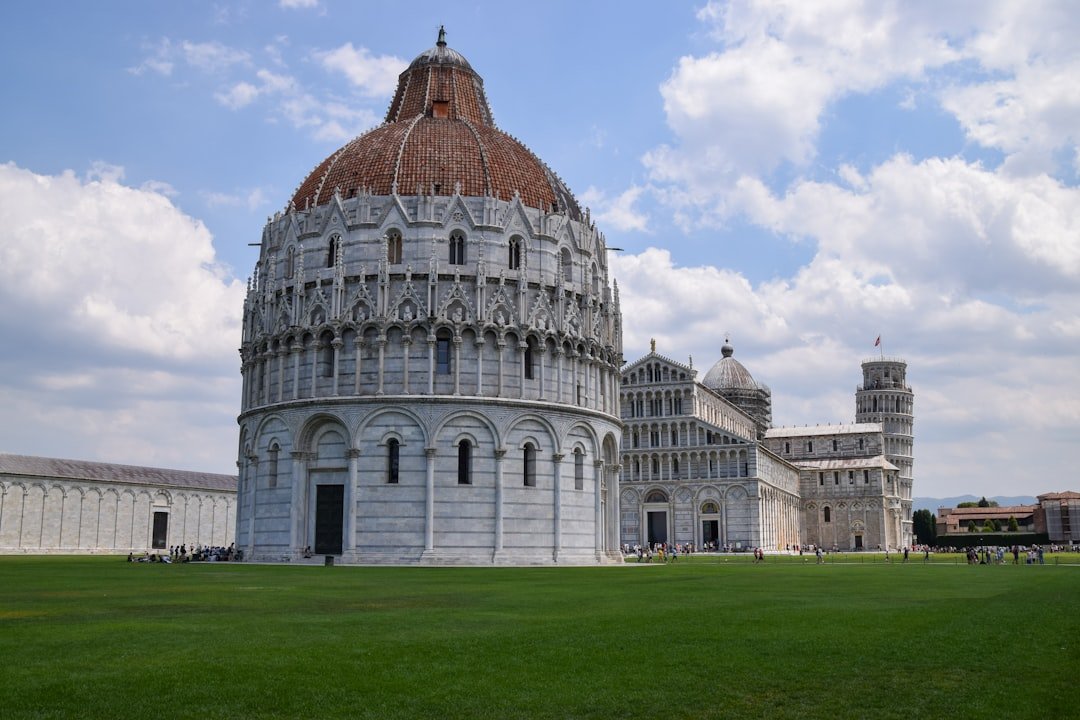
Begin at the Piazza dei Miracoli, officially Piazza del Duomo, the monumental heart of Pisa. UNESCO inscribed the square on the World Heritage List in 1987 and highlights four major masterpieces here: the Cathedral, Baptistery, Leaning Tower, and Camposanto. The white and grey marble buildings rise from broad lawns inside the historic city walls, creating one of Italy’s most recognizable architectural ensembles.
The square rewards more than a quick Tower photograph. Look closely at the arcades, sculptural decoration, striped marble, domes, and the relationship between the four monuments. UNESCO notes that the group had a major influence on medieval architecture and monumental art from the 11th through the 14th centuries. You can read the official UNESCO description at Piazza del Duomo, Pisa.
Visit the Leaning Tower of Pisa
As you approach the Leaning Tower, its angle becomes increasingly obvious. The tilt began during construction because the foundation settled unevenly in the soft ground below. Today the stabilized tower remains the bell tower of Pisa Cathedral and the best-known landmark in the city.
The climb is part of the experience, but the current visitor rules are more important than the old “294 steps” figure often repeated online. According to the official operator, the visit takes about 30 minutes and the ascent involves 251 steps. The staircase curves through the leaning structure, so the changing floor angle can feel unusual as you climb.
Warning: The official visitor guidance says the Tower floor can be uneven and slippery and that the climb is not recommended for people with cardiovascular or muscular disorders. Bags and luggage must be left at the cloakroom before entering. Visitors who will not have turned 8 by the end of the calendar year are not permitted to climb.
A Breathtaking View from the Top
At the upper level, you can look across the cathedral roof, Baptistery, lawns of Piazza del Duomo, Pisa’s red-tiled center, and the landscape beyond the city. The elevated view also makes it easier to understand how closely the monuments were planned as a single religious and architectural complex.
The setting can feel especially memorable early or late in the day, when the light is softer. However, choose your Tower time based first on ticket availability because entry is timed and visitor numbers are limited.
An Unforgettable Experience
The Leaning Tower combines architecture, engineering history, and an unusual physical experience. Even visitors who have seen it countless times in photographs are often surprised by the scale of the structure and how noticeable the lean feels when standing beside it or walking inside.
Book the Tower Before You Arrive
The Tower uses fixed entry times. Opening hours vary by date, and the official schedule can change because of ceremonies, public-safety requirements, religious events, or other circumstances. Check Opera della Primaziale Pisana’s official opening calendar and use its official ticket system rather than relying on an old static timetable.
Ordinary reduced-price Tower tickets are not generally offered. Under-18 visitors who are old enough to enter need a regular ticket and must be accompanied by an adult. The Cathedral uses a different system: admission is free with a pass, and a Cathedral pass is included when you buy another eligible monument ticket.
Pro Tip: Choose your Tower time first, then arrange the Cathedral, Baptistery, Camposanto, and museums around it. This prevents a fixed Tower reservation from breaking up the rest of your visit.
Discover the Cathedral of Santa Maria Assunta
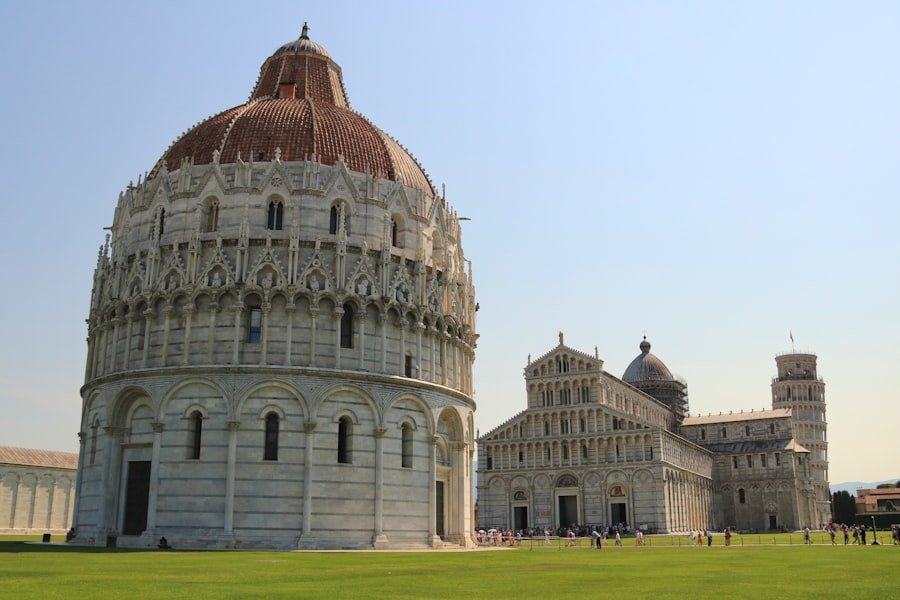
Beside the Leaning Tower stands the Cathedral of Santa Maria Assunta, the building at the center of the monumental complex. Founded in 1064 and consecrated in 1118, it became a defining example of the Pisan Romanesque style. Its marble exterior combines arcades, contrasting stone, reused classical materials, and Mediterranean influences.
Inside, the scale changes dramatically. Tall granite columns line the nave, galleries rise above the aisles, and a richly decorated coffered ceiling replaced the earlier roof after the destructive fire of 1595. Give yourself time to look beyond the main altar and study the pulpit, mosaics, columns, and decorative details.
The cathedral is also linked with Galileo Galilei. UNESCO recounts that Galileo observed the oscillations of a bronze chandelier inside Pisa Cathedral, an observation associated with his study of the isochronism of small oscillations. This is more accurate than the common story that a silver lamp on the altar directly inspired his experiments.
The Cathedral remains an active religious building. Tourist opening times can change on Sundays, religious holidays, and during services, so confirm the day’s schedule before planning a tightly timed visit.
Visit the Baptistery of St. John
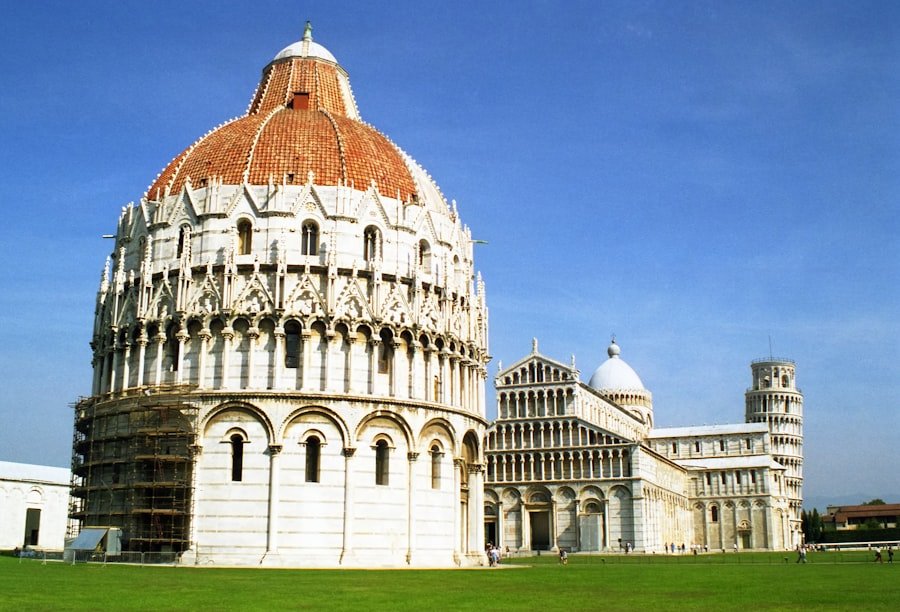
Facing the Cathedral is the Baptistery of St. John. Construction began in 1152, and the long building process helps explain its combination of Romanesque and Gothic features. The structure is almost 55 meters high, while its huge circular form makes it the largest baptistery in Italy.
Inside, the restrained central space focuses attention on the baptismal font and Nicola Pisano’s celebrated pulpit. A staircase also leads to the upper gallery, where you can look down onto the geometric interior.
The Baptistery’s acoustics are not a tourism myth. Its unusual double-dome structure creates a long reverberation, effectively turning the building into a monumental resonating chamber. The official operator states that an attendant normally demonstrates the effect at regular intervals by singing a few notes.
Restoration work can occasionally affect parts of the Baptistery, and hours can vary on Sundays and religious holidays. Check the official schedule before your visit.
Add the Camposanto Monumentale
Do not leave Piazza dei Miracoli after seeing only the Tower, Cathedral, and Baptistery. The long marble-walled Camposanto Monumentale is the fourth great monument in UNESCO’s description of the square. Its cloister-like interior contains historic tombs, Roman sarcophagi, and important medieval frescoes.
The Camposanto offers a quieter contrast to the busy lawn around the Tower. Its fresco cycle, including works associated with the famous Triumph of Death, is especially important in the history of medieval painting. The building and frescoes suffered severe damage during World War II and became the focus of a long conservation effort.
Piazza dei Miracoli Visitor Planning
| Attraction | Opening / Booking | Admission Notes |
| Piazza del Duomo | Outdoor square; monument hours are separate | Walking through the square itself is free |
| Leaning Tower of Pisa | Timed entry; hours vary by date | Paid ticket required; capacity is limited and standard reduced Tower tickets are not generally available |
| Baptistery of St. John | Hours vary; Sunday, holiday, and restoration changes are possible | Included in eligible monument ticket combinations |
| Cathedral of Pisa | Tourist visits normally begin later than the other monuments and can change for worship | Admission is free with the required pass; a pass is included with eligible monument tickets |
Day 2: Wander through Pisa’s Historic Center
On your second day, move beyond Piazza dei Miracoli and explore the streets where everyday Pisa unfolds. The historic center combines medieval lanes, university buildings, small shops, cafés, churches, markets, and grand civic squares within a relatively compact area.
Walk through streets such as Borgo Stretto and allow time for detours rather than treating Day 2 as a checklist. Colorful façades and arcades create a very different atmosphere from the open lawns and marble monuments of Piazza del Duomo.
Piazza delle Vettovaglie is one useful stop in this part of the city. The historic market square remains surrounded by food and social activity, giving you a glimpse of a more lived-in side of central Pisa.
Near the Arno, look for the small Church of Santa Maria della Spina. Its elaborate Gothic exterior, pointed forms, and sculptural decoration make it one of the most distinctive small churches in the city. Even a brief exterior stop works well as you move toward the riverfront.
Stroll along the Arno River
A walk along the Arno provides a calmer view of Pisa. Tall historic buildings line the Lungarni, their façades changing appearance as the light moves across the river. Ponte di Mezzo connects the two sides of the center and is a natural point from which to continue exploring.
The river route works especially well between Piazza Garibaldi, Santa Maria della Spina, Palazzo Blu, and the Cittadella area. Rather than rushing, pause occasionally to look back at the sequence of bridges and façades.
Late afternoon and early evening are pleasant times for this walk. The low light can give the riverside buildings a warmer tone, and the route creates an easy transition from sightseeing to dinner.
Visit the Palazzo Blu
Palazzo Blu is a historic blue-fronted palace and cultural venue on Lungarno Gambacorti. Its permanent collections and temporary exhibitions offer a useful change of pace after Pisa’s medieval churches and outdoor monuments.
Inside, you can explore paintings, decorative arts, historic rooms, and works connected with Pisa and Tuscany. The collections include art associated with Tuscan painters such as Giovanni Fattori and the Macchiaioli, while temporary exhibitions can substantially change what is on view from one visit to another.
For the permanent Pisa Foundation collections, Palazzo Blu currently lists opening hours of Tuesday through Friday from 10:00 AM to 7:00 PM and Saturday, Sunday, and holidays from 10:00 AM to 8:00 PM, with the ticket office closing one hour earlier. Temporary exhibitions can use different prices or schedules, so check Palazzo Blu’s official visitor information before you go.
Explore the Piazza dei Cavalieri
Piazza dei Cavalieri is one of Pisa’s most important civic spaces and makes an excellent historic-center stop. During the Middle Ages it was associated with political life, while a major Renaissance redesign later transformed its appearance.
The dominant building is Palazzo della Carovana, whose façade was designed by Giorgio Vasari. Today it is associated with the Scuola Normale Superiore, so the square still feels connected to learning and university life rather than functioning only as a preserved monument.
Look at the decorated façades and the way the surrounding buildings frame the square. Students passing through the area give Piazza dei Cavalieri a very different atmosphere from the heavily visited Piazza dei Miracoli.
Indulge in Tuscan Cuisine at a Local Trattoria
A two-day visit should leave room for a proper Tuscan meal. Ribollita, a hearty bread-and-vegetable soup, and pappa al pomodoro, made with tomato and bread, are classic regional dishes. In Pisa, also look for cecina, a thin savory flatbread made from chickpea flour.
Pasta with slow-cooked meat sauces, grilled meats, beans, seasonal vegetables, and simple dishes based on high-quality olive oil are common across Tuscany. Pici pasta may also appear on menus, although it is more strongly associated with southern Tuscany than Pisa itself.
Wine lists often extend well beyond the province. Chianti is a major Tuscan wine, while Vernaccia di San Gimignano comes from the San Gimignano area rather than Pisa. Vin Santo, often served with cantucci biscuits, is another traditional Tuscan option.
Family-run trattorias can be a good place to ask what is seasonal or locally popular that day instead of choosing only the best-known tourist dishes.
If you are also collecting simple fruit ideas for travel days or for when you return home, the site’s existing guide to Asian melon offers a separate snack idea. It is not a traditional Pisan specialty, so treat it as an optional food resource rather than part of the local-cuisine itinerary.
Climb the Torre Guelfa for Panoramic Views of the City
Torre Guelfa rises in the Cittadella Vecchia near the western end of central Pisa’s Arno riverfront. The tower was built during the early 15th century under Florentine rule and stood above an area with deep connections to Pisa’s medieval naval and shipbuilding history.
The original tower was destroyed during bombing in 1944 and reconstructed in 1956 to reproduce its earlier appearance. It is about 18 meters high, not approximately 48 meters as sometimes reported.
When interior access is available, the upper level offers views over the old arsenal area, the Arno, Pisa, and the greenery toward San Rossore. Current municipal information also warns that access is limited by architectural barriers.
Note: Do not build the entire afternoon around a guaranteed Torre Guelfa climb. Public access can depend on current openings and events. Check the Comune di Pisa’s Torre Guelfa page before visiting. If the tower is closed, the Cittadella and Arno riverfront are still worthwhile stops.
Relax in the Orto Botanico di Pisa
The Orto Botanico di Pisa offers a quieter finish to your sightseeing. Founded in 1543 at the request of botanist and physician Luca Ghini, it is recognized by the University of Pisa as the world’s oldest university botanic garden. It was originally closer to the Arno and moved to its present location in 1591.
The garden now covers about two hectares and holds roughly 3,000 plants. Its different sections include greenhouses, Mediterranean plants, succulents, historic trees, aquatic species, and collections organized for botanical study.
It is an appealing place to slow down after two days of churches, towers, museums, and busy streets. Shaded paths and varied plant collections make the atmosphere noticeably calmer than Piazza dei Miracoli only a short distance away.
Current access note: As of September 9, 2026, the University of Pisa lists the Botanic Museum as temporarily closed following the earthquake of August 4, 2026. The Botanic Garden has separate seasonal opening hours. Check the official opening page for the latest status before visiting.
How to Get to Pisa and Around the City
Pisa Centrale is the main railway station and has rail connections with cities across Tuscany and the rest of Italy. If you arrive by train, you can walk from the station toward the Arno, historic center, and Piazza dei Miracoli while sightseeing along the way.
Pisa International Airport, also known as Galileo Galilei Airport, sits close to the city. The automated PisaMover links the airport with Pisa Centrale. The operator currently states that the journey takes about five minutes including the intermediate stop and that the service runs daily, with operating times extending later during the June-to-September period. Check PisaMover’s official timetable before travel.
Once you are in central Pisa, walking is usually the simplest way to follow this itinerary. The major historic-center sights are close enough that repeatedly using taxis or buses can add more complication than convenience.
Best Time to Visit Pisa
Spring and early autumn are attractive periods for walking because temperatures are generally milder than during the hottest part of summer. April through June and September through October are therefore popular choices for travelers who want to spend much of the day outdoors.
July and August bring long daylight hours and extended summer activity, but they can also mean stronger heat and heavier visitor numbers around the Leaning Tower. In 2026, the Piazza del Duomo monuments even offered extended summer evening openings through late August, showing why checking seasonal schedules can reveal useful alternatives to midday sightseeing.
Winter is quieter and can suit travelers who prefer fewer crowds, but days are shorter and opening schedules may be more limited. Whatever month you choose, check monument schedules shortly before the trip instead of relying on permanent opening hours copied from older guides.
Suggested Pisa 2 Day Itinerary Schedule
| Time | Plan |
| Day 1 morning | Arrive at Piazza dei Miracoli; explore the exterior of the complex and visit the Cathedral and Baptistery around your reserved Tower slot. |
| Day 1 afternoon | Visit Camposanto and any Piazza del Duomo museum that interests you; leave time for photographs and a relaxed walk around the square. |
| Day 2 morning | Walk the historic center, Borgo Stretto, Piazza delle Vettovaglie, and Piazza dei Cavalieri. |
| Day 2 lunch | Choose a trattoria and try a Tuscan or Pisan specialty such as ribollita, pappa al pomodoro, or cecina. |
| Day 2 afternoon | Follow the Arno past Santa Maria della Spina and Palazzo Blu toward the Cittadella and Torre Guelfa. |
| Day 2 late afternoon | Use remaining time for the Botanic Garden, another museum, or a slow riverside walk before dinner. |
Frequently Asked Questions
What are the top attractions to visit in Pisa?
Start with the Piazza dei Miracoli complex: the Leaning Tower, Pisa Cathedral, Baptistery of St. John, and Camposanto. Beyond the square, add Piazza dei Cavalieri, the Arno riverfront, Santa Maria della Spina, Palazzo Blu, and the historic center.
How can I get to Pisa?
Pisa Centrale is the city’s principal rail station and connects with major Italian rail routes. Pisa International Airport is close to the center, and the PisaMover automated shuttle connects the airport with Pisa Centrale in about five minutes.
What is the best time to visit Pisa?
Spring and early autumn are good choices for travelers who prefer milder walking weather. Summer offers long days but can be hotter and busier, while winter is generally quieter. Opening hours vary seasonally, so check the official monument schedules for your exact dates.
What is the local cuisine in Pisa?
Pisa shares the broader Tuscan tradition of simple, ingredient-focused cooking. Try dishes such as ribollita, pappa al pomodoro, and cecina, a chickpea-flour flatbread strongly associated with this part of Tuscany. Local menus also feature pasta, meat, beans, vegetables, olive oil, and Tuscan wines.
Is it possible to visit Pisa in 2 days?
Yes. Two days are enough to see the full Piazza dei Miracoli complex and spend a second day exploring the historic center, Piazza dei Cavalieri, Arno riverfront, Palazzo Blu, food stops, and another museum or garden. The compact center makes this pace realistic without rushing every stop.
Do I need to book the Leaning Tower of Pisa in advance?
Advance booking is strongly recommended because Tower tickets use a specific entry time and capacity is limited. Choose your Tower time first, then plan the other Piazza dei Miracoli monuments around that reservation.
Can young children climb the Leaning Tower?
No. Under the official visitor rules, children who will not have turned 8 by the end of the calendar year are not permitted to enter the Tower. Visitors under 18 who are old enough to climb must be accompanied by an adult.
Sources
- UNESCO World Heritage Centre — Piazza del Duomo, Pisa — World Heritage status, monument significance, architecture, and Galileo connection.
- Opera della Primaziale Pisana — opening calendar and official visitor advice — Tower timing, stairs, bag rules, safety, Cathedral access, and monument schedules.
- Palazzo Blu — official visiting information — current permanent-collection hours and visitor details.
- Comune di Pisa — Torre Guelfa — official history, reconstruction, location, views, and accessibility information.
- University of Pisa — Botanic Garden history and current opening information — 1543 foundation, present site, seasonal hours, and temporary museum closure.
- PisaMover — airport and railway-station shuttle — current service pattern and approximate airport-to-Pisa Centrale journey time.