The walk through the Flims Forest from Caumasee toward Crestasee combines turquoise water, deep woodland, mountain scenery, and several strong photography locations. It is best planned as a flexible outing rather than one fixed 4.5-kilometer trail because different routes can include Conn, the Il Spir viewpoint, Crestasee, the Felsbach Gorge, or additional lakes before returning to Flims.
Quick Answer
For the best photos on the Caumasee to Crestasee walk, prioritize Caumasee’s turquoise shoreline, the forest around Conn, the Il Spir Rhine Gorge viewpoint, Crestasee’s reflections, and the Felsbach Gorge. Allow extra time for photography because published routes through this area vary considerably in distance, difficulty, and walking time.
Key Takeaways
- Caumasee is the strongest location for turquoise-water and forest-framed images.
- Il Spir near Conn adds a completely different composition with a high view over the Rhine Gorge.
- Crestasee works especially well for quiet shoreline details and reflections when the water is calm.
- Do not rely on the old 4.5 km figure. Published routes containing both lakes range considerably in distance and duration.
- A phone is enough for good photographs, although a polarizing filter, spare battery, and lightweight tripod can expand your options.
- Drones and other flying models are prohibited throughout the Caumasee area.
At a Glance
| Time Required | Allow roughly 2–3 hours for a shorter Caumasee–Crestasee forest outing, and longer if you add Il Spir, swimming, or extensive photography. Published four-lake routes take about 3 hours 40 minutes to 4 hours 20 minutes of walking. |
| Difficulty | Easy to moderate depending on the route. The official four-lake hike is rated medium. |
| Tools Needed | Phone or camera, spare battery, water, weather protection, and shoes with good grip. A wide-angle lens, polarizing filter, and lightweight tripod are optional. |
| Cost | Walking the forest routes does not require a hiking ticket, but the managed bathing areas can charge admission. In summer 2026, visitor admission to Bogn La Cauma is CHF 18 for adults, while Crestasee lists CHF 7 adult admission. Check current prices before visiting. |
| Useful Starting Area | Flims Waldhaus is a practical starting area for reaching Caumasee and continuing through the forest toward Conn and Crestasee. |
Choose Your Caumasee to Crestasee Route First
One of the most important planning details is that “the Caumasee to Crestasee walk” can describe several different outings. The forest contains a network of paths, so distance and walking time depend on where you start, whether you visit Conn and Il Spir, and where you finish.
For comparison, Graubünden Tourism’s four-lake hike is 12.9 kilometers and lists a walking time of about 3 hours 40 minutes. SwitzerlandMobility’s Senda quatter lags da Flem covers 15 kilometers in about 4 hours 20 minutes. Both include Caumasee and Crestasee but follow different overall routes.
If your main goal is photography rather than completing a specific official circuit, a practical approach is to start around Flims Waldhaus, visit Caumasee, continue through the Flims Forest toward Conn, decide whether to make the Il Spir detour, and then continue toward Crestasee. You can arrange your return according to your available time and current trail conditions.
Note: Walking time and photography time are not the same. Swimming, waiting for calm water, experimenting with compositions, eating at Conn, or visiting Il Spir can turn a two- or three-hour walk into a half-day outing.
The Enchanting Beauty of Caumasee
Caumasee, also called Lag la Cauma, is known for its turquoise-colored water and wooded setting. The official Flims Laax Caumasee guide describes a forested lake with a small wooded island, swimming facilities, pedal boats, stand-up paddleboards, restaurants, changing areas, and several ways to approach it from Flims Waldhaus.
For photography, start before you reach the busiest part of the shore. Openings between the trees can frame the turquoise water and island while giving the picture more depth. Once you reach lake level, look for simple compositions using the shoreline as a leading line. Reflections become more noticeable when wind is light and the surface is calm.
The lake can look very different as the light changes. Direct sun can make the turquoise color vivid, while softer light can reduce glare and make it easier to retain detail in both the forest and water. Autumn foliage can add warmer colors around the lake, but trail and weather conditions should always take priority over a photography schedule.
Warning: Do not plan drone photographs at Caumasee. Flims Laax states that multicopters, drones, and other flying models are prohibited throughout the Caumasee area. The lake also has fire, dog, and bathing-area rules that visitors should check before entering.
Capturing the Serenity of Crestasee
Crestasee provides a different photographic atmosphere. It lies lower than Caumasee, not higher. Regional route information places Caumasee at about 997 meters above sea level and Crestasee at about 845 meters.
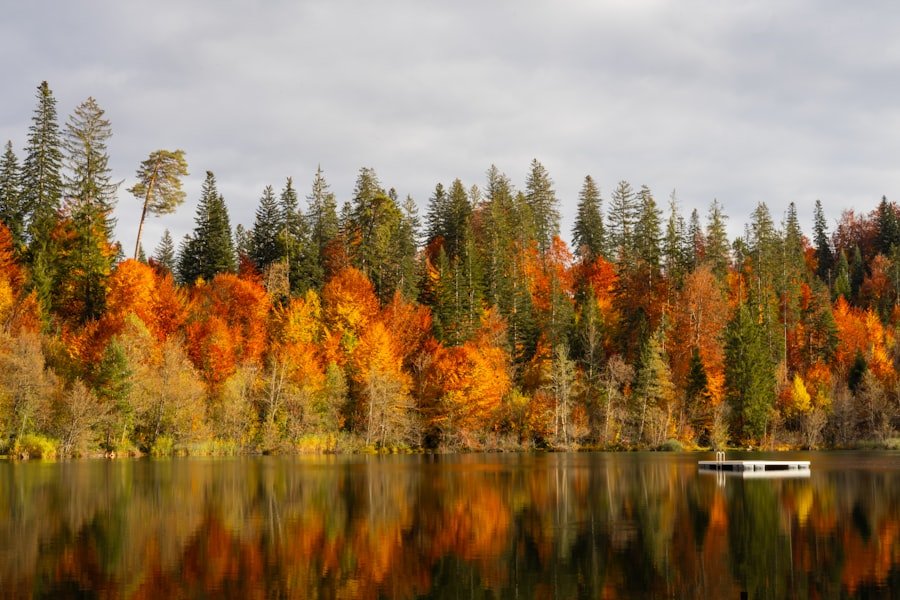
The official Flims Laax Crestasee guide describes the lake as crystal clear and surrounded by a dark green grove of trees. The wooded shoreline makes it particularly useful for quieter compositions based on reflections, tree trunks, small patches of light, and the contrast between dark forest and bright water.
Instead of photographing only a wide lake view, try several focal lengths. A wide view can establish the setting, while a longer focal length can isolate reflections, swimmers, boats, or repeating tree patterns. When the water is calm, keep the horizon level and leave enough space for the reflection rather than cropping it too tightly.
Crestasee is approached on foot at the lake itself. The official visitor information lists a restaurant, kiosk, boat rental, stand-up paddle options, changing facilities, and a natural bathing area.
Verified Photo Stops Along the Scenic Trail
| Photo Stop | What to Photograph | Best Approach |
| Caumasee | Turquoise water, wooded island, shoreline curves, and forest framing. | Try both a wide establishing image and tighter details where trees frame the water. |
| Conn and Il Spir | A high view into the Rhine Gorge and a landscape that looks very different from the lakes. | Use the viewpoint as a deliberate detour if you have enough time rather than rushing it between the lakes. |
| Crestasee | Clear water, reflections, wooded shoreline, boats, and quiet details. | Look for calm water and simple compositions instead of trying to include everything in one frame. |
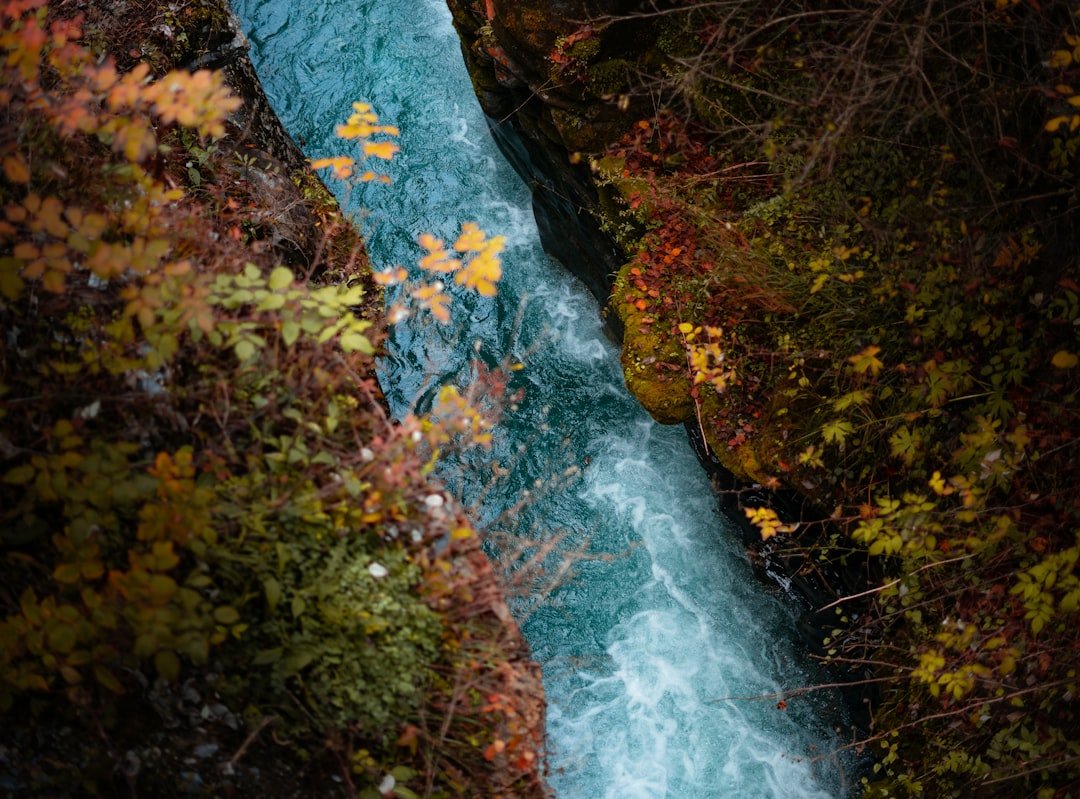
| Felsbach Gorge | Flowing water, shaded forest, rock, and the narrow gorge carved by the Flem. | Use it as an additional stop when your route continues from Crestasee toward Flims or Trin. |
The strongest “hidden gems” are therefore not unnamed waterfalls or unspecified ruins. They are the changing environments between the lakes: the blocky forest landscape, shaded tracks, Conn clearing, the Rhine Gorge viewpoint at Il Spir, and the Felsbach Gorge.
Official route descriptions specifically connect Caumasee with Conn, Il Spir, Crestasee, and the Felsbach Gorge. This sequence gives photographers useful variety without needing to invent extra attractions.
Best Times of Day for Photography
Early morning and late afternoon often produce softer light than the middle of a clear day, but forested lakes do not behave exactly like open mountain viewpoints. Trees and surrounding terrain can place parts of Caumasee and Crestasee in shade well before sunset, so the best light depends on season, cloud cover, and your exact position.
The best light is not always the brightest light. Calm water, controlled highlights, and a clear composition can matter more than arriving at a textbook “golden hour.”
Early Morning
Morning is useful when you want softer light and a better chance of calm-looking water. It can also make forest scenes easier to photograph because the contrast between bright water and dark trees may be less severe. If you arrive before managed bathing facilities open, respect all access restrictions and remember that lifeguard services may not yet be operating.
Middle of the Day
Strong sun can make Caumasee’s color especially vivid, but glare can become a problem. A circular polarizing filter can reduce some reflections and deepen color, although rotating it too far can make skies or water look unnatural. Phone users can often improve the result simply by changing position so that the strongest reflection is not directly facing the camera.
Late Afternoon
Later light can create warmer tones on trees and mountains. However, the forest may shade sections of the lakes early. If sunset itself is your priority, check the sun direction and make sure your return route remains comfortable in fading light.
Cloudy Conditions
Overcast weather can be excellent for the forest. Clouds act like a large diffuser, reducing harsh highlights and helping cameras retain detail in dark trees and bright water at the same time. Wet foliage after rain can also appear richer, but slippery paths require extra care.
Tips for Taking Stunning Photos
Composition matters more than owning expensive equipment. Use paths, shorelines, fallen logs, or rows of trees as leading lines. Instead of automatically placing the lake in the middle of every frame, move a few steps left or right and watch how foreground objects change the balance.
Experiment with height as well. A lower viewpoint can bring rocks, flowers, leaves, or the shoreline into the foreground. A slightly higher position can reveal more of a lake’s shape. Always remain on permitted paths and stable surfaces rather than stepping into sensitive vegetation just to gain a different angle.
Use Exposure Compensation
Bright water can trick a camera into darkening the entire scene. If the forest looks too dark, try a small positive exposure adjustment while watching that highlights on the water do not become pure white. Modern phones usually let you change exposure by tapping the scene and dragging the brightness control.
Photograph Reflections Carefully
For a strong reflection, look for calm water first. Keep the camera level and decide whether the reflection or the landscape is the main subject. If both are equally important, a balanced composition can work well. If ripples destroy the mirror effect, switch to photographing texture rather than waiting endlessly for perfect stillness.
Take Several Versions
Make a wide image, a medium image, and one detail shot at each major location. This gives you more variety than taking ten nearly identical wide photographs. It also helps tell the story of the walk rather than showing only panoramic scenery.
Pro Tip: Before leaving a location, turn around and look back along the path. The strongest composition is often behind you, especially where the forest opens toward the lakes.
Gear and Equipment for the Hike
You do not need a DSLR or mirrorless camera to photograph this walk. A recent smartphone can handle wide landscapes, reflections, close details, and most daylight conditions. A dedicated camera becomes more useful if you want greater control over focal length, low-light images, or large prints.
- Wide-angle lens: Useful for lakes, forest interiors, and the Rhine Gorge.
- Standard zoom: The most flexible choice if you want to carry only one lens.
- Telephoto lens: Useful for isolating distant mountain details, reflections, or small sections of the landscape.
- Circular polarizer: Optional, but helpful for controlling glare on water and wet leaves.
- Lightweight tripod: Useful for slower shutter speeds, low light, or carefully composed reflection shots.
- Spare battery or power bank: Navigation, photography, and cold weather can drain batteries faster than expected.
- Weather protection: Carry protection for both yourself and your camera when rain is possible.
- Footwear with grip: Forest tracks can become wet or slippery.
Graubünden Tourism recommends trekking shoes, weather-appropriate clothing, sun or rain protection, drinks, and optional food for the longer four-lake route. Swiss Hiking Trails also recommends planning for current weather and trail conditions rather than assuming a marked route is free from seasonal hazards.
Access, Facilities, and 2026 Visitor Information
Caumasee
From the “Flims Waldhaus Caumasee” bus stop, the official visitor information gives roughly 15 minutes on foot to the Caumasee lift and about another 15 minutes on forest paths if you continue to the lake without shortening the descent. The approach from Flims Waldhaus is described as suitable for buggies and wheelchairs.
For summer 2026, Bogn La Cauma’s managed bathing facility is scheduled to operate daily from 8:30 a.m. to 5 p.m., subject to weather changes. Current single-entry prices listed by Flims Laax are CHF 18 for adult visitors and CHF 9 for visitors up to age 16. Local residents and qualifying guest-card holders have different prices.
The free Caumasee lift descends about 80 vertical meters. The current official page also carries a notice that the lift will be temporarily out of service from September 2 because of renovation work. Check the official page before relying on the lift.
Crestasee
Crestasee’s current official entrance prices are CHF 7 for adults, CHF 5 for adults with a qualifying guest pass, CHF 3 for children and school pupils aged 6–16, and free admission for children under six. Opening can depend on weather, so check the current Crestasee information before traveling.
The lake has a restaurant and kiosk, and the official page lists rowing boats and stand-up paddle options. Visitors coming from the direction of Trin can also use the “Trin, Felsbach-Crestasee” bus stop, from which the lake is about a 15-minute walk.
Food and Water
Even with restaurants and kiosks available in the area, carry water and a small snack in case your route takes longer than planned or operating hours change. If you prefer making food before leaving, this existing homemade cottage cheese recipe is one option for preparing a simple snack in advance.
Preserving the Natural Beauty Through Responsible Photography
The Flims Forest is not a photography set. Stay on marked paths, take rubbish with you, and avoid trampling vegetation to reach a composition. Flims Laax specifically asks visitors to use signed paths and respect the natural environment.
Many routes in the region are shared by walkers and cyclists. Keep camera bags, tripods, and people out of the middle of the trail when stopping for photographs. Listen for approaching bikes and move to a safe position before setting up a shot.
Wildlife should be photographed from a respectful distance. Do not chase animals, play sounds to attract them, or block their movement. The same principle applies to other visitors: avoid occupying narrow viewpoints for long periods when people are waiting.
At Caumasee, follow the site’s specific rules. Drones are prohibited, fires and barbecues are prohibited around the lake area, and dogs have restrictions within the managed bathing area. Checking the current official rules before arrival is the easiest way to avoid problems.
Frequently Asked Questions
What is the Caumasee to Crestasee walk?
It is a walk through the Flims Forest linking the areas around Caumasee and Crestasee. There is no single universal route with one fixed distance. Depending on your chosen path, you can also include Conn, the Il Spir viewpoint, the Rhine Gorge, and the Felsbach Gorge.
What are the best photo spots along the Caumasee to Crestasee walk?
The strongest verified photo locations are Caumasee’s turquoise shoreline, forest paths around Conn, the Il Spir viewpoint over the Rhine Gorge, Crestasee’s clear water and reflections, and the Felsbach Gorge if your route includes it.
How long is the Caumasee to Crestasee walk?
It depends on the route. A shorter forest outing can take roughly 2–3 hours, while published routes that include both lakes can be much longer. Graubünden Tourism’s four-lake route is 12.9 km and about 3 hours 40 minutes, while SwitzerlandMobility’s four-lake route is 15 km and about 4 hours 20 minutes.
What is the best time of year to do the Caumasee to Crestasee walk?
Summer is convenient for swimming, green scenery, and operating lake facilities, while autumn can provide colorful foliage. Do not treat June through September as a guaranteed trail season. Check current weather, snow, ice, closures, and facility information before every visit.
Are there facilities or amenities along the walk?
Yes. Caumasee has managed bathing facilities, changing areas, restaurants and seasonal food options. Crestasee has a natural bathing area, restaurant, kiosk, boat rental, and other water activities. Restaurant Conn is another possible food stop when your route passes through Conn.
Can I fly a drone at Caumasee?
No. Flims Laax states that drones, multicopters, and other flying models are prohibited throughout the Caumasee area.
Is the Caumasee to Crestasee route suitable for strollers or wheelchairs?
Do not assume the complete route is fully accessible. The official Caumasee information says the approach from Flims Waldhaus can be used with buggies and wheelchairs, but longer forest routes and optional sections can have different surfaces, gradients, and conditions.
Do I need to pay just to walk between Caumasee and Crestasee?
The hiking paths themselves are not sold as a paid hiking route, but managed bathing areas and some facilities can charge admission. In 2026, Bogn La Cauma and the Crestasee natural bathing area both publish admission prices, so check the current rules if you want to enter those areas.
Sources
- Flims Laax: Lake Cauma — current 2026 bathing hours, prices, access, facilities, lift information, and visitor rules.
- Flims Laax: Lake Cresta — current admission prices, facilities, access, and Felsbach Gorge information.
- Graubünden Tourism: Four-Lake Hike — verified route distance, duration, difficulty, equipment, and route sequence.
- SwitzerlandMobility: Senda quatter lags da Flem — official 15 km four-lake route, walking time, and route description.
- Swiss Hiking Trails: Hiking Safety — route planning, weather, equipment, and responsible hiking guidance.