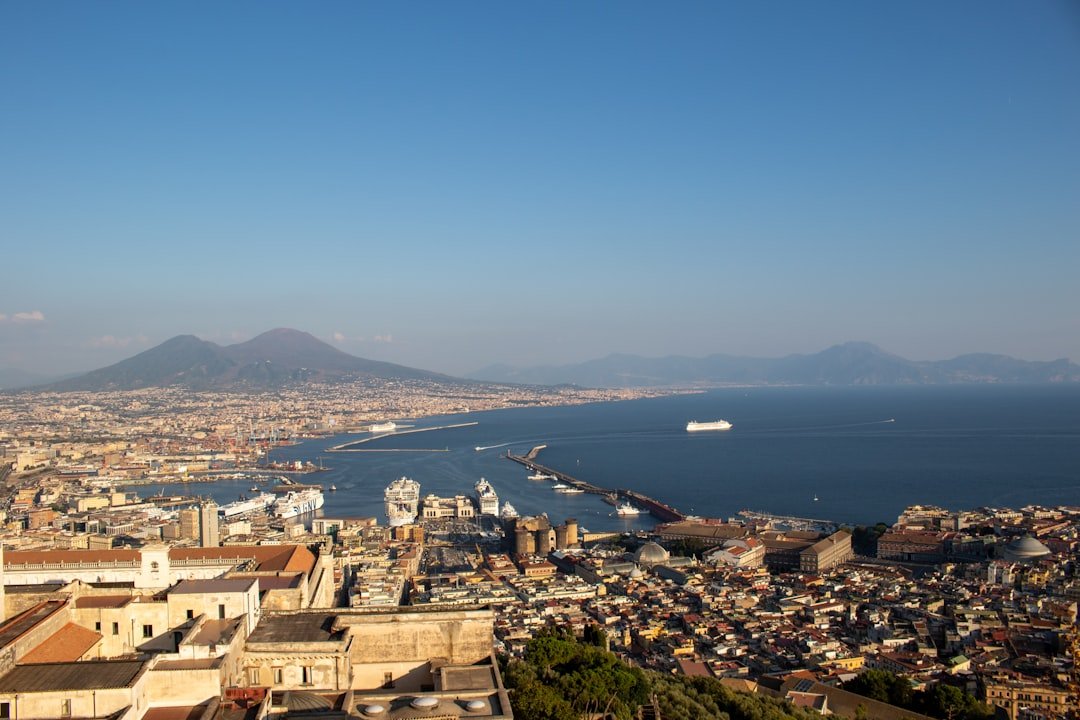
Taormina gives you ancient architecture, lively streets, gardens, beaches, hilltop views, and Mount Etna within a compact area. The strongest photographs come from matching each location with the right light, lens, and time of day rather than trying to visit every viewpoint at midday.
Quick Answer
Taormina’s best photo spots are the Ancient Theatre, Villa Comunale, Piazza IX Aprile, Isola Bella, Castelmola, Corso Umberto I, the Church of San Giuseppe, and viewpoints toward Mount Etna. Visit early for quiet streets, return in late afternoon for warm light, and check attraction access and volcanic conditions before setting out.
Key Takeaways
- The Ancient Theatre is the classic Taormina photograph, combining Roman architecture with views toward the Ionian Sea and Mount Etna.
- Villa Comunale works well for portraits, garden details, shaded scenes, and coastal viewpoints.
- Piazza IX Aprile and Corso Umberto I are strongest early in the morning, before pedestrian traffic becomes heavy.
- Isola Bella is best for coastal landscapes, turquoise water, pebble textures, and views of the tidal isthmus.
- Castelmola provides the widest elevated views over Taormina, Giardini Naxos, the Ionian coast, and Etna.
- Opening hours, event closures, sea conditions, and volcanic activity can change, so confirm current information before travelling.
Best Photo Spots in Taormina at a Glance
| Location | Best For | Best Light | Access Notes |
|---|---|---|---|
| Ancient Theatre | Architecture, Etna, sea views | Morning or late afternoon | Ticketed site with steps and uneven stone |
| Villa Comunale | Portraits, plants, shaded details | Early morning | Paths include slopes and some uneven surfaces |
| Piazza IX Aprile | Street scenes, Clock Tower, panoramas | Sunrise and blue hour | Free public square; crowded later in the day |
| Isola Bella | Coast, water, pebble beach | Morning or late afternoon | Stairs, pebbles, water, and a tidal isthmus |
| Castelmola | Wide panoramas and elevated views | Late afternoon and sunset | Reachable by road, bus, taxi, or a steep walk |
| Corso Umberto I | Street life, doors, façades, details | Early morning or evening | Pedestrian street with heavy daytime traffic |
| San Giuseppe | Baroque architecture and symmetry | Morning or soft afternoon light | Respect services and interior photography rules |
| Mount Etna Views | Telephoto landscapes and weather | Clear mornings and golden hour | Visibility and volcanic conditions change quickly |
Ancient Theatre of Taormina: The Classic Etna View
The Ancient Theatre is one of the most recognisable photography locations in Taormina. Its original layout dates to the third or second century BC, but most of the structure visible today belongs to a major Roman reconstruction completed during the second century AD.
According to the official Naxos-Taormina Archaeological Park, the cavea measures approximately 109 metres across and is divided into nine sectors. Historical estimates place its ancient capacity near 10,000 spectators, while the venue’s modern seated event capacity is about 4,500.
The broken stage wall now frames the Ionian coast and Mount Etna. That opening creates the theatre’s signature composition: ancient columns and brickwork in the foreground, the bay in the middle distance, and Etna on the horizon.
Start with a wide horizontal frame from the upper seating area. Then move lower and use arches, columns, or the edges of the stage building as natural frames. A medium telephoto lens can make Etna appear larger behind the ruins, while a wide-angle lens shows the scale of the seating and coastline.
Pro Tip: Cultural events and stage installations can change the usual view or restrict parts of the site. Check the official schedule before planning a specific composition, and arrive near opening time for fewer people.
The Gardens of Villa Comunale: A Lush Oasis for Photography
A Diverse Array of Flora
Villa Comunale, also known as Parco Florence Trevelyan, provides a shaded contrast to Taormina’s stone streets. Lady Florence Trevelyan settled in Taormina in 1884 and married local doctor and mayor Salvatore Cacciola in 1890. The garden later became public and is now maintained by the municipality.
The paths pass palms, Mediterranean pines, cypresses, flowering plants, and layered greenery. These elements work well for portraits, close-up plant studies, and photographs that use leaves or branches to frame the coastline.
Coastal Views and the Trevelyan Follies
The garden overlooks the Ionian coast and provides views toward Mount Etna when the weather is clear. It also contains eccentric ornamental buildings commonly known as the Victorian Follies or “beehives.” Their stonework, arches, steps, and irregular shapes create more distinctive subjects than a standard garden scene.
Use a wide lens to place a folly within the surrounding vegetation. For detail photographs, look for repeating stone textures, openings, rooflines, and the contrast between architecture and plants.
An Ideal Backdrop for Portrait Photography
Morning and late-afternoon light filters through the trees and produces softer contrast than the open piazzas. Position your subject near the edge of the shade rather than under dense foliage, where faces may develop a green colour cast.
A short portrait lens or phone portrait mode can separate the subject from the layered background. Keep public paths clear and avoid placing equipment where it may obstruct other visitors.
Piazza IX Aprile: Taormina’s Historic Panoramic Square
Piazza IX Aprile is one of Taormina’s central gathering places. Its patterned paving, cafés, churches, Clock Tower, and broad coastal viewpoint give you several subjects without leaving the square.
The Clock Tower dates to the 12th century. It was destroyed during a French attack in 1676 and rebuilt in 1679, when the large clock was installed. Photographing through or beside the tower’s arch can create a strong frame for Corso Umberto and the surrounding buildings.
Arrive around sunrise to photograph the paving and architecture with fewer people. Later in the day, the square becomes better for candid street scenes, silhouettes, and photographs showing Taormina’s busy atmosphere.
For the panoramic view, expose for the bright sky and lift the shadows carefully during editing. A graduated exposure or phone HDR mode can help retain detail in both the coastline and shaded foreground.
Isola Bella: Beach and Coastal Photography
| Aspect | Details |
|---|---|
| Location | Mazzarò Bay below Taormina, on Sicily’s Ionian coast |
| Protected Area | The wider regional nature reserve covers approximately 10.49 hectares and includes Isola Bella, Capo Sant’Andrea, and Capo Taormina |
| Connection to Shore | A short isthmus may be exposed or covered by shallow water depending on sea conditions |
| Photography Subjects | Turquoise water, pebble beach, vegetation, reflections, coastal rocks, the isthmus, and elevated bay views |
| Access | Cable car or road transport to Mazzarò, followed by steps and an uneven pebble shoreline |
| Current Visitor Status | The visitor site reopened on June 20, 2026, after a temporary weather-related closure; reconfirm access before visiting |
Isola Bella is a small islet joined to the mainland by a short isthmus that can be submerged or exposed as water conditions change. Ferdinand I of Bourbon donated it to Taormina in 1806. Florence Trevelyan purchased it in 1890 and introduced many of the plants associated with its garden landscape.
The protected reserve was established in 1998. Current regional records identify the University of Catania as the reserve’s managing body, while visitor information and ticketing for the island site are provided through the Naxos-Taormina Archaeological Park.
From the beach, use the curve of the shoreline as a leading line toward the island. A polarising filter can reduce glare and deepen the appearance of the water, although its effect varies with the angle of the sun. A slower shutter speed can soften small waves, but only use a tripod where staff rules and pedestrian space allow it.
Colourful pebbles, wet stones, shallow water, and reflections provide strong foreground details. For a wider view of the complete bay, photograph from the paths and viewpoints above Mazzarò rather than only from beach level.
Note: The Taormina-Mazzarò cable car reopened after maintenance on March 28, 2026. Service hours, fares, weather closures, and attraction access can change, so check the official ASM Taormina cable-car page and the archaeological park before travelling.
Castelmola: Panoramic Views Above Taormina
Castelmola is a medieval village perched more than 500 metres above sea level. Its height gives you broad views over Taormina, Giardini Naxos, the Ionian coast, Calabria, and Mount Etna when visibility is good.
Piazza Sant’Antonino is one of the easiest viewpoints to use. Its white-and-lava-stone mosaic paving can serve as a foreground, while the nearby belvederes open toward Taormina and the sea. The castle ruins provide another elevated perspective and add rough stone textures to wide landscape frames.
Late afternoon usually provides warmer side light on the village and surrounding slopes. At sunset, expose one frame for the sky and another for the land if your camera cannot hold both ranges in a single image.
The narrow streets also work well for details: balconies, doorways, stone walls, signs, café scenes, and local crafts. Use a small camera or phone when the lanes are crowded so you can move without blocking the route.
Corso Umberto I: Street Photography in the Historic Centre
Corso Umberto I is Taormina’s main pedestrian street. Named after King Umberto I, it follows part of the route of the ancient Via Valeria and runs between Porta Messina and Porta Catania.
The street brings together medieval, Gothic, Baroque, and later architecture. Notable subjects along or near the route include Palazzo Corvaja, the Church of Santa Caterina above the remains of the ancient Odeon, historic doorways, shopfronts, arches, cafés, and small side lanes.
For clean architectural photographs, arrive early and use the street’s central lines to create depth. During busy hours, switch to close compositions that isolate signs, windows, balconies, hands, food, or reflections instead of trying to remove every person from a wide frame.
In the evening, shop lights and the remaining blue colour in the sky create a balanced blue-hour scene. Stabilisation or a higher ISO may be more practical than a tripod on a crowded pedestrian street.
The Church of San Giuseppe: Baroque Architectural Details
The Church of San Giuseppe overlooks Piazza IX Aprile beside the Clock Tower. The municipal history dates its construction to the late 1600s and early 1700s and identifies it as a Baroque church.
A double staircase bordered by a Syracuse-stone balustrade leads to the entrance. The façade includes a central portal made with differently coloured Taormina marble, two smaller side portals, and a bell tower whose lower section uses large blocks of local stone.
Inside, the church has a single nave, a transept, and a central dome with a fresco depicting the young Saint John Bosco with Mary and Jesus. These documented details provide stronger photographic subjects than unsupported claims about public balcony access.
From the square, centre the staircase and façade for a symmetrical composition. A slightly longer focal length can reduce distortion, while a wider lens works when you want to include the piazza and Clock Tower.
When the church is open, remain quiet, avoid photographing worshippers without consent, and follow posted rules concerning flash, tripods, ceremonies, and restricted areas.
Mount Etna: A Changing Landscape Behind Taormina
Mount Etna is one of the world’s most active stratovolcanoes and the highest mountain on a Mediterranean island. Its summit rises more than 3,300 metres, although the exact elevation changes as eruptions build or erode individual crater rims.
Etna forms the background to many Taormina photographs rather than a single fixed photo location. Strong viewpoints include the Ancient Theatre, Piazza IX Aprile, Villa Comunale, Castelmola, and elevated streets facing south.
A telephoto lens compresses the distance and makes the volcano appear larger behind buildings or ruins. A wider lens gives more context by including the coast, town, or theatre. Clear mornings often provide better visibility before haze and clouds build around the summit.
Etna experienced explosive and effusive activity during June and July 2026. INGV issued an end-of-phenomenon notice on July 8, while satellite monitoring recorded moderate summit thermal activity later in the month. Conditions can change quickly, so a dated article should never replace current monitoring.
Warning: Never approach closed volcanic areas or treat visible ash, gas, or lava as permission to move closer. Follow local authorities, licensed guides, weather alerts, and the latest INGV Etna updates.
Best Times and Seasons for Taormina Photography
Products Worth Considering

【Lightweight and Portable】4 section leg can adjust tripod height from 20.4''/52cm to 64.1''/163cm; it can be folded to 15.5''/39.5cm to make it easy to put it in the carrying bag; the net weight with the ball head included is only 2.53lbs/1.15 KG.

Camera mount tripod stand with zippered storage bag

【Sturdy and Stable】: Made of premium aluminum alloy and plastic, Liphisy phone tripod with remote keeps your device stay securely in place for still shots and video recording.
Early Morning
Early morning is the best period for uncluttered photographs of Corso Umberto, Piazza IX Aprile, and the Ancient Theatre. Temperatures are also more comfortable during summer, and the air may be clearer for Etna views.
Late Afternoon and Golden Hour
Late-afternoon light adds warmth and texture to stone façades, theatre walls, Castelmola, and coastal scenes. Check the direction of the sun before choosing a viewpoint because mountains and buildings can block direct light earlier than expected.
Blue Hour and Evening
The period after sunset suits Piazza IX Aprile and Corso Umberto, where artificial lights balance with the remaining blue sky. Use image stabilisation, a steady hand position, or a small support that does not obstruct pedestrians.
Seasonal Conditions
- Spring: Comfortable temperatures, garden colour, and generally manageable crowds outside holidays.
- Summer: Long days and active street life, but strong midday contrast, heat, haze, and heavy visitor numbers.
- Autumn: Softer light and fewer crowds, with a greater chance of changing weather.
- Winter: Quieter streets and dramatic skies, although rain, wind, closures, and limited daylight may affect plans.
The most useful photography advantage in Taormina is not expensive equipment. It is reaching the busiest locations before the main pedestrian traffic arrives.
A One-Day Taormina Photography Route
- Start at Piazza IX Aprile: Photograph the empty paving, Clock Tower, San Giuseppe, and coastal viewpoint shortly after sunrise.
- Walk Corso Umberto I: Capture doors, balconies, façades, arches, and quiet street scenes before shops and cafés become busy.
- Visit the Ancient Theatre: Enter near opening time and photograph the Etna view before large groups arrive.
- Continue to Villa Comunale: Use the shade for plant details, portraits, follies, and coastal frames.
- Descend to Mazzarò and Isola Bella: Use the cable car or road transport, allowing time for steps and the pebble shore.
- Finish in Castelmola: Travel uphill in the late afternoon for wide views and sunset light.
This route is ambitious. If you prefer slower photography, choose either Isola Bella or Castelmola for the afternoon rather than rushing through both.
Products Worth Considering

75in Extendable Camera Tripod: This tripod for camera phone can extend to a height of 75 inches by adjusting the flip locks, which can be quickly adjusted to any desired height to meet the needs of various shooting scenarios. Both the ball head and center column are equipped with level for easy real-time level calibration, ensuring perfectly level shots.Good Digital Camera Accessory Kits for you.

Innovative Pentagonal Tube Design – Engineered for stability and portability, this lightweight (2.6 lbs/1.18 kg) tripod features a unique pentagonal-shaped tube for enhanced durability and easy folding. With a compact 19.6 ''/50 cm folded size, it’s effortless to carry, making it ideal for travel, outdoor shoots, and professional use, even on rugged terrains

SAFE AND FASHIONABLE: Protective rear access to photography equipment that remains hidden when you are on the move. 60% space reinforced with protective padding; 40% for personal effects
Photography Gear and Composition Tips
- Wide-angle lens: Useful inside the Ancient Theatre, narrow streets, gardens, and Piazza IX Aprile.
- Standard zoom: The most flexible single lens for street scenes, architecture, and travel details.
- Telephoto lens: Helps enlarge Etna behind the town and isolate architectural details.
- Polarising filter: May reduce reflections on water and vegetation, but avoid excessive polarisation that makes skies look uneven.
- Lens cloth: Useful near Isola Bella, where spray, humidity, and fingerprints can reduce contrast.
- Spare battery: Heat, video recording, navigation, and frequent screen use can drain batteries quickly.
- Comfortable footwear: Taormina includes polished paving, steep lanes, steps, archaeological stone, and pebble beaches.
Phone photographers should clean the lens before every major location, use the main camera for the best quality, tap to protect highlights, and avoid heavy digital zoom. For portraits, move physically closer when possible rather than relying on extreme software zoom.
Products Worth Considering

Premium Ultra-Soft Microfiber: Effortlessly removes fingerprints, smudges, oil, and dust without scratching—leaving lenses and screens spotless and streak-free.
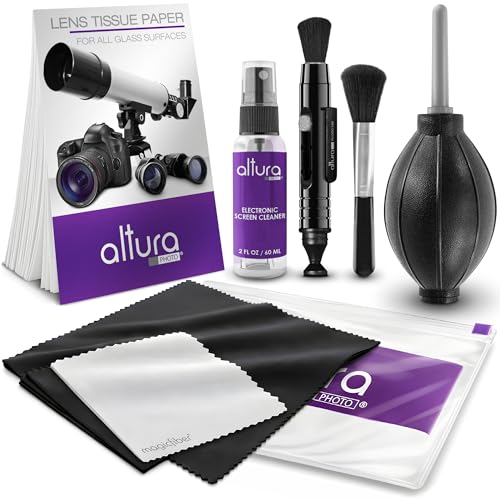
COMPLETE CAMERA CLEANING KIT: Our camera lens cleaning kit includes an alcohol & ammonia-free lens cleaner spray, cleaning brush, lens pen, air blower, MagicFiber microfiber cloths (3), and lens tissue paper wipes (50). Most competing lens cleaning kits cost more and still make you buy the spray and brush separately. Ours doesn't.

Dependable: ZEISS microfiber cleaning cloth leaves a streak-free finish and is suitable for everyday use.
Photography Rules, Access, and Safety
- Check each ticketed site’s current photography and equipment policy.
- Do not assume that tripods, flash, lighting stands, drones, or commercial shoots are automatically allowed.
- Do not block public streets, stairs, church entrances, emergency routes, or viewpoints.
- Ask before taking an identifiable close-up photograph of a local resident, worker, worshipper, or child.
- Respect services, weddings, performances, and private events.
- Carry water and sun protection during warm weather.
- Use footwear suitable for steep paving, uneven ruins, wet stones, and pebble beaches.
- Keep cameras and phones protected from spray near the water.
Drone Information: Italy applies EU drone rules as well as national geographic restrictions. Open-category flights must generally remain within visual line of sight, stay below 120 metres, avoid assemblies of people, and follow the applicable distance and registration rules. Check the current ENAC requirements and official airspace maps before every flight. Protected areas and archaeological sites may impose additional restrictions.
Frequently Asked Questions
What are the best photo spots in Taormina?
The strongest locations are the Ancient Theatre, Piazza IX Aprile, Villa Comunale, Isola Bella, Castelmola, Corso Umberto I, the Church of San Giuseppe, and viewpoints facing Mount Etna.
What time of day is best for photography in Taormina?
Visit the historic centre early in the morning for fewer people and clearer streets. Late afternoon provides warmer light for stone buildings, Castelmola, and coastal views. Blue hour is particularly effective around Piazza IX Aprile and Corso Umberto.
Are there photography restrictions in Taormina?
Restrictions vary by venue. Archaeological sites, churches, performances, private properties, and protected areas may limit flash, tripods, lighting, commercial photography, or access to certain spaces. Check posted rules and ask staff when uncertain.
Can I fly a drone in Taormina?
Do not fly without checking current ENAC geographic restrictions, registration requirements, protected-area rules, crowd limits, and site-specific permissions. A small drone is not automatically permitted over the town, archaeological sites, beaches, or groups of people.
Is Taormina easy to photograph with a phone?
Yes. A phone is well suited to Taormina’s streets, gardens, viewpoints, and wide coastal scenes. Clean the lens, protect bright highlights, use the main camera when possible, and avoid excessive digital zoom.
Are the main Taormina photo spots wheelchair accessible?
Accessibility varies. Central public streets and some viewpoints are easier to reach, but steep gradients, steps, uneven archaeological surfaces, pebble beaches, and the Isola Bella isthmus may create barriers. Contact individual attractions for current accessible routes and assistance.
Are photography tours or workshops available in Taormina?
Private guides and photography walks are offered in and around Taormina, but schedules and quality vary. Confirm the route, group size, guide experience, cancellation policy, attraction tickets, and whether transport to Isola Bella or Castelmola is included.
Sources
- Naxos-Taormina Archaeological Park: Ancient Theatre — theatre history, Roman reconstruction, layout, and 109-metre cavea.
- Naxos-Taormina Archaeological Park: Isola Bella — isthmus, historical landscape, buildings, and visitor-site background.
- Sicilian Region Protected Areas Register — reserve size, 1998 designation, management, flora, fauna, and marine habitat.
- Municipality of Taormina: Parco Trevelyan — Florence Trevelyan’s arrival, marriage, garden history, and municipal ownership.
- Municipality of Taormina: Church of San Giuseppe — construction period, Baroque architecture, staircase, portals, bell tower, and interior.
- INGV Etna Observatory Updates — current volcanic notices, monitoring bulletins, and activity status.