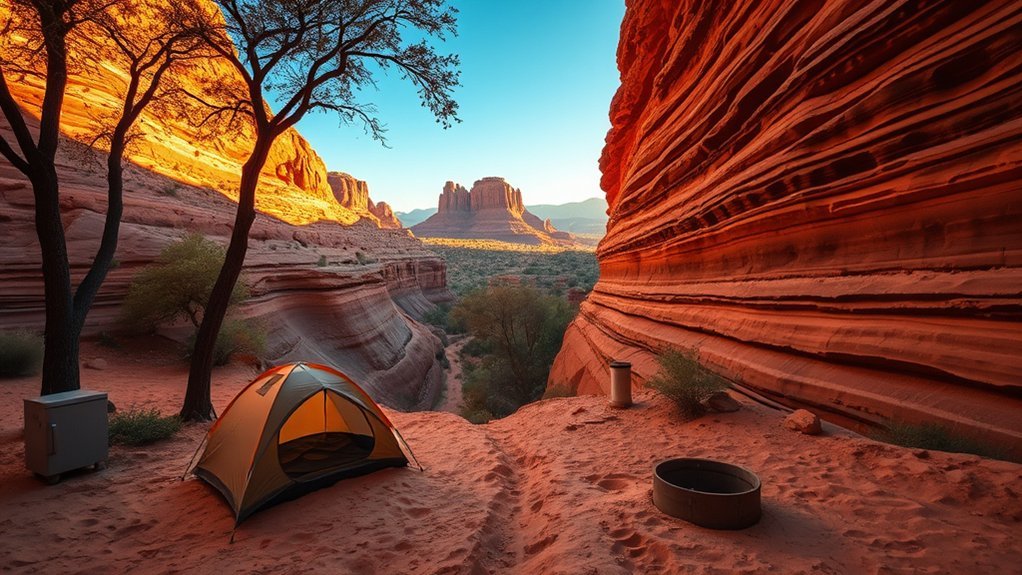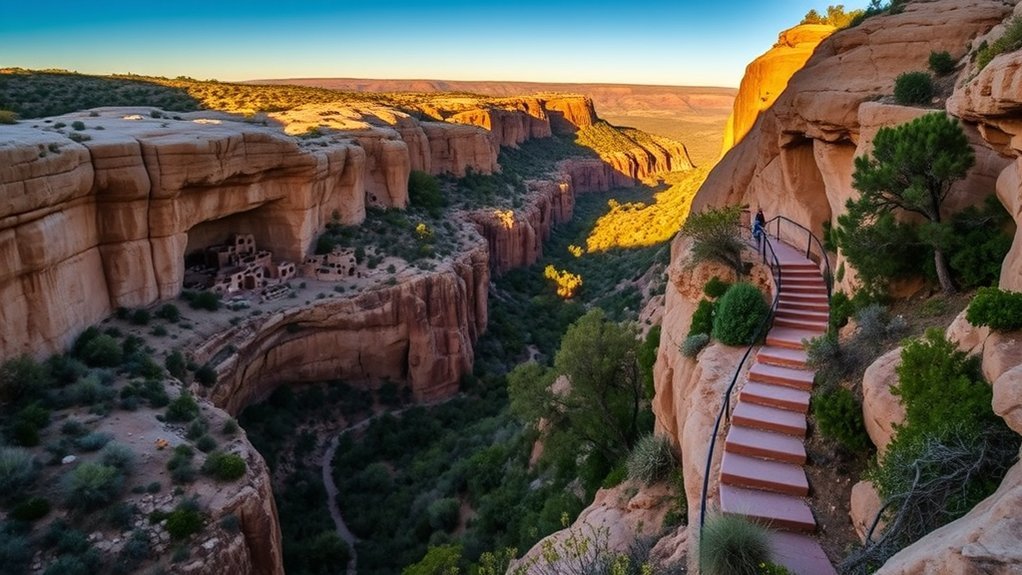
Walnut Canyon National Monument protects one of the Southwest’s most remarkable concentrations of ancient cliffside architecture, set against steep limestone canyon walls just east of Flagstaff, Arizona. Inhabited by the Northern Sinagua culture over 800 years ago, this high-desert sanctuary features more than 80 visible cliff dwellings accessible via dramatic canyon rim and canyon-floor trails. This comprehensive guide covers essential planning details, trail comparisons, safety protocols, and conservation guidelines for a seamless visit.
Quick Answer
Walnut Canyon National Monument is located 10 miles east of Flagstaff off I-40 (Exit 204). It is open daily from 9:00 AM to 5:00 PM (closed Thanksgiving and Christmas Day). Entrance costs $25 per vehicle (or free with an America the Beautiful Interagency Pass). The signature 1-mile Island Trail descends 185 feet down 273 stairs to view 25 cliff dwelling rooms.
Key Takeaways
- Two Distinct Trails: The paved 0.7-mile Rim Trail offers easy, accessible viewpoints, while the 1.0-mile Island Trail descends 273 stairs directly to ancient masonry rooms.
- Strict Cutoff Times: The Island Trail closes to downhill hikers at 4:00 PM daily to ensure all visitors return before the park gates close at 5:00 PM.
- High Altitude Exertion: At 6,690 feet elevation, climbing out of the canyon requires pacing, proper footwear, and adequate hydration.
- Pet Policy: Pets are strictly prohibited on all canyon trails and inside the Visitor Center; they are allowed only in the paved parking area on a leash.
At a Glance
| Time Required | 2 to 3 hours for trails and visitor exhibits |
| Difficulty | Easy (Rim Trail) to Strenuous (Island Trail stair climb) |
| Tools & Gear Needed | Sturdy walking shoes, 1+ liter water per person, sun protection |
| Cost | $25 per private vehicle (7-day pass) or Interagency Pass |
Overview and Historical Significance of Walnut Canyon
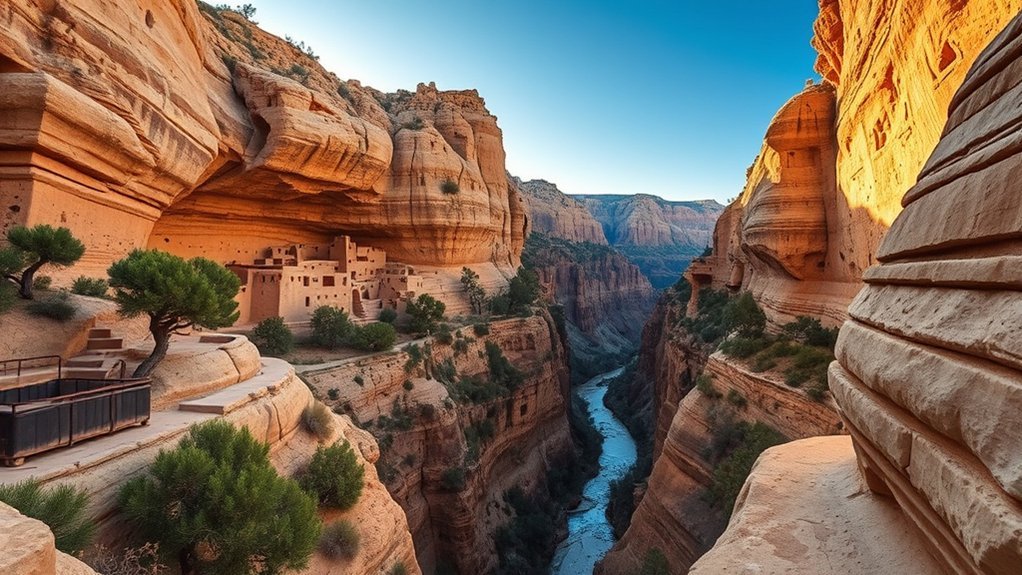
Walnut Canyon protects a dense concentration of ancient masonry architecture constructed by the Sinagua people between 1125 and 1250 CE. Taking advantage of natural alcoves eroded into the 20-million-year-old Kaibab Limestone and Toroweap Sandstone, Sinagua families built single- and multi-room homes sheltered by overhanging rock ledges. More than 300 prehistoric sites, including over 80 cliff dwelling rooms, line the 400-foot-deep canyon cut by Walnut Creek.
The canyon’s microclimates provided agricultural advantages in an otherwise challenging high-desert environment. The Sinagua farmed corn, beans, and squash on the canyon rim using soil enriched by volcanic ash from the nearby 1064 CE eruption of Sunset Crater Volcano. Walnut Canyon holds deep religious and ancestral significance for at least 13 modern tribal nations, including the Hopi, Zuni, Yavapai, and Apache, whose oral histories trace connections to these stone rooms.
“The stone walls built into these limestone alcoves represent centuries of environmental adaptation, architectural precision, and enduring cultural heritage across the Colorado Plateau.”
Getting There and Parking Information
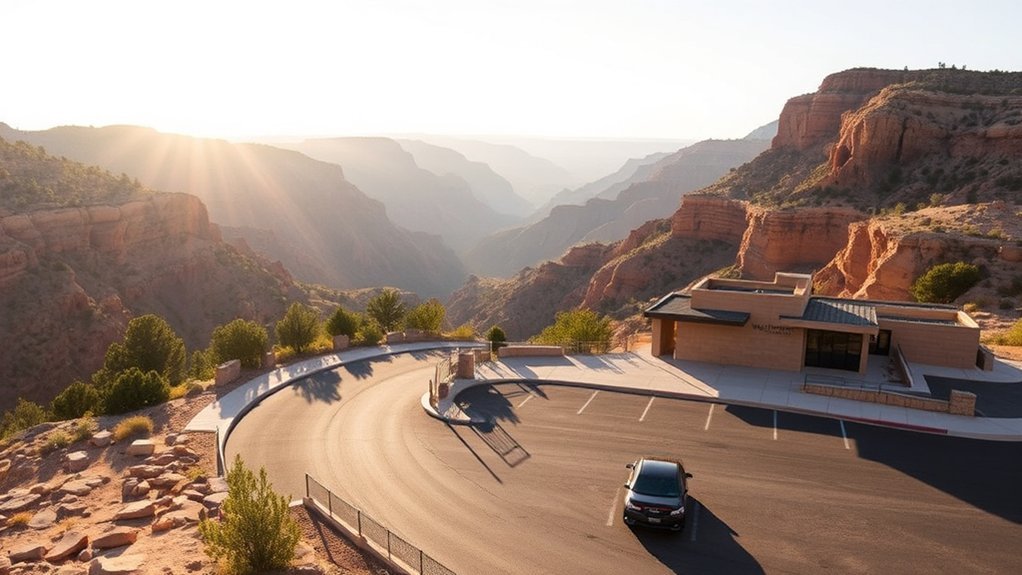
Walnut Canyon National Monument is situated approximately 7.5 miles east of downtown Flagstaff. To reach the park:
- Travel east on Interstate 40 from Flagstaff.
- Take Exit 204 for Walnut Canyon Road.
- Continue south for 3 miles directly to the monument entrance and parking complex.
The park entrance features a spacious paved parking area accommodating passenger vehicles, camper vans, and standard RVs. During peak spring and summer travel periods, parking spaces fill quickly between 10:30 AM and 2:00 PM. Arriving early in the morning ensures easier parking and cooler trail conditions.
Warning: Pets are strictly prohibited on both the Rim Trail and the Island Trail, as well as inside the Visitor Center. High summer temperatures make leaving pets in parked vehicles extremely hazardous. Plan boarding arrangements in Flagstaff prior to arrival.
Visitor Center: Hours, Services, and Accessibility
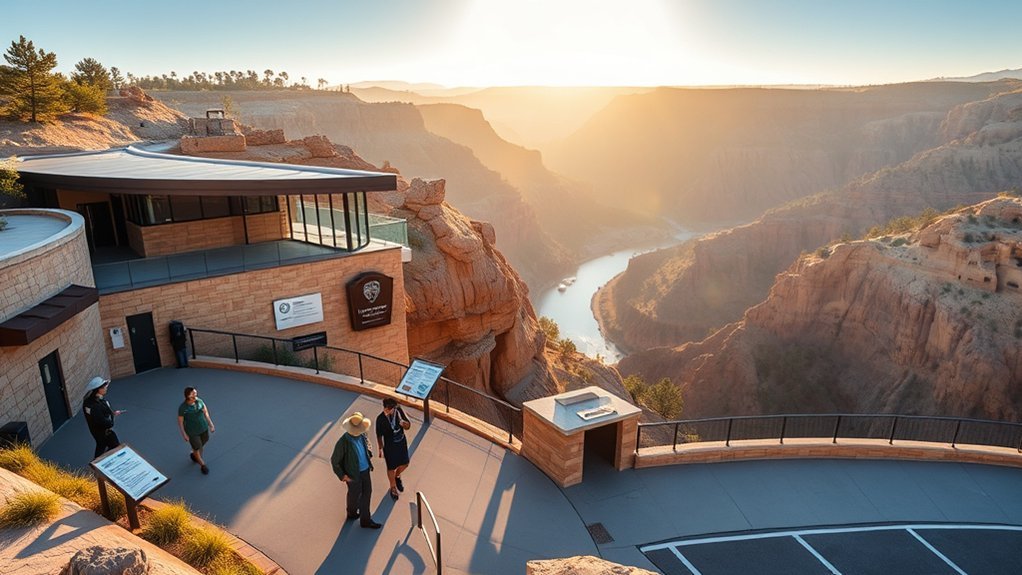
Perched directly on the canyon edge, the Walnut Canyon Visitor Center serves as the gateway to the park’s trail system and educational exhibits. The facility features floor-to-ceiling windows framing panoramic views of the canyon’s northern and southern walls.
Visitor Center Hours
The visitor center and monument grounds are open daily from 9:00 AM to 5:00 PM Mountain Standard Time (Flagstaff does not observe Daylight Saving Time). The park is open year-round with two standard holiday exceptions:
- Thanksgiving Day: Closed
- Christmas Day (December 25): Closed
- New Year’s Day: Open normal hours (9:00 AM – 5:00 PM)
Services and Amenities
Inside the facility, visitors will find museum exhibits displaying authentic Sinagua pottery, stone tools, weaving fragments, and architectural dioramas. Park amenities include:
- Ranger information desk for trail updates and Junior Ranger booklets.
- Western National Parks Association (WNPA) educational bookstore and gift shop.
- Year-round indoor restrooms and outdoor picnic tables.
- Potable water refill stations (essential before starting canyon hikes).
Accessibility and Access
The Visitor Center, observation deck, and the first section of the Rim Trail are fully wheelchair accessible. The initial 500-foot paved segment of the Rim Trail leads to an accessible canyon overlook equipped with interpretive panels and binoculars. In contrast, the Island Trail contains steep staircases and uneven stone surfaces that are not accessible to wheelchairs or strollers.
Island Trail: Route, Difficulty, and What to See
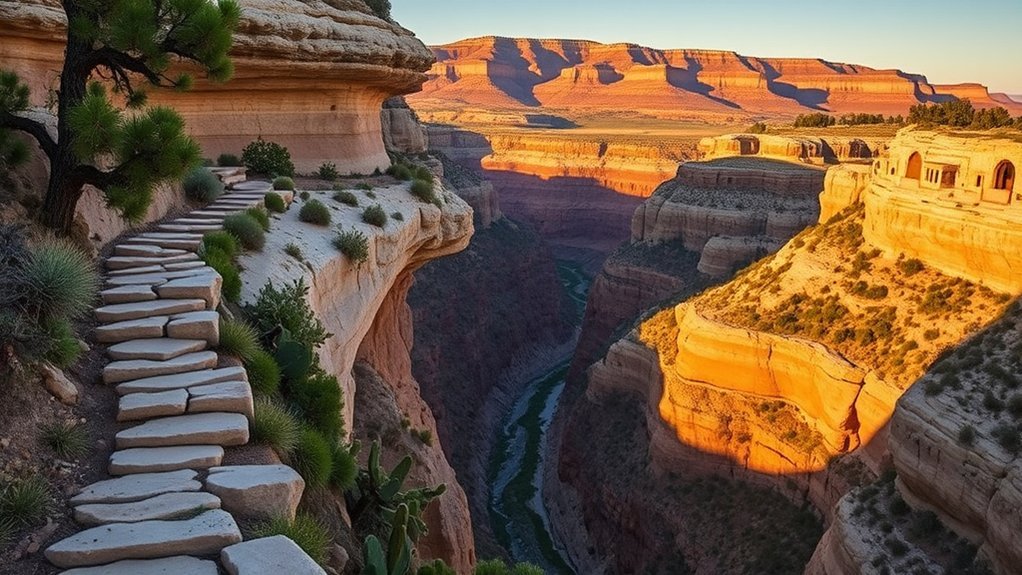
The Island Trail is the monument’s premier hiking experience. This 1.0-mile (1.6 km) paved loop descends into the canyon around a central limestone promontory, passing directly alongside 25 preserved Sinagua cliff dwelling rooms.
- Distance: 1.0-mile (1.6 km) loop
- Elevation Change: 185 feet (56 m) vertical drop and climb
- Stair Count: 273 paved steps with secure metal handrails
- Trailhead Elevation: 6,690 feet above sea level
- Average Time: 45 to 60 minutes
Pro Tip: Pacing is key on the return climb. The 273 stairs become significantly more strenuous at 6,690 feet elevation. Rest at the shaded landings and benches built along the ascent rather than attempting the climb in a single push.
As you walk the loop, interpretive signs explain how families prepared meals, stored dried maize, and framed entryways with juniper timbers. Hikers can look across the canyon gap to spot dozens of inaccessible cliff dwellings nestled into the facing cliffs.
Rim Trail: Highlights and Scenic Overlooks
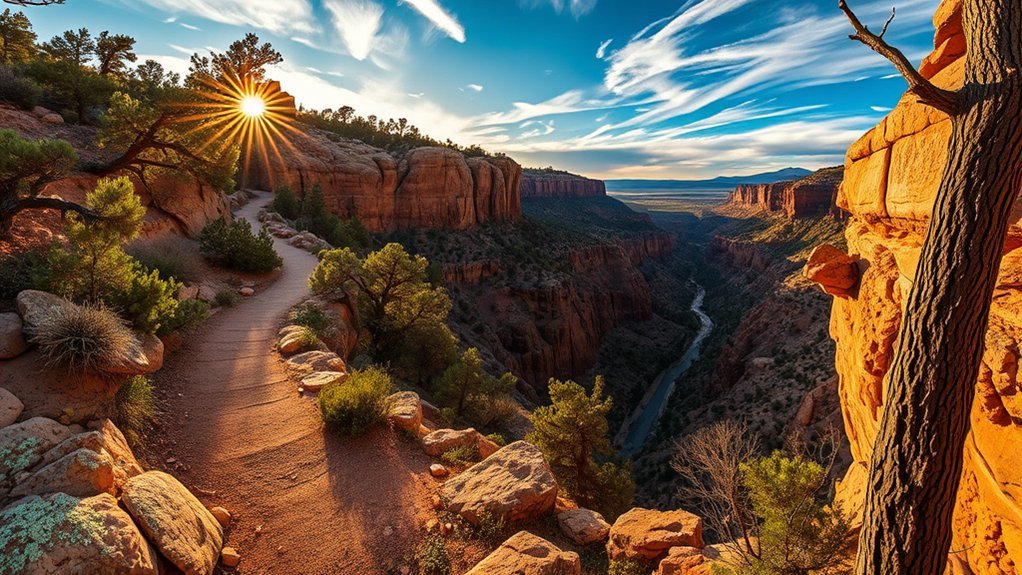
The Rim Trail offers an easy, family-friendly alternative to the steep Island Trail. This 0.7-mile (1.1 km) round-trip paved pathway meanders through high-desert pinyon-juniper and ponderosa pine forest along the canyon rim.
Canyon Rim Views
The trail features two primary canyon overlooks offering sweeping vantage points across the gorge. From these elevated perches, visitors can easily observe the layered Kaibab Limestone strata and use mounted viewing scopes to examine cliff dwellings embedded in the far cliff faces.
Interpretive Overlooks
Along the Rim Trail, visitors encounter two significant archaeological ruins:
- Pithouse Ruin: A partially reconstructed subterranean dwelling illustrating early Sinagua domestic architecture prior to 1100 CE.
- Pueblo Ruin: A surface-level stone masonry structure demonstrating surface construction methods used on the canyon rim alongside the cliff dwellings below.
Rules, Safety, and Protecting Cultural Resources
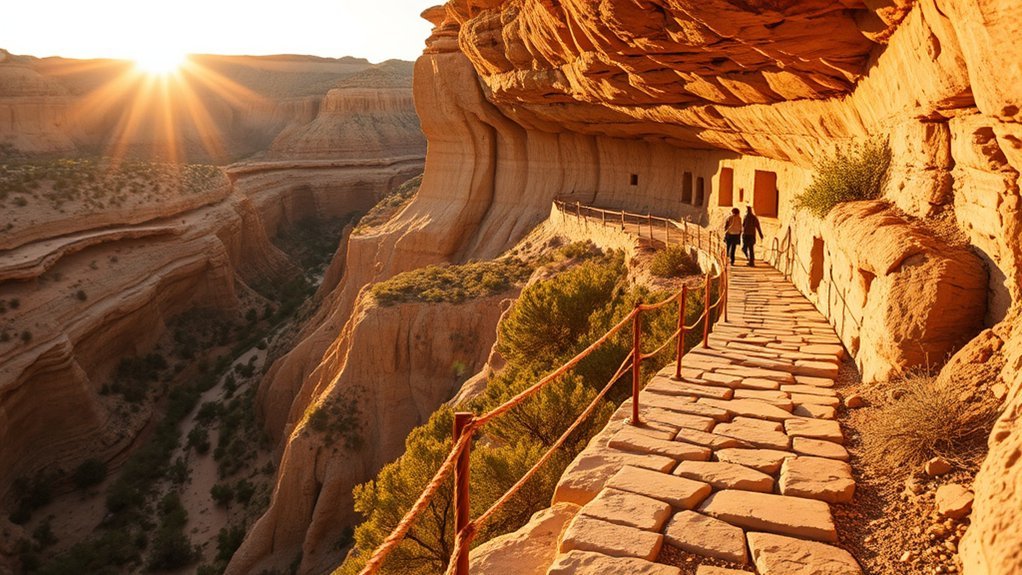
The cliff dwellings and rock art of Walnut Canyon are fragile, irreplaceable cultural treasures protected under the Archaeological Resources Protection Act (ARPA). Visitors must observe strict conservation guidelines:
- Stay on Paved Trails: Walking off designated paths accelerates soil erosion and damages undiscovered archaeological artifacts.
- Do Not Touch or Lean on Walls: Skin oils and physical pressure degrade original 800-year-old stone and clay mortar.
- No Entry Beyond Boundaries: Visitors must observe dwellings from trailside viewing areas; never climb into or sit upon ancient masonry walls.
- Leave Everything Intact: Removing pottery shards, rocks, plants, or historic materials is a federal offense resulting in severe fines and legal action.
Wildlife, Plants, and Seasonal Considerations
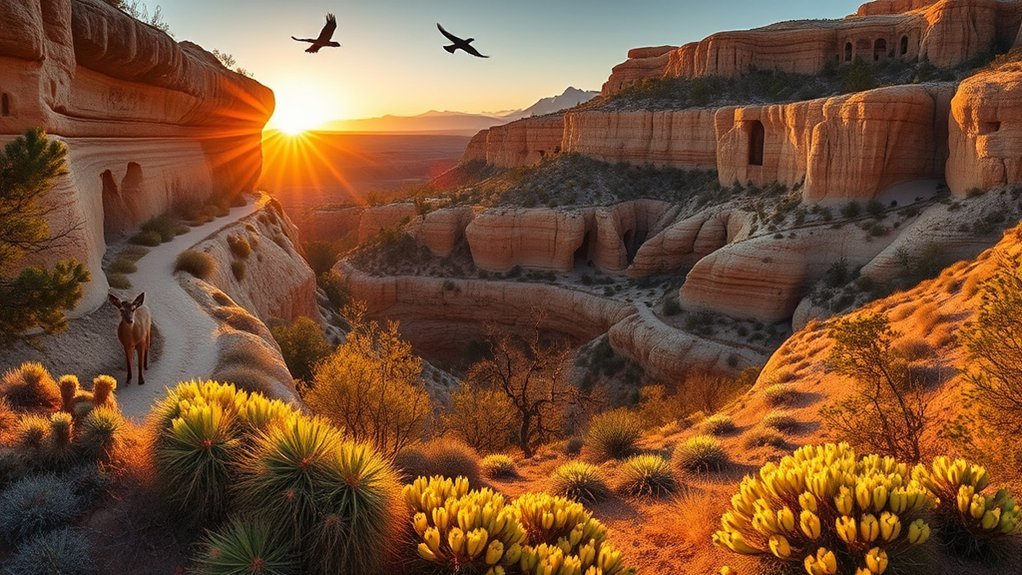
Walnut Canyon functions as a vital biological corridor connecting the Colorado Plateau with the Mogollon Rim. Varied elevations and microclimates create diverse habitats across short distances.
- Flora: Ponderosa pine dominates the shaded north-facing slopes, while drought-tolerant pinyon pine, Utah juniper, banana yucca, and cliffrose thrive on sunny south-facing walls.
- Fauna: Visitors frequently spot mule deer, Abert’s squirrels, coyotes, and scrub jays. The canyon cliffs also provide nesting territory for peregrine falcons and ravens.
- Seasonal Weather: Spring brings high winds and lingering snow flurries; summer introduces afternoon monsoon thunderstorms (July–August) requiring rapid trail clearance; winter brings freezing temperatures and icy stairs on the Island Trail.
Tickets, Passes, and Admission Policies

Entrance fees are collected at the Visitor Center entrance desk upon arrival:
- Private Vehicle Pass: $25.00 (valid for 7 consecutive days at Walnut Canyon).
- Individual Pass (bicyclist/foot): $15.00 per person.
- Interagency Passes Accepted: America the Beautiful Annual, Senior, Military, Access, and 4th Grade Every Kid Outdoors passes grant free entry for the pass holder and up to three adults in the same vehicle.
Note: Walnut Canyon is a cashless park. Entrance fees must be paid via credit/debit card or with valid Interagency passes.
Nearby Attractions and Where to Stay
Walnut Canyon’s convenient location off I-40 makes it easy to combine with other prominent northern Arizona landmarks:
| Attraction | Drive Time | Highlights |
|---|---|---|
| Downtown Flagstaff | 15 minutes | Historic Route 66 dining, microbreweries, and hotels |
| Sunset Crater Volcano National Monument | 30 minutes | Lava flows, cinder cone hiking, and volcanic geology |
| Wupatki National Monument | 45 minutes | Multi-story freestanding red-sandstone pueblo communities |
| Sedona (Oak Creek Canyon) | 55 minutes | Red rock formations, art galleries, and vortex hiking |
| Grand Canyon National Park (South Rim) | 90 minutes | World-famous canyon vistas and historic village |
Frequently Asked Questions
How much time do you need at Walnut Canyon National Monument?
Most visitors spend 2 to 3 hours exploring the park. This window provides sufficient time to tour the Visitor Center museum exhibits, hike the strenuous 1.0-mile Island Trail (45–60 minutes), and walk the flat 0.7-mile Rim Trail (30 minutes).
Is Walnut Canyon National Monument worth visiting?
Yes. Unlike many Southwestern archaeological sites viewed only from a distance, Walnut Canyon allows visitors to walk directly up to 25 ancient cliff dwelling rooms on the Island Trail while enjoying expansive canyon views just minutes from Flagstaff.
What is there to do at Walnut Canyon National Monument?
Key activities include hiking the Island Trail to view cliffside dwellings, exploring the accessible Rim Trail to see surface pueblos and pithouse ruins, viewing museum artifacts inside the Visitor Center, birdwatching, and attending seasonal ranger-led interpretive talks.
How hard is the hike into Walnut Canyon?
The Island Trail is rated moderately strenuous due to its 273 stairs and 185-foot vertical descent and ascent at an elevation of 6,690 feet. While the entire pathway is paved and equipped with handrails, the cardiovascular demand of climbing out can be taxing for unprepared hikers. The Rim Trail is flat, paved, and easy.
Sources
- National Park Service: Walnut Canyon National Monument — Official monument administration, conditions, and visitor guidelines.
- NPS Plan Your Visit: Hours & Seasons — Operating hours, holiday closures, and trail cutoff regulations.
- NPS Plan Your Visit: Fees & Passes — Vehicle pass rates, America the Beautiful acceptance, and entry policies.
- NPS Trails Guide: Island & Rim Trails — Trail lengths, step counts, elevation changes, and accessibility ratings.
- NPS Archaeological Resources Protection Act — Federal preservation laws and conservation guidelines for prehistoric structures.
Conclusion
Walnut Canyon National Monument provides an intimate window into prehistoric life on the Colorado Plateau, where ancient Sinagua stonework harmonizes with sheer canyon cliffs. Whether tackling the 273 steps of the Island Trail to view masonry dwellings up close or taking in panoramic views along the accessible Rim Trail, respecting these cultural resources ensures their preservation for generations to come. Add Walnut Canyon to your northern Arizona itinerary for an unforgettable journey into ancient American history.