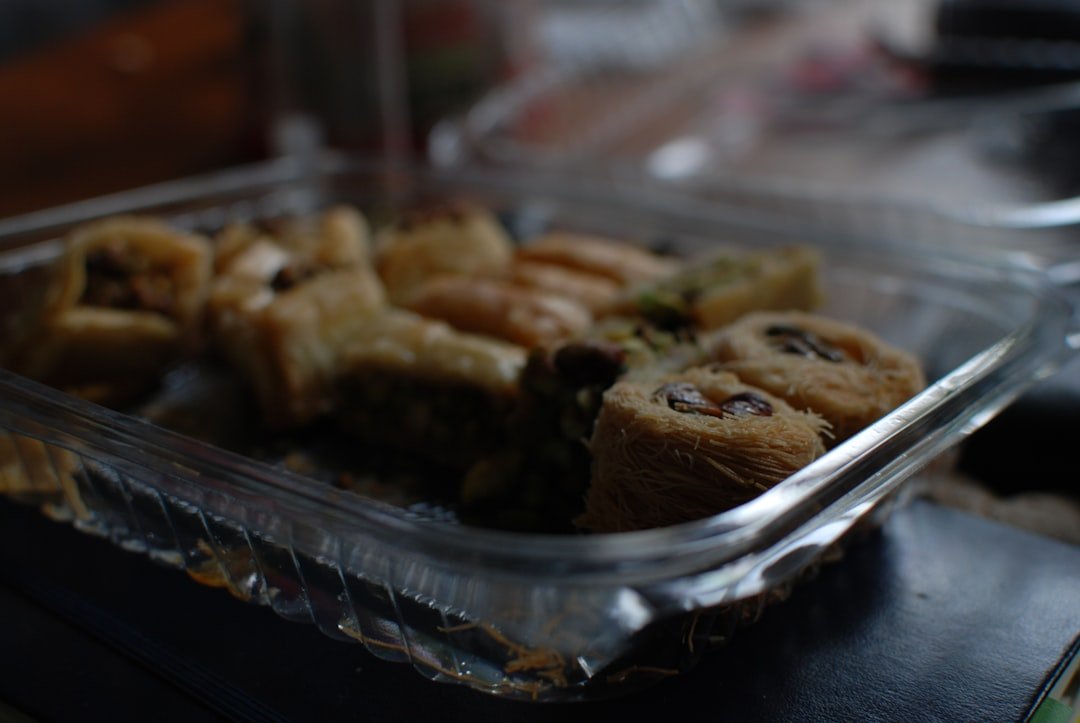
Baklava is one of the essential sweets to try in Istanbul, but choosing where to eat it matters. Good baklava should have thin, crisp pastry, a clean butter aroma, balanced syrup, and fresh-tasting nuts rather than a heavy, soggy texture. Istanbul offers everything from long-established specialist bakeries to modern pastry shops and rooftop restaurants serving contemporary versions.
Quick Answer
For a first baklava tasting in Istanbul, Karaköy Güllüoğlu is a strong traditional choice, while Hafız Mustafa is convenient for visitors around Eminönü and Sultanahmet. Try classic pistachio or walnut baklava first, then compare specialties such as kuru baklava, dürüm, şöbiyet, or a modern variation from a contemporary pastry shop.
Key Takeaways
- Karaköy Güllüoğlu and Hafız Mustafa are two of Istanbul’s best-known historic names for baklava.
- Start with pistachio or walnut baklava before trying richer styles such as şöbiyet, dürüm, or chocolate-based variations.
- For a contemporary version, Pelit’s current range includes Purple Baklava made with extracts from red and purple fruits and vegetables.
- Do not rely on old ratings, opening hours, or restaurant menus; individual locations and selections can change.
- Traditional baklava commonly contains wheat, dairy, eggs, pistachios or walnuts, so people with allergies should ask before ordering.
Traditional Baklava: Where to Find the Best
If you want a classic Istanbul baklava experience, begin with a specialist rather than a general restaurant. Two of the city’s best-known names have long histories and large selections.
Karaköy Güllüoğlu
Karaköy Güllüoğlu traces its Istanbul operation to 1949, when Mustafa Güllü brought his family’s Gaziantep baklava tradition to Karaköy. The company describes that location as Istanbul’s first dedicated baklava shop.
For a first visit, pistachio baklava is the obvious starting point. Current selections also include walnut baklava, pistachio dürüm, kuru baklava, Nadir Dolama, burma, and other variations. Ordering a mixed plate or box is useful when two or more people want to compare textures.
Hafız Mustafa 1864
Hafız Mustafa was founded in Istanbul in 1864 and now operates multiple locations in areas frequently visited by travelers. Its current range includes pistachio, walnut, mixed, and premium baklava as well as other Turkish sweets.
This makes Hafız Mustafa especially convenient if your sightseeing keeps you around Eminönü, Sultanahmet, Sirkeci, or İstiklal Avenue. You can pair a portion with Turkish tea or coffee instead of buying a large box immediately.
The best baklava should feel crisp and light for its richness: thin pastry should separate cleanly, the nuts should taste fresh, and the syrup should support the pastry rather than drown it.
Modern Twists on Baklava: Innovative Spots to Try
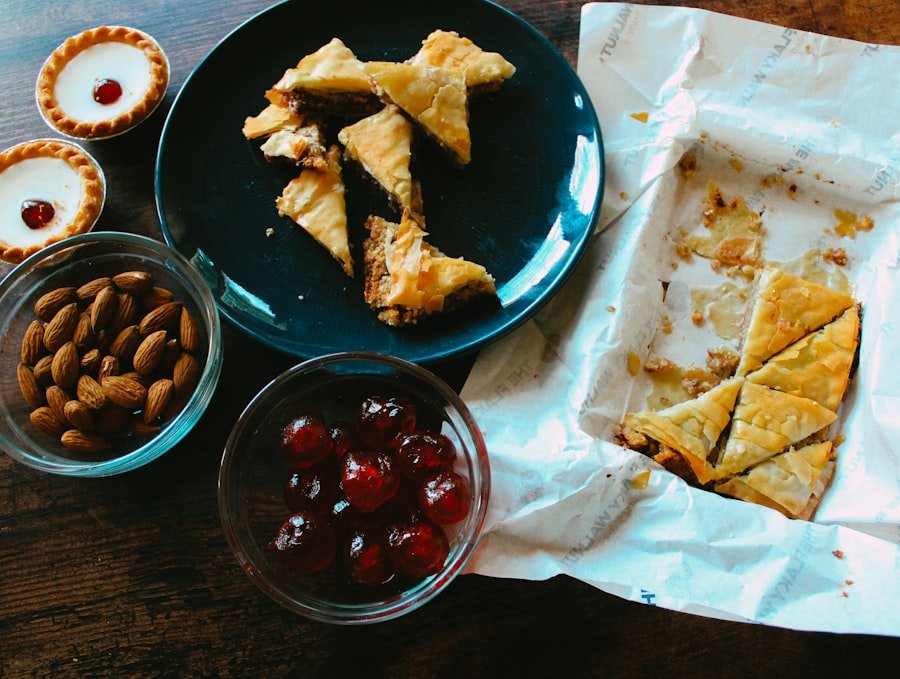
Istanbul’s baklava scene is not limited to the classic pistachio-and-syrup formula. Contemporary pastry shops experiment with color, chocolate, milk-based syrup, shapes, and presentation while keeping the layered pastry structure recognizable.
Pelit is a useful example. The company was founded in 1957, and its current traditional-dessert range includes Purple Baklava, made with a natural mixture derived from red and purple fruits and vegetables. It also sells Sütlü Nuriye, a related layered pastry sweetened with a milk-based syrup and finished with almonds.
Mendel’s Bakery in Beşiktaş is another modern dessert stop, but individual flavors can change. Specific claims that it always serves matcha or salted-caramel baklava are difficult to verify, so choose it for its contemporary bakery style rather than traveling there solely for one advertised flavor.
Note: Restaurant and pastry-shop menus in Istanbul change more often than the core selections at specialist baklava producers. If one particular modern flavor is important to you, confirm the current menu on the business’s official site before making a special trip.
Baklava for Breakfast: Morning Spots to Indulge
| Place | Area | Best For | Practical Note |
|---|---|---|---|
| Karaköy Güllüoğlu | Karaköy | A specialist tasting early in your sightseeing day | Choose several small pieces rather than one large portion. |
| Hafız Mustafa 1864 | Multiple central locations | Baklava with tea or Turkish coffee | Useful if you are already sightseeing around the Historic Peninsula. |
| Grand Bazaar area | Beyazıt | Combining sweets with shopping | Individual shops keep their own hours; do not assume every shop opens with the bazaar. |
Baklava is usually treated as a dessert or sweet snack, but nothing prevents you from tasting it earlier in the day. In fact, an early tasting can be useful because your palate is fresh and specialist shops may have a full selection available.
The original association of Çınaraltı with Emirgan is incorrect. The famous Tarihi Çınaraltı Aile Çay Bahçesi is in Çengelköy on Istanbul’s Asian side. It is better known as a Bosphorus tea garden than as a baklava specialist, so think of it as a place for tea and scenery rather than your primary bakery destination.
Hidden Gems: Smaller Baklava Stops Beyond the Famous Names
Famous brands are convenient, but you do not have to limit yourself to them. Kadıköy is particularly useful if you want to compare sweets on Istanbul’s Asian side.
Bilgeoğlu Baklava on Bahariye Caddesi is an identifiable specialist in Kadıköy and offers an alternative to the heavily visited central-city names. Because selections change, ask what was prepared most recently and start with a small portion before ordering a box.
Şekerci Cafer Erol is another long-established Kadıköy confectioner worth knowing if you are exploring Turkish sweets more broadly. However, do not assume that a specific hazelnut, orange-blossom, or other baklava flavor mentioned in an older guide will still be available. Treat the current display as the reliable menu.
Pro Tip: When comparing shops, order one or two pieces first. A small tasting tells you far more about crispness, nut freshness, butter aroma, and syrup balance than ratings alone.
Baklava with a View: Rooftop Restaurants and Cafes
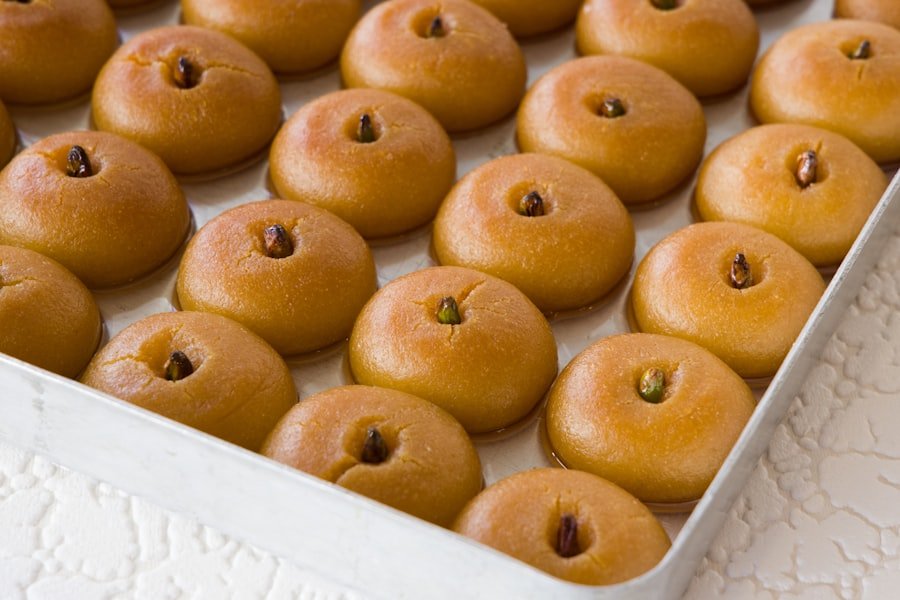
If atmosphere matters as much as tradition, a rooftop restaurant can turn baklava into part of a longer evening.
360 Istanbul’s current dessert menu lists Warm Pistachio Baklava with pistachio croquant ice cream. The restaurant is in Beyoğlu and combines the dessert with a high-level city view. This is a more contemporary restaurant presentation than the straightforward pieces served at specialist bakeries.
Mikla, on the rooftop of The Marmara Pera, is another major view-focused restaurant with contemporary Turkish cooking. Its dessert selection changes, however, so it should not be described as having a permanent “signature baklava” unless that item appears on the current menu. Choose Mikla primarily for the complete dining experience rather than as a guaranteed baklava stop.
Baklava and Turkish Tea: Charming Tea Houses to Visit
Turkish tea works well with baklava because the unsweetened, slightly tannic drink cuts through the pastry’s butter and syrup. Turkish coffee offers a stronger, more bitter contrast.
For the simplest experience, order tea directly at a specialist dessert shop such as Karaköy Güllüoğlu or Hafız Mustafa. You can compare bites and sips without traveling to a separate café.
For scenery, Tarihi Çınaraltı in Çengelköy is a classic Bosphorus tea stop. Pierre Loti in Eyüpsultan is another well-known café with elevated Golden Horn views. Neither should be treated as a guaranteed specialist-baklava destination; the better strategy is to enjoy them for tea and atmosphere while getting your serious baklava tasting from a dedicated producer.
Baklava and History: Historic Locations to Savor the Story
Baklava’s exact origin is more complicated than a single-city or single-empire claim. Layered breads and nut-filled pastries have deeper regional histories, while sources cited by GoTürkiye emphasize both southeastern Anatolia’s baklava tradition and the importance of Gaziantep pistachios.
The Ottoman palace connection, however, is well documented. Türkiye’s Ministry of Culture and Tourism describes baklava in accounts of palace food and Ramadan meals at Topkapı. Historical descriptions also identify it among sweets served in the palace.
That context makes a visit to Topkapı Palace useful even though you should not expect the museum itself to function as a specialist baklava bakery. See the palace for the history, then taste baklava at a dedicated shop elsewhere in the city.
The Spice Bazaar in Eminönü offers another food-history setting. Its surrounding streets are packed with confectionery, spices, nuts, coffee, and sweets, and Hafız Mustafa’s historic Bahçekapı roots are nearby. This area works especially well for travelers who want food culture and sightseeing in the same walk.
Baklava and Culture: Artisanal Shops and Markets to Explore
Markets show how baklava fits into a much larger Turkish food culture. Around the Grand Bazaar, you will encounter cafés, confectioners, nut sellers, Turkish delight, tea, and coffee alongside the better-known jewelry, textile, and craft shops.
On the Asian side, Kadıköy offers a different experience. Food shops, fishmongers, spice sellers, bakeries, cafés, and traditional confectioners are concentrated within a walkable district. This makes it easy to compare baklava with other pastries such as börek, kadayıf, and local sweets without building your day around one store.
When possible, ask what was produced that day and what the shop considers its specialty. A confident specialist should be able to explain the nuts, pastry style, syrup level, and differences between varieties without relying on exaggerated sales language.
Baklava for Every Budget: How to Spend Less
You do not need a large restaurant dessert or kilogram box to experience excellent baklava. Most specialist shops make it possible to taste individual pieces or smaller mixed portions.
- Buy by the piece first: This is the cheapest way to compare pistachio, walnut, and specialty styles.
- Share a mixed plate: Two people can sample several varieties without ordering full portions of each.
- Choose a specialist counter instead of a rooftop: You are paying mainly for the pastry rather than the view and full restaurant service.
- Ask the price by weight before ordering a box: Premium pistachio-heavy varieties can cost more than basic walnut pieces.
- Avoid buying a huge souvenir box immediately: Taste first, then return for the variety you actually prefer.
How to Recognize Good Baklava
Appearance alone does not guarantee quality. Use several clues together.
- Thin, distinct layers: The pastry should look finely laminated rather than thick and doughy.
- Crisp sound: Well-made baklava often gives a light crackle or rustle when cut or bitten.
- Fresh nut aroma: Pistachios or walnuts should smell clean and nutty, not stale or oily.
- Balanced syrup: The pastry should be sweet but not swimming in liquid.
- Clean butter flavor: Good clarified butter adds richness without a greasy aftertaste.
- Even bake: Look for a golden surface without scorched corners or pale, underbaked dough.
GoTürkiye’s Gaziantep food guidance similarly describes good baklava as golden, well puffed, light rather than overloaded with syrup, aromatic with pistachio and butter, and audibly crisp when bitten.
What Baklava Should You Order First?
If the display case feels overwhelming, use this order as a simple tasting progression.
Fıstıklı Baklava
Classic pistachio baklava is the best starting point if you want the flavor most strongly associated with Gaziantep-style baklava. It lets you judge the pastry, butter, syrup, and pistachios without extra fillings.
Cevizli Baklava
Walnut baklava has a deeper, earthier nut flavor and is worth comparing directly with pistachio. Some visitors prefer its less delicate, more robust character.
Kuru Baklava
“Kuru” means dry. Specialist producers generally prepare it with less syrup so it stays crisp longer, making it particularly practical for carrying or gifting.
Dürüm or Sarma
These rolled styles usually emphasize the nut filling more heavily than a standard square of baklava. Choose one if pistachio is your favorite part.
Şöbiyet
Şöbiyet combines layered pastry with pistachio and a soft semolina-based cream filling, creating a richer, softer center than classic baklava.
Modern Variations
Once you know the traditional styles, try chocolate baklava, Pelit’s Purple Baklava, milk-syrup pastries such as Sütlü Nuriye, or a restaurant interpretation such as 360 Istanbul’s warm pistachio baklava.
A Practical Baklava Route Through Istanbul
If you have only a few hours, start in Karaköy with a tasting at Karaköy Güllüoğlu. From there, continue toward Eminönü for the Spice Bazaar area and, if you still have room, compare the style at a Hafız Mustafa branch.
If you have more time, take a ferry to Kadıköy and explore the food market district. Bilgeoğlu gives you another baklava specialist to compare, while Şekerci Cafer Erol broadens the experience into traditional confectionery.
This route is more useful than trying to visit every famous shop. After two or three tastings, differences in syrup, nuts, pastry thickness, and richness become much easier to recognize.
Allergens and Dietary Notes
Warning: Traditional baklava commonly contains wheat/gluten, butter or other dairy ingredients, eggs, pistachios, walnuts, and sometimes other tree nuts or traces of nuts. Recipes vary by producer. If you have a food allergy, do not rely only on the appearance of the pastry—ask the shop about ingredients and cross-contact.
Traditional baklava is therefore normally not gluten-free. Vegan versions also should not be assumed because classic Turkish recipes commonly use clarified butter. If dietary restrictions are important, ask for a written allergen list where available.
Taking Baklava Home and Storing It
Baklava can make a practical food souvenir, but the variety matters. Kuru baklava is particularly useful for travel because its lower syrup level can help it remain crisp for longer.
Ask the shop which variety is most suitable for the length of your journey and whether the box should be kept cool. Avoid leaving baklava in direct sun or a hot vehicle. For packaged products, follow the producer’s own storage instructions rather than assuming every variety has the same shelf life.
Hafız Mustafa, for example, advises keeping its packaged baklava in a cool, dry place away from direct sunlight, while exact storage guidance varies by product.
Insider Tips: How to Order and Enjoy Baklava Like a Local
You do not need complicated Turkish to order confidently. Learning a few words helps:
- Fıstıklı: with pistachio.
- Cevizli: with walnut.
- Karışık: mixed.
- Kuru baklava: less-syrupy “dry” baklava.
- Bir tane: one piece.
- Çay: tea.
- Türk kahvesi: Turkish coffee.
Do not assume warm baklava is automatically fresher or better. Traditional baklava is baked, syruped, and allowed to settle, so a properly rested room-temperature piece can have excellent crispness and balance.
Ask the staff which tray was produced recently and which style the shop is best known for. If you are new to baklava, start with one pistachio and one walnut piece before moving to cream-filled or chocolate versions.
Finally, alternate small bites with unsweetened Turkish tea or coffee. The contrast prevents the syrup from overwhelming your palate and makes differences between varieties easier to notice.
Frequently Asked Questions
What is baklava?
Baklava is a layered pastry made with very thin dough, clarified butter, nuts such as pistachios or walnuts, and sweet syrup. Turkish baklava has many regional and stylistic variations.
Where can I find baklava in Istanbul?
Baklava is widely available in pastry shops and restaurants. Well-known options include Karaköy Güllüoğlu in Karaköy, Hafız Mustafa at several central locations, and Bilgeoğlu in Kadıköy.
What are some famous places to eat baklava in Istanbul?
Karaköy Güllüoğlu and Hafız Mustafa are among the city’s best-known historic names. Bilgeoğlu is a useful specialist option in Kadıköy, while 360 Istanbul currently offers a restaurant-style warm pistachio baklava.
What types of baklava can I try in Istanbul?
Common choices include pistachio baklava, walnut baklava, kuru baklava, dürüm or sarma, şöbiyet, burma, and modern chocolate or colored variations. Availability differs by shop.
Is baklava gluten-free?
Traditional baklava is not gluten-free because its pastry is normally made from wheat flour. It can also contain dairy, eggs, pistachios, walnuts, and traces of other nuts.
What is the best time to eat baklava in Istanbul?
Baklava can be eaten at any time of day, although it is commonly enjoyed as a dessert or sweet snack with Turkish tea or coffee. Visiting a specialist earlier in the day can be convenient if you want to see a broad selection.
What should a first-time visitor order?
Start with one pistachio and one walnut baklava. After comparing those classics, try a pistachio dürüm, kuru baklava, or şöbiyet to experience different nut-to-pastry ratios and textures.
What is the best baklava to take home from Istanbul?
Kuru baklava is often a practical travel choice because it uses less syrup and can retain its crisp texture longer. Ask the bakery for packaging and storage guidance based on the length of your journey.
Sources
- Karaköy Güllüoğlu — Official History — supports the Güllü family history and the 1949 Istanbul opening.
- Hafız Mustafa 1864 — Official History — supports the company’s 1864 foundation in Istanbul.
- GoTürkiye — Taste Gaziantep — supports traditional baklava characteristics and Gaziantep’s pistachio-baklava culture.
- Republic of Türkiye Ministry of Culture and Tourism — Ottoman Palace Food — supports baklava’s documented place in Ottoman palace meals.
- Pelit — Traditional Desserts — supports current products including Purple Baklava and Sütlü Nuriye.
- 360 Istanbul — Official Dessert Menu — supports the current Warm Pistachio Baklava presentation.