Wildlife viewing in Katmai National Park and Preserve can put you remarkably close to one of Alaska’s richest natural ecosystems, but timing and preparation matter. Brooks Camp and Brooks Falls are famous for brown bears feeding on salmon, while Katmai’s coast, lakes, rivers, tundra, and volcanic landscapes support moose, caribou, wolves, foxes, river otters, eagles, and many other species. Knowing where to go, when wildlife is most concentrated, and how to follow Katmai’s safety rules will make your visit both more rewarding and more responsible.
Quick Answer
For the best wildlife viewing in Katmai, plan Brooks Camp for July or September. July is strongest for bears fishing at Brooks Falls, while September shifts activity toward the lower Brooks River. Coastal areas can also be productive in summer. Always follow NPS bear rules and remain at least 50 yards from bears unless you are in a designated viewing situation.
Key Takeaways
- July and September are the prime bear-viewing periods at Brooks Camp. August often has noticeably fewer bears along the Brooks River.
- Maintain at least 50 yards (46 m) from bears under Katmai’s applicable wildlife-distance rules and never approach a bear for a photograph.
- Katmai’s brown bears are mostly active during daylight, so location and salmon availability often matter more than choosing only dawn or dusk.
- Brooks Camp visitors must attend the park’s bear-safety orientation after arrival.
- Expect rain, wind, rapid weather changes, and possible transportation delays even in summer.
- Launching, landing, or operating recreational drones from National Park Service lands and waters is generally prohibited unless specifically authorized.
Top Wildlife Viewing Areas in Katmai National Park
Katmai covers a huge and mostly roadless landscape, so wildlife viewing varies greatly from one part of the park to another. Bears gather where food is concentrated, which means salmon streams, coastal sedge meadows, and tidal flats are usually much more productive than food-poor areas.
Brooks Camp and Brooks Falls
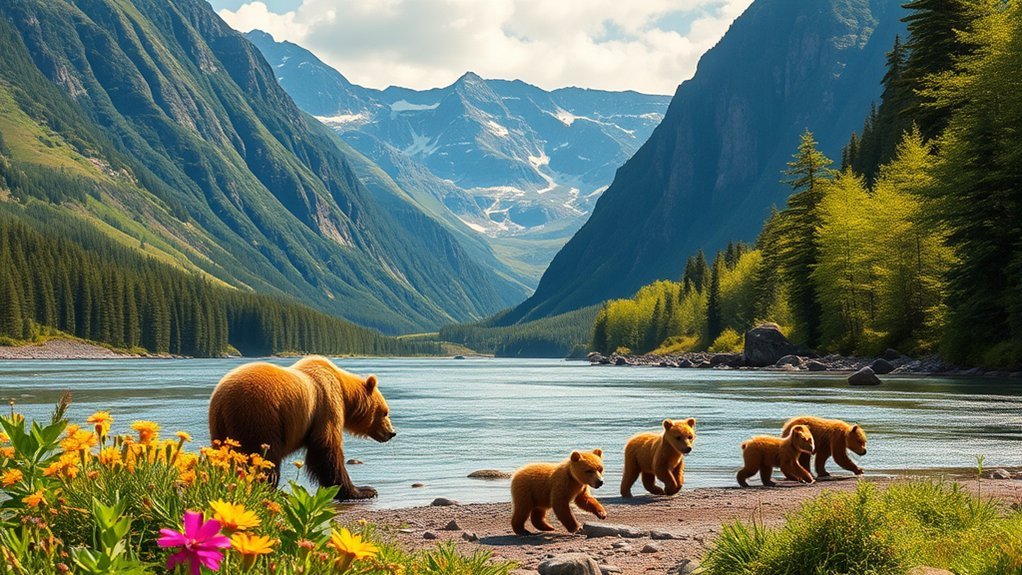
Brooks Camp is Katmai’s best-known brown bear viewing destination. When sockeye salmon move through the Brooks River in July, bears gather along the river and around Brooks Falls to catch fish.
The elevated wildlife-viewing areas allow visitors to observe bears while reducing interference with their feeding and travel routes. The Brooks Falls area is especially productive in July, although bear activity changes throughout the season.
At Brooks Camp, timing matters more than a generic “summer” recommendation: July and September usually provide the strongest bear-viewing opportunities.
Lower Brooks River and Riffles
Brooks Falls is not the only useful viewing area. Bears also fish and travel around the Riffles and the lower Brooks River.
In July, bears that are not using Brooks Falls may feed downstream. Females with cubs can also be easier to see in lower-river areas. By September, many bears concentrate near slower water and the river mouth, where dead and dying salmon provide an important food source.
Pro Tip: Do not judge a Brooks Camp visit only by the number of bears at Brooks Falls. The Riffles and Lower River viewing areas may provide better activity at different points in the season.
Katmai Coast and Hallo Bay
Katmai’s Pacific coast offers a very different wildlife-viewing experience. In late spring and early summer, bears may feed on sedges in coastal meadows and dig for clams on tidal flats. Later, salmon streams become important feeding locations.
Hallo Bay is one of the better-known coastal destinations. Bears may graze in meadows, forage on tidal flats, or fish nearby streams depending on the season. Coastal viewing usually requires an air taxi, boat, or guided trip, and weather and tides can strongly affect access.
Valley of Ten Thousand Smokes and Inland Areas
The Valley of Ten Thousand Smokes is primarily known for its extraordinary volcanic landscape rather than concentrated bear viewing. Wildlife such as bears, caribou, ground squirrels, and ptarmigan can be seen in parts of the Valley, but food-poor areas generally support fewer bears than salmon streams and coastal feeding grounds.
Naknek Lake and waterways around the Katmai region also support fish, birds, and other wildlife. The Naknek River near King Salmon can be useful for bird and aquatic-wildlife observation during the travel portion of a Katmai trip, although Brooks Camp and the Pacific coast remain the better-known bear-viewing destinations.
Best Times for Wildlife Viewing
The best season depends on both the species you want to see and the part of Katmai you plan to visit. For brown bears at Brooks Camp, the pattern is much more specific than simply choosing “summer.”
| Period | What to Expect |
|---|---|
| May–June | Interior bears are often dispersed, so Brooks Camp sightings can be less predictable. Coastal sedge meadows can be productive. |
| July | One of the strongest periods at Brooks Camp, especially for bears catching migrating salmon around Brooks Falls and along the river. |
| August | Brooks Camp bear numbers often drop as salmon become less concentrated and bears move to other feeding areas. |
| September | Bear numbers increase again around Brooks River, with much activity concentrated toward the lower river and river mouth. |
Seasonal Animal Activity
Spring brings bears out of their dens, but that does not automatically make spring the best time to see them at Brooks Camp. Food is relatively scarce in the interior, so bears may be spread over a large area.
Summer produces Katmai’s most famous bear-viewing scenes when salmon return to rivers and streams. At Brooks Camp, July is particularly important because migrating salmon concentrate around Brooks Falls.
By late summer and fall, salmon begin spawning and dying. Bear distribution changes in response, and September can again produce excellent viewing along the Brooks River.
Moose, caribou, wolves, foxes, river otters, and birds are also found within Katmai, although their visibility is less predictable than bears concentrated around major food sources.
Optimal Viewing Hours
You do not need to limit your Brooks Camp viewing to early morning and late afternoon. Katmai’s brown bears are largely diurnal and may be active throughout daylight hours.
Dawn and dusk can still be productive in less developed areas, particularly where animals avoid daytime human activity, but bear viewing at Brooks Camp depends heavily on salmon, individual bear behavior, platform access, and seasonal conditions.
Instead of planning around one narrow time window, allow enough time to watch several viewing areas and expect activity to change during the day.
Weather Considerations
Katmai’s weather can change quickly. Summer temperatures can range roughly from freezing conditions to unusually warm days, and rain, wind, and low clouds are common.
Bring a waterproof outer layer, warm insulating layers, and clothing that remains useful when wet. Weather can also delay small aircraft and boats, so avoid planning tightly timed connections immediately after a Katmai trip whenever possible.
Note: Katmai is remote. Bad weather may affect both wildlife plans and transportation, so build flexibility into your itinerary and carry enough clothing and essential supplies for changing conditions.
Essential Gear for Wildlife Photography
Good wildlife photography in Katmai starts with keeping enough distance from the animals. Camera equipment should help you photograph safely rather than encourage you to move closer.
A DSLR or mirrorless camera with a telephoto lens is useful for bears and other distant wildlife. A lens around 300mm or longer can provide strong reach, although shorter telephoto lenses may also work well from designated platforms depending on the composition you want.
A sturdy tripod or monopod can help in low light, but keep your setup compact on busy viewing platforms so other visitors have room. A weather-resistant camera body, lens protection, or rain cover is valuable because rain and blowing moisture are common.
Bring extra batteries and memory cards. Cold, wet weather can shorten battery life, and wildlife behavior can change quickly enough that you may shoot far more photographs than expected.
Keep your equipment controlled and close to you. At Brooks Camp, unattended gear can attract curious bears. On wildlife-viewing platforms, keep voices low, avoid blocking walkways, and turn off flash photography around bears.
Warning: Never move closer to a bear to improve a photograph. A telephoto lens, designated viewing platform, or patient wait is safer than reducing the animal’s space.
Understanding Bear Behavior and Safety
Brown bears are the main reason many visitors come to Katmai, but they are wild animals rather than attractions operating on a schedule. Learn basic behavior before your trip and follow ranger instructions whenever they differ from general advice.
Bear Communication Signals
Bears communicate through posture, movement, sounds, and the position of their ears. One signal should never be interpreted in isolation.
- Standing on the hind legs: This is usually an information-gathering posture. A standing bear may be trying to identify what it sees, hears, or smells; standing by itself is not a threat display.
- Huffing, woofing, or jaw popping: These can indicate stress or warning. Give the bear additional space and avoid escalating the encounter.
- Ears flattened backward: This can accompany stress or defensiveness.
- Ears forward: The bear may be attentive, curious, or confident, but you should still maintain distance.
- A bear reacting to you: Treat this as a sign that you may already be too close.
Rather than trying to “read” a bear like a domestic animal, focus on maintaining distance, staying out of its travel path, and allowing it to continue feeding, resting, or moving without interference.
Safe Viewing Distance
Katmai’s wildlife-distance rules are much closer to 50 yards than the 300-yard figure sometimes repeated in informal travel advice.
| Situation | What to Do |
|---|---|
| Bear nearby | Maintain at least 50 yards (46 m) whenever the park rule applies and never deliberately approach closer. |
| Bear using salmon, a carcass, or another concentrated food source | Do not remain within 50 yards. Give the bear space to feed. |
| Bear crosses a trail or travel route | Give the bear the right-of-way, move out of its path when safe, and follow ranger directions. |
| Viewing from a designated Brooks Camp platform | Stay on the designated viewing structure and follow ranger instructions; bears may pass closer to managed platforms or walkways without visitors deliberately approaching them. |
At Brooks Camp, every visitor must complete the mandatory bear-safety orientation after arrival. Rangers may also temporarily close trails, bridges, or access points when bears are nearby.
What to Do During a Bear Encounter
Your response should depend on what the bear is doing.
- If the bear has not noticed you: Back away quietly and give it space rather than calling attention to yourself.
- If the bear knows you are there: Remain calm. Do not run. Speak calmly so the bear can identify you as a person, stay with your group, and slowly move away when appropriate.
- If a defensive bear charges: Stand your ground and remain calm. Many charges stop before contact. Prepare an appropriate bear deterrent if you carry one.
- If a defensive brown bear physically attacks: Follow current NPS guidance to play dead by lying face down, protecting your neck, and remaining still until the bear leaves. If the attack continues for an extended period, fight back.
- If a non-defensive bear persistently approaches: Become more assertive, make yourself look large, prepare your deterrent, and follow current NPS instructions.
- If a non-defensive or predatory bear attacks: Fight back vigorously.
Bear spray may be carried in Katmai in accordance with applicable law, but transporting it by aircraft can be complicated. It cannot simply be carried in an airplane passenger compartment, so check with your airline or air-taxi operator before travel. Learn how to use any deterrent before entering bear country.
Other Wildlife to Look Out For
Brown bears receive most of Katmai’s attention, but the park protects an extensive mix of terrestrial, freshwater, coastal, and marine habitats.
- Moose: Moose live in Katmai’s lake regions, wetlands, and other suitable habitat. They can be difficult to predict and should receive the same respectful space as other large mammals.
- Caribou: Caribou occur within Katmai and may be encountered in inland and open-country areas, including portions of the Valley region.
- Wolves: Wolves occur throughout the park and have even been observed fishing for salmon near Brooks Camp, although sightings are much less reliable than bear sightings.
- Red foxes and lynx: Both occur in Katmai but are generally less conspicuous.
- River otters and mink: Watch waterways and riverbanks for these aquatic and semi-aquatic mammals.
- Bald eagles and other birds: Eagles, ospreys, waterfowl, gulls, ravens, mergansers, and many other species use Katmai’s rivers, lakes, coast, and forest habitats.
- Coastal wildlife: Sea otters, seals, sea lions, and other marine mammals occur along Katmai’s long Pacific coastline.
Wildlife sightings are never guaranteed. Watching habitat and food sources instead of chasing individual animals usually produces a better experience and reduces disturbance.
Responsible Wildlife Viewing Practices
Responsible viewing protects both visitors and animals. Katmai’s bear-viewing reputation depends in part on predictable human behavior and preventing bears from receiving food or other rewards from people.
- Keep the required distance. Never approach a bear or other large mammal for a closer photograph.
- Do not feed wildlife. A bear that learns to associate humans with food can become dangerous.
- Store food correctly. Brooks Camp restricts where food can be stored and eaten. Backcountry travelers must follow Katmai’s current bear-resistant food-storage rules.
- Keep equipment controlled. Do not leave packs, camera bags, clothing, or other gear where a curious bear can investigate it.
- Do not block bear travel routes. Move out of the animal’s path when safe and give bears the right-of-way.
- Travel in groups when possible. Groups are easier for bears to detect and can reduce surprise encounters.
- Use your voice in low-visibility areas. Talking helps bears recognize your approach. The goal is to avoid surprising them, not to frighten them away.
- Follow closures and ranger instructions. Temporary restrictions may be necessary when bears are close to trails or facilities.
Planning Your Katmai Wildlife Viewing Trip
Getting to Katmai
Katmai is almost entirely accessed by plane or boat. A common route is to fly commercially from Anchorage to King Salmon and then continue by small aircraft or water taxi. Some operators also provide direct small-aircraft service to Katmai from Anchorage, Homer, Kodiak, Kenai, and other communities.
Brooks Camp is roughly 30 air miles from King Salmon and has no road connection to the outside highway system. Weather can delay small-aircraft operations, so allow flexibility in both directions.
Guided Wildlife Tours
Guided day trips and multi-day wildlife trips are available through commercial operators authorized to work in Katmai. A knowledgeable guide can help with transportation, local conditions, tide planning, wildlife behavior, and remote-area safety.
Use the National Park Service’s current list of authorized commercial operators rather than assuming that every company advertising a Katmai trip is authorized to provide services inside the park.
Camping in Katmai
You can camp overnight in Katmai, but the rules depend on location.
The Brooks Camp Campground requires advance reservations and is managed specifically to reduce bear-human conflicts. Campers must attend the Brooks Camp bear orientation, use the designated food and cooking facilities, and follow campground wildlife rules.
Backcountry camping is permitted in many areas, but bear-resistant food storage is required and several popular bear-viewing destinations have seasonal camping closures. Within the Brooks Camp Developed Area, camping is restricted to the established campground.
Before setting up a remote camp, check current closures, tides, food-storage requirements, weather, and transportation arrangements.
Drone Rules
Do not plan on using a recreational drone for wildlife photography in Katmai. National Park Service policy generally prohibits the launching, landing, or operation of public recreational drones from lands and waters administered by the NPS unless a specific authorization or exception applies.
Drones can also disturb wildlife and other visitors. Use ground-based photography equipment instead and check current park rules before your trip.
Frequently Asked Questions
What Is the Best Way to Get to Katmai National Park?
Most visitors reach Katmai by plane or boat. A common route is to fly from Anchorage to King Salmon and then continue to Brooks Camp by small aircraft or water taxi. Small aircraft can also reach parts of Katmai directly from Anchorage, Homer, Kodiak, Kenai, and other Alaska communities.
Are There Any Guided Tours Available for Wildlife Viewing?
Yes. Authorized commercial operators offer air transportation, day trips, guided bear viewing, fishing trips, coastal trips, and multi-day experiences. Check the National Park Service’s current commercial-operator information before booking because access, weather, locations, and services can change.
Can I Camp Overnight in Katmai National Park?
Yes. Brooks Camp has a reservation-only campground with special bear-safety and food rules. Backcountry camping is also permitted in many parts of Katmai, but bear-resistant food storage is required and seasonal closures apply at some popular wildlife areas. Check current regulations before departure.
What Should I Do if I Encounter a Bear?
Remain calm and never run. If the bear has not noticed you, quietly back away and give it space. If it knows you are there, speak calmly and slowly move away when appropriate. Defensive and non-defensive encounters require different responses, so learn Katmai’s current NPS bear-encounter guidance before your trip and follow ranger instructions at Brooks Camp.
Are There Any Restrictions on Using Drones for Photography?
Yes. National Park Service policy generally prohibits visitors from launching, landing, or operating recreational drones from NPS-administered lands and waters unless specifically authorized. Do not assume that ordinary recreational drone photography is permitted in Katmai.
Conclusion
Wildlife viewing in Katmai National Park is at its best when you plan around the animals rather than expecting them to follow a fixed schedule. For Brooks Camp, July and September usually offer the strongest brown bear viewing, while coastal destinations can provide different opportunities earlier in summer. Use designated viewing areas, maintain the required distance, protect food and equipment, prepare for rapidly changing weather, and follow ranger instructions. With patient and responsible viewing, you can watch Katmai’s bears and other wildlife without interfering with the behaviors that make this ecosystem so extraordinary.
Sources
- National Park Service — Bear Safety at Brooks Camp — bear-distance rules, Bear School, viewing-platform behavior, food, and equipment safety.
- National Park Service — Bear Encounters in Katmai — bear behavior, defensive encounters, charges, attacks, and response guidance.
- National Park Service — Brown Bear Frequently Asked Questions — Brooks River seasonal timing and bear activity.
- National Park Service — Directions and Transportation — air and boat access, King Salmon connections, and authorized transportation options.
- National Park Service — Katmai Weather — temperature range, rain, wind, and weather preparation.
- National Park Service — Uncrewed Aircraft in the National Parks — recreational drone restrictions on NPS-administered lands and waters.