Choosing between Florence’s Duomo area and Oltrarno can change the feel of your entire trip. Stay near the Duomo and Florence’s biggest sights are close to your door. Cross the Arno into Oltrarno and you get easier access to Santo Spirito, artisan streets, Palazzo Pitti, and a more neighborhood-focused side of the city. Neither area is better for everyone, so the right choice depends on how you plan to spend your days.
Quick Answer
For most first-time visitors, the Duomo area is the easiest choice because major sights are close and walking distances are short. Choose Oltrarno if you prefer artisan streets, local-feeling squares, evening atmosphere, and quick access to Santo Spirito, Palazzo Pitti, and Boboli Gardens. Both areas are highly walkable.
Key Takeaways
- Choose Duomo if this is your first Florence trip, you have limited time, or you want the shortest walks to the Cathedral and other central sights.
- Choose Oltrarno if you value neighborhood atmosphere, artisan traditions, Santo Spirito, Palazzo Pitti, Boboli Gardens, and a less monument-centered stay.
- Oltrarno is not automatically quiet. Streets around Piazza Santo Spirito can be lively well into the evening.
- Neither neighborhood is always cheaper. Rates vary by exact street, season, room type, and how far you stay from the busiest squares.
- Florence’s historic center is compact enough that you can visit both sides of the Arno regardless of where you sleep.
- If you are arriving by car or need step-free access, check the exact hotel location carefully rather than choosing only by neighborhood name.
Florence Duomo vs Oltrarno: Quick Comparison
| Factor | Duomo | Oltrarno |
| Best for | First visits, short stays, sightseeing-heavy trips | Repeat visits, slower trips, neighborhood atmosphere |
| Major nearby sights | Cathedral, Baptistery, Giotto’s Bell Tower, Palazzo Vecchio, Uffizi side of the center | Palazzo Pitti, Boboli Gardens, Santo Spirito, artisan areas |
| Atmosphere | Busy, monumental, central, visitor-focused | Residential in parts, artistic, lively around Santo Spirito |
| Dining | Huge choice, but more visitor-oriented restaurants near the busiest sights | Strong trattoria, wine-bar, market-square, and neighborhood options |
| Night noise | Can be busy around major pedestrian streets and squares | Often calmer away from nightlife, but Santo Spirito can be lively |
| Getting around | Excellent on foot; convenient for the north side of the historic center | Excellent on foot for south-of-Arno sights; cross the river for many central museums |
| Budget | Premium prices are common close to Piazza del Duomo | Can offer more variety farther from Ponte Vecchio, but prime locations can still be expensive |
What Staying Near the Duomo Feels Like
The Duomo area sits in the historic heart of Florence around Piazza del Duomo, home to the Cathedral of Santa Maria del Fiore, Giotto’s Bell Tower, and the Baptistery. Florence’s official tourism site describes the square as the city’s religious center and one of its main historic focal points.
If sightseeing efficiency matters most, this location is hard to beat. You can step outside early in the morning, see the cathedral before the busiest part of the day, return to your room for a break, and head out again without planning transport.
Staying here also puts you within easy walking reach of much of the northern and central historic core. Palazzo Vecchio, Piazza della Signoria, the Uffizi area, Santa Maria Novella, and many churches, shops, cafés, and museums can be reached on foot.
The trade-off is atmosphere. The streets closest to the cathedral attract large numbers of visitors throughout the day. Restaurants immediately beside major sights can feel more tourist-oriented, and rooms facing busy pedestrian streets may hear late-evening or early-morning activity.
Pro Tip: If you want Duomo convenience without sleeping directly beside the busiest square, look a few blocks away from Piazza del Duomo. In Florence, even a short walk can noticeably change the noise level and room price.
What Staying in Oltrarno Feels Like
Oltrarno literally refers to the part of Florence on the other side of the Arno. For most visitors comparing accommodation areas, the most relevant sections include Santo Spirito, the Pitti Palace area, and streets extending toward San Frediano and the artisan quarters.
Florence’s official tourism service describes the traditional Oltrarno as an area long associated with craftspeople and artisan workshops. That identity remains one of its strongest attractions. Instead of beginning every day beside the cathedral crowds, you may walk past workshops, neighborhood cafés, small stores, historic churches, and residential streets before crossing the river.
Piazza Santo Spirito is one of the area’s best-known gathering places. It has a lively, social character, so choosing Oltrarno does not necessarily mean choosing silence. If quiet nights are important, check whether your room faces a major square, restaurant street, or late-night gathering area.
Oltrarno is especially convenient for Palazzo Pitti and Boboli Gardens. It can also make evening meals feel easier because you can explore Santo Spirito and nearby streets and then walk back to your accommodation without crossing Florence again at the end of the night.
Accommodation Options
Both Duomo and Oltrarno offer everything from luxury hotels and full-service properties to boutique guesthouses, apartments, small bed-and-breakfasts, and simpler rooms. The biggest difference is not the hotel category but the setting around it.
Accommodation Near the Duomo
Duomo accommodation works well when location is your highest priority. Rooms can be only minutes from Florence’s main monuments, which is particularly useful on a two- or three-night trip. You also have a relatively straightforward walk toward Santa Maria Novella railway station from much of the central area.
Before booking, look beyond the promotional phrase “near the Duomo.” Check the actual street, room orientation, elevator availability, staircase access, air-conditioning details for warm-weather trips, and recent comments about street noise. Historic buildings can vary greatly even within the same block.
Accommodation in Oltrarno
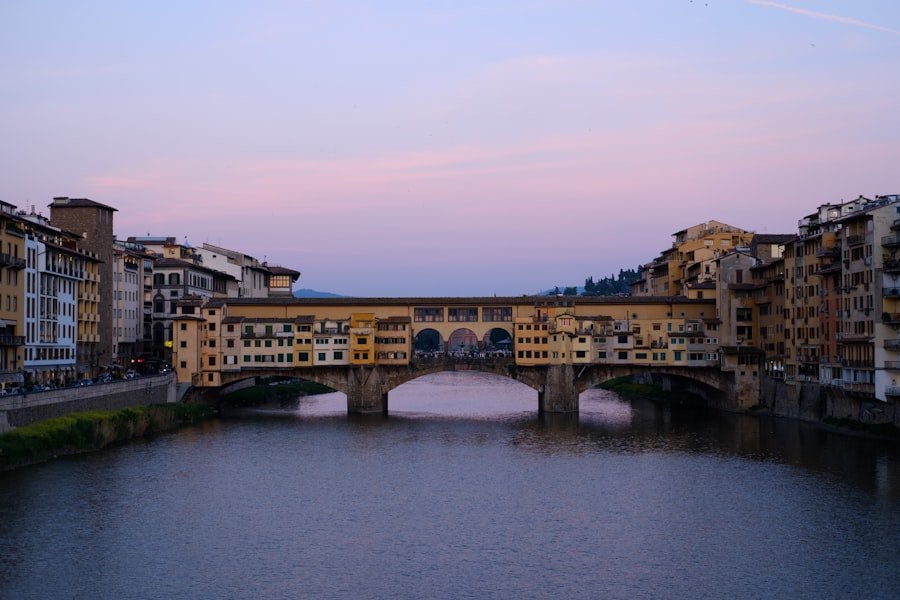
Oltrarno has boutique hotels, guesthouses, apartments, historic properties, and smaller lodgings mixed among residential streets. A stay near Ponte Vecchio can still feel extremely central and busy, while a property deeper around Santo Spirito or San Frediano may feel much more neighborhood-oriented.
This is why “Oltrarno” should not be treated as a single uniform atmosphere. Always check how far the property is from the bridge you expect to use, whether the route involves hills, and what surrounds the building at night.
Dining and Entertainment
Florence has excellent food on both sides of the Arno, so you should not choose a neighborhood because you think the other side lacks restaurants. The difference is more about the style of the streets around you.
Near the Duomo, dining choices are extremely dense. You can find traditional Tuscan dishes, cafés, bakeries, gelato, wine, quick meals, and higher-end restaurants within a short walk. The central location is convenient, but restaurants directly beside the busiest monuments receive heavy visitor traffic. Reading recent menus and reviews before sitting down can help you avoid choosing only by location.
Oltrarno is particularly appealing to travelers who enjoy wandering for dinner. Santo Spirito and its surrounding streets have trattorias, wine bars, cafés, and informal evening spots mixed into a neighborhood that remains active after daytime sightseeing slows down.
If nightlife noise matters to you, do not assume Oltrarno will always be quieter than the Duomo. Piazza Santo Spirito is officially described as one of Florence’s characteristic and lively squares, and nearby accommodation can reflect that energy.
Historical and Cultural Attractions
The two areas offer different ways to experience Florence’s history.
Major Sights Near the Duomo
The Duomo side is best for a trip centered on Florence’s most famous historic core. Piazza del Duomo contains the Cathedral of Santa Maria del Fiore, Baptistery, and Giotto’s Bell Tower. The Uffizi, Piazza della Signoria, Palazzo Vecchio, and many central churches and museums are also easily reached on foot.
For travelers planning to climb Brunelleschi’s Dome, staying nearby can make an early reserved time easier. The official Opera di Santa Maria del Fiore site requires a timed reservation for the Dome climb. The route involves 463 steps and no elevator, so travelers with mobility, heart, vertigo, or claustrophobia concerns should review the official access guidance before booking.
Major Sights in Oltrarno
Oltrarno places Palazzo Pitti and Boboli Gardens on your side of the river. The Uffizi Galleries manage both sites, making this side especially convenient if you plan a substantial Pitti and Boboli visit.
Santo Spirito adds another layer. The square grew around the Augustinian presence in Oltrarno, and the Basilica di Santo Spirito is closely associated with Filippo Brunelleschi. The surrounding district also preserves Florence’s long artisan tradition.
The choice is therefore not “historic versus non-historic.” Both areas are packed with history. Duomo concentrates many of Florence’s headline monuments; Oltrarno combines major sights with workshops, neighborhood squares, palaces, churches, and gardens.
Transportation and Accessibility
Florence’s historic center is compact, and walking will usually be your main form of transportation in both areas. The official tourism service describes the central ZTL area as relatively small and flat, although surfaces in the old city can be uneven.
Public Transportation
Florence currently has two main tram lines, T1 and T2. T1 connects Villa Costanza, Santa Maria Novella station, and Careggi, while T2 connects Florence Airport with the station and continues to Piazza San Marco. The tram does not function like a subway running directly between the Duomo and Santo Spirito, so most travelers move between these two accommodation areas on foot.
City buses and electric center minibuses can help when you are tired, carrying luggage, or traveling farther from the historic core. As of September 2026, Florence’s standard urban bus/tram ticket costs €2 and is valid for 90 minutes.
Accessibility
Travelers with limited mobility should investigate the exact property rather than assuming either neighborhood is fully accessible. Florence’s official accessibility guidance notes that narrow sidewalks and uneven historic surfaces can create challenges. Public buses and trams are equipped for accessible boarding, but individual attractions vary.
The Cathedral itself has accessible entry, while Brunelleschi’s Dome does not: the Dome climb requires 463 steps and has no elevator. In Oltrarno, some routes farther south rise toward Florence’s hills, so mapping the exact hotel-to-attraction route is useful before booking.
Note: If you use a wheelchair, walker, or heavy luggage, ask the accommodation to confirm elevator access, entrance steps, bathroom accessibility, and the route from street level. “Historic building” can mean very different access conditions from one property to another.
Arriving by Car
Neither central Duomo nor central Oltrarno is ideal for casually driving to your door. Large parts of Florence’s historic center are covered by a camera-controlled ZTL, or restricted-traffic zone.
Warning: Do not drive into central Florence simply because your navigation app sends you there. ZTL cameras record license plates, and restrictions include daytime hours plus seasonal night controls. If you are bringing a car, confirm parking and ZTL procedures directly with your accommodation before arrival and check Florence’s current official traffic rules.
Budget Considerations
Accommodations for All Budgets
Both neighborhoods contain luxury, mid-range, and simpler accommodation. It is risky to say that Duomo is always expensive or Oltrarno is always cheap. A small room two blocks from the Cathedral may cost less than a stylish apartment near Ponte Vecchio, while moving several streets away from the most famous squares can reduce prices on either side of the river.
Compare the total stay price rather than only the nightly headline rate. Look at cancellation rules, breakfast, room size, elevator access, and any local taxes or property fees shown during booking.
Dining Options to Suit Different Budgets
You can eat affordably or spend heavily in either neighborhood. Quick lunches, bakeries, markets, sandwiches, simple trattorias, and casual cafés can keep food costs down. Fine dining, long wine-focused dinners, and restaurants in landmark locations can raise the daily budget quickly.
For value, walk a little beyond the most obvious monument-facing streets, check menus before sitting down, and avoid assuming that a restaurant is either good or bad simply because it is central.
Exploring Without Overspending
Walking between the Duomo and Oltrarno costs nothing and is one of the pleasures of Florence. Squares, bridges, streets, church exteriors, artisan districts, and views along the Arno can fill hours without requiring a paid ticket.
For museums and monuments, decide which paid attractions matter most to you and use official ticket sites. This is especially important for high-demand attractions such as Brunelleschi’s Dome and the Uffizi Galleries.
Local Experiences and Activities
If your ideal Florence trip includes traditional craft culture, Oltrarno has a clear advantage. Florence’s official tourism site highlights the district’s historic concentration of artisan workshops, including crafts connected with jewelry, silver work, fabric decoration, instrument making, and woodwork.
The Santo Spirito area also works well for slower evenings. You can spend the afternoon visiting Palazzo Pitti or Boboli Gardens, wander through nearby streets, stop for an aperitivo or dinner, and return to your accommodation without planning a long trip across town.
The Duomo side offers a different local rhythm. Staying centrally makes it easier to see famous squares at quieter times, such as early morning or later in the evening after many day visitors have left. It also works well for travelers whose itinerary includes several museums and churches in one day.
Both areas reward walking without a strict plan. The difference is what appears outside your door: monumental Florence around the Duomo, or the artisan and residential character of Oltrarno.
Recommendations for Different Types of Travelers
First-Time Visitors
Best choice: Duomo for most first trips. If you have never visited Florence, staying near the Cathedral simplifies sightseeing and reduces the amount of navigation needed. You can still walk across the river to Oltrarno whenever you want a change of atmosphere.
Couples
Best choice: either, with a slight edge to Oltrarno for atmosphere. Couples who enjoy evening walks, wine bars, smaller streets, artisan shops, and long dinners may prefer Santo Spirito or another well-chosen Oltrarno location. Couples focused on landmark views and very short sightseeing walks may prefer Duomo.
Families With Children
Best choice: depends on the exact property. Duomo can reduce walking between headline attractions, which helps on short trips with children. Oltrarno can provide a less monument-centered base and easy access to Boboli Gardens. Families should prioritize room size, elevators, street noise, and walking distance over the neighborhood label alone.
Solo Travelers
Best choice: both work well. Duomo makes navigation simple and keeps you close to a dense concentration of sights. Oltrarno is attractive if you enjoy cafés, workshops, markets, and neighborhood wandering. Standard city precautions remain sensible in busy tourist areas and late at night.
Short Stays of One to Three Nights
Best choice: Duomo. When time is limited, central access usually matters more than having the most residential atmosphere. Being able to leave your hotel and reach several major sights within minutes helps maximize a short visit.
Repeat Visitors and Slow Travelers
Best choice: Oltrarno. If you already know Florence’s major monuments, staying across the Arno can shift the trip toward neighborhood life, artisan culture, Pitti Palace, gardens, long meals, and streets you may have rushed through on an earlier visit.
Travelers With Heavy Luggage or Mobility Concerns
Best choice: the exact hotel matters more than the neighborhood. Check distance from your arrival point, elevator access, entrance steps, cobblestones, hills, and whether a taxi can legally reach the property. A perfectly located hotel with several flights of stairs may be less practical than a slightly farther property with step-free access.
Frequently Asked Questions
What are the main differences between staying in Florence Duomo and Oltrarno?
The Duomo area places you beside Florence’s Cathedral and close to many headline sights, making it ideal for sightseeing efficiency. Oltrarno is across the Arno and is known for areas such as Santo Spirito, artisan workshops, Palazzo Pitti, and Boboli Gardens. It often feels more neighborhood-focused, although busy squares can still be lively.
What are the advantages of staying near the Duomo?
The main advantage is convenience. You can walk quickly to the Cathedral complex, Piazza della Signoria, the Uffizi area, shops, restaurants, and many central churches and museums. It is especially useful for first-time visitors and short stays.
What are the advantages of staying in Oltrarno?
Oltrarno gives you easy access to Santo Spirito, Palazzo Pitti, Boboli Gardens, artisan areas, neighborhood restaurants, and streets with a different feel from the busiest monument zone. It is particularly attractive to repeat visitors and travelers who want a slower Florence experience.
Which area is better for first-time visitors to Florence?
Duomo is usually the simplest option for a first visit because many famous attractions are close together and easy to reach on foot. Choose Oltrarno instead if neighborhood atmosphere matters more to you than minimizing every sightseeing walk.
Are there accommodation options for different budgets in both areas?
Yes. Both Duomo and Oltrarno offer luxury hotels, boutique properties, apartments, guesthouses, and simpler rooms. Neither neighborhood is always cheaper. Compare the exact location, season, room type, cancellation terms, and total stay price.
Is Oltrarno quieter than the Duomo area?
Sometimes, but not always. Residential streets can be calmer than the busiest Duomo lanes, but Piazza Santo Spirito and nearby nightlife areas can remain active late into the evening. Check recent room-specific reviews if sleep noise is important to you.
Should I stay in Duomo or Oltrarno if I have a car?
Neither historic-center area is ideal for casual driving because Florence operates a restricted-traffic zone controlled by cameras. Choose accommodation with clear parking and ZTL instructions, or consider parking outside the restricted center and entering by tram, bus, taxi, or on foot.
Sources
- FeelFlorence — Piazza del Duomo — official Florence tourism information on the Cathedral square and historic center.
- FeelFlorence — The Triangle of the Oltrarno — official information on Oltrarno’s artisan traditions and historic streets.
- FeelFlorence — Bus and Tram in Florence — current tram lines, buses, city-center minibuses, and fares.
- FeelFlorence — Florence ZTL — official restricted-traffic and driving guidance for the historic center.
- Opera di Santa Maria del Fiore — Plan Your Visit — official Cathedral complex access, reservations, opening information, and visitor rules.
- Uffizi Galleries — Visit — official visitor information for the Uffizi, Palazzo Pitti, and Boboli Gardens.