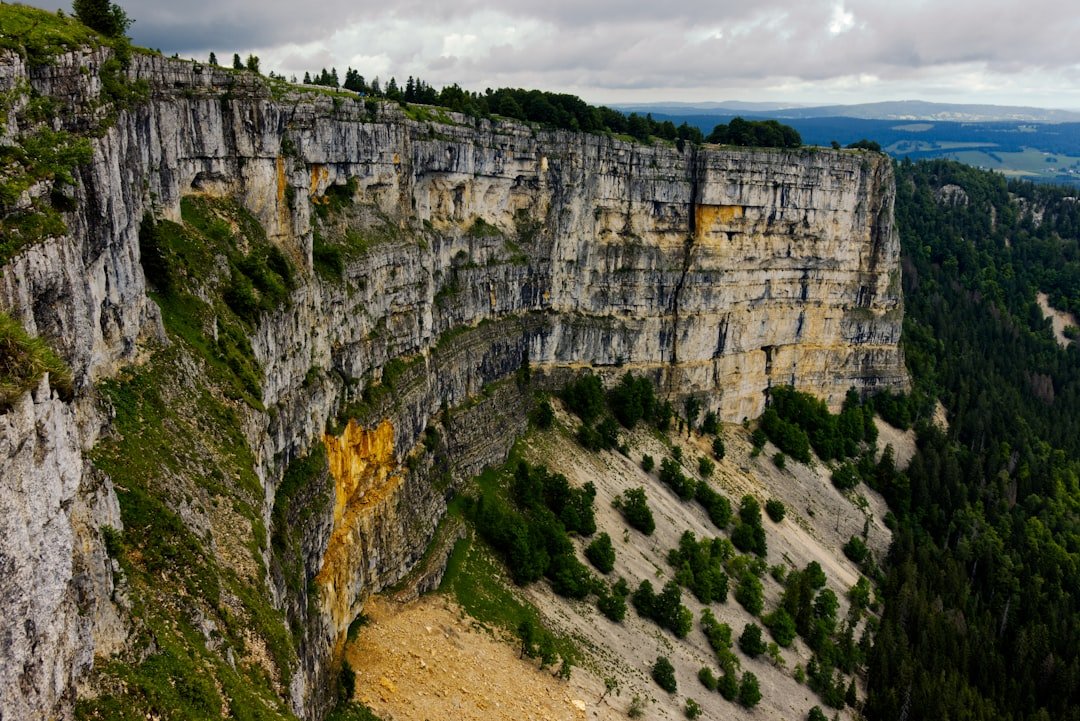
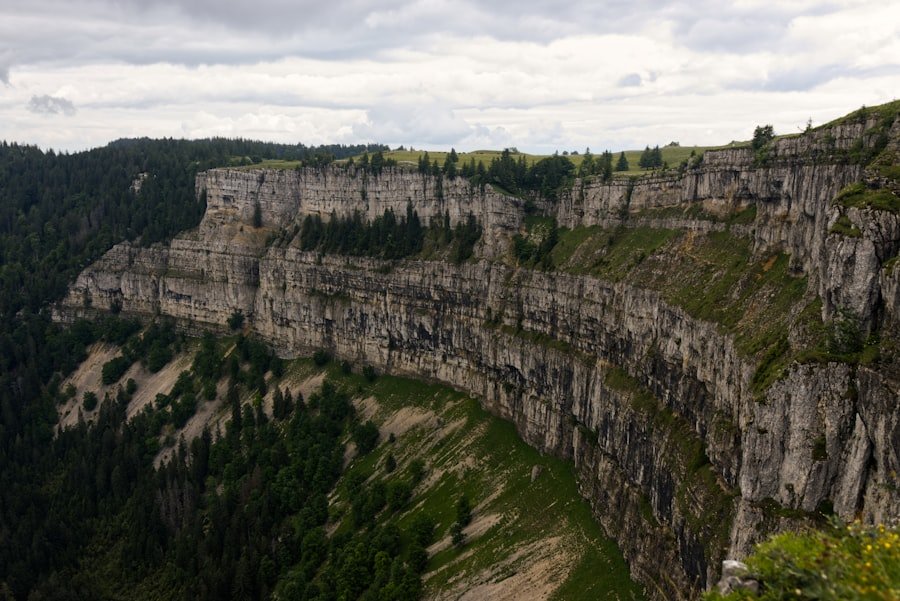
Creux du Van is a huge horseshoe-shaped limestone cirque in the Neuchâtel Jura of western Switzerland. Its sheer rock wall, broad summit plateau, wildlife, and views across the Jura and toward the Alps make it one of the region’s best-known natural sights. You can reach the area on foot from Noiraigue or approach the upper plateau by road during the normal snow-free season.
The landscape is impressive, but Creux du Van is also a protected natural area rather than an unrestricted viewpoint. Visitors should plan for exposed terrain, changing mountain weather, wildlife-protection rules, seasonal road conditions, and a demanding hike if approaching from Noiraigue.
Quick Answer
Creux du Van is a dramatic limestone rock cirque near Noiraigue in Switzerland’s Neuchâtel Jura. The classic circular hike is roughly 14 to 15 km and takes about 4.5 hours. You can also approach the upper plateau by car in the snow-free season. Expect exposed cliffs, protected wildlife, limited facilities, and strict reserve rules.
Key Takeaways
- Creux du Van is a protected limestone cirque in the Neuchâtel Jura, roughly 1 to 1.4 km across, with rock walls around 160 to 200 m high depending on how the formation is measured.
- The classic Noiraigue loop takes about 4.5 hours and covers roughly 14 to 15 km with substantial climbing.
- Noiraigue is the most useful public-transport starting point, while seasonal road access also reaches parking areas closer to the upper plateau.
- Ibex, chamois, marmots, lynx, and birds of prey occur in the wider protected landscape, but sightings are never guaranteed.
- Wild camping and drone use are prohibited in the protected area, and dogs must be kept on a leash.
- The exposed cliff edge, livestock, rapidly changing weather, and slippery winter trails all require extra care.
Getting to Creux du Van
Noiraigue in the Val-de-Travers is the most common starting point for hikers. It has a railway station, so you can reach the village by public transport and begin the marked climb toward Creux du Van without needing a car. Other marked walking approaches are available from Travers, Champ-du-Moulin, Bevaix, and St-Aubin.
If you start in Noiraigue and complete the classic circular hike, allow much more than the 1.5 to 2 hours sometimes quoted for part of the ascent. Jura & Three-Lakes currently lists its Noiraigue loop at 14 km, 821 m of ascent and descent, and about 4 hours 32 minutes. Switzerland Tourism lists a closely related route at 15 km, 780 m of ascent, and about 4 hours 35 minutes. The difference reflects the exact mapped route, so a practical planning figure is roughly 14 to 15 km and 4.5 to 5 hours.
Note: A 4.5-hour route estimate is moving time, not a deadline. Add extra time for wildlife viewing, photographs, meals, rest stops, and slower sections of the climb.
Driving and parking
Driving can shorten the amount of walking, but access changes by season. According to Neuchâtel Tourism’s current access guidance, several approaches are normally available from May to October. These include the Soliat parking area from Couvet or Provence, the Ferme Robert parking area from Noiraigue, parking in Noiraigue itself, and Grand’Vy from the southern side.
The Soliat parking area is only a few minutes’ walk from the edge when the road is open, while Grand’Vy requires a somewhat longer walk. Parking outside official parking areas, including in meadows, is prohibited.
Winter access
From November through April, do not assume that summer driving routes remain usable. Official tourism guidance says several roads are not cleared of snow. On the road between Provence and Couvet toward Creux du Van, winter tyres or snow chains are required under winter conditions. Trails from Noiraigue can also become icy and slippery.
Warning: Creux du Van has exposed cliff edges without the type of continuous barrier you might expect at an urban viewpoint. Stay well back from the edge in fog, wind, snow, or ice, supervise children closely, and never rely on the low stone wall as a safety barrier.
Hiking and Wildlife at Creux du Van
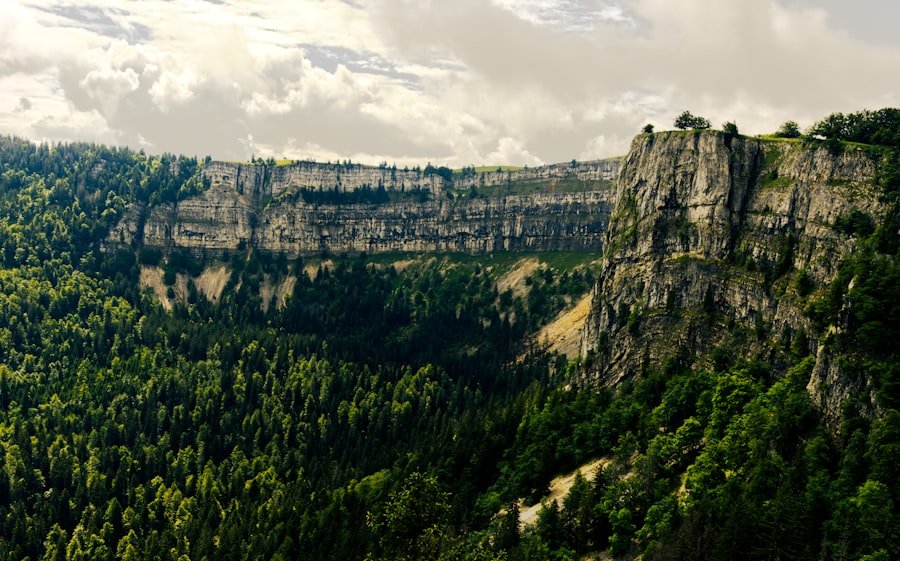
The classic Creux du Van hike from Noiraigue is rewarding but physically demanding. The best-known ascent follows the Sentier des 14 Contours, or Trail of the 14 Bends, through forest before reaching the open upper landscape. The official Jura & Three-Lakes listing rates its version of the route as sporty and very challenging in fitness terms.
The scenery changes noticeably during the climb. Lower sections pass through forest, while the upper route reaches pastures, limestone terrain, and open viewpoints around the rim. Sturdy walking shoes with good grip are a better choice than casual street shoes.
Wildlife you may see
Creux du Van and its protected surroundings support notable wildlife. Official tourism information identifies ibex, chamois, marmots, lynx, and other species in the area. Birds of prey also use the wider landscape.
Wildlife is easiest to enjoy when you treat a sighting as a possibility rather than a guarantee. Early morning and late afternoon can be quieter, but weather, season, disturbance, and the animals’ natural movements all influence what you see. Binoculars allow you to observe animals without approaching them.
Pro Tip: If you see ibex or chamois near the trail, stop at a respectful distance and let the animal choose where to move. A longer camera lens or binoculars usually produces a better experience than walking closer.
Dogs and livestock
Dogs must be kept on a leash inside the nature reserve. There is an additional practical concern around the upper pastures: Jura & Three-Lakes strongly advises visitors not to bring dogs through the suckler-cow pastures around Creux du Van and Le Soliat because cattle protecting calves can react aggressively to dogs.
If you encounter cattle, give them space and follow any temporary signs or route instructions. Do not walk between a cow and its calf.
The Geology and Formation of Creux du Van
| Geological Feature | Verified Description |
|---|---|
| Creux du Van | A large horseshoe-shaped limestone cirque shaped by long-term erosion, especially the action of water and ice. |
| Rock Type | Predominantly Jurassic limestone visible in regular rock layers. |
| Rock Age vs. Landform Age | The limestone is Jurassic in age, but the present cirque was sculpted much later through erosion. The age of the rock and the age of the landform are not the same. |
| Width / Diameter | Official descriptions range from more than 1 km in diameter to about 1.4 km wide, depending on the measurement used. |
| Cliff Relief | Roughly 160 to 200 m, depending on the official description and measurement. |
The geology is one of the main reasons Creux du Van looks so distinctive. The rock layers are limestone associated with the folded Jura. Water, frost, ice, rockfall, and other erosional processes gradually cut into the limestone and created the steep semicircular wall visible today.
It is important to distinguish the age of the limestone from the age of the modern landscape. The limestone layers originated in the Jurassic geological period, but that does not mean the present amphitheater suddenly formed during the Jurassic. The cirque is the much younger result of prolonged erosion acting on those older rocks.
Current official descriptions differ slightly in their dimensions. Jura & Three-Lakes describes a rocky arena more than a kilometre across with vertical cliffs exceeding 160 m, while Switzerland Tourism describes it as approximately 1.4 km wide and 200 m deep. Both are more useful than the incorrect claim that the cliffs themselves rise 1,400 m.
The dramatic shape comes from a simple geological contrast: ancient limestone forms the structure, while much later erosion by water, ice, frost, and gravity carved the cirque visitors see today.
Points of Interest and Photography at Creux du Van
The rim itself is the main attraction. From the upper plateau, clear conditions can reveal the surrounding Jura landscape, Lake Neuchâtel, and distant Alpine peaks. Sunrise and late-afternoon light can produce softer shadows on the limestone wall, but photographers should balance the search for a viewpoint with cliff-edge safety.
Instead of relying on the poorly documented “Grotte de l’Ermite” claim in older descriptions of the site, focus on attractions that are clearly documented in current regional visitor information. The Fontaine Froide spring lies at the bottom of the cirque, and Ferme Robert provides another useful stop in the lower area. A seasonal interpretation center at Ferme Robert explains the geology, wildlife, flora, and history of Creux du Van.
The changing seasons also alter the photographic character of the landscape. Spring and summer bring green pastures and flowering vegetation. Autumn can add warm woodland colors. Winter can transform the rim completely, but snow, ice, fog, and uncleared paths make access much more serious.
Drone photography
Do not plan a normal recreational drone flight at Creux du Van. The Canton of Neuchâtel states that drones may not operate within the Creux du Van federal game reserve. This restriction helps limit disturbance to protected wildlife.
Camping and Accommodation Options near Creux du Van
Creux du Van is not a place to choose an unofficial patch of ground and pitch a tent. Wild camping is prohibited in the protected area. The same applies to staying overnight in a caravan or motorhome outside permitted locations.
Camper-van travelers should use an official site. Neuchâtel Tourism lists formal camper facilities in places including Noiraigue and St-Aubin. For example, the Noiraigue Les Courtons camper area is positioned near hiking routes for Creux du Van and the Gorges de l’Areuse.
Travelers who want a conventional room can look for hotels, guesthouses, bed-and-breakfast accommodation, and other lodging in Noiraigue and elsewhere in the Val-de-Travers. Staying in the valley also makes it easier to begin the hike early without trying to drive narrow upper roads before or after a long day on foot.
Note: Accommodation services, restaurants, and mountain-road access can be seasonal. Check the current operator or official tourism information before building your schedule around a specific meal, shuttle, or overnight stop.
Local Cuisine and Dining Options near Creux du Van
Regional farm restaurants, often called métairies, are part of the food experience around the Jura. Jura & Three-Lakes highlights foods such as rösti, fondue, mushroom toast, cold cuts, sausages, and regional cheeses at farm restaurants around Creux du Van.
Restaurant du Soliat is convenient for visitors approaching the upper plateau, while Ferme Robert is useful on the lower side of the cirque. Opening days and hours can vary, so carry enough water and food to remain self-sufficient rather than assuming a restaurant will be open when you arrive.
Fondue is an obvious choice if you want a traditional Swiss cheese meal, but hikers may prefer something lighter before a steep descent. If you are preparing your own picnic, this site’s homemade cottage cheese recipe is another general picnic idea, although cottage cheese should not be presented as a special Creux du Van regional dish.
Tips for Visiting Creux du Van
Choose the right season and weather
May through October is the main period promoted for the standard hiking route, although actual conditions vary from year to year. Even in summer, weather on the plateau can change quickly. Check the forecast shortly before leaving and carry an extra layer.
Carry enough water and food
Restaurants exist around the wider site, but they are not positioned at every viewpoint and can operate seasonally. Carry sufficient water, snacks, and any essential medication from the start.
Wear proper footwear
The classic Noiraigue route involves sustained climbing and uneven surfaces. Shoes with reliable grip are especially useful after rain and during descents.
Respect the protected landscape
Creux du Van is both a cantonal nature reserve and part of a federal game reserve. The Neuchâtel nature-reserve rules require dogs to be on a leash and prohibit disturbing wildlife. They also prohibit camping in the reserve and restrict fires to designated locations. Plants, flowers, mushrooms, and other natural material are protected from collection under the reserve rules.
Use marked trails, follow local signs, and avoid creating shortcuts across sensitive vegetation. Creux du Van is included in the federal inventory landscape “Creux du Van et Gorges de l’Areuse,” which reflects its national geological, ecological, and landscape importance.
Keep wildlife wild
Do not feed ibex, chamois, marmots, or other wildlife. Give animals enough room to move naturally and never position yourself between an animal and its escape route.
Start early if you want a quieter hike
An early start gives you more daylight for the full loop and can help you avoid some of the busiest periods. It also leaves more time for photography and rest stops without rushing the descent.
Consider a shorter outing if the full climb is too demanding
You do not have to complete the full Noiraigue loop to see the landscape. Switzerland Tourism describes a shorter lower-plateau discovery walk of roughly 30 to 40 minutes from a parking area at the foot of the cirque. The surface is still partly uneven, so sturdy footwear remains useful.
Frequently Asked Questions
What is Creux du Van?
Creux du Van is a large horseshoe-shaped limestone cirque in the Neuchâtel Jura of western Switzerland. Its rock wall is roughly 160 to 200 m high depending on the measurement used, and official descriptions put the formation at more than 1 km to about 1.4 km across.
How do I get to Creux du Van?
Noiraigue is the standard public-transport and hiking starting point. From its railway station, marked trails climb toward Creux du Van. During the normal snow-free season, drivers can also use official parking approaches from Noiraigue, Couvet, Provence, Gorgier, or Bevaix, depending on the route and current road conditions.
How long is the Creux du Van hike from Noiraigue?
Allow roughly 4.5 to 5 hours for the classic circular hike before long breaks. Current official route descriptions vary slightly, with approximately 14 to 15 km of walking and around 780 to 821 m of ascent depending on the mapped version.
What activities can I do at Creux du Van?
Hiking, wildlife watching, landscape photography, geology viewing, and visiting regional farm restaurants are the main visitor activities. Because Creux du Van is protected, always follow current signs and regulations before attempting activities such as climbing, cycling, or other sports.
What should I bring when visiting Creux du Van?
Bring sturdy hiking shoes, water, food or snacks, weather-appropriate layers, sun protection, and a charged phone. Binoculars are useful for wildlife watching. In colder conditions, check for snow and ice before leaving because ordinary hiking equipment may not be sufficient.
Are there restaurants or facilities at Creux du Van?
Yes, but facilities are limited and spread across the wider area rather than positioned continuously along the cliff. Regional farm restaurants include options around Le Soliat and Ferme Robert, and Ferme Robert also has a seasonal interpretation center. Carry your own water and essentials because opening times can vary.
Is Creux du Van accessible for people with disabilities?
The standard Creux du Van hiking experience is not wheelchair accessible. Official tourism information currently lists the attraction as not accessible, and the trails include uneven ground, steep sections, and exposed natural terrain.
Can I camp at Creux du Van?
Wild camping is prohibited in the protected area. Camper vans and motorhomes should use official overnight sites such as designated facilities listed by Neuchâtel Tourism rather than parking overnight in meadows or unofficial roadside locations.
Can I fly a drone at Creux du Van?
No for ordinary recreational use within the federal game reserve. Canton Neuchâtel states that drones may not operate in the Creux du Van protected wildlife area.
Can I bring a dog to Creux du Van?
Dogs must be kept on a leash inside the reserve. Official tourism guidance also strongly advises against taking dogs through the suckler-cow pastures around Creux du Van and Le Soliat because cattle protecting calves can behave aggressively toward dogs.
Sources
- Jura & Three-Lakes: Creux du Van — official regional information on dimensions, wildlife, views, hiking, and farm restaurants.
- Jura & Three-Lakes: Creux du Van hike — current route distance, elevation gain, duration, difficulty, and livestock warning.
- Neuchâtel Tourism: Access and parking at Creux du Van — seasonal road access, official parking, winter conditions, camper access, and wild-camping rules.
- Canton of Neuchâtel: Terrestrial wildlife and protected areas — federal game reserve status, leash requirement, camping restriction, drone restriction, and wildlife protection.
- Canton of Neuchâtel: Protected territories — national landscape protection and Creux du Van’s geological and ecological importance.
- Switzerland Tourism: Creux du Van — dimensions, seasonal guidance, accessibility, wildlife, and alternative visitor routes.