Wembley Stadium is far more than the home of major football finals. The original stadium opened in 1923, while today’s 90,000-seat venue combines more than a century of sporting history with a behind-the-scenes visitor experience. If you are planning a Wembley Stadium Tour, the most useful details are what you can see, how long the experience takes, current ticket costs, accessibility and how the route can change around live events.
Quick Answer
The Wembley Stadium Tour takes visitors behind the scenes at England’s national stadium. The current standard experience is marketed as a 90-minute tour and can include the press conference room, dressing rooms, players’ tunnel and pitch-side. Routes can change around events, so check the official booking calendar before travelling.
Key Takeaways
- The original Wembley opened in 1923, and today’s stadium opened in 2007 with a capacity of 90,000.
- The famous arch reaches 133 metres high and supports much of the stadium roof.
- The standard Wembley Stadium Tour is currently promoted as a 90-minute experience, although Wembley recommends allowing extra time for self-guided elements.
- Current tour highlights can include dressing rooms, the press conference room, players’ tunnel and a pitch-side walkout.
- Tour routes can change when Wembley is preparing for football, concerts or other events.
- Wheelchair users can take the tour, with alternative access provided where steps make the normal route unsuitable.
Wembley Stadium History: From 1923 to Today
The original Wembley Stadium was built as the centrepiece of the British Empire Exhibition and first appeared on the London skyline in 1923. According to Wembley Stadium’s official history, the FA Cup Final between Bolton Wanderers and West Ham United on April 28, 1923 was the first event staged there.
The official attendance for that match was 126,047, although Wembley estimates that around 200,000 people entered the stadium. That enormous crowd helped create the legend of the 1923 “White Horse Final” and immediately established Wembley as one of England’s most important sporting venues.
The old stadium became famous for its Twin Towers and hosted major moments including the 1948 Olympic Games, England’s 1966 FIFA World Cup victory and Live Aid in 1985. The final football match at the original stadium was England against Germany in October 2000.
After the old venue closed, Wembley was rebuilt on the same site. The new stadium opened in 2007, beginning a modern era while continuing the site’s role as England’s national stadium.
The Architecture and Design of Wembley Stadium
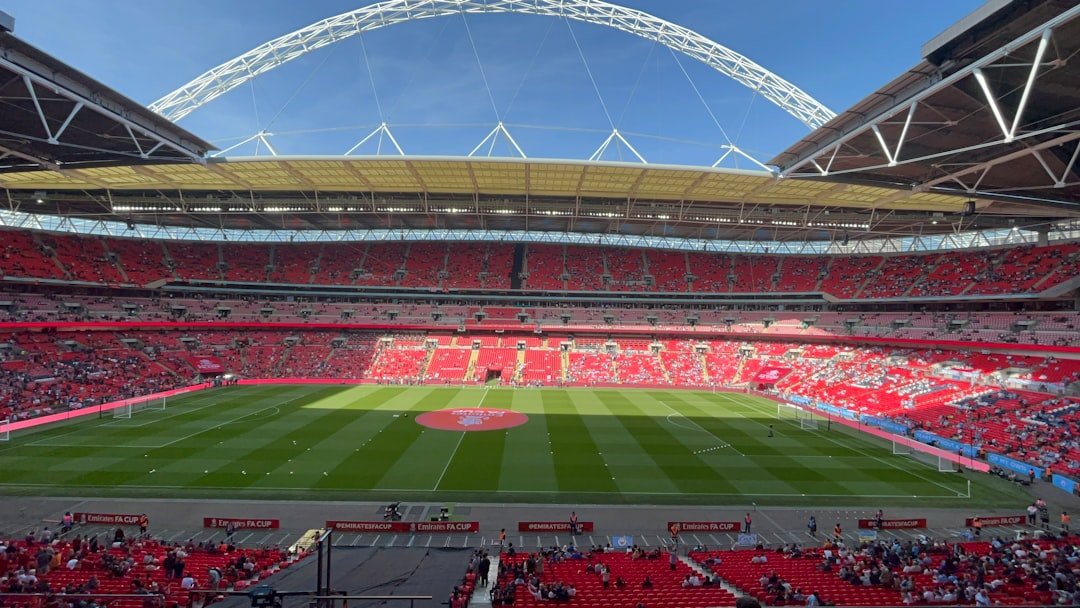
The most recognizable feature of modern Wembley is its huge arch. It reaches about 133 metres above the stadium and supports the north roof as well as a substantial portion of the south roof.
Wembley has a capacity of 90,000 spectators. The roof sits high above the playing area and uses a sliding design, but it should not be confused with a fully closing dome. The roof does not completely cover the pitch.
Note: Wembley is not an enclosed indoor stadium. The movable roof sections help protect spectator seating and manage light over the playing surface, but the pitch remains open to the elements.
The seating bowl, large concourses, hospitality areas, screens, sound systems and transport links were designed to support football, rugby, American football, concerts and other large events. The combination of the arch, 90,000-seat capacity and multipurpose layout makes the modern stadium visually very different from the Twin Towers era.
The Events and Matches Held at Wembley Stadium
Football remains central to Wembley’s identity. The stadium has hosted FA Cup Finals, England internationals, European club finals and major international tournaments. The old stadium was also the setting for England’s 4-2 victory over West Germany in the 1966 FIFA World Cup Final.
Wembley’s history extends well beyond football. The site has hosted the Olympic Games, rugby league, boxing and American football. Music is equally important to its legacy: Live Aid took place at the old Wembley in 1985, and artists including Queen, Michael Jackson and the Rolling Stones have performed there.
The same Wembley site has hosted England’s 1966 World Cup triumph, Olympic competition, major cup finals, international football and some of the world’s biggest live music events.
This variety explains why a stadium tour is not only about football. The visitor experience also explores the building’s wider role in British sport, entertainment and popular culture.
The Wembley Stadium Tour Experience
The official Wembley Stadium Tour booking page currently promotes a 90-minute standard experience. The normal route can take visitors into areas that are usually unavailable to general spectators.
Wembley Stadium Tour at a Glance
| Standard Tour | Advertised as a 90-minute experience |
| Recommended Visit Time | Allow up to about 2 hours when including self-guided elements |
| Adult Price | £28 online price shown September 9, 2026 |
| Child / Accessible / Concession | £19 online price shown September 9, 2026 |
| Family Ticket | £75 online price shown September 9, 2026 |
| Under 5 / Carer | £0 on the current booking page; conditions apply |
Current highlights advertised for the standard tour include the press conference room, dressing rooms, the players’ tunnel and walking out pitch-side. This is more accurate than saying every visitor is allowed onto the playing grass itself.
Wembley’s visitor information explains that the guided part of the experience is approximately 75 minutes, while self-guided areas can increase the total visit. For that reason, Wembley recommends allowing roughly two hours rather than planning around a strict 75-minute departure-to-exit window.
Pro Tip: Pre-book before making a special journey. Wembley is a working stadium, and the available tour type, time slots and accessible areas can change around football matches, concerts and event setup.
Security, Bags and Arrival
Visitors should expect security searches. Wembley also warns that larger bags or luggage may be refused and that the stadium does not provide facilities for leaving personal belongings during the tour.
Check your selected arrival time carefully. Tour availability is managed around the stadium’s live-event calendar, so an arrival slot should not be treated like a guarantee that every normally advertised area will be available.
Wembley Heritage Displays and Memorabilia
The current visitor experience is best understood as a stadium tour with historical displays rather than a separate standard attraction called the “Wembley Stadium Museum.” Wembley incorporates the venue’s heritage into the tour through historic material, multimedia content and stories connected with famous events.
That approach makes sense because the history spans two different stadiums on the same site. Visitors can learn about the old Twin Towers, famous FA Cup Finals, the 1948 Olympics, England’s 1966 World Cup victory, major concerts and the construction of the present stadium.
Historic objects and specific display areas can change. Wembley states in its Stadium Tour terms and conditions that the route can be altered and that it cannot guarantee every advertised tour element will be available.
Behind the Scenes at Wembley Stadium
The strongest part of the Wembley Stadium Tour is the contrast between the public stadium and the spaces normally associated with players, coaches, media and event staff. Instead of seeing only the seating bowl from a spectator’s seat, visitors can experience parts of the route used before and after major matches.
Depending on the tour operating that day, this can include the press conference room, dressing-room areas, players’ tunnel and pitch-side. Standing near the field also gives visitors a clearer sense of the scale of a 90,000-seat venue.
Behind those visitor areas is the much larger operation required to stage football, concerts and other events, including security, guest services, hospitality and technical support. Because crews may be preparing the building for the next event, Wembley can modify the tour route when necessary.
Warning: Do not book solely for one specific room or photo location. Wembley reserves the right to change the tour route, and not every advertised area can be guaranteed on every date.
Wembley Stadium’s Impact on Sports History
Wembley’s influence comes from the number of defining events associated with the site. England’s 1966 World Cup Final victory remains one of its most famous sporting moments, while the stadium has also hosted generations of FA Cup Finals, England internationals and major European matches.
It is important to separate Wembley history from events staged elsewhere during the rebuilding period. For example, the dramatic 2006 FA Cup Final between Liverpool and West Ham United was played at Cardiff’s Millennium Stadium because Wembley was still under construction.
The wider Wembley story also includes the 1948 Olympics, rugby league, boxing, American football and major concerts. That range has helped make the stadium both a sporting landmark and a major entertainment venue.
Wembley Stadium Today: Planning Around a Working Venue
Rather than relying on speculative promises about future renovations or new facilities, visitors should remember one practical fact: Wembley is an active event venue. Football matches, concerts and event preparation directly affect tour availability.
Some dates may use a shortened or altered experience when player areas are unavailable. Wembley can also offer different products such as standard tours, VIP experiences and event-related tours, so read the description attached to your actual booking rather than assuming every ticket follows exactly the same route.
Getting to Wembley Stadium
Wembley is well served by public transport. The three main stations serving the stadium are Wembley Park, Wembley Stadium and Wembley Central. Wembley Park is served by the Jubilee and Metropolitan lines, Wembley Stadium by Chiltern Railways, and Wembley Central by the Bakerloo line and London Overground.
For current rail, Underground and accessibility information, use Wembley’s official Getting Here guidance before travelling, particularly on event days when services and pedestrian routes can be busier than usual.
Accessibility on the Wembley Stadium Tour
The official Wembley tour accessibility guidance states that the tour is suitable for wheelchair users. Some steps on the normal route, including uneven steps toward the Royal Box, are not wheelchair accessible, so staff use an alternative route where required.
Accessible toilet facilities are available during the tour, and service dogs are welcome. Wembley also warns that parts of the visitor experience can contain dark spaces, strobe lighting and sound effects. Visitors who need to avoid these areas should tell a member of staff.
Children and Photography
Children under five can currently enter the standard tour free when accompanied by a paying adult, although Wembley’s terms state that the tour is not considered suitable for very small children. Buggies are not permitted. Under-16 concession holders must be accompanied by an adult.
Photography and audiovisual recording for personal use are permitted under the tour terms. Professional, commercial or professional-grade recording requires prior permission from Wembley.
Elsewhere on this site, the existing Asian melon article covers a completely different subject. It is not a Wembley Stadium Tour resource, so visitors should rely on the official Wembley sources linked throughout this guide for planning information.
Frequently Asked Questions
What is the Wembley Stadium Tour?
The Wembley Stadium Tour is a behind-the-scenes visitor experience at Wembley Stadium in London. The standard tour explores areas associated with players, media and major events while explaining the history of both the original and current stadium.
What can I expect to see on the Wembley Stadium Tour?
Current standard-tour highlights include the press conference room, dressing rooms, players’ tunnel and a pitch-side walkout. The exact route is not guaranteed and can change when Wembley is preparing for an event.
How long does the Wembley Stadium Tour last?
The standard product is currently advertised as a 90-minute experience. Wembley separately states that the guided component is about 75 minutes and recommends allowing around two hours if you want time for the self-guided sections.
How much does the Wembley Stadium Tour cost?
On September 9, 2026, Wembley’s official booking page listed standard adult tickets at £28, child/accessibility/concession tickets at £19, family tickets at £75, and under-five and carer tickets at £0. Prices and available products can change, so check the booking page for your date.
Are there age restrictions for the Wembley Stadium Tour?
Children under five can enter the standard tour free with a paying adult. Wembley says the tour may not be suitable for very small children, buggies are not permitted, and under-16 concession holders must be accompanied by an adult.
Can I take photos during the Wembley Stadium Tour?
Yes. Wembley’s tour terms allow photography and audiovisual recording for personal use. Professional or commercial recording equipment and commercial use require prior written permission.
Do I need to book Wembley Stadium Tour tickets in advance?
Pre-booking is the safest option because available tour types and time slots depend on Wembley’s event schedule. Check the official booking calendar before travelling, particularly during school holidays, weekends or periods with major stadium events.
Is the Wembley Stadium Tour wheelchair accessible?
Yes. Wembley states that the tour is suitable for wheelchair users. Some sections of the normal route contain steps, so staff provide an alternative route where necessary, including access toward the Royal Box. Accessible toilets are available.
Can the Wembley Stadium Tour route change?
Yes. Wembley is a working venue, and its terms allow the tour date or route to be changed around stadium operations. Not every normally advertised area is guaranteed to be available on every visit.
Sources
- Wembley Stadium — The History of Wembley Stadium — 1923 opening, attendance, sporting history, new stadium, arch, roof and capacity.
- Wembley Stadium Tours — Official Booking Page — current tour format, highlights, availability and September 2026 ticket-price snapshot.
- Wembley Stadium — Tour Visitor Information — guided-tour timing, self-guided elements, security and visitor planning.
- Wembley Stadium Tours — Terms and Conditions — route changes, photography, children, buggies, security and tour duration.
- Wembley Stadium — Tour Accessibility — wheelchair access, Royal Box alternative route, service dogs, accessible toilets and sensory considerations.
- Wembley Stadium — Getting Here — rail, Underground and public-transport information.