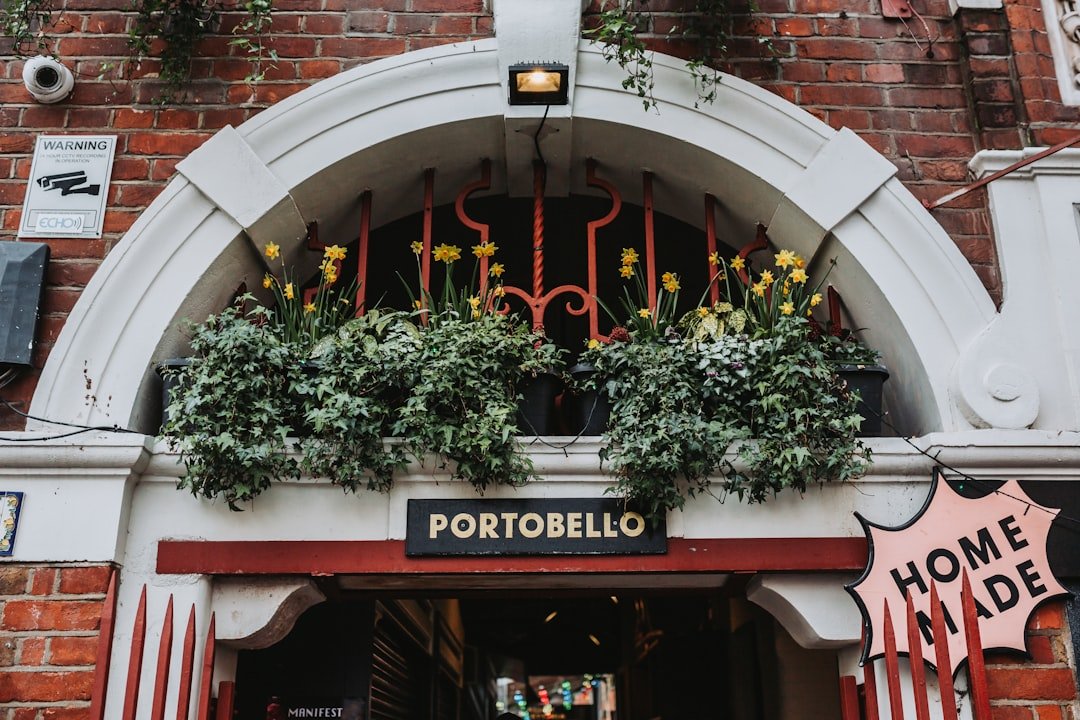
Portobello Road Market is one of the best-known places to explore in Notting Hill, with antiques, vintage clothing, fresh food, street food, independent shops and bric-a-brac spread along Portobello Road and into Golborne Road. The experience changes noticeably by day, so choosing when to visit matters almost as much as deciding what you want to buy.
Quick Answer
Saturday is the best day for the fullest Portobello Road Market experience, especially for antiques, while Friday offers many of the same sections with somewhat lighter crowds. Weekday and Sunday trading varies by section and season, so check the official market information before travelling for a specific stall or category.
Key Takeaways
- Saturday has the fullest selection: it is the busiest day and a strong choice for antiques, vintage goods, fashion and food.
- Friday is a useful alternative: much of the whole market operates, but the experience can feel more manageable than peak Saturday.
- Trading varies during the week: individual stalls, shops and market sections keep different schedules, particularly on Sundays and in winter.
- Allow around two to three hours: more if you plan to browse antiques carefully, eat, visit Golborne Road or explore nearby Notting Hill streets.
- Use public transport: Ladbroke Grove and Notting Hill Gate are both useful Tube stations, depending on which end of the market you want to explore first.
Best Day and Time to Visit Portobello Road Market
The official Portobello Road Market visitor guide lists the wider market area as open throughout the week, but that does not mean every stall or section trades every day. Individual traders keep their own hours, and the full street-market experience is concentrated around Friday and Saturday.
- Monday to Thursday: expect a smaller market, with produce, household goods, food and selected clothing or bric-a-brac traders in parts of Portobello Road and Golborne Road.
- Friday: one of the two principal whole-market days, with antiques, food, vintage clothing, accessories, bric-a-brac and additional traders operating.
- Saturday: the busiest and most comprehensive day, particularly if antiques are your priority.
- Sunday: activity varies with season and location. Portobello Green, shops, cafes and some specialist markets may operate even when the main Portobello and Golborne street market is limited.
The visitor site lists general market-area hours of roughly 8am to 7pm, with many traders operating for a shorter period. In summer, stalls commonly set up during the morning and finish by late afternoon or early evening; winter trading can finish earlier. If a particular dealer, food stall or market section is the main reason for your trip, check its current listing before you leave.
Note: Portobello does not have one universal timetable for every trader. Seasonal events and Sunday trading can change, so the official market calendar and vendor directory are more reliable than assuming the same schedule year-round.
For the best selection, arrive in the morning. If you mainly want to enjoy Notting Hill, browse shops and eat rather than hunt for a specific antique, later in the day can still be enjoyable. London weather is changeable, so check the forecast and wear comfortable shoes that can handle several hours of walking.
Navigating the Market: Tips for Getting Around
On the busiest days, stalls extend for about a mile along Portobello Road and around into Golborne Road. The easiest approach is to choose a starting point based on what interests you most rather than wandering back and forth.
Starting near Notting Hill Gate places you toward the southern end of Portobello Road and makes it easy to see the colourful Notting Hill streets before entering the busiest shopping sections. Starting near Ladbroke Grove puts you closer to Portobello Green, the Westway and the northern market areas. Continue farther north for Golborne Road’s food, second-hand goods and more local atmosphere.
Pro Tip: Antique hunters may prefer starting toward the southern antiques area early and walking north. Vintage-fashion shoppers can start near Ladbroke Grove and Portobello Green, then work south through the rest of the market.
Use the official market map or vendor directory if you are looking for something specific. Stall locations and trading days can change, so it is also worth asking traders for directions once you arrive.
What to Expect: A Guide to the Market’s Layout and Sections
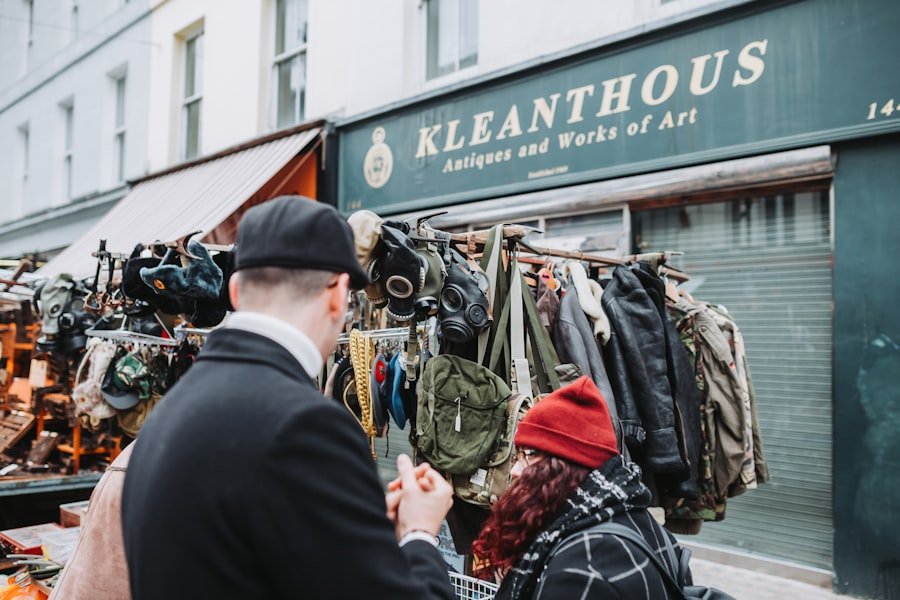
Portobello Road and Golborne Road combine several different types of market rather than one uniform row of stalls. According to the official market guide and the London Museum’s history of Portobello Market, visitors can encounter antiques, second-hand goods, fashion, household goods, fruit and vegetables, prepared food and other specialist traders.
Antiques and Collectables
Antiques are the market’s signature attraction. Saturday is the busiest day for antique stalls and arcades, with dealers offering items such as ceramics, jewellery, silver, books, textiles, art and objects from many different periods. The official antiques guide is useful if this is the main focus of your visit.
Portobello Green and Vintage Fashion
Portobello Green, under and around the Westway near Ladbroke Grove, is strongly associated with vintage clothing, fashion and weekend traders. You can also find permanent retail units in the nearby arcade, so this area is worth exploring even if you are not shopping for antiques.
Food and Produce
Fresh fruit, vegetables and herbs are part of the market during the week, while Friday and Saturday bring a wider selection of specialist food and cooked dishes. The official food guide lists items such as baked goods, cheese, olives, crepes, paella, curry and other international foods. Golborne Road is particularly associated with North African and Caribbean food.
Golborne Road and Bric-a-Brac
Continue north past the Westway and the atmosphere gradually changes. Golborne Road mixes food, furniture, second-hand goods, bric-a-brac and local businesses, giving visitors another side of the wider Portobello market district.
Must-See Attractions: Highlights of Portobello Road Market
The market itself is the main attraction, but several nearby Notting Hill sights are easy to combine with your visit.
Film fans often look for the famous blue door associated with Hugh Grant’s character in the 1999 film Notting Hill. The door is on Westbourne Park Road, not at “280 Portobello Road.” Visit London’s Notting Hill area guide specifically identifies Westbourne Park Road as the place to see it.
The Notting Hill Bookshop at 13 Blenheim Crescent is another popular stop. Its official history explains that the shop became famous because its interior was copied for the bookshop seen in the film. That distinction is useful for visitors expecting to find the exact movie set.
Colourful residential streets are another major part of the Notting Hill experience. Lancaster Road, Colville Terrace and streets around Westbourne Grove are popular for their painted houses. Remember that these are residential areas: take photographs without blocking entrances, sitting on private steps or disturbing residents.
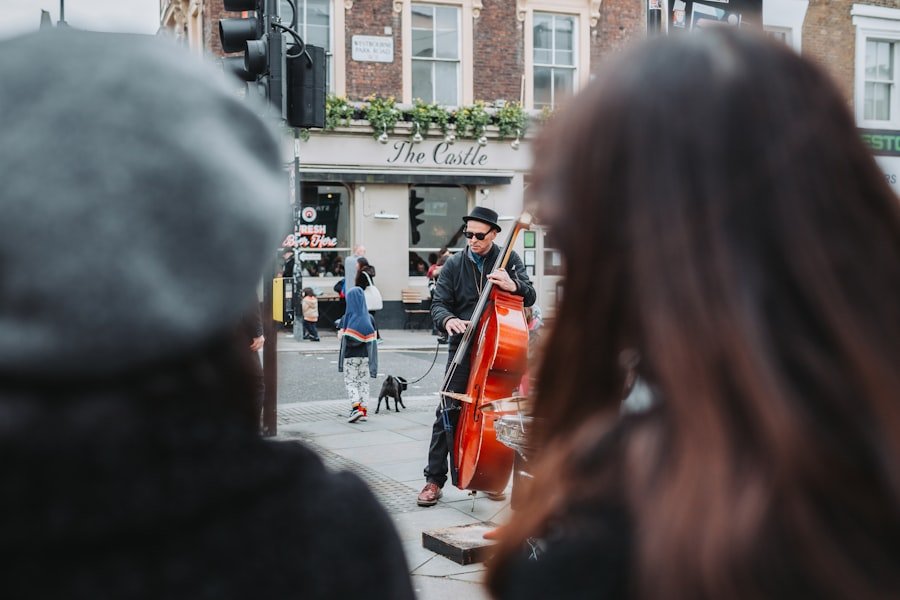
Portobello Green is also worth exploring for vintage fashion and independent retail, while street musicians and other performers can sometimes add to the atmosphere. Performances and events are not guaranteed, so treat them as a bonus rather than something to schedule around.
Shopping Tips: How to Find the Best Deals
Arriving early gives you the best chance to see desirable antiques, collectables and one-off vintage pieces before they are sold. If you arrive late, an occasional seller may be willing to reduce a price, but end-of-day discounts are never guaranteed.
Negotiation can be acceptable with some antiques and second-hand sellers, but do not assume every price is negotiable. Ask politely whether there is any flexibility rather than immediately demanding a large discount. For valuable antiques or collectables, ask the dealer what they know about age, condition, repairs and provenance before paying.
Explore beyond the busiest clusters. Arcades, side areas and the northern end toward Golborne Road can offer very different stock from the stalls most visitors see first.
It is sensible to carry more than one payment option. Many businesses accept cards or contactless payment, but individual traders decide which methods they accept, so a modest amount of cash can be a useful backup.
Warning: Saturdays can become crowded. Keep your phone, wallet and other valuables secure, and step away from the main pedestrian flow before stopping to check maps, messages or purchases.
Dining and Refreshments: Where to Eat and Drink at the Market
You do not need to leave the market area when hunger hits. Portobello’s official food guide describes fresh produce, specialist food stalls and cooked dishes from around the world.
Friday and Saturday normally provide the widest street-food choice. Depending on the current traders, you may find crepes, curry, paella, baked goods, cheese, olives and other prepared foods. Golborne Road also has North African and Caribbean food businesses and stalls.
Instead of relying on one supposedly permanent “Cheese Stall,” browse the current specialist cheese and food traders. Market line-ups change, which is part of the appeal.
For a sit-down meal, Electric Diner at 191 Portobello Road remains a convenient option, although its food concept has changed over time. Current Visit London information describes Baja-Mexican food from Maya, so check the latest menu rather than expecting the older American-diner menu associated with the venue.
Another nearby option is The Cow on Westbourne Park Road. Its current menu focuses on pub food, seafood and oysters, with Guinness among its best-known drinks. Menus and opening times can change, so check directly before making a special trip.
Entertainment and Activities: Things to Do Beyond Shopping
Shopping does not have to fill your entire visit. Allow time to walk through the surrounding Notting Hill streets, explore independent shops and watch any musicians or performers you happen to encounter.
The Museum of Brands is at 111–117 Lancaster Road, close to Portobello Road. Its permanent Time Tunnel explores around 150 years of brands, packaging and advertising, making it an easy indoor addition if you want a break from shopping or London’s weather turns wet.
You can also continue exploring Notting Hill’s colourful residential streets, small shops and cafes. This works especially well if you have already spent several hours in the market and want a slower end to the visit.
Meeting the Locals: Engaging with the Community
Many of Portobello’s traders know their specialist subjects well. If a piece catches your attention, ask about where it came from, how it was made, how old it may be or why the seller chose it. A short conversation can reveal more than simply reading the price label.
Be considerate during busy periods. Traders are working, so give them space when they are serving another customer. If workshops, temporary exhibitions or community events are taking place during your visit, the official Portobello events listings are the best place to confirm what is actually scheduled.
This part of London is also a residential neighbourhood rather than an attraction built only for tourists. Respect private homes, keep entrances clear and avoid treating residential doorways as photo props.
History and Culture: Learning about the Market’s Heritage
Portobello’s history helps explain why the street contains such an unusual mix of everyday shopping, food, antiques and tourism. The London Museum says the market was established by about 1870. Early traders mainly supplied fresh food and everyday goods to the growing local population.
The antiques trade became an increasingly important part of Portobello from the 1940s onward. Over time, the market grew into one of London’s most famous destinations for antiques and collectables while continuing to support food, clothing and other everyday trading.
On Fridays and Saturdays, the wider market can stretch for about a mile along Portobello Road and into Golborne Road.
The neighbourhood’s international reputation later grew through music, fashion, Notting Hill Carnival and films including Notting Hill. That combination of local history and popular culture is a large part of why visitors now come for more than shopping alone.
Getting to and from Portobello Road Market: Transportation Options
Public transport is usually the simplest way to reach the market.
Ladbroke Grove
Ladbroke Grove Underground Station is served by the Circle and Hammersmith & City lines. The official market guide describes it as about a five-minute walk away. It is especially convenient for Portobello Green, the Westway and the northern half of the market.
Notting Hill Gate
Notting Hill Gate is served by the Central, Circle and District lines. It is useful if you want to approach the market from the south, explore the colourful Notting Hill streets first or walk gradually north toward Portobello Green and Golborne Road.
Bus, Walking and Cycling
Several London bus services operate around Notting Hill, Portobello Road, Westbourne Grove and Ladbroke Grove. Routes can change, so use TfL’s live journey planner rather than relying on an old fixed list of bus numbers.
Walking is often the easiest way to move once you reach the neighbourhood. Parts of Portobello Road are restricted to vehicles during market operating periods, helping create more room for shoppers. Cycling can also work for reaching the area, but busy market sections are better explored on foot rather than riding through crowds.
Making the Most of Your Visit: Insider Recommendations and Suggestions
Give yourself at least two to three hours if this is your first visit. Antique collectors and serious vintage shoppers can easily spend longer, particularly on Saturday when more traders are operating.
Wear comfortable shoes, bring a card plus a little cash as backup, and use a small bag that you can keep secure in crowded areas. Check the weather before leaving because much of the experience is outdoors.
If you want the strongest selection, start in the morning. If your priority is atmosphere, food and photography rather than specific collectables, you can take a slower approach and combine the market with Westbourne Park Road, Blenheim Crescent and other nearby streets.
Take breaks rather than rushing from stall to stall. A cafe stop, lunch or short visit to the Museum of Brands can make a long market day much more comfortable.
Finally, keep your plans flexible. Portobello’s appeal comes partly from not knowing exactly what you will find. A piece of vintage clothing, an unusual antique, a new food stall or a conversation with a trader may become the most memorable part of your visit.
More from Tagline Today: If you also enjoy exploring unusual foods and ingredients, you can read this guide to Asian melon varieties.
Frequently Asked Questions
What is Portobello Road Market?
Portobello Road Market is a large street-market district in Notting Hill, west London. It is best known for antiques and collectables but also includes vintage clothing, food, fresh produce, household goods, independent shops and second-hand items.
When is Portobello Road Market open?
The wider Portobello market area has activity throughout the week, but individual traders and sections keep different schedules. Friday and Saturday are the principal whole-market days, with Saturday the busiest. Sunday trading varies by season and section, so check the official market website before travelling.
What is the best day to visit Portobello Road Market?
Saturday is best if you want the largest selection, particularly antiques. Friday also has extensive trading and can be a good alternative. Monday through Thursday are better suited to visitors who prefer a smaller market and are less focused on the full antiques and vintage experience.
What can I buy at Portobello Road Market?
Depending on the day, you can find antiques, jewellery, ceramics, books, art, vintage clothing, accessories, bric-a-brac, fresh fruit and vegetables, specialist foods, street food, household goods and other new or second-hand products.
How do I get to Portobello Road Market?
Ladbroke Grove is convenient for Portobello Green and the northern market and is served by the Circle and Hammersmith & City lines. Notting Hill Gate, served by the Central, Circle and District lines, is useful for approaching Portobello Road from the south.
How long should I spend at Portobello Road Market?
Allow about two to three hours for a first visit. Give yourself longer if you want to inspect antiques carefully, shop for vintage clothing, eat at the market, continue into Golborne Road or explore nearby Notting Hill attractions.
What are some useful tips for visiting Portobello Road Market?
Arrive in the morning for the best selection, wear comfortable shoes, check the weather, carry more than one payment option and keep valuables secure in crowded areas. If you want a specific type of stall, check its trading day before travelling. Negotiation may be possible with some sellers, but always ask politely.
Sources
- Portobello Road Market — How to Get Here and When to Visit — current market-day patterns, seasonal trading, general hours, Portobello Green and transport guidance.
- Portobello Road Market — Antiques & Collectables — antiques trading days, market character and Saturday activity.
- Portobello Road Market — Eat & Drink — produce, specialist food stalls and street-food information.
- London Museum — Portobello Market History — establishment around 1870, development of the antiques trade and historic market sections.
- Transport for London — Ladbroke Grove Underground Station — current Tube lines and station information.
- Visit London — Notting Hill Guide — nearby colourful streets and the famous film blue door on Westbourne Park Road.