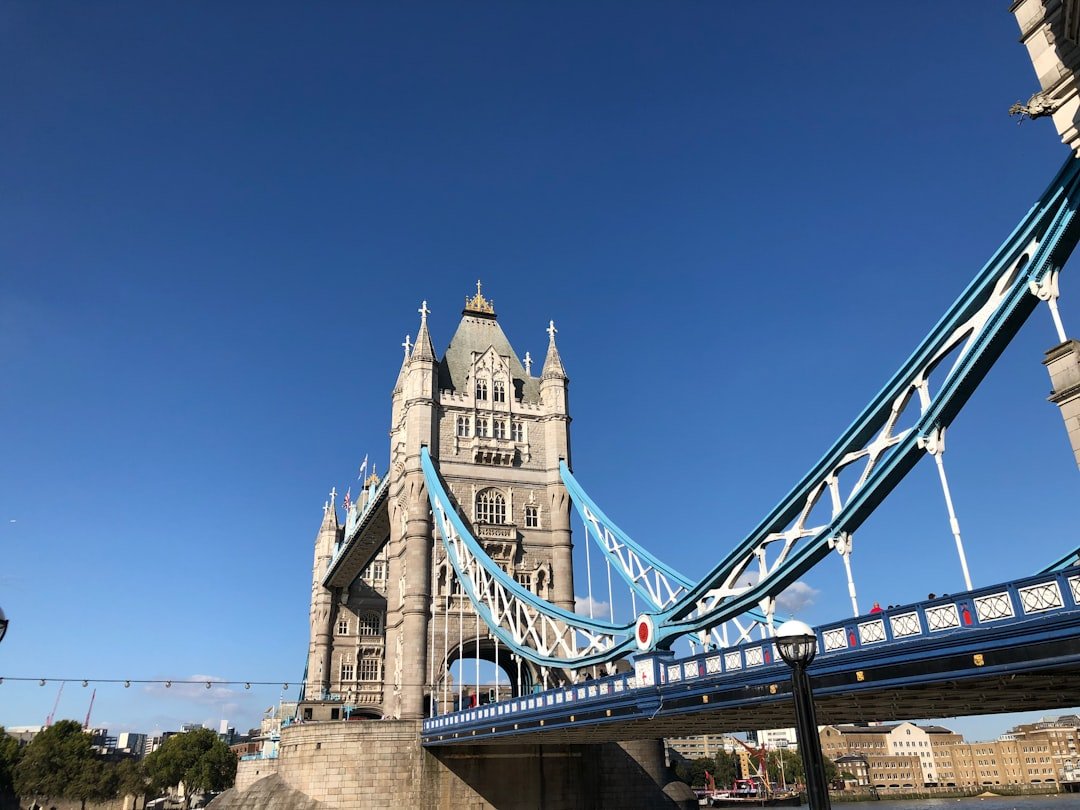
Tower Bridge is one of London’s best-known landmarks, but there is much more to see than the famous exterior. You can enter its towers, cross the High-Level Walkways and Glass Floors, explore the Victorian Engine Rooms, learn how the bascules lift for ships, and enjoy wide views across the Thames. Planning ahead matters because opening hours, ticket prices, bridge lifts, tours, and visitor rules can change.
Quick Answer
Tower Bridge is currently open daily from 9:30 AM to 6:00 PM, with last entry at 5:00 PM. A standard ticket includes the Towers, High-Level Walkways, Glass Floors, and Victorian Engine Rooms. Book ahead during busy periods, allow time for security screening, and check the Bridge Lift schedule before visiting.
Key Takeaways
- Tower Bridge officially opened on June 30, 1894, after eight years of construction.
- As of September 2026, general admission costs £18 for adults, £13.50 for concessions, and £9 for children aged 5–15; children under five enter free.
- The paid attraction includes the Towers, High-Level Walkways, Glass Floors, and Victorian Engine Rooms.
- Walking across the public bridge itself is different from entering the paid attraction.
- Tower Hill Underground station is about a seven-minute walk from the attraction.
- Check the official Bridge Lift schedule before your visit if you want to see the bascules rise for a vessel.
Tower Bridge History and Why It Was Built
The need for a new Thames crossing east of the Tower of London became increasingly urgent during the 19th century as London expanded and road traffic increased. In 1876, the Corporation of London asked for a committee to investigate possible solutions that could improve road connections without blocking ships using the busy Pool of London.
More than 50 bridge ideas were considered. The design that eventually became Tower Bridge was developed by City Architect Sir Horace Jones in collaboration with civil engineer Sir John Wolfe Barry and accepted in 1884. Parliament approved the project through the Tower Bridge Act in 1885, and construction began in 1886.
Horace Jones died in 1887, leaving Wolfe Barry to oversee the completion of the project. After eight years of construction, Tower Bridge was officially opened by the Prince and Princess of Wales on June 30, 1894. You can explore the full chronology on the official Tower Bridge construction timeline.
The bridge combines a steel structural framework with distinctive neo-Gothic architecture. Cornish granite and Portland stone were used around the structure to help its appearance harmonize with the nearby Tower of London. Its two central road sections, known as bascules, can rise to allow tall vessels to pass.
Originally, steam-powered pumping engines created hydraulic power for the lifting mechanism. Modernisation began in the 1970s, and Tower Bridge became fully electro-hydraulic in 1976. Electricity now powers pumps that operate the hydraulic system, while the original Victorian machinery survives in the Engine Rooms.
Planning Your Visit to Tower Bridge
According to the official Tower Bridge visitor information, the attraction is currently open daily from 9:30 AM to 6:00 PM, with last entry at 5:00 PM.
Tower Bridge normally closes on December 24, December 25, and December 26. On January 1, it opens at 10:00 AM. Because special events or operational requirements can affect access, check the official site again before travelling.
Current Tower Bridge Ticket Prices
As verified in September 2026, standard admission prices listed by Tower Bridge are:
| Visitor | Price |
| Adult, age 18+ | £18.00 |
| Concession | £13.50 |
| Child, age 5–15 | £9.00 |
| Disabled child, age 5–15 | £6.80 |
| Under 5 | Free |
| Companion for a disabled visitor | Free |
Prices can change, so confirm them on the official Tower Bridge ticket page before booking. Family, group, local-resident, and other concessionary options may also be available.
What Your General-Admission Ticket Includes
- North Tower
- South Tower
- High-Level Walkways
- Glass Floors
- Victorian Engine Rooms
- Available self-guided audio-tour content and selected family activities
Note: Pre-booking is recommended during school holidays and busy periods, but a pre-booked general-admission ticket does not provide fast-track entry. Visitors still need to complete ticket checks and security screening.
Getting to Tower Bridge: Transportation Options
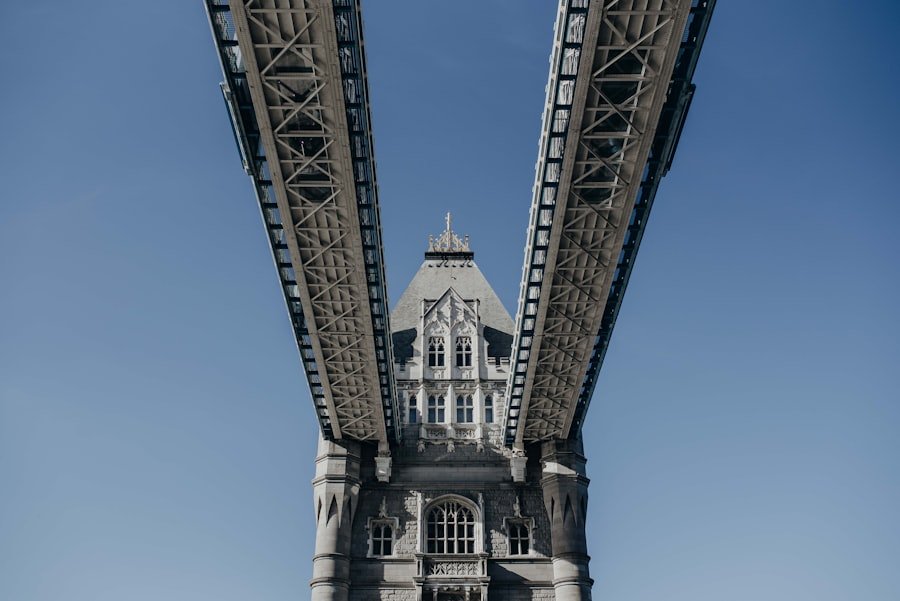
Tower Bridge is easy to reach by public transport. The attraction entrance and Ticket Office are on the west side of the North Tower, on the north-west side of the bridge.
London Underground
Tower Hill is the closest Underground station and is about a seven-minute walk from Tower Bridge. It is served by the District and Circle lines and offers step-free access from platform to street.
London Bridge is served by the Jubilee and Northern lines and is also within walking distance on the south side of the Thames.
Train and DLR
London Bridge and Fenchurch Street National Rail stations are nearby. Tower Gateway DLR station is another useful option for visitors arriving from east London or the Docklands.
Bus
The official Tower Bridge visitor page currently lists routes 15, 42, 78, 100, and 343 as serving the area. Bus routes can change, so check the Transport for London Journey Planner shortly before travelling.
Riverboat
River services stop at Tower Pier on the north side of the Thames and London Bridge City Pier on the south side. Both are a short walk from Tower Bridge.
Walking and Cycling
Walking along the Thames Path is one of the most scenic ways to approach the bridge. Santander Cycle docking stations are also available in several nearby streets, including Tooley Street and St Katharine’s Way.
Driving and Parking
Driving is usually less convenient than public transport. Tower Bridge Road is a Red Route, so stopping and parking restrictions apply. Several paid car parks operate nearby, including Tower Hill Coach and Car Park.
Exploring Inside Tower Bridge
Older travel guides sometimes refer to the attraction as the “Tower Bridge Exhibition.” The official site now generally describes the experience as exploring or visiting inside Tower Bridge.
Your visit begins in the North Tower, where displays explain why the bridge was built and introduce the architects, engineers, and workers behind it. From there, you reach the High-Level Walkways and Glass Floors before crossing to the South Tower.
The route continues outside along the Blue Line toward the Victorian Engine Rooms. These rooms contain the original steam pumping engines, boilers, accumulators, and other machinery that once generated the hydraulic power needed for Bridge Lifts.
The Engine Rooms are especially valuable if you want to understand the bridge rather than simply photograph it. They show how steam was converted into stored hydraulic energy and how that energy moved the enormous bascules before the modern electro-hydraulic system replaced the original arrangement in 1976.
Taking a Walk on the Glass Floor
The Glass Floors are among the most memorable parts of a Tower Bridge visit. They are installed in the High-Level Walkways approximately 33.5 metres above road level, giving you a direct view of buses, taxis, cyclists, pedestrians, and the river traffic below.
The transparent floor is made from multiple layers of structural glass designed for heavy loads. If you feel uncomfortable looking straight down, you can still use the surrounding solid floor and enjoy the skyline through the walkway windows.
For photographers, the Glass Floors create unusual views that are difficult to get anywhere else in London. If a Bridge Lift takes place during your visit, you may also be able to watch the roadway and bascules moving from above.
Enjoying the Views from the High-Level Walkways
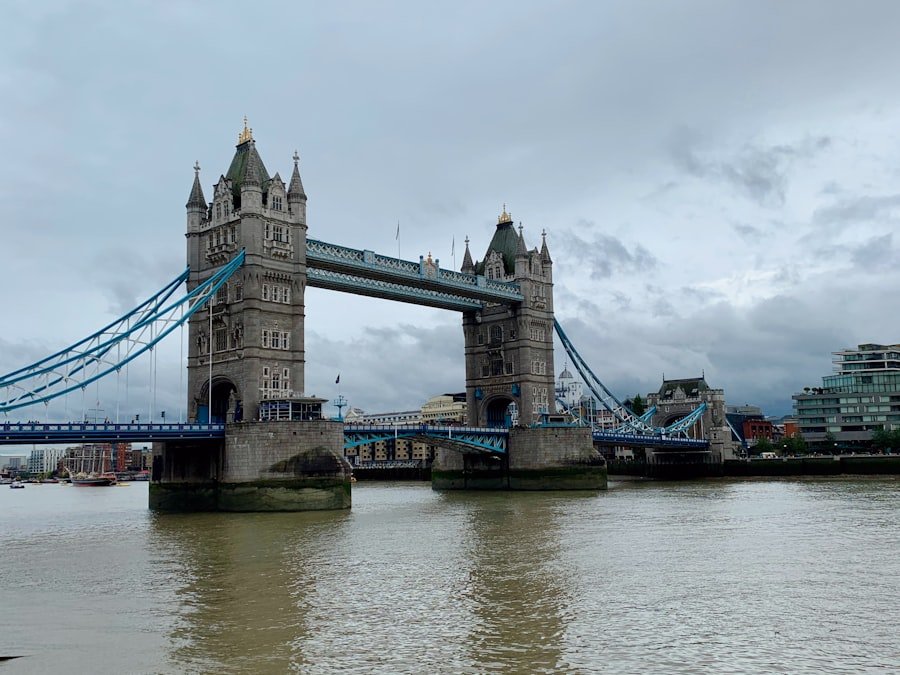
The East and West High-Level Walkways connect Tower Bridge’s North and South Towers and provide panoramic views along the Thames. Depending on the direction you look, you can see landmarks and districts including the Tower of London, St Paul’s Cathedral, Canary Wharf, and other parts of central and east London.
The displays along the walkways explain the history of the bridge, its construction, and the development of the surrounding riverfront. Take time to visit both sides because the eastern and western views are noticeably different.
Pro Tip: Check the official Bridge Lift schedule before booking your visit. If the timing works, watching the bascules rise adds a completely different dimension to the experience.
Tower Bridge opens for vessels roughly 800 times a year, compared with more than 6,000 lifts during its first year of operation.
Bridge Lifts, Guided Tours, and Special Events at Tower Bridge
Tower Bridge remains a working bridge, and seeing a Bridge Lift can be one of the highlights of a visit. Scheduled lift times, vessel names, and travel directions are published on the official Bridge Lift schedule.
Bridge Lifts do not follow a simple daily tourist timetable because they are arranged around qualifying river traffic. Check the schedule rather than assuming a lift will happen while you are inside.
Tower Bridge also runs guided tours and changing visitor programmes. Standard guided tours generally cover the Towers, High-Level Walkways, Glass Floors, and Engine Rooms. Separate limited-capacity behind-the-scenes experiences may provide access to operational spaces such as the Bascule Chambers, Control Cabin, and Machinery Room.
Family activities, Ask an Expert sessions, accessible experiences, and seasonal programmes also appear on the official What’s On calendar. Because these events change throughout the year, check current listings rather than relying on claims about recurring Christmas markets, summer festivals, or exhibitions.
Food, Picnics, and Shopping at Tower Bridge
Tower Bridge currently has no café or restaurant inside the attraction. Visitors may bring their own food and drink, but alcohol and nuts should not be consumed inside. There are also restrictions on glass items near the Glass Floors.
If you want to eat nearby, the surrounding Tower Bridge and London Bridge areas have many restaurants and cafés. Potters Fields Park, beside the south side of Tower Bridge, is another convenient place to sit outdoors or have a picnic when the weather is suitable.
There is an official Tower Bridge gift shop selling books, souvenirs, prints, toys, and other London-themed items. You can browse the shop during your visit or use the official Tower Bridge online shop.
Understanding Tower Bridge’s Engineering and Architecture
Tower Bridge is best known as a bascule bridge. The word “bascule” comes from the French idea of a balance or seesaw. Each movable roadway pivots around an off-centre point and is counterbalanced, reducing the amount of energy needed to raise it.
When the bridge first opened, coal-fired boilers produced steam that powered pumping engines. Those pumps forced water into hydraulic accumulators, where energy was stored under pressure until a Bridge Lift was required. The stored hydraulic pressure then powered the machinery that moved the bascules.
The modern system still uses hydraulics, but electric pumps and oil replaced the old steam-and-water power system. The modernisation was completed in 1976, allowing the original Victorian engines to be preserved rather than continuing to operate them for daily bridge lifts.
Architecturally, Tower Bridge uses a neo-Gothic style with towers, turrets, pointed details, and stone cladding chosen to complement the nearby Tower of London. The appearance hides a substantial metal and steel structural skeleton, combining decorative Victorian architecture with major civil engineering.
Security, Accessibility, and Visitor Facilities
Warning: Tower Bridge currently searches all bags, prams, pushchairs, and wheelchairs on entry. Shoulder bags and backpacks should be no larger than 45 × 35 × 20 cm. Suitcases, wheeled luggage, and oversized items are not permitted.
Lift access is available to the High-Level Walkways in the Towers and to the Engine Rooms, and accessible toilets are available inside the attraction. Tower Hill Underground station also provides step-free access from platform to street.
Tower Bridge offers a Relaxed Opening designed for neurodivergent visitors on the second Saturday of each month. The current session runs from 9:30 AM to 11:30 AM, with reduced capacity and a calmer environment. Check current accessibility arrangements before travelling because programmes can change.
Well-behaved dogs are normally welcome if kept on a lead and supervised, although numbers may be restricted during busy periods. Assistance dogs are permitted.
Tips for Visiting Tower Bridge with Children
Tower Bridge works well as a family attraction because the experience combines views, moving machinery, historical displays, and interactive activities rather than relying only on text panels.
The Tower Bridge Cat Trail is included with admission and takes children through the attraction while they complete activities and collect stamps. Tower Bridge also runs family craft sessions on selected days, including the second Saturday of the month and additional dates during some UK school holidays.
Children often enjoy the Glass Floors and watching river traffic from the walkways. If possible, check the Bridge Lift schedule in advance because seeing the road open for a vessel can make the engineering easier for younger visitors to understand.
Plan short breaks if you are visiting with young children. Potters Fields Park is close to the south side of the bridge and can be useful for a picnic or rest before or after your indoor visit.
Making the Most of Your Visit: Insider Tips and Tricks
- Arrive near opening time: Being ready around the 9:30 AM opening can make the first part of your visit more comfortable during busy periods.
- Allow time for security: Every visitor may need to queue and have bags checked, even with a pre-booked ticket.
- Check Bridge Lift times: Plan your visit around a scheduled lift if seeing the bascules move is important to you.
- Use both walkways: The East and West Walkways offer different views of London.
- Do not skip the Engine Rooms: They explain how the famous lifting mechanism originally worked and contain the preserved Victorian machinery.
- Bring weather protection: Part of the route between the main bridge attraction and the Engine Rooms is outdoors.
- Wear comfortable shoes: There is substantial walking. Lifts are available, but visitors who use the stairs will climb through more of the Towers.
- Photograph the exterior separately: Early morning and evening light can be excellent for photos from the riverside even when the paid attraction is closed.
More from TaglineToday
Elsewhere on TaglineToday, you can read about homemade cottage cheese, explore an article about Asian melon, or read the site’s article about Ozzy Osbourne.
Frequently Asked Questions
What are the opening hours of Tower Bridge?
Tower Bridge is currently open daily from 9:30 AM to 6:00 PM, with last admission at 5:00 PM. It normally closes on December 24, 25, and 26 and opens at 10:00 AM on January 1. Check the official website before travelling for temporary changes.
What is the best way to get to Tower Bridge?
Public transport is usually easiest. Tower Hill Underground station is about a seven-minute walk away and is served by the District and Circle lines. London Bridge station, Tower Gateway DLR, buses, riverboats, walking routes, and cycle-hire services are also available.
Is there an entrance fee to visit Tower Bridge?
You can cross the public bridge without buying an attraction ticket. A paid ticket is required to enter the Towers, High-Level Walkways, Glass Floors, and Victorian Engine Rooms. As of September 2026, standard adult admission is £18.
Are guided tours available at Tower Bridge?
Yes. Tower Bridge offers guided tours covering the Towers, High-Level Walkways, Glass Floors, and Engine Rooms. Limited behind-the-scenes tours may also visit operational areas such as the Bascule Chambers and Machinery Room. Advance booking is required for many guided experiences.
Can visitors access the Glass Floor walkway at Tower Bridge?
Yes. General admission includes access to the Glass Floors in the High-Level Walkways. They sit about 33.5 metres above road level and provide views of vehicles, pedestrians, and river traffic below.
Can I watch Tower Bridge open for a ship?
Yes, if a Bridge Lift is scheduled during your visit. Tower Bridge publishes upcoming lift times and vessel information online. Check the schedule before travelling because lifts depend on river traffic rather than a fixed tourist timetable.
Is Tower Bridge accessible for wheelchair users?
Lift access is available to the High-Level Walkways and Engine Rooms, and accessible toilets are provided inside. Visitors with specific access requirements should review the latest accessibility information before booking, particularly for special behind-the-scenes tours.
Is there a café inside Tower Bridge?
No. Tower Bridge currently has no café or restaurant on-site. You may bring your own food and drink, subject to visitor rules, and there are many places to eat nearby. Potters Fields Park is also convenient for a picnic.
Sources
- Tower Bridge — Plan Your Visit — opening hours, transport, security, accessibility, food, and visitor facilities.
- Tower Bridge — Entry Tickets — current admission prices and what general admission includes.
- Tower Bridge — Explore Inside — High-Level Walkways, Glass Floors, Towers, and Engine Rooms.
- Tower Bridge — Construction Timeline — design, construction, and 1894 opening history.
- Tower Bridge — Bridge Lifts — current lift schedules and vessel information.
- Transport for London — Journey Planner — current Underground, bus, rail, and public-transport routing.