Fener is a historic quarter of Istanbul’s Fatih district on the southern shore of the Golden Horn. Known in Greek as Phanar, it became especially important after the Ottoman conquest of Constantinople because of its Greek Orthodox institutions, influential Phanariot families, schools, churches, and distinctive residential architecture. Its history, however, stretches beyond any single community or period.
Quick Answer
Fener is one of Istanbul’s most historically important Golden Horn neighborhoods. Its Byzantine predecessor was associated with the Petrion area, but Fener became especially prominent after 1453. The Ecumenical Patriarchate settled here around 1600, and the neighborhood later became closely associated with the influential Greek Orthodox Phanariot community.
Key Takeaways
- Fener sits in Fatih beside the Golden Horn and is historically known in Greek as Phanar.
- The neighborhood’s Byzantine background is linked with the Petrion area, but its strongest Greek Orthodox institutional identity developed after the Ottoman conquest.
- The Ecumenical Patriarchate moved to the Church of St. George in Fener around 1600, not during the Byzantine Empire.
- Fener became associated with the Phanariots, influential Greek Orthodox families who played important roles in Ottoman administration, diplomacy, education, and commerce.
- Its 20th-century history includes major demographic change, while modern conservation programs have worked to protect parts of its architectural heritage.
Early Settlement and Development
It is safer to understand Fener’s earliest history as part of the development of Constantinople rather than to assign the modern neighborhood a precise foundation date in antiquity. The ancient city of Byzantion had much older origins, but evidence for a separate settlement called Fener in the 7th century BCE is not established by the sources reviewed for this article.
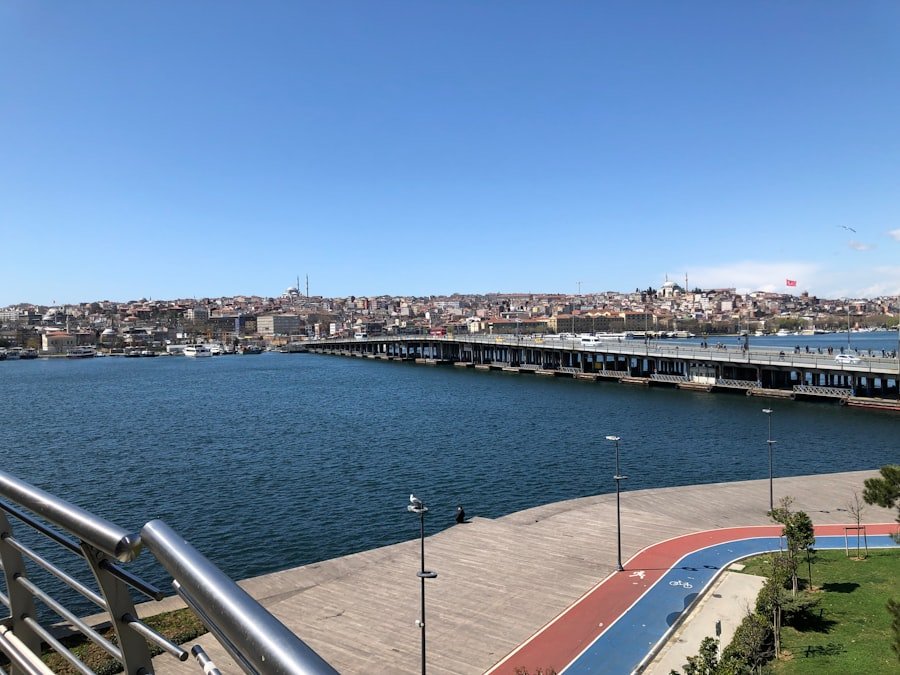
During the Byzantine period, the area along this part of the Golden Horn was associated with a quarter known as Petrion. Fatih Municipality’s historical account describes Petrion as a Byzantine quarter connected with fortifications, churches, maritime movement, and access along the Golden Horn.
The shoreline mattered because the Golden Horn was one of Constantinople’s great natural harbors. Movement by water connected neighborhoods along the inlet with other parts of the imperial capital, while walls and fortified points protected the city’s northern side.
Fener During the Byzantine Empire
The Byzantine history of the Fener area should be distinguished from the later history of the Ecumenical Patriarchate. Christian institutions certainly formed an important part of Constantinople’s religious landscape, and the Golden Horn shore contained churches, monasteries, walls, landing places, and residential districts.
However, the Ecumenical Patriarchate did not occupy its present Fener site during the Byzantine Empire. After Constantinople fell to the Ottomans in 1453, the Patriarchate occupied several locations before eventually moving to the Church of St. George in Fener around 1600.
Note: This distinction is important: Fener has a Byzantine past, but the neighborhood’s identity as the present seat of the Ecumenical Patriarchate belongs to the Ottoman and modern periods.
Ottoman Rule, the Patriarchate, and Fener’s Rise
The Ottoman conquest of Constantinople in 1453 transformed Fener’s history. Greek Orthodox life continued in the city, while institutions associated with the Orthodox community were reorganized within the Ottoman political order.
One important development came in 1454 with the establishment or reorganization of the institution now known as the Fener Greek Orthodox College. Public records from the Fatih Governorate trace the school’s Ottoman-era history to 1454.
The most important institutional change for Fener itself came around 1600. According to the Ecumenical Patriarchate’s official history of the Church of St. George, the church had formerly served a convent for Orthodox nuns before Patriarch Matthew II converted it for patriarchal use around 1598–1601. It was refurbished in 1614, rebuilt after a fire in 1720, repaired in 1836, and restored again in the modern era.
Once the Patriarchate was established in Fener, the neighborhood became increasingly important to wealthy and educated Greek Orthodox families. These families came to be known as Phanariots, from Phanar, the Greek name associated with Fener.
The Phanariots
The Phanariots were not simply wealthy residents. They became an influential Ottoman Christian elite. Scholarly research places their political rise from roughly the 1660s until the Greek War of Independence in 1821. Some served as senior interpreters and diplomats, while others became governors of Moldavia and Wallachia under Ottoman authority.
Their influence helped give Fener a reputation for education, diplomacy, commerce, and ecclesiastical life. Schools, churches, residences, and community institutions became important parts of the neighborhood’s identity.
This history should not be reduced to the idea that Ottoman diversity was always harmonious. Muslim, Christian, and Jewish communities lived within a complicated imperial system in which periods of coexistence, privilege, restriction, political conflict, and violence all occurred. Fener’s history reflects that complexity.
Key Dates in Fener’s History
- Byzantine period: The Golden Horn area associated with Fener included the historic Petrion quarter and formed part of Constantinople’s urban landscape.
- 1453: Constantinople was conquered by the Ottoman Empire.
- 1454: The institution associated with today’s Fener Greek Orthodox College traces its post-conquest foundation to this year.
- Around 1600: The Ecumenical Patriarchate moved to the Church of St. George in Fener.
- 17th–18th centuries: Phanariot families became increasingly influential in Ottoman political, diplomatic, commercial, and cultural life.
- 1821: The Greek War of Independence marked a major rupture in Phanariot political influence within the Ottoman system.
- Late 19th century: The present monumental building of the Fener Greek Orthodox College was constructed.
- 20th century: Istanbul’s Greek population declined sharply amid political, economic, and social upheaval.
- 2000s onward: Major heritage and rehabilitation initiatives drew renewed attention to Fener and neighboring Balat.
Fener in the 20th Century
The 20th century changed Fener profoundly. The end of the Ottoman Empire and the creation of the Republic of Turkey in 1923 created a new political setting for Istanbul’s minority communities, but the decline of the city’s Greek population cannot be explained by 1923 alone.
Academic research on Istanbul’s Greek community identifies several later events as particularly important. These include the 1942 Wealth Tax, which placed severe burdens on many non-Muslim citizens; the anti-Greek violence and destruction of 6–7 September 1955; and the 1964 expulsion of many Greek citizens, which also encouraged wider emigration among Greek families in Istanbul.
These events affected neighborhoods with long-established Greek institutions and contributed to major demographic change. Fener nevertheless remained the seat of the Ecumenical Patriarchate, while churches, schools, residences, and community buildings continued to preserve visible links with the neighborhood’s past.
The Church of St. George retained its central ecclesiastical role, serving worshippers and receiving Orthodox clergy, pilgrims, and visitors from around the world.
Fener Today: Preservation and Tourism
Fener’s historic buildings have faced deterioration, redevelopment pressure, fire, changing population patterns, and the challenges of maintaining older urban structures. Preservation has therefore become a major part of the neighborhood’s modern story.
One of the best-documented efforts was the Fener and Balat rehabilitation program supported by the European Union with UNESCO involvement. UNESCO’s account of heritage work in Fatih describes planning and rehabilitation efforts that emerged after the 1996 Habitat II conference and later developed into projects aimed at combining building conservation with improvements to local living conditions.
A 2008 UNESCO/ICOMOS mission reported that the Fener-Balat program had restored numerous historic structures and praised the community-based rehabilitation approach. The project is important because it treated the neighborhood not merely as scenery for tourism but as a living urban area where heritage conservation and residents’ needs had to be considered together.
Conservation has continued in different forms. In June 2025, Istanbul Metropolitan Municipality reported that restored historic Fener Houses were operating as Haliç Sanat cultural spaces hosting exhibitions.
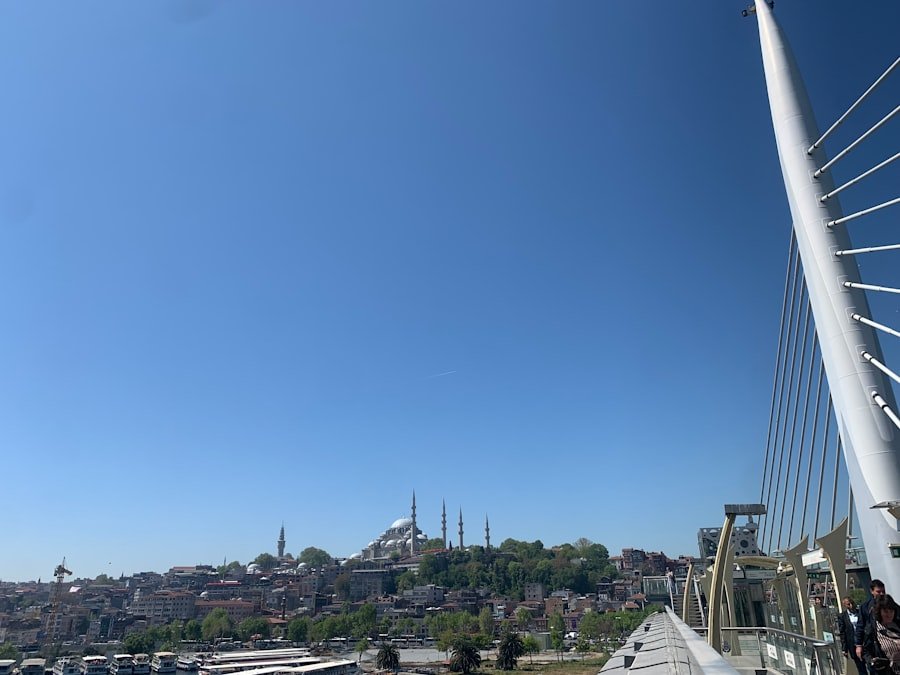
Tourism now brings many visitors to the Golden Horn neighborhoods. People come to see churches, historic schools, steep streets, surviving houses, cafes, and the urban landscape around Fener and Balat. Tourism can support local businesses and increase interest in preservation, although responsible conservation also requires protecting the residential and community character of the area.
Famous Landmarks and Architecture in Fener
Patriarchal Church of St. George
The Patriarchal Church of St. George is Fener’s most important religious landmark and the principal church of the Ecumenical Patriarchate. Its significance comes less from monumental scale than from its institutional role and long connection with the Patriarchate.
The church follows a traditional three-aisled basilica arrangement. Its interior preserves important icons and sacred objects associated with Orthodox Christian history. Its present form reflects repeated rebuilding, repair, and restoration rather than a single untouched Byzantine construction.
Fener Greek Orthodox College
The Fener Greek Orthodox College, also known as the Great School of the Nation and commonly recognized by its large red building, is one of the neighborhood’s most visible landmarks.
The educational institution traces its post-conquest foundation to 1454, but the building that dominates Fener’s skyline is much later. The present structure was designed by Konstantinos Dimadis and built in the late 19th century. This distinction between the age of the institution and the age of the current building is essential when describing its history accurately.
Historic Residential Architecture
Fener’s streets contain surviving examples of Istanbul’s older residential fabric, including masonry and timber buildings from different periods. Projecting upper floors, narrow plots, balconies, decorative façades, steep streets, and closely spaced houses contribute to the area’s distinctive character.
Not every colorful building seen today is a perfectly preserved Ottoman house, however. Fires, demolition, road widening, reconstruction, restoration, and newer development have altered the neighborhood over generations. Fener is best understood as a layered historic district rather than a frozen architectural museum.
Fener and Balat: Related but Distinct Neighborhoods
Fener and Balat are often promoted together because they sit next to each other on the Golden Horn and share parts of the same preservation and tourism story. They are nevertheless distinct historic areas.
Fener is especially associated with the Ecumenical Patriarchate, the Church of St. George, Greek Orthodox institutions, and Phanariot history. Balat has its own history and is particularly associated with Istanbul’s historic Jewish community, although the religious and ethnic history of both areas is more complex than a single label suggests.
Pro Tip: When researching a specific building, check whether its official address places it in Fener, Balat, or another nearby quarter. Travel guides frequently use “Fener and Balat” as one destination even when individual landmarks belong to different neighborhoods.
Fener’s Legacy and Impact
Fener occupies an unusual place in Istanbul’s history because several layers of the city remain visible in one compact part of the Golden Horn. Its story includes the Byzantine urban landscape, the Ottoman conquest, the relocation of the Ecumenical Patriarchate, the rise of the Phanariots, Greek Orthodox education, 20th-century demographic upheaval, and modern attempts to conserve historic buildings.
The neighborhood’s importance is therefore larger than its architecture alone. Fener remains a living center of Orthodox Christianity while also preserving evidence of Istanbul’s changing political, cultural, and social life.
Modern restoration cannot return Fener to one idealized moment in history, nor should its past be reduced to a simple story of uninterrupted coexistence or decline. Its real value lies in the layers that remain: institutions that still operate, buildings that have survived or been restored, and memories of communities whose presence shaped Istanbul over centuries.
More from TaglineToday: Read about the delightful world of Asian melon, try a simple homemade cottage cheese recipe, or read the site’s report on rock legend Ozzy Osbourne.
Frequently Asked Questions
What is the history of Fener?
Fener is a historic Golden Horn neighborhood in Istanbul’s Fatih district. Its wider area formed part of Byzantine Constantinople, while its best-known identity developed after the Ottoman conquest. The Ecumenical Patriarchate moved to Fener around 1600, and the neighborhood later became closely associated with Greek Orthodox institutions and influential Phanariot families.
When was Fener founded?
There is no single reliable foundation date for Fener as the modern neighborhood known today. The area was part of historic Constantinople and was associated with the Byzantine Petrion quarter. Fener’s distinctive post-Byzantine identity developed especially after 1453 and the arrival of major Greek Orthodox institutions.
Why is Fener also called Phanar?
Phanar is the traditional Greek form of the neighborhood’s name. The name is associated with a word for a lantern or lighthouse and with a light or lighthouse historically connected with this part of the Golden Horn.
When did the Ecumenical Patriarchate move to Fener?
The Ecumenical Patriarchate moved to the Church of St. George in Fener around 1600, during the Ottoman period. The church had previously been associated with an Orthodox convent and was adapted for patriarchal use under Patriarch Matthew II.
What are some notable landmarks in Fener?
The best-known landmarks include the Ecumenical Patriarchate and its Patriarchal Church of St. George, as well as the monumental Fener Greek Orthodox College. Historic residences and the streets descending toward the Golden Horn also form an important part of the area’s architectural character.
How has Fener’s population changed over time?
Fener was strongly associated with Istanbul’s Greek Orthodox population during the Ottoman period. The Greek community declined substantially during the 20th century. Important factors included discriminatory economic measures, the events of 6–7 September 1955, the 1964 expulsions of Greek citizens, and subsequent emigration.
What is the significance of Fener in Istanbul’s history?
Fener is important because it connects several periods of Istanbul’s history. It preserves links with Byzantine Constantinople, the Ottoman Greek Orthodox community, the Ecumenical Patriarchate, Phanariot political and cultural life, historic education, and modern heritage conservation.
How has Fener’s architecture evolved over time?
Fener’s built environment has changed repeatedly. Byzantine remains and urban patterns were followed by Ottoman churches, schools, houses, and later monumental 19th-century buildings. Fires, road projects, demolition, rebuilding, and restoration have also changed the neighborhood, so today’s streets contain architecture from several periods rather than one uniform historic style.
Are Fener and Balat the same place?
No. Fener and Balat are neighboring historic areas along the Golden Horn. They are frequently marketed together to visitors, but they have distinct histories and landmarks. Fener is particularly associated with the Ecumenical Patriarchate and Greek Orthodox institutions, while Balat has a particularly important place in Istanbul’s Jewish history.
Sources
- Ecumenical Patriarchate — History of the Patriarchal Church of St. George — supports the chronology of St. George and the Patriarchate’s move to Fener.
- Fatih Municipality — Fatih in History — supports the Byzantine Petrion background, Golden Horn location, and origin traditions associated with Fener’s name.
- Fatih Governorate — Fener Greek High School — supports the historical development of the Fener Greek Orthodox College.
- UNESCO World Heritage Centre — Historic Areas of Istanbul conservation support — documents heritage rehabilitation work involving Fener and Balat.
- Cambridge University Press — research on Istanbul’s Greek Orthodox community — supports the major 20th-century factors behind the community’s demographic decline.
- Istanbul Metropolitan Municipality — Haliç Sanat and restored Fener Houses — provides a recent example of historic-building restoration and cultural reuse.