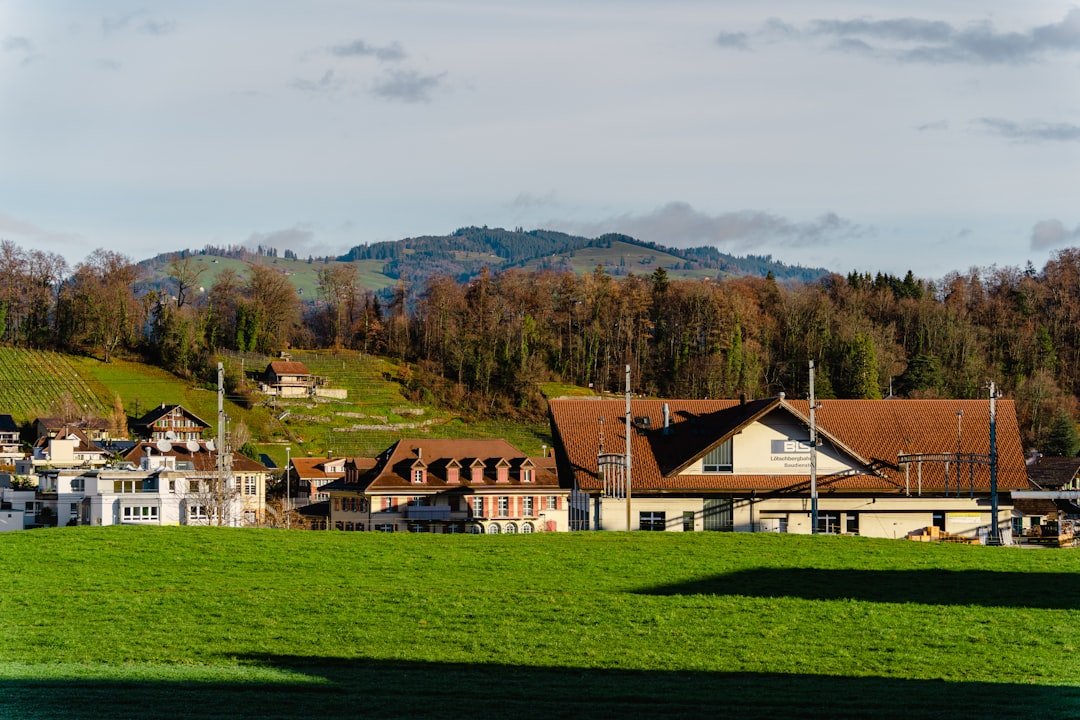
The Bernese Oberland is a mountain region in central Switzerland. Peaks like the Eiger, Mönch, and Jungfrau rise above green valleys and bright lakes. It’s ideal for hiking, skiing, and easy sightseeing.
You’ll also find wooden chalets, car-free villages, and classic Swiss hospitality. Interlaken sits between Lake Thun and Lake Brienz, with fast train links into the surrounding valleys.
Key takeaways
- The Bernese Oberland combines alpine scenery, charming villages, and outdoor activities in every season.
- Base yourself in Interlaken for the easiest transport connections, or stay in villages like Lauterbrunnen, Grindelwald, Mürren, or Wengen for a quieter feel.
- For a 3-day trip, focus on Interlaken/Lake Thun, the Lauterbrunnen Valley, and a high-alpine excursion to Jungfraujoch plus time in Grindelwald.
- Public transport is excellent; regional passes can simplify travel and reduce costs for multiple rides.
Day 1: Exploring Interlaken and Lake Thun
Start in Interlaken with a walk along the Aare River and the Höhematte park. On clear days you’ll see paragliders and big mountain views. For an easy viewpoint, ride the Harder Kulm funicular for panoramas over Interlaken and both lakes.
In the afternoon, head to Lake Thun for a boat cruise. The Bernese Alps line the shore. You can hop off in towns like Spiez or Thun for a short walk, a café stop, or a castle visit.
Day 2: Hiking in the Lauterbrunnen Valley

On day two, explore the Lauterbrunnen Valley, often called the “valley of 72 waterfalls.” Start with Staubbach Falls, a 297-metre plunge and a valley landmark.
For a scenic, mostly downhill walk, follow the valley trail toward Stechelberg. Watch for waterfalls spilling from the cliffs. For higher views, take the cable car to Grütschalp and hike the easy path to Mürren, a car-free village above the valley.
If it’s wet, swap the longer hike for the Trümmelbach Falls. This is a set of ten glacial waterfalls inside the mountain, reached via a tunnel lift and walkways.
Day 3: Visiting the Jungfraujoch and Grindelwald
| Metrics | Jungfraujoch (Top of Europe) | Grindelwald |
|---|---|---|
| Altitude | 3,454 metres | 1,034 metres |
| Typical conditions | Cold and changeable. It can be below freezing even in summer. Dress in layers. | Valley climate is milder; conditions vary widely by season. |
| Activities | Ice Palace, Sphinx Observatory, glacier viewpoints, snow play (seasonal). | Hiking, mountain biking, and paragliding (seasonal). |
| Views | Panoramas over the Aletsch Glacier and surrounding peaks. | Front-row views of the Eiger, Mönch, and Jungfrau. |
The final day takes you to Jungfraujoch (“Top of Europe”), the highest railway station in Europe at 3,454 metres. From Interlaken, go via Kleine Scheidegg on the classic cog railway route. Or take the Eiger Express from Grindelwald Terminal to Eigergletscher, then continue by train.
At Jungfraujoch, explore the Ice Palace, visit the Sphinx Observatory terrace, and step outside for views over the Aletsch Glacier (the longest glacier in the Alps). The high altitude can feel intense. Take it slow, drink water, and dress warmly.
After Jungfraujoch, spend the afternoon in Grindelwald. It’s great for an easy walk or a café with Eiger views. If you have time, ride up to First for more hikes.
Where to stay in the Bernese Oberland
Interlaken is a convenient base for a short trip thanks to frequent trains, boats, and bus connections. If you’d rather wake up in the mountains, consider Lauterbrunnen or Grindelwald, or choose car-free villages like Mürren or Wengen for a quieter atmosphere and direct access to trails.
In peak seasons, book well ahead—especially if you want a specific village or a room with mountain views.
Dining and cuisine in the Bernese Oberland

Swiss mountain food is hearty. Try cheese fondue, raclette, and rösti. You’ll also find plenty of casual cafés and international options in Interlaken, Lauterbrunnen, and Grindelwald.
Transportation in the Bernese Oberland
Public transport is a big advantage here. Trains link Interlaken with Lauterbrunnen, Grindelwald, and the lakes. Mountain railways and cable cars make higher trails easy to reach without a car.
Tips for making the most of your 3-day itinerary
- Start early to maximize daylight, especially if you’re combining trains, boats, and mountain lifts.
- Pack layers and a windproof outer layer—weather can change quickly, and Jungfraujoch is cold even in summer.
- If you plan lots of rides, consider a regional pass. As of 2026-01-26, the Berner Oberland Pass is sold for 3, 4, 6, 8, or 10 consecutive days and covers many trains, buses, boats, and mountain transport lines in the region. Details: Berner Oberland Pass (official overview).
- For Jungfraujoch, confirm the latest timetables and any seat-reservation requirements on the Jungfraujoch – Top of Europe (official site).
FAQs
What is the Bernese Oberland?
The Bernese Oberland is a region in the canton of Bern in Switzerland, known for mountain scenery and famous peaks like the Eiger, Mönch, and Jungfrau.
How many days should I spend in the Bernese Oberland?
You can visit highlights in one or two days, but three days lets you combine lakes, valley scenery, and at least one high-alpine excursion at a comfortable pace.
What are some highlights of a 3-day itinerary in the Bernese Oberland?
Popular highlights include Interlaken and Lake Thun, the waterfalls and villages of the Lauterbrunnen Valley, and a mountain day to Jungfraujoch plus time in Grindelwald.
What are some outdoor activities to do in the Bernese Oberland?
Activities include hiking, mountain biking, paragliding, and skiing or snow sports in winter. Lakes like Thun and Brienz also offer swimming and boat trips in warmer months.
What is the best way to get around the Bernese Oberland?
The region is well served by trains, buses, boats, and mountain lifts, making it easy to travel without a car. Travel passes can help if you’ll be using public transport and mountain railways often.