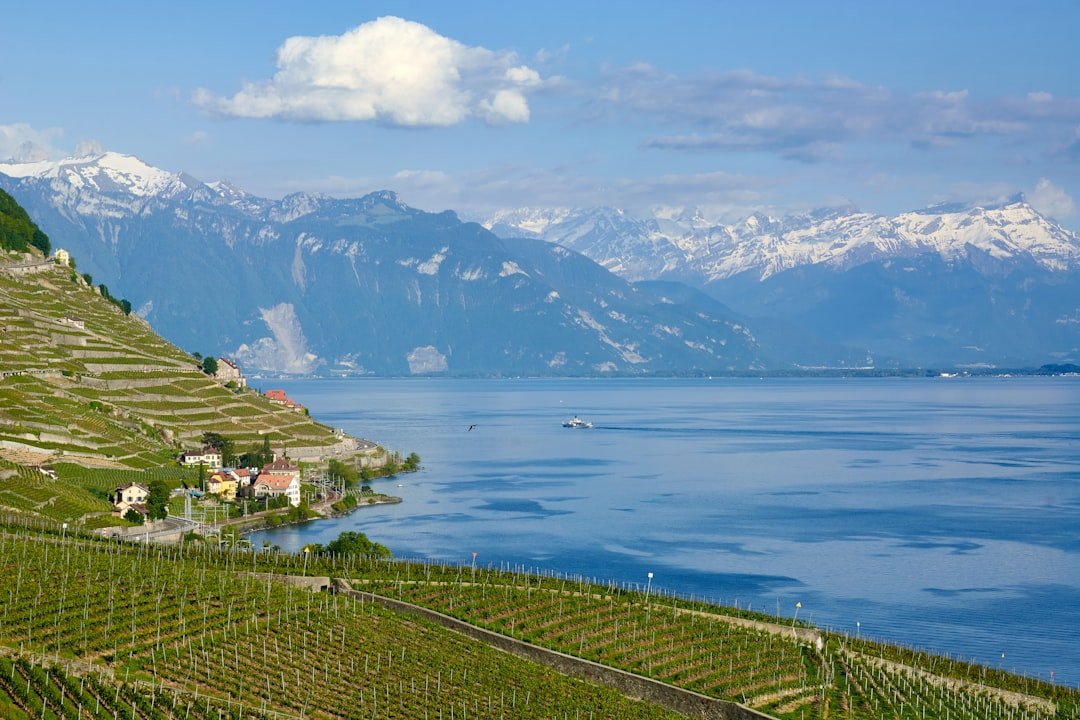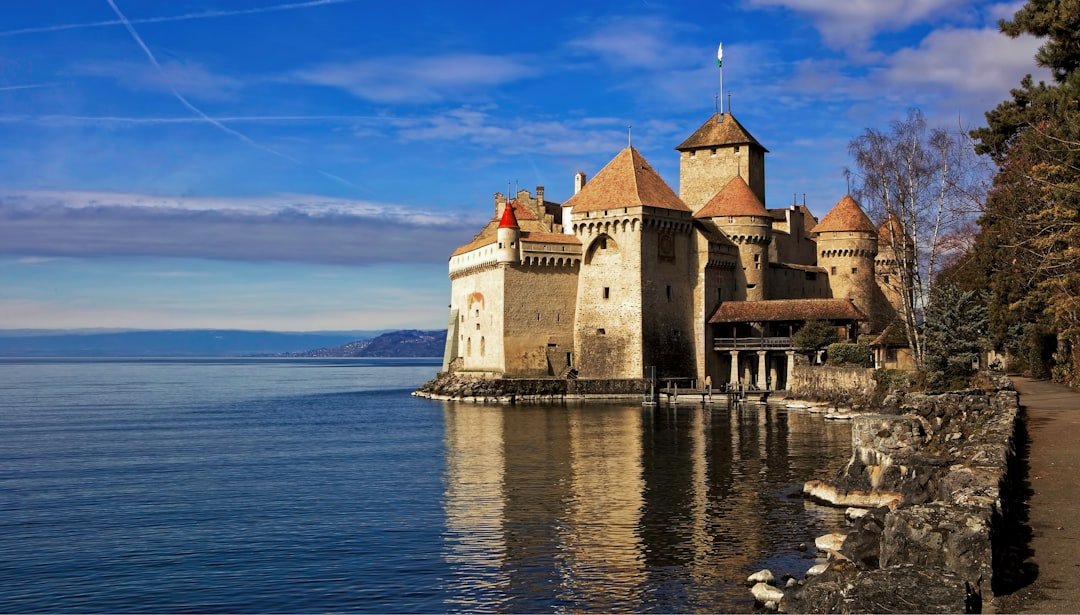
Chillon Castle sits on a rocky island at the eastern end of Lake Geneva near Montreux and Veytaux. Its setting is striking, but the castle is equally important for its long history. The site was occupied as far back as the Bronze Age, while the surviving fortress developed over many centuries under the House of Savoy, Bernese authorities, and the Canton of Vaud.
Quick Answer
Chillon Castle is a medieval lakeside fortress near Montreux, Switzerland, known for its Gothic underground rooms, Savoy residences, historic chapel, defensive towers, and connection to François Bonivard and Lord Byron. Most visitors need about 1–2 hours, and the castle can be reached by train, bus, boat, car, bicycle, or on foot.
Key Takeaways
- The site has evidence of Bronze Age occupation, while the oldest surviving keep probably dates to the 11th century and the first written mention of Chillon dates to 1150.
- Chillon was controlled first by the House of Savoy, then by the Bernese from 1536 to 1798, and afterward by the Canton of Vaud.
- Major highlights include the underground Gothic rooms, four courtyards, great halls, Saint George’s Chapel, Camera Domini, defensive structures, and the keep.
- Standard 2026 admission is CHF 15 for adults and CHF 7 for children aged 6–15, with reduced and family tickets also available.
- Allow roughly 1–2 hours for a normal visit and check the official website before traveling because opening hours, special-event prices, and transport conditions can change.
History of Chillon Castle
The history of Chillon is best understood as a series of distinct periods rather than as the story of one building constructed at a single moment. Archaeological work carried out around the castle indicates that people occupied the rocky site during the Bronze Age. The castle itself was developed and rebuilt over centuries.
The Chillon Castle Foundation’s official history states that the first written reference to Chillon Castle dates to 1150, when it belonged to the Counts of Savoy. Its location was strategically valuable because it controlled a narrow route between Lake Geneva and the mountains on an important north-south passage through Europe.
The Savoy Period
From the 12th century until 1536, Chillon was closely associated with the House of Savoy. During the 13th century, Peter II of Savoy transformed the fortress into a residence as well as a defensive site. The castle combined comfortable residential rooms on the lakeside with stronger defensive architecture facing the land route.
The underground areas also changed over time. Their Gothic vaults were used for storage, including supplies and weapons, before part of the space became a prison. The castle’s strategic position allowed the Savoys to oversee the road running in front of Chillon and collect tolls from travelers, merchants, and pilgrims.
The Bernese Period
In 1536, Bernese forces conquered the Pays de Vaud and took Chillon after a siege. The castle then became the administrative center of the bailiwick of Vevey and the residence of the Bernese bailiff. It continued to serve practical roles as a stronghold, arsenal, administrative center, and prison.
This period lasted until 1798. The Bernese adapted parts of the fortress to changing military needs, including the use of firearms, while also leaving decorative evidence such as coats of arms and wall paintings.
The Vaudois Period
In January 1798, the castle passed from Bernese control during the Vaudois Revolution. It later became property of the Canton of Vaud, which was formally established in 1803.
Chillon eventually attracted growing interest from travelers, historians, writers, and artists. Restoration work began in earnest near the end of the 19th century. Conservation continues today under professional oversight while the monument remains open to the public.
François Bonivard and Lord Byron
One of the best-known stories connected with Chillon concerns François Bonivard, a Genevan religious and political figure who opposed Savoy influence over Geneva. He was imprisoned at Chillon and was freed when Bernese forces took the castle in 1536.
British poet Lord Byron visited Chillon in 1816. Bonivard’s story inspired Byron’s poem The Prisoner of Chillon, which helped spread the castle’s fame throughout Europe. The connection between Bonivard, Byron, and the underground prison remains one of the most recognizable parts of Chillon’s cultural history.
Exploring the Grounds of Chillon Castle
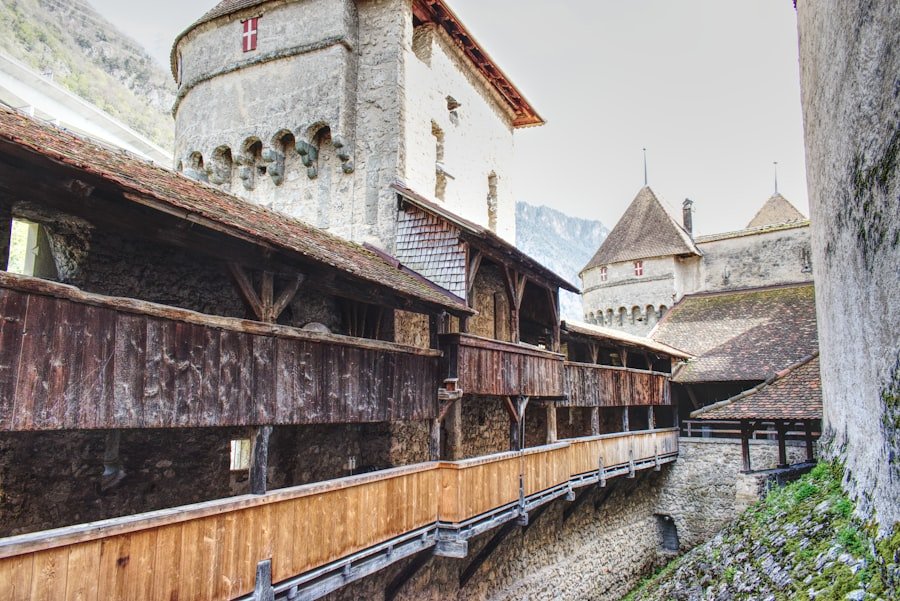
Chillon is built on a rocky island shaped like an elongated oval. Instead of following the square plan seen at many castles, its buildings follow the natural form of the rock. The castle is surrounded by water on much of its perimeter and is linked to the shore by a bridge that replaced the former drawbridge.
Visitors move through a sequence of underground spaces, courtyards, residential rooms, administrative chambers, halls, defensive structures, and towers. The official self-guided route covers 36 rooms, so even a relatively compact-looking castle contains much more to explore than its exterior suggests.
Pro Tip: Allow at least 1–2 hours for the normal visitor route. If you enjoy photography, architecture, or reading every exhibit panel, give yourself additional time rather than treating Chillon as a quick photo stop.
The Four Courtyards
Visitors pass through four courtyards. They include the lower or service courtyard, the Castellan’s Courtyard, the Courtyard of Honour associated with the Savoy residence, and the Curtain-wall Courtyard on the defensive side of the complex.
The different courtyards help explain how Chillon functioned as both a residence and a fortress. Service areas, private apartments, administrative rooms, and defensive structures were organized according to their roles rather than being mixed randomly throughout the site.
The Underground Rooms
The underground rooms are among Chillon’s most distinctive spaces. Their stone pillars and Gothic vaults create an appearance that the castle describes as reminiscent of a 13th-century Gothic cathedral. These areas were originally used for storage and later included prison spaces.
This is also the part of the monument most strongly associated with François Bonivard and Byron’s The Prisoner of Chillon.
Notable Features and Architecture of Chillon Castle
| Location | On Lake Geneva at Veytaux, between Montreux and Villeneuve, Switzerland |
| Early history | Bronze Age occupation of the site; oldest surviving keep probably 11th century; first written castle reference in 1150 |
| Historic functions | Fortress, noble residence, administrative center, arsenal, storage site, and prison |
| Major features | Gothic underground vaults, four courtyards, great halls, chapel, murals, defensive towers, former drawbridge system, and keep |
| Historic owners | House of Savoy, Bernese authorities, and the Canton of Vaud |
Chillon’s architecture reflects its dual function. The land-facing northern side was designed for defense and includes features such as arrow slits, later loopholes, defensive walls, and machicolations. The lakeside residential façade has larger Gothic windows overlooking Lake Geneva and the surrounding mountains.
The present entrance crosses a bridge. Historically, this connection incorporated a drawbridge, and remains of its pulley system can still be seen. Inside, wall paintings, stonework, timber features, fireplaces, vaulted ceilings, and restored historic rooms show how the castle changed across different periods.
Great Halls
Chillon has three formal great halls: the Aula Magna, the Constable’s Dining Hall, and the Domus Clericorum. These spaces were used for activities such as receptions, banquets, administration, and the dispensing of justice.
Saint George’s Chapel
The castle chapel contains important surviving paintings dating from the 14th century. According to Chillon’s official interpretation, these decorations make the chapel one of the relatively rare religious interiors in the canton to retain medieval paintings despite the iconoclasm associated with the Reformation.
The chapel was originally used privately by the counts and later dukes of Savoy. During the Bernese period it was put to other uses, including storage, before eventually returning to a religious function.
The Keep
The keep stands near the center of the rocky island and probably dates to the 11th century, making it the oldest surviving building at Chillon. It served several purposes over time, including refuge, observation, storage, imprisonment, and military use. Its upper level now provides broad views over the castle and surrounding landscape.
Chillon is not a single-period medieval building. Its rooms and defenses record centuries of rebuilding under Savoyard, Bernese, and Vaudois control.
Chillon Castle’s Role in Swiss History
Chillon’s historical importance comes primarily from its location and the authorities that controlled it. The narrow passage between Lake Geneva and the mountains made the site useful for monitoring a major north-south route. Under the Savoys, the castle helped control movement along this corridor and served both political and residential purposes.
After the Bernese conquest of 1536, Chillon became an administrative center for the surrounding district while continuing to serve military and prison functions. In 1798 it passed from Bernese control during the Vaudois Revolution. The castle has belonged to the Canton of Vaud since the canton’s creation in the early 19th century.
Chillon’s cultural importance grew strongly during the Romantic era. Writers and artists were attracted to its medieval setting and dramatic position on Lake Geneva. Byron’s 1816 visit and subsequent poem about Bonivard gave the castle an international literary identity that still shapes how many visitors encounter it today.
Visiting Chillon Castle: Practical Information
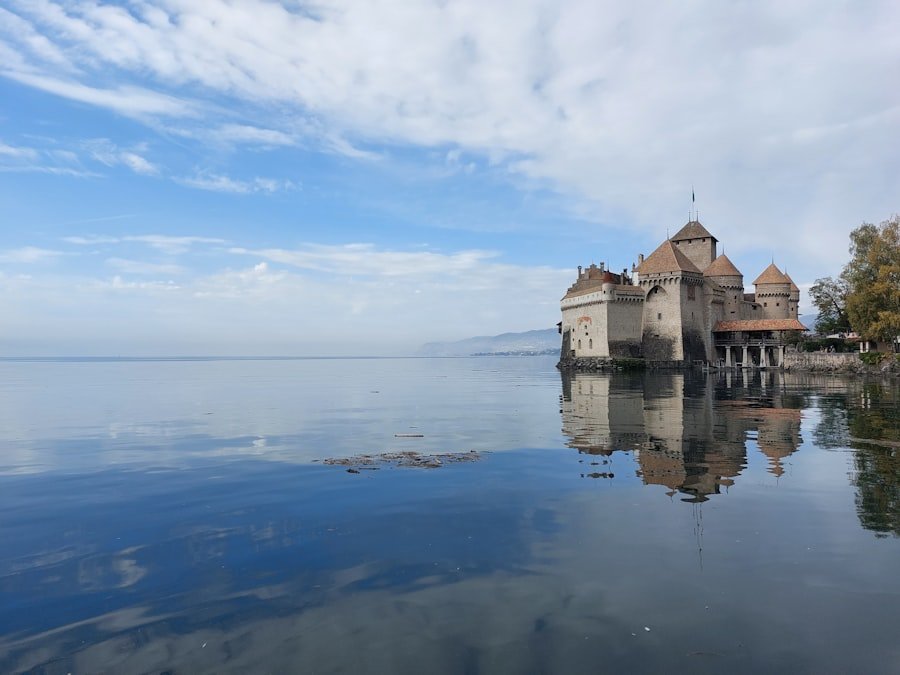
Chillon Castle is located at Avenue de Chillon 21 in Veytaux, a few kilometers from central Montreux. Before traveling, check the official Chillon visitor page because opening times, prices, event schedules, and transport conditions can change.
2026 Opening Hours
| April–September | 9:00 am–7:00 pm; last admission 6:00 pm |
| March and October | 9:30 am–6:00 pm; last admission 5:00 pm |
| November–February | 10:00 am–5:00 pm; last admission 4:00 pm |
| Annual closures | December 25 and January 1 |
2026 Standard Admission Prices
| Adult, age 16+ | CHF 15 |
| Child, age 6–15 | CHF 7 |
| Reduced admission | CHF 12.50 for eligible visitors |
| Family ticket | CHF 35 for 2 adults plus 1–5 children aged 6–15 |
| Physical audioguide | CHF 6 in addition to admission |
| Chillon app | CHF 3 |
Note: Special events and themed days can use different admission prices. Verify the official ticket page for the date of your visit.
How Long Does a Visit Take?
The castle recommends allowing approximately 1–2 hours for a typical visit. A free multilingual information brochure is available for the self-guided route. Visitors who want more interpretation can rent an audioguide or use the castle’s paid app.
Getting to Chillon Castle
By train: Regional S5 trains serve Veytaux-Chillon station, which is about a six-minute walk from the castle according to the official visitor information.
By bus: Bus 201 runs from Vevey, Montreux, and Villeneuve, with the Chillon stop directly in front of the castle. Frequencies can vary, so check the local timetable before departure.
By boat: During the main operating season, scheduled Lake Geneva boats connect places including Lausanne, Vevey, Montreux, and Villeneuve with the Chillon landing, roughly 100 meters from the castle.
By car: Chillon lies between Montreux and Villeneuve near the A9 corridor. Roadside parking is available for a limited period, but spaces are limited. The castle recommends public transport when possible.
On foot: The lakeside path from Montreux is about 4 km and takes roughly 45 minutes. From Villeneuve, the walk is about 2 km and around 20 minutes.
By bicycle: Bicycle parking and an e-bike charging facility are available near the entrance. Cyclists and scooter users must dismount at the castle entrance.
Accessibility and Families
Chillon is a medieval monument with paved floors, narrow passages, and many stairs. As a result, much of the visitor route is difficult or inaccessible for wheelchair users and people who rely on walkers. Accessible areas include the paved courtyards, cafeteria with adapted toilets, the Bazaar, and Café Byron. Audiovisual terminals provide a virtual view of additional parts of the castle.
Strollers and pushchairs cannot be used on the visitor route and must be left in the designated cloakroom area. The castle recommends using a baby carrier. Children under 16 must be accompanied and supervised by an adult.
Pets and Photography
Ordinary pets are not permitted inside the castle grounds. Recognized assistance dogs are allowed when the required conditions are met.
Personal photography is permitted around the castle. However, selfie sticks are not allowed inside, and drones may not be flown over the Chillon Castle grounds.
Warning: The historic stairs, uneven paving, narrow passages, and changes in level can make the full route difficult for visitors with limited mobility. Review the official accessibility information before visiting if this affects your plans.
Chillon Castle’s Surrounding Area and Nearby Attractions
Chillon works well as part of a wider day around the Montreux Riviera. The lakeside promenade links the castle area with Montreux, where visitors can combine lake views with restaurants, cafés, shopping, and the town’s music-related attractions.
Montreux
Montreux is about 4 km from the castle and is connected by train, bus, road, and the lakeside walking route. Its waterfront makes it one of the easiest places to combine with Chillon on the same day.
Vevey
Farther west along Lake Geneva, Vevey has a walkable lakeside center and several cultural attractions. The Montreux Riviera tourism authority’s museum guide lists attractions including the Alimentarium, Swiss Camera Museum, Jenisch Museum, and other regional museums.
Fort de Chillon
Fort de Chillon is located close to the castle and offers a very different perspective on the strategic importance of this narrow lakeside corridor. While Chillon focuses heavily on medieval and early-modern history, the fort explores more recent military history.
Lake Geneva
Boat trips are an especially scenic way to approach or leave Chillon during the operating season. The surrounding waterfront also offers walking and cycling opportunities, and there is a public beach near the castle.
If you are preparing food for a lakeside picnic rather than eating in a restaurant, this delicious homemade cottage cheese recipe is one simple make-ahead option for your travel day.
Tips for Making the Most of Your Visit to Chillon Castle
- Allow enough time: Plan around 1–2 hours for the standard route and longer if you enjoy detailed exhibits or photography.
- Consider public transport: Train, bus, and seasonal boat connections reduce the need to find limited parking near the castle.
- Arrive earlier in the day: This can make it easier to explore popular rooms before larger groups arrive.
- Use the visitor brochure: The free self-guided brochure helps explain the 36-room route without requiring a guided tour.
- Wear practical footwear: Medieval stairs and uneven surfaces are easier to manage in comfortable, stable shoes.
- Check accessibility beforehand: Much of the castle is not step-free.
- Combine Chillon with the lakefront: Montreux, Villeneuve, Vevey, boat travel, or the lakeside walking route can turn a castle visit into a fuller day trip.
- Check official information before leaving: Seasonal hours, event pricing, transport, and special closures can change.
Frequently Asked Questions
What is Chillon Castle?
Chillon Castle is a historic fortified residence on a rocky island at Veytaux on Lake Geneva, near Montreux, Switzerland. Its architecture reflects centuries of use as a fortress, noble residence, administrative center, arsenal, storage site, and prison.
How old is Chillon Castle?
The rocky site was occupied during the Bronze Age, but that does not mean the present castle dates from that period. The oldest surviving keep probably dates to the 11th century, and the first written mention of Chillon Castle dates to 1150.
What can visitors see inside Chillon Castle?
Visitors can explore underground Gothic rooms, prison areas, four courtyards, great halls, residential chambers, Saint George’s Chapel, defensive structures, murals, historic objects, and the keep. The official self-guided route covers 36 rooms.
How long should I spend at Chillon Castle?
The castle recommends approximately 1–2 hours for an average visit. Visitors who stop frequently for exhibits, views, or photographs may want more time.
How do I get to Chillon Castle?
You can reach Chillon by regional train to Veytaux-Chillon, bus 201, seasonal Lake Geneva boat services, car, bicycle, or the lakeside walking path. The walk is about 4 km from Montreux and about 2 km from Villeneuve.
What are Chillon Castle’s 2026 opening hours?
Standard hours are 9:00 am–7:00 pm from April through September, 9:30 am–6:00 pm in March and October, and 10:00 am–5:00 pm from November through February. Last admission is one hour before closing. The castle is closed December 25 and January 1.
How much does Chillon Castle cost in 2026?
Standard admission is CHF 15 for adults, CHF 7 for children aged 6–15, CHF 12.50 for eligible reduced-fare visitors, and CHF 35 for a family ticket covering two adults and one to five children aged 6–15. Special-event prices can differ.
Is Chillon Castle wheelchair accessible?
Only part of the site is accessible because the medieval monument contains many stairs, narrow passages, and uneven or paved surfaces. Accessible areas include the courtyards, cafeteria with adapted toilets, Bazaar, and Café Byron, and audiovisual terminals provide a virtual view of additional areas.
Can I take photos inside Chillon Castle?
Yes. Personal photography is allowed throughout the castle. Selfie sticks are not permitted inside, and drones cannot be flown over the castle grounds.
Sources
- Chillon Castle Foundation — Castle and Historical Periods — historical timeline, ownership, architecture, collections, and conservation.
- Chillon Castle Foundation — Castle Highlights — underground rooms, courtyards, halls, chapel, keep, murals, and defenses.
- Chillon Castle Foundation — Visit — opening hours, admission prices, transportation, parking, and practical visitor information.
- Chillon Castle Foundation — Self-Guided Tour — 36-room route, brochures, audioguide pricing, app, and typical tour format.
- Chillon Castle Foundation — FAQ — recommended visit duration, accessibility, pets, photography, and other visitor rules.
- Montreux Riviera — Museums — official regional information on nearby cultural attractions.