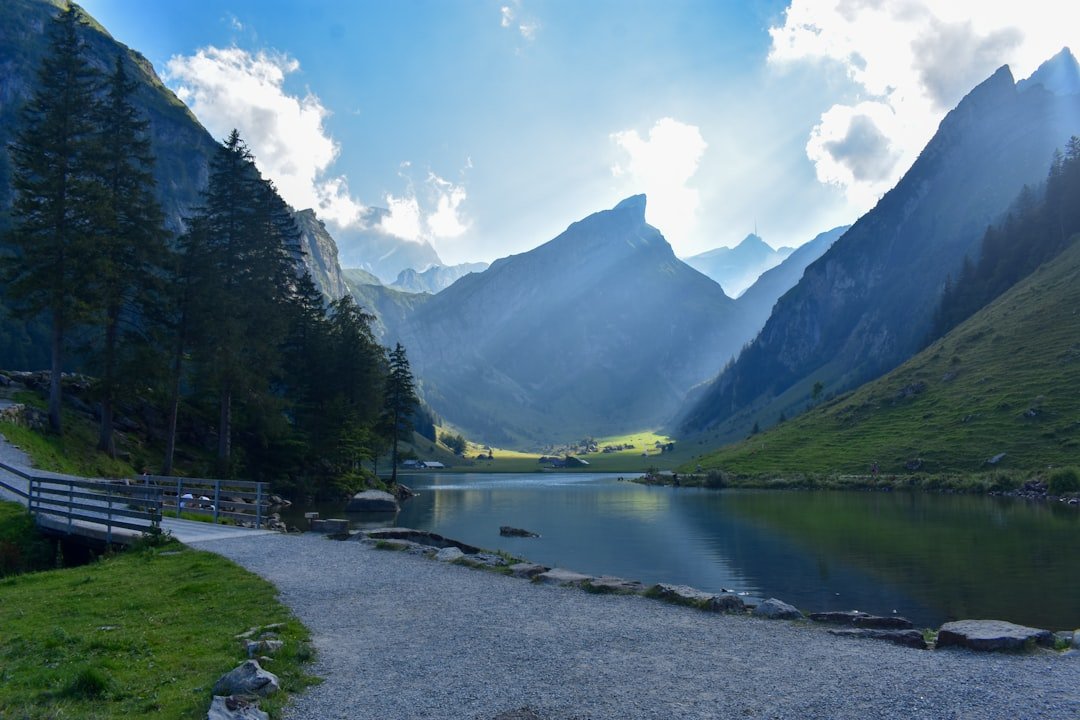
Blausee may be small, but its clear blue water, submerged trees, moss-covered rocks and dense forest create several excellent viewpoints within a compact area. The best views are close to the lake rather than on high mountain overlooks, so you can explore the main photo spots without undertaking a long alpine hike.
Quick Answer
Blausee’s best viewpoints are the wooden lakeside bridge and platform, the shore path, the glass-bottom rowing boat in summer, and the forest and gorge paths that frame the blue water through trees and rocks. For wide lake photos, start at the bridge and platform, then circle the shore for changing reflections and foregrounds.
Key Takeaways
- The wooden bridge and lakeside platform provide one of the clearest classic views across Blausee.
- The Lake Path gives several shore-level angles with trees, rocks, reflections and clear water in the foreground.
- In summer, the glass-bottom rowing boat provides a different perspective and is included with eligible daytime admission.
- Blausee is a compact nature park with forest and gorge paths, not a network of high-elevation panoramic hiking trails.
- Ordinary day visitors enter from 9:00 a.m., so opening time and late afternoon are more realistic photography periods than sunrise.
Best Viewpoints at Blausee
The most rewarding viewpoints are distributed around the lake and its surrounding woodland. Because the lake is compact, changing your position by only a short distance can completely change the composition. One angle emphasizes the turquoise water, while another frames the lake with trees, boulders or the wooden bridge.
1. Wooden Bridge and Lakeside Viewing Platform
For a classic Blausee photograph, begin with the wooden bridge and platform beside the lake. Switzerland Tourism specifically highlights the lakeside path, wooden bridge and platform as picturesque features of the nature park.
This is not a high panoramic lookout above the valley. It is a low lakeside viewpoint that puts you close to the water. That lower angle is useful because the lake’s blue and green tones, submerged tree trunks and surrounding forest can fill much of the frame.
Try several positions instead of taking only one photograph. Looking across the lake creates a broad scenic composition, while shooting along the bridge can add depth and a strong leading line.
Pro Tip: Walk a few steps around the bridge and platform before choosing your composition. Reflections and glare can change quickly with your viewing angle, so a slightly different position may reveal much more detail below the surface.
2. The Glass-Bottom Rowing Boat
During summer, the glass-bottom rowing boat offers one of the most unusual perspectives at Blausee. According to the official Blausee Nature Park, the ride is included in the entrance fee during its operating season.
The boat brings you onto the lake instead of keeping you at the shore. It is especially interesting for seeing the clarity of the water and the submerged rocks and tree trunks beneath you.
Blausee is much shallower than the original article suggested. Official diving information lists a maximum depth of 12 metres and typical underwater visibility of about 5 to 15 metres.
Blausee is only about 0.64 hectares in area, yet its clear water can provide underwater visibility of roughly 5 to 15 metres.
3. The Lake Path and Shoreline
The shoreline provides the greatest variety of viewpoints because you can continually change the relationship between the water, trees and mountains. The official park map identifies the Seeweg, or Lake Path, around the lake and also marks the bridge, glass-bottom boat and the submerged sculpture associated with the Blausee legend.
Look for sections where the water is visible through tree trunks or where rocks provide foreground detail. On calm days, reflected foliage can produce a very different photograph from the clear underwater scenes seen closer to shore.
The water itself is the main attraction. Blausee is groundwater-fed, even though the Kander River passes only about 17 metres away. The clarity of that water contributes to the lake’s striking blue appearance.
4. Forest and Gorge Paths
The surrounding forest is valuable for photography because it creates natural frames around the lake. Gnarled trees, moss-covered rocks and filtered light give these viewpoints a quieter woodland character than the open shore.
Blausee’s official visitor information identifies several paths rather than major alpine hiking routes. The Gorge Path leads toward the Felsenzimmer and Wolfsschlucht areas, while the Forest Path leads toward the lake house and playground. Underfoot conditions can include roots, stones and natural earth.
These routes are best thought of as scenic nature walks. Visitors looking for long mountain hikes should plan those separately in the wider Kandertal and Kandersteg region.
5. Wasserhaus and the Opposite Shore
The Wasserhaus side of Blausee gives another useful lake-level angle. The official park information notes that the seasonal Bistro Wasserhaus has seating with views over the deep-blue lake.
Even if you are not stopping for food, moving to this side of the lake changes the background and foreground enough to create a different set of photographs. It is particularly useful after you have already photographed the bridge and main shoreline.
The Crystal-Clear Lake
Blausee’s unusual clarity is one of the main reasons its viewpoints are so photogenic. You can often see rocks, tree trunks and fish beneath the surface rather than only reflections on top of the water.
According to Blausee’s official diving information, the lake sits at about 887 metres above sea level, covers approximately 0.64 hectares and reaches a maximum depth of 12 metres. Underwater visibility is normally about 5 to 15 metres.
The surrounding landscape also has a long geological history. The official nature park states that the 20-hectare landscape was formed around 15,000 years ago following a major rockfall from the Fisistock mountain.
The lake is fed by groundwater flowing through the Kander Valley. This cold, clear water also supports the trout associated with Blausee.
The Enchanting Forest Surroundings
The forest is more than a backdrop. It changes the character of the lake as you walk. Dense trees create shaded viewpoints, while openings along the paths reveal brighter stretches of blue water.
Instead of rushing directly to the most photographed platform, spend time on the smaller paths. Fir and deciduous trees, large rocks and moss-covered surfaces provide useful foreground elements and make photographs feel more connected to the landscape.
Autumn can add warm leaf colors around the blue water, while winter can create a strong contrast between snow and the lake. Spring and summer bring greener forest scenes and, during summer, access to the glass-bottom rowing boat.
What About the Blausee Waterfall?
A large 150-metre waterfall is not a documented attraction inside Blausee Nature Park. The official park map and visitor information focus on the lake, bridge, boat, forest paths, gorge paths, Sommerau area, playground, trout facilities and visitor amenities.
Visitors who want dramatic waterfall scenery can find waterfalls elsewhere in the wider Bernese Oberland. Switzerland Tourism, for example, notes waterfall scenery around nearby Lake Oeschinen. That is a separate excursion and should not be confused with the viewpoints inside Blausee Nature Park.
Walking and Hiking at Blausee
Blausee is better suited to short scenic walks than demanding mountain hikes. Paths wind through woodland, beside the lake and through rocky sections of the nature park. That makes it easy to combine several viewpoints during one visit.
The official visitor FAQ says there is an asphalted route from the main entrance toward the lake that is generally suitable for wheelchairs and pushchairs. However, the smaller paths through the nature park are not all accessible.
Note: If accessibility is important, use the main paved approach and lakeside facilities rather than assuming every forest or gorge path can accommodate a wheelchair or pushchair.
Good shoes are still useful, especially if you plan to explore natural paths with roots, stones or damp ground.
Nearby Alpine Scenery and Kandersteg
Blausee itself is not a traditional alpine village. The nature park contains the lake, Hotel & Spa Blausee, restaurants, walking paths and other visitor facilities.
For a classic Swiss mountain-village atmosphere, nearby Kandersteg is a better match. Switzerland Tourism describes Kandersteg as an alpine village in the Bernese Oberland and highlights both Blausee Nature Park and Lake Oeschinen among the area’s attractions.
Kandersteg also serves as one of the public-transport gateways to Blausee, making the two destinations easy to combine when schedules allow.
Wildlife and Flora
The most visible animals associated with Blausee are its trout. The cold mountain water also feeds the site’s organic trout farm, and trout can often be seen through the clear lake water.
The official trout-farm information states that the water remains around 8°C throughout the year. Rather than relying on chance sightings of deer or other large wildlife, visitors can expect woodland vegetation, fish and seasonal animal attractions maintained by the park.
During summer, Blausee also hosts llamas in the Sommerau forest clearing. Their presence is seasonal, so check current park information if seeing them is important to your visit.
Best Time for Blausee Views and Photography
The original sunrise recommendation needs one important qualification: ordinary visitors generally cannot enter Blausee Nature Park at sunrise because the park normally opens at 9:00 a.m.
For fewer people around the most popular viewpoints, arriving close to opening time is usually the most practical strategy. You can photograph the bridge and platform first, then move around the shore as visitor numbers increase.
Late afternoon and evening can also produce softer light and stronger reflections. However, closing times can change because of seasons and events, so check the official schedule before planning a late visit.
Cloudy conditions are not necessarily bad. Softer light can reduce harsh glare on the water and make it easier to see details beneath the surface.
Planning Your Visit
Blausee Nature Park is privately owned and charges admission. According to the official visitor page, the park opens daily from 9:00 a.m., although closing times and special-event schedules can vary.
As posted on August 17, 2026, daytime admission from 9:00 a.m. is CHF 11 for adults Monday through Friday and CHF 13 on Saturdays, Sundays and public holidays. Children aged 6 to 15 have reduced admission, while children under 6 enter free. Prices can change, so confirm them on the official ticket page before travelling.
- By public transport: Take the train to Frutigen or Kandersteg, transfer to a bus and get off at the “Blausee BE” stop. The official FAQ places the walk from the stop to the lake at about 350 metres.
- By car: Follow the route toward Frutigen and Kandersteg and use the signed Blausee parking areas. Parking is paid, and the walk from different parking areas is roughly 300 to 550 metres.
- Boat: The glass-bottom rowing boat operates during summer and is included with qualifying daytime admission.
- Accessibility: The main paved approach is generally suitable for wheelchairs and pushchairs, but smaller nature paths are not.
- Dogs: Dogs are welcome without an entrance charge but must remain on a leash.
Pro Tip: The official park recommends buying admission online to reduce waiting at the entrance. This is particularly useful when you want to reach the main viewpoint soon after opening.
Warning: Swimming in Blausee is normally prohibited. Visitors must also avoid feeding the trout or throwing stones into the water. Dogs may not swim in the lake and must remain on a lead inside the nature park.
If you’re planning a picnic around your visit and want general food inspiration from this site, you can also read its feature on Asian melon. It is separate from the Blausee destination itself but may be useful for picnic ideas.
Blausee works best as a compact nature and photography visit rather than a full alpine hiking expedition. Focus on the bridge and platform, circle the lake for changing shore views, explore the forest paths, and take the summer boat ride if it is operating. The lake’s small scale makes it easy to revisit the same scene from several angles instead of rushing from one attraction to another.
Frequently Asked Questions
What are the best viewpoints at Blausee?
The best viewpoints include the wooden bridge and lakeside platform, different positions along the Lake Path, the glass-bottom rowing boat in summer, forest-framed openings around the shore, and the Wasserhaus side of the lake.
Is there a panoramic platform at Blausee?
There is a picturesque wooden bridge and platform extending at lake level. It provides an excellent view across the water, but it is not a high mountain observation deck or elevated panoramic lookout.
Are there hiking trails with viewpoints at Blausee?
Blausee has Lake, Forest and Gorge paths with scenic viewpoints through the woodland and beside the water. They are nature-park walks rather than long, high-elevation alpine hiking trails. Longer mountain hikes are available elsewhere in the wider Kandertal and Kandersteg area.
What is Blausee Nature Park?
Blausee Nature Park is a privately owned, approximately 20-hectare nature park in the Kandertal region of the Bernese Oberland. It contains Blausee, forest and gorge paths, picnic and barbecue areas, visitor facilities, a playground and other attractions.
Can you swim in Blausee?
No. Ordinary swimming in Blausee is prohibited. The restriction helps protect the lake environment and its fish. Special organized events may receive exceptions, but normal visitors should not enter the water.
Can I visit Blausee for sunrise?
Ordinary day visitors generally cannot enter for sunrise because Blausee Nature Park normally opens at 9:00 a.m. Arriving close to opening time is the more realistic option for early-day photography. Hotel arrangements may differ for overnight guests.
Is Blausee wheelchair accessible?
The main asphalted approach from the entrance toward the lake is generally wheelchair accessible and suitable for pushchairs, although it rises and falls in places. Smaller forest and nature paths are not all accessible.
How clear and deep is Blausee?
Official diving information lists Blausee’s maximum depth at 12 metres and typical visibility at approximately 5 to 15 metres. The lake covers about 0.64 hectares and sits at roughly 887 metres above sea level.
Sources
- Blausee AG: Nature Park — park size, geology, walking paths, groundwater source, glass-bottom boat and visitor attractions.
- Blausee AG: Contact, Directions, Opening Hours and Tickets — current admission, opening arrangements and transport information.
- Blausee AG: Visitor FAQ — parking, accessibility, admission, swimming, dogs, fish protection and public transport.
- Blausee AG: Events and Diving Information — lake depth, underwater visibility, elevation, area and water temperature.
- Switzerland Tourism: Blausee — lakeside bridge and platform, nature park, regional setting and visitor activities.