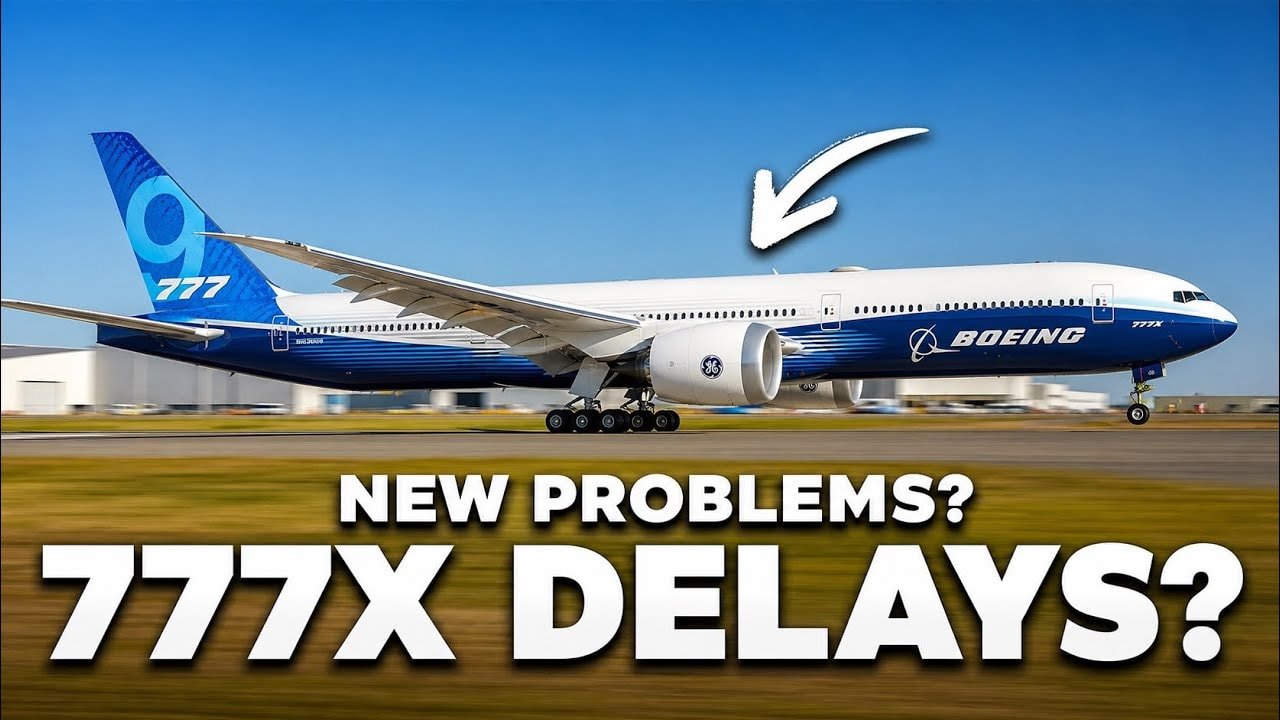
The widebody recovery was supposed to be one of the cleanest stories in commercial aviation.
Airlines coming out of the pandemic needed newer long haul jets with better fuel burn, more premium seats, and stronger economics. Airbus had the A350. Boeing had the 777X. On paper, these were the aircraft meant to power the next decade of intercontinental flying.
Instead, both programs are running into fresh trouble.
On the Airbus side, the A350 is facing new delivery pressure tied to a single former Spirit AeroSystems factory in Kinston, North Carolina. On the Boeing side, the 777X remains stuck in certification limbo, years later than planned, with billions in overruns and no passenger deliveries yet.
These are very different problems. One is primarily a supply chain and industrial integration crisis. The other is a certification and program execution nightmare. But for airlines waiting on airplanes they ordered years ago, the result is the same: fleet plans get blown up, growth gets delayed, and patience gets thinner.
🛠️ The A350 delay starts in one North Carolina factory
The Airbus situation is the fresher and, in some ways, the more surprising story.
In May 2026, Airbus warned some A350 customers that aircraft expected later in the decade could slip again. What makes this so striking is that the core issue is not weak demand, and it is not a simple Airbus assembly line slowdown. The pressure point sits inside one major facility in Kinston, North Carolina.
That factory used to belong to Spirit AeroSystems, one of the most important suppliers in aerospace for years. Spirit occupied a rare position in the industry because it supplied both Boeing and Airbus. It built 737 MAX fuselages for Boeing, and it also produced major A350 structural components for Airbus.
When Spirit’s broader business troubles deepened, Boeing moved to bring the supplier back into its orbit. At the same time, Airbus took over the Spirit sites that were critical to Airbus programs, including Kinston and the Belfast plant that produces A220 wings.
The logic was sound. If a supplier is unstable, bring the critical assets in house and gain more control over quality, staffing, and output.
The problem is that taking over a complex aerospace plant in the middle of production is far easier to sketch on a strategy slide than to execute in real life.
👷 Why Kinston became the pacing item
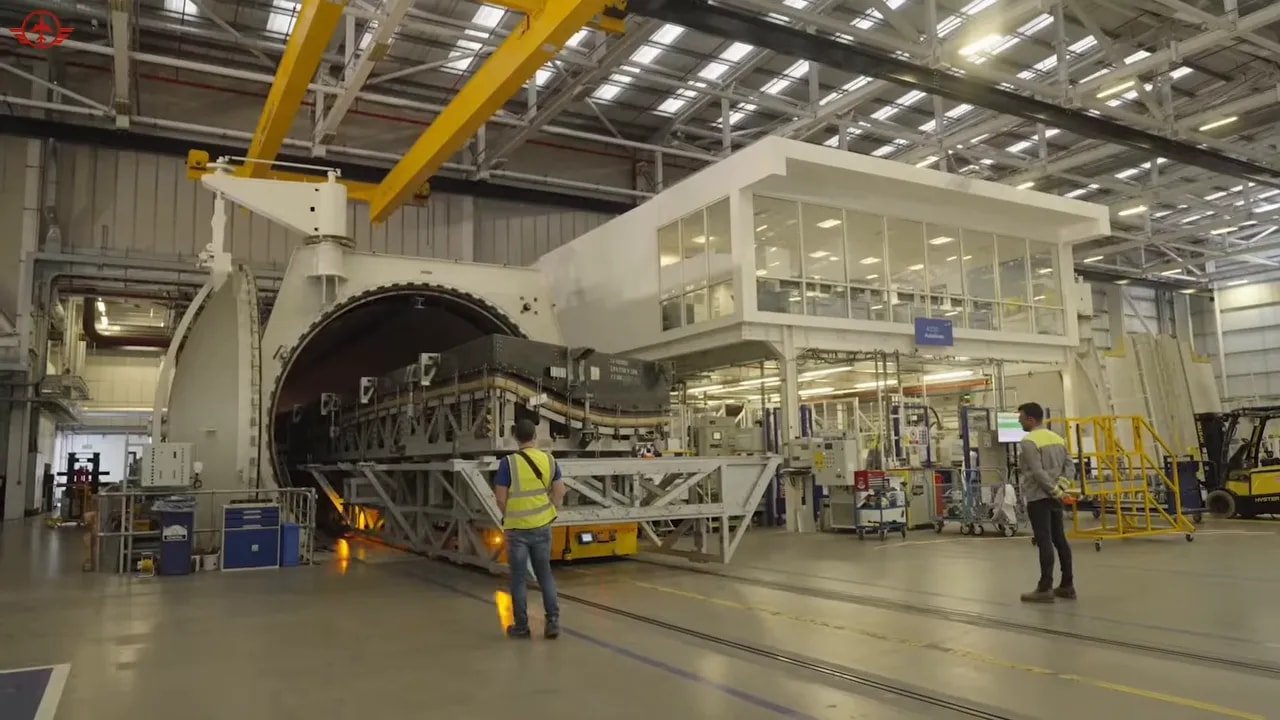
The Kinston facility does not make minor hardware. It produces high value composite structures for the A350, including upper fuselage panels and carbon fiber wing spars. These are major, safety critical parts that require specialized processes, specialized tooling, and above all, specialized people.
That last part is where the problem appears to have intensified.
After Airbus took over the plant, a meaningful share of skilled employees reportedly chose not to remain under the new setup. Engineers, composite technicians, and inspectors left instead of staying on with Airbus. Some returned to operations still aligned with Boeing.
That left Airbus trying to stabilize a sophisticated composites facility without enough of the exact workforce needed to run it smoothly.
And in aerospace manufacturing, that is not something you patch quickly. You cannot replace deep process knowledge overnight, especially when the parts involved are structural composites with tight tolerances and heavy certification implications.
Airbus has acknowledged the difficulty of the transition and has relied on technical support from Europe to help the ramp up. Officially, the company has tried to sound measured. Unofficially, the situation looks much harsher than the corporate phrasing suggests.
This is why former Airbus commercial aircraft chief Christian Scherer described the issue in such blunt terms earlier in 2026. He identified the A350 center fuselage section built by the former Spirit operation as the bottleneck. In other words, it is not just one challenge among many. It is the constraint that sets the pace for the whole program.
📉 The A350 numbers are moving the wrong way
If this were just noise in the supply chain, the delivery figures would probably show gradual recovery. They do not.
- Airbus delivered 57 A350s in 2025.
- By the end of April 2026, Airbus had delivered only 15 A350s.
- If that pace were sustained through the year, output would land around 45 aircraft.
That would not be a ramp up. It would be a step backward.
And that matters because demand for the A350 is not the issue. The backlog remains strong. Airlines still want the aircraft, and Airbus still wants to hand them over. The pressure is entirely on the production side.
That is what makes this so frustrating for customers. This is not a case of a weak market or a deliberate slowdown. It is a case where demand exists, orders exist, and the aircraft is broadly proven, but deliveries are still being held back by one industrial bottleneck.
📦 The A350 freighter has its own complication
As if Kinston were not enough, Airbus is also dealing with separate production disruptions tied to the A350 freighter program in Spain.
The A350F is Airbus’s dedicated new freighter, developed to challenge Boeing’s 777 freighter family. One of its standout features is an enormous main deck cargo door, the largest of its kind, roughly 15 feet wide and more than 14 feet tall.
That cargo door is a major engineering item in its own right, and Airbus had only recently built the first one before these new delay concerns surfaced. Now that part of the program is also seeing production disruption.
To Airbus’s credit, the company still says the first A350F flight planned for later in 2026 and the first customer delivery in 2027 remain on schedule. So this is not yet a public declaration that the freighter timeline is broken.
But when your passenger variant has a structural bottleneck in North Carolina and your freighter variant is dealing with manufacturing disruption in Spain, there is clearly not much margin for error left.
✈️ Why airlines waiting for A350s are getting squeezed
For an airline, a delayed widebody is not just an inconvenience. It can upset an entire long haul strategy.
These aircraft are ordered years in advance. Cabin products get designed around them. Route planning assumes they will arrive. Crew recruitment and training often track those assumptions. If deliveries slip repeatedly, airlines have to improvise.
That can mean:
- Keeping older aircraft in service longer than planned
- Paying higher fuel and maintenance costs on aging fleets
- Delaying route launches or frequency increases
- Postponing premium cabin upgrades
- Reworking fleet commonality plans
And because Airbus has nearly 8,800 commercial aircraft on order across all families, any weakness in delivery flow can cascade through customer planning. Even if an airline’s own slot does not move dramatically, uncertainty itself becomes damaging.
That is the deeper issue here. Airlines can deal with hard dates better than moving targets. What they hate is uncertainty.
🧨 The 777X is a completely different kind of delay
If the A350 story is an industrial bottleneck, the 777X story is a much bigger and more painful saga.
Boeing launched the 777X in 2013 as the heir to the hugely successful 777-300ER. It looked like a logical evolution of one of the best long haul aircraft families ever built.
The formula was compelling:
- New composite wings
- New GE9X engines
- A wider, more modern cabin
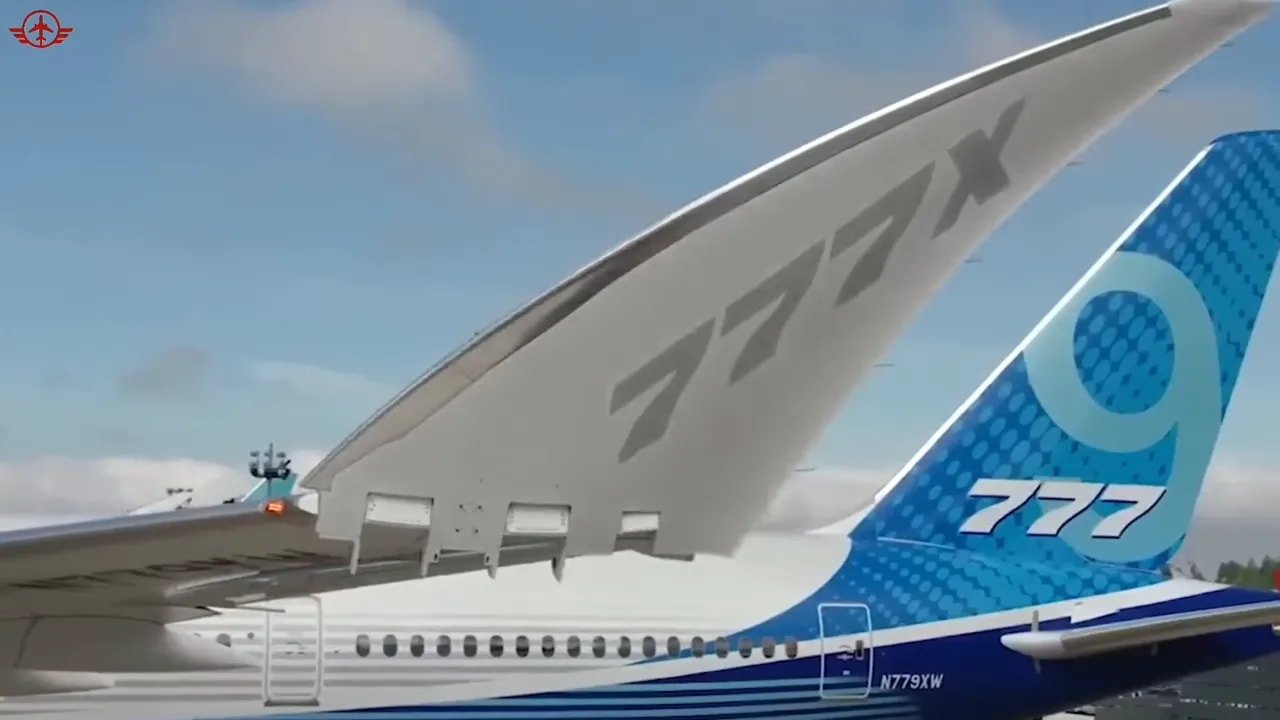
- Folding wingtips to preserve airport compatibility
That last feature became the signature image of the program. The 777X has a massive wingspan, but the outer sections of each wing fold upward on the ground so the jet can still fit gates designed for narrower aircraft.
It is a clever answer to a very practical problem. Build a larger, more efficient wing in the air, then make the aircraft behave like a smaller one at the airport.
Customers bought in early and heavily. Emirates placed the biggest order. Lufthansa became launch customer. Qatar Airways ordered in force, and airlines such as Singapore Airlines and Cathay Pacific also lined up. The backlog eventually rose above 600 aircraft, with roughly 500 passenger jets still on order in the latest count mentioned.
The original first delivery target was 2020.
Now the earliest expected entry into service is 2027.
That is a seven year delay on what was supposed to be Boeing’s flagship widebody.
🧾 How the 737 MAX crisis changed the 777X timeline
One of the most important points in this story is that the 777X was not delayed only by its own technical issues. It was also delayed by a completely different program that changed Boeing’s regulatory reality.
After the 737 MAX crisis and the intense scrutiny that followed, the FAA’s posture toward Boeing shifted dramatically. The old environment, where Boeing had broad room to manage portions of certification with limited friction, is gone.
That matters enormously for the 777X because this airplane is packed with novel features.
- The wing is new
- The GE9X engine is new
- The folding wingtip system is new
- The aircraft is larger than prior 777 variants
In the post MAX world, every one of those features attracts more independent review, more scrutiny, and less regulatory flexibility. Steps that might once have moved at a predictable pace now take longer and carry more risk.
So even without major engineering trouble, certification was always going to be tougher than Boeing first imagined. Unfortunately for Boeing, major engineering trouble showed up too.
⚙️ The technical setbacks that kept the 777X grounded
The 777-9, the lead variant of the family, made its first flight in January 2020. That should have been the start of a steady test march toward service entry.
It was not.
Before the first flight even happened, the program had already suffered a significant structural test issue. During stress testing in 2019, the rear fuselage pressure bulkhead cracked. That required redesign work and consumed time before the aircraft ever entered full flight test rhythm.
Then came additional program disruption, including a suspension of flight testing in 2024 after an issue involving the GE9X engine was discovered during inspection. Boeing and GE Aerospace had to investigate the root cause before moving ahead.
The details made public were limited, but the outcome was clear: more lost time, more schedule erosion, and less credibility around any future timeline promises.
By late 2025, Boeing leadership was openly acknowledging that certification would consume at least all of 2026. In other words, 2026 was no longer an entry into service year. It was simply more waiting.
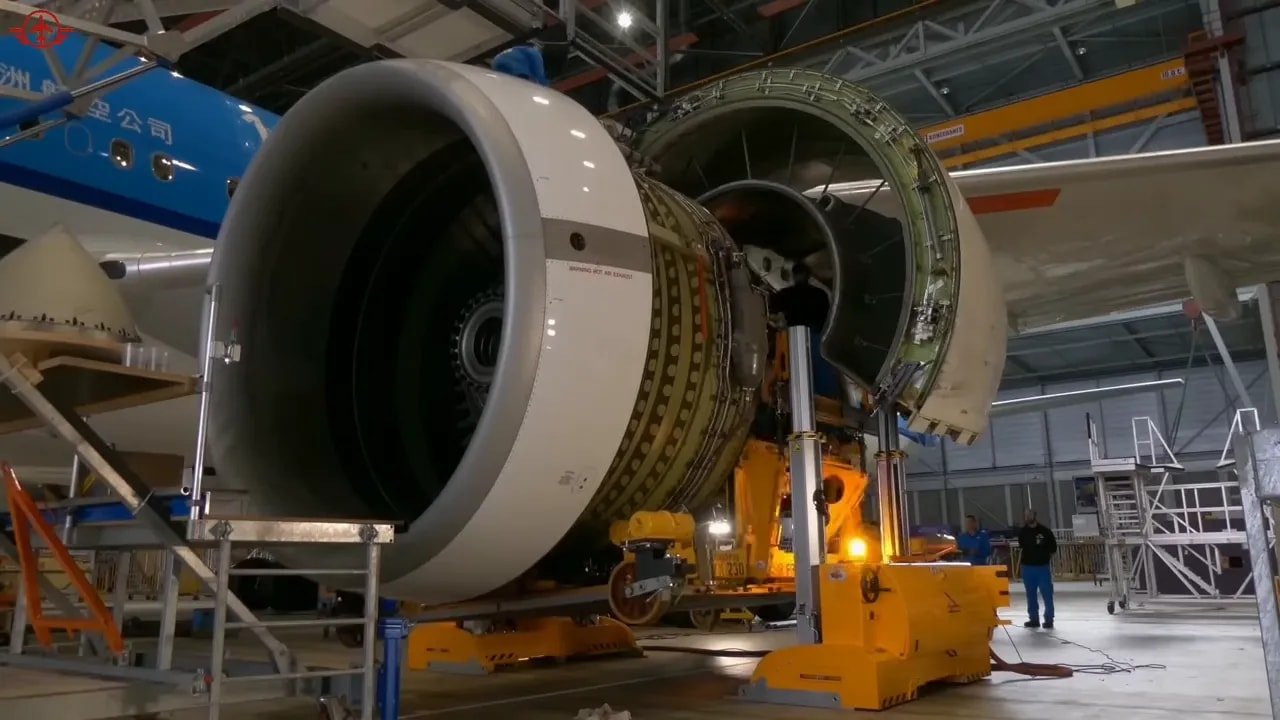
💸 A $15 billion problem with no passenger deliveries
The financial side of the 777X is brutal.
Boeing has booked a succession of charges on the program:
- $6.5 billion for the first major delay in 2020
- $0.9 billion in early 2025
- $4.9 billion in October 2025
That brings total cost overruns to roughly $15 billion.
And remember, this is on a program that still has not delivered a single passenger aircraft.
That is the kind of math that becomes painful fast. Every time the schedule slips, Boeing has to recognize that costs it once hoped to recover through deliveries are now pushed further into the future, or become harder to recover at all.
Even small shifts matter because the order book is still large. A delay on hundreds of aircraft means a delay in cash, a delay in margin recovery, and another hit to confidence.
📋 The certification bottleneck Boeing still has to clear
The key certification milestone still hanging over the 777X is the Type Inspection Authorization, or TIA.
This is the stage where the FAA authorizes its own test pilots to begin the final inspection flight campaign. Until Boeing gets through that gate, the last phase of certification simply cannot happen.
And until that final campaign begins and is completed, firm delivery dates remain slippery.
Boeing did signal progress in early 2026 by planning the first flight of a production representative 777X, meaning an aircraft built to final production standard rather than an earlier development configuration. That is meaningful.
But meaningful is not the same thing as sufficient.
Lufthansa’s leadership was already pointing to 2027 for first delivery by March 2026. That tells you how even close customers see the timeline now: not as a near term launch, but as another year away at best.
🌍 Which airlines are taking the hit
The pain lands hardest on airlines that built their future premium and long haul strategies around these airplanes.
On the 777X side, the names are some of the biggest in global aviation:
- Emirates, with the largest order book and enormous dependence on long haul capacity
- Lufthansa, the launch customer now expecting first delivery no earlier than 2027
- Qatar Airways
- Singapore Airlines
- Cathay Pacific
For these carriers, the delay is not abstract. It affects replacement timing, product upgrades, network planning, and in some cases competitive positioning.
Emirates is the clearest example. Its business model depends on moving huge volumes of long haul passengers through Dubai. A delayed 777X means the airline has to lean longer on existing 777s and A380s while waiting for the next generation of capacity to finally appear.
Lufthansa faces a different version of the same problem. As launch customer, it expected to be first in line for a new flagship aircraft. Instead, it has spent years adjusting expectations.
On the Airbus side, while specific airlines were not identified in the same detail in the material, the same strategic pressure applies to A350 customers who placed orders five or six years ago and have had to keep moving their internal timelines.
🔍 Airbus and Boeing are dealing with different failures
It is tempting to put both aircraft into one neat headline about widebody delays, but that can hide the real lesson.
The A350 problem is largely about production stability. Airbus has a mature aircraft with strong market demand, but one disrupted supplier transition and workforce shortfall has become the limiting factor.
The 777X problem is much deeper. Boeing is dealing with a combination of technical setbacks, regulatory mistrust, prolonged certification scrutiny, and enormous financial overruns on a jet that still has not entered service.
So while both situations frustrate customers, they are not equally severe.
Airbus looks like a company trying to stabilize a very real but potentially fixable industrial choke point.
Boeing looks like a company still trying to finish a flagship program under a much harsher regulatory regime than the one it expected when the aircraft was launched.
⏳ Is there any end in sight?
For Airbus, the answer is probably yes, but not quickly.
If Kinston can be staffed properly, process stability can improve, and the freighter side avoids major escalation, the A350 should eventually return to a more reliable output rhythm. The aircraft itself is not the issue. The market is not the issue. This is about execution inside a critical part of the supply chain.
For Boeing, the answer is murkier.
The 777X will almost certainly reach service eventually. The aircraft remains technologically impressive, airlines still want it, and when it finally starts carrying passengers, it may very well prove worth the wait operationally.
But there is a big difference between believing the jet will arrive someday and having confidence in the next promised date.
Right now, Airbus has a bottleneck. Boeing has a saga.
And for airlines trying to rebuild long haul fleets in the mid 2020s, neither one is arriving fast enough.
❓ FAQ
Why is the Airbus A350 facing new delays in 2026?
The main issue is a supply chain bottleneck at the former Spirit AeroSystems facility in Kinston, North Carolina. That plant makes critical A350 composite structures, and staffing shortfalls after Airbus took control have slowed production.
What parts does the Kinston plant build for the A350?
The facility produces composite upper fuselage panels and carbon fiber wing spars, both of which are major structural components of the aircraft.
Is demand for the A350 weakening?
No. Demand remains strong. The problem is not the order book. It is Airbus’s ability to produce and deliver enough aircraft on schedule.
What is happening with the A350 freighter?
The A350F is also dealing with manufacturing disruption, particularly around its very large main deck cargo door in Spain. Airbus still says first flight and initial delivery targets remain on track, but the margin for further disruption looks thin.
Why is the Boeing 777X so late?
The delay is the result of several factors at once: technical setbacks, structural redesign work, an engine related testing pause, and a much tougher FAA certification environment after the 737 MAX crisis.
How far behind schedule is the 777X?
The aircraft was originally supposed to enter service in 2020. First deliveries are now expected in 2027 at the earliest, putting the program about seven years behind its original plan.
How much has the 777X delay cost Boeing?
Total cost overruns have reached roughly $15 billion, including several major charges booked over multiple years.
Which airlines are most affected by the 777X delays?
Major customers affected include Emirates, Lufthansa, Qatar Airways, Singapore Airlines, and Cathay Pacific. These carriers have all built long haul fleet plans around the aircraft’s arrival.