There is a 777X sitting in Boeing’s orbit as one of the most ambitious airliners ever built, and also one of the most uncomfortable stories in modern aviation.
On paper, this aircraft should have been a triumph. Airlines committed well over $400 billion in orders. It carries the largest commercial jet engines ever fitted to an airliner. It uses folding wingtips so a very large wing can still fit airport gates designed for smaller aircraft. It was supposed to give airlines the efficiency of a new generation jet while preserving the capacity advantages that made the 777 family so dominant.
And yet, years after it was supposed to enter service, the 777X still has not become a routine part of commercial long haul flying.
That delay is not just a scheduling problem. It points to something deeper. The official explanations mention certification complexity, pandemic disruption, and technical findings that have been addressed. All of that is partly true. But taken together, the record tells a harsher story. This program ran into serious structural and engine issues before carrying a single paying passenger, and it is being examined by an FAA that no longer takes Boeing’s word for much of anything.
✈️ What the 777X was supposed to be
To understand why the 777X matters so much, you have to start with the aircraft it was meant to extend and defend.
The original Boeing 777 entered service in the mid 1990s and became one of the most successful widebody aircraft ever built. Airlines loved it because it was large, long ranged, dependable, and efficient enough to replace older four engine and three engine long haul jets with a twin engine platform.
By the 2000s, the 777 had become the backbone of international fleets around the world. Some carriers built entire long haul strategies around it.
Then Airbus changed the equation with the A350. When that aircraft entered service, it brought fuel burn numbers that made the older 777 generation look expensive. That put Boeing in a bind. Airlines were comparing seat economics, and the existing 777 was beginning to lose its edge.
The 777X was Boeing’s answer. The idea was straightforward, at least in concept.
- Keep the successful 777 fuselage as the base
- Add a huge new composite wing
- Fit it with the GE9X, the largest commercial turbofan ever built
- Use folding wingtips so the aircraft could still operate at existing airport gates
- Deliver per seat fuel efficiency that could challenge or beat the A350
That was a compelling pitch. Airlines responded accordingly. Emirates placed an enormous order. Qatar Airways committed to dozens. Lufthansa, British Airways, Singapore Airlines, and other major long haul carriers either ordered the jet or positioned themselves to do so.
From a design standpoint, the 777X looked like the ultimate refinement of Boeing’s long haul thinking. Bigger wing. Bigger engine. Better fuel burn. Higher capacity. Familiar 777 DNA. It was presented as the company’s masterpiece.
Then testing began, and the program stopped looking like a masterpiece and started looking like a warning sign.
🧱 The cargo door failure was not a minor incident
One of the most important moments in the 777X story happened before the aircraft even completed its first flight.
During a ground pressurization test in September 2019, a 777X test aircraft suffered a major structural failure. The rear cargo door blew out, and the surrounding fuselage was damaged.
That description can sound technical and distant if you leave it there. It should not. A pressurization test is not some obscure surprise exam. It is a standard and essential part of certifying an airliner. Engineers use it to simulate the repeated pressure cycles an aircraft will endure over many years of service. The whole point is to prove that the structure can tolerate thousands of cabin pressurization and depressurization cycles without failing.
In plain English, the aircraft was being tested to prove its long term structural durability, and the structure failed during the test.
Yes, Boeing later modified the cargo door design and the fuselage structure around it. Yes, regulators accepted those changes. Officially, that finding was addressed.
But the real significance is not just that a defect was found. Testing is supposed to find defects. The deeper question is why something this fundamental made it that far in the first place.
If a new flagship aircraft fails a standard structural test before first flight, that says something important about the design and validation process that produced it. It suggests that the engineering margin, the assumptions, or the execution were not as solid as they should have been on a mature, high stakes program.
Defenders of the program will argue, correctly, that this is why certification exists. Find the problem on the ground, fix it, and prevent it from becoming an in service disaster.
That is true.
What is also true is that findings this serious should not be brushed aside as routine paperwork or regulatory overreaction. A structural failure of this type is exactly the sort of event that should make everyone slow down.
🛂 The FAA after the 737 MAX is a different regulator
One of the biggest reasons the 777X has been trapped in certification limbo is that it arrived at exactly the wrong time for Boeing.
Before the 737 MAX crashes, Boeing operated in a certification system that gave manufacturers broad room to handle parts of the process themselves through delegated authority. In practice, Boeing employees were often reviewing and signing off on work that fed directly into Boeing programs.
Then came the MAX disasters.
The second crash, Ethiopian Airlines Flight 302 in March 2019, cemented a crisis that had already begun after the Lion Air crash. Investigations exposed the role of MCAS, the flight control system that could push the nose down based on faulty sensor input. They also exposed something equally damaging: Boeing had not been fully candid with regulators about how much authority that system had.
That changed everything.
Congressional hearings were brutal. Boeing faced accusations that schedule and cost had been elevated above safety. The FAA itself came under heavy scrutiny for relying too much on delegated certification. The result was a much tougher regulatory environment for any new Boeing aircraft that came after.
That matters enormously for the 777X.
This aircraft is not being reviewed under the same assumptions or trust that previous Boeing jets benefited from. FAA engineers are digging deeper. Findings that might once have moved through more quickly now face independent verification. Analysis has to be more thorough. Demonstrations have to be more convincing. Boeing cannot simply say the airplane is safe and expect that to close the file.
The standard is no longer just whether Boeing believes the aircraft meets the rules. The standard is whether the FAA can independently prove it does.
That is a much harder burden to meet, especially for a company already carrying a credibility deficit with its regulator.
⚙️ The GE9X engine is extraordinary, and it has had real problems
The 777X depends on the GE9X, and from a pure engineering perspective, the GE9X is remarkable.
It is massive. Its fan diameter is 134 inches, so large that it is wider than the fuselage of a Boeing 737. Its composite fan blades and advanced materials represent a serious leap over older engine generations. Its efficiency gains are real.
But this engine has not had a clean path either.
In 2020, GE found cracking in low pressure turbine blades under certain operating conditions. The cracks were discovered during inspection rather than after an in flight failure, which is the best possible way to find such a problem.
Still, turbine blade cracking is not the kind of issue anyone should casually wave away. These components operate in brutal heat and mechanical stress. If a blade cracks and lets go, the fragments can damage the engine in catastrophic ways, and in the worst case, threaten the aircraft.
GE revised the blade design and adjusted operating procedures. Regulators accepted the changes. Officially, that issue too was resolved.
Notice the pattern, though.
- A major structural finding involving the fuselage and cargo door
- A major engine finding involving turbine blade cracking
- Both discovered before commercial service
- Both serious enough to require redesigns or operational changes
- Both closed on paper, but only future service data will prove how complete the fixes really were
Aviation history has taught this lesson repeatedly. A certification issue can be formally closed and still leave unanswered questions behind it. That does not mean the 777X is destined for a disaster scenario. It does mean confidence should be earned with years of safe operation, not assumed because a document says a finding is complete.
🤐 What airlines know, and what they will never say plainly
Airlines almost never speak publicly about uncertainty in a way that sounds like uncertainty.
That is not because every airline executive is lying. It is because the incentives are stacked hard against candor. Publicly expressing concern about the structural integrity or certification health of a future aircraft program would carry real consequences.
- Share prices could react
- Customer confidence could wobble
- Relationships with Boeing could be damaged
- Billions in existing and future orders could be affected
So airlines use polished language instead.
They say they remain confident in Boeing’s engineering. They say they support the thorough certification process. They say they look forward to introducing the aircraft into service.
Those statements are carefully constructed. They are usually not direct falsehoods. But they also do not tell you what is being said privately among technical teams, engineering departments, and fleet planners.
Behind closed doors, concerns about program maturity, reliability, and certification evidence are far more likely to be aired honestly.
One of the more revealing signs has come from leasing companies. Unlike airlines, lessors are often making colder calculations about residual value and long term financial exposure. Several large leasing firms have quietly reduced their 777X commitments over time.
When the institutions that evaluate aircraft as financial assets begin trimming exposure without a lot of publicity, that is worth paying attention to.
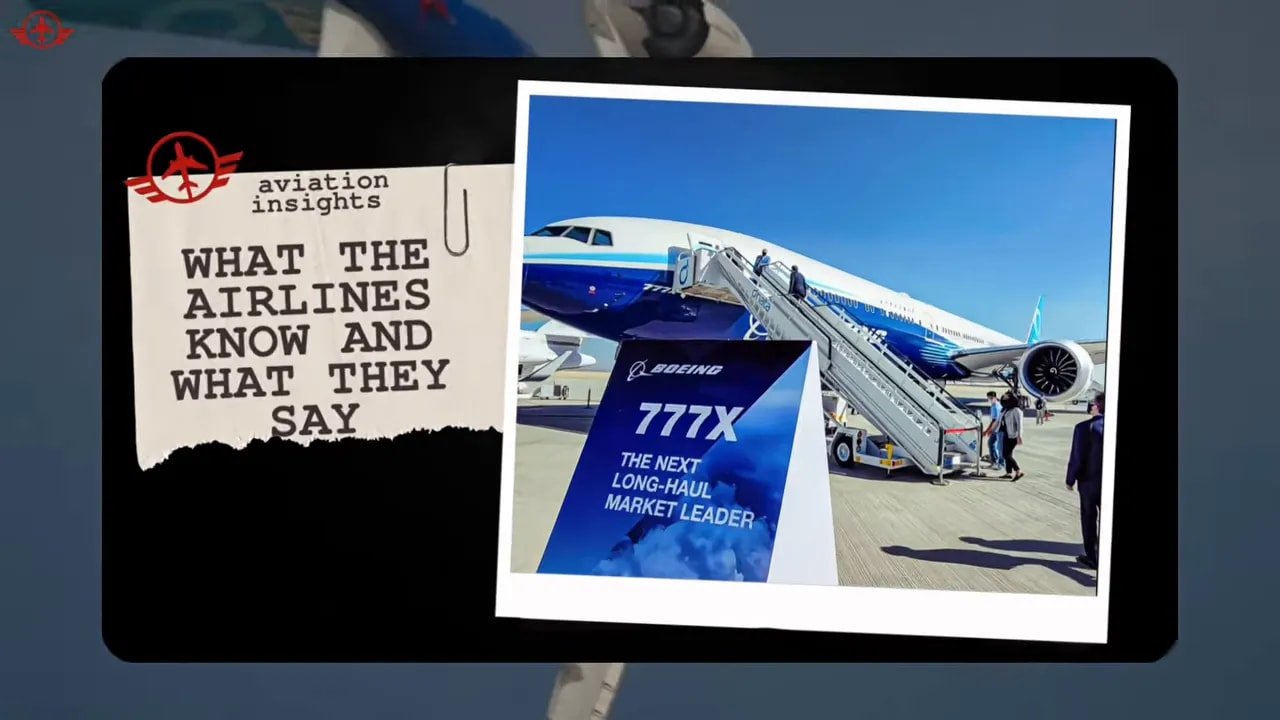
It does not prove the aircraft is unsafe. It does suggest that confidence in the program is not as unanimous as public statements make it sound.
📅 Five years of delay is not normal
Boeing originally expected the 777X to enter service in 2020. That date came and went.
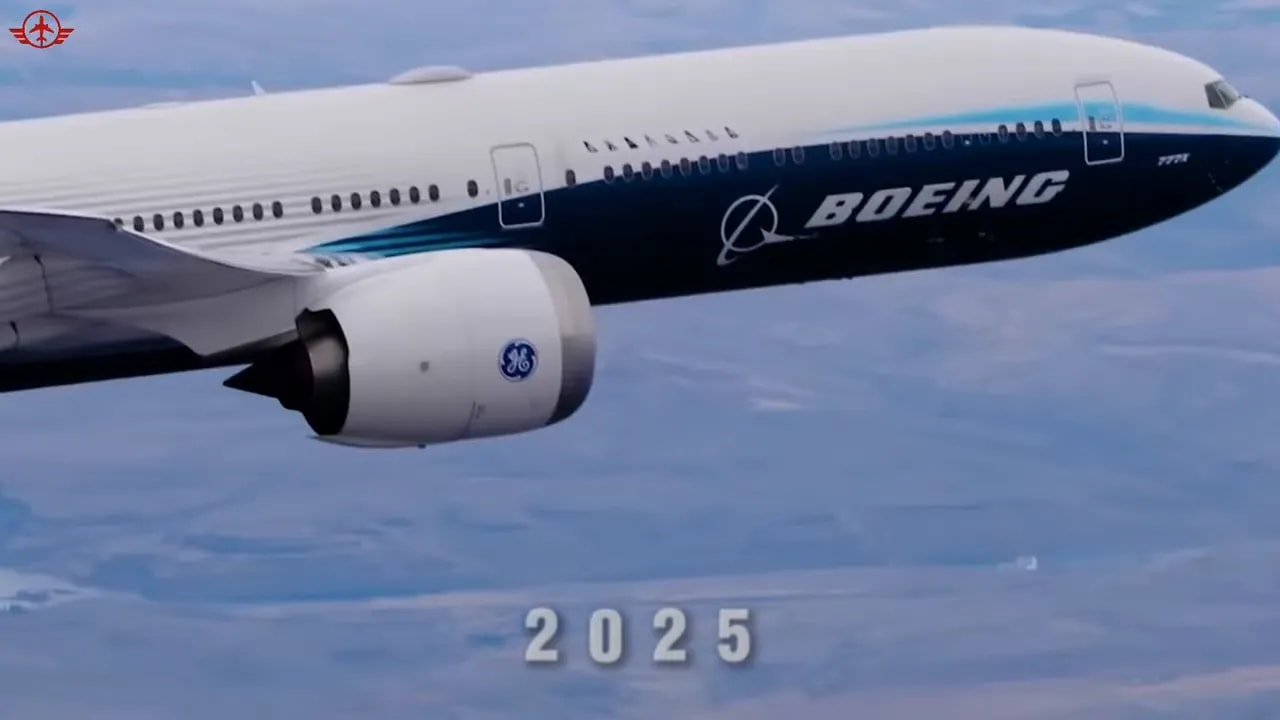
Then came later targets. Those slipped too. By 2025, even Boeing’s public messaging had become noticeably more cautious, framed with qualifications that earlier promises did not carry.
The explanations for the delay are familiar:
- The cargo door structural failure
- Pandemic disruption to testing and logistics
- The stricter FAA environment after the MAX crisis
- Additional technical findings that needed analysis and correction
Each of those explanations contains some truth. The problem is that none of them, on its own, explains the full scale of the schedule collapse.
Five years of slippage on a major commercial aircraft program is not a minor miss. It is not routine turbulence. It is a sign that the work required to satisfy certification and engineering standards turned out to be much more difficult than the original plan assumed.
And some of the supposed external causes were not exactly unforeseeable.
The cargo door failure happened before the pandemic spread through the United States. The post MAX crackdown at the FAA was already visible to anyone paying attention in 2019. Boeing knew the regulator was going to become far less permissive. That was not a bolt from the blue.
When a program slips this far, the simplest explanation is usually the right one. The airplane has been harder to certify, harder to validate, and harder to de risk than Boeing expected.
🏭 The larger Boeing problem sits behind all of this
The 777X does not exist in isolation. Its troubles sit inside the much larger story of Boeing’s corporate culture.
For years, critics have argued that Boeing drifted away from an engineer led culture and toward one dominated by finance, schedule pressure, and cost discipline. That shift is often traced back to the merger with McDonnell Douglas in 1997, after which decision making increasingly reflected management priorities that were not always aligned with conservative engineering practice.
The 737 MAX became the most devastating expression of that culture. The drive to compete quickly with Airbus produced compromises that ended in catastrophe.
The 777X was conceived before those crashes, under many of the same broader conditions. That does not mean it contains an equivalent flaw. It does mean it is fair to ask whether some of the same pressures shaped this program too.
Were certain assumptions made too optimistically to protect the schedule? Were design and certification tasks treated as easier than they really were? Did financial and competitive pressure influence decisions that later became harder to justify under deeper scrutiny?
Those are uncomfortable questions, and Boeing’s public statements cannot answer them.
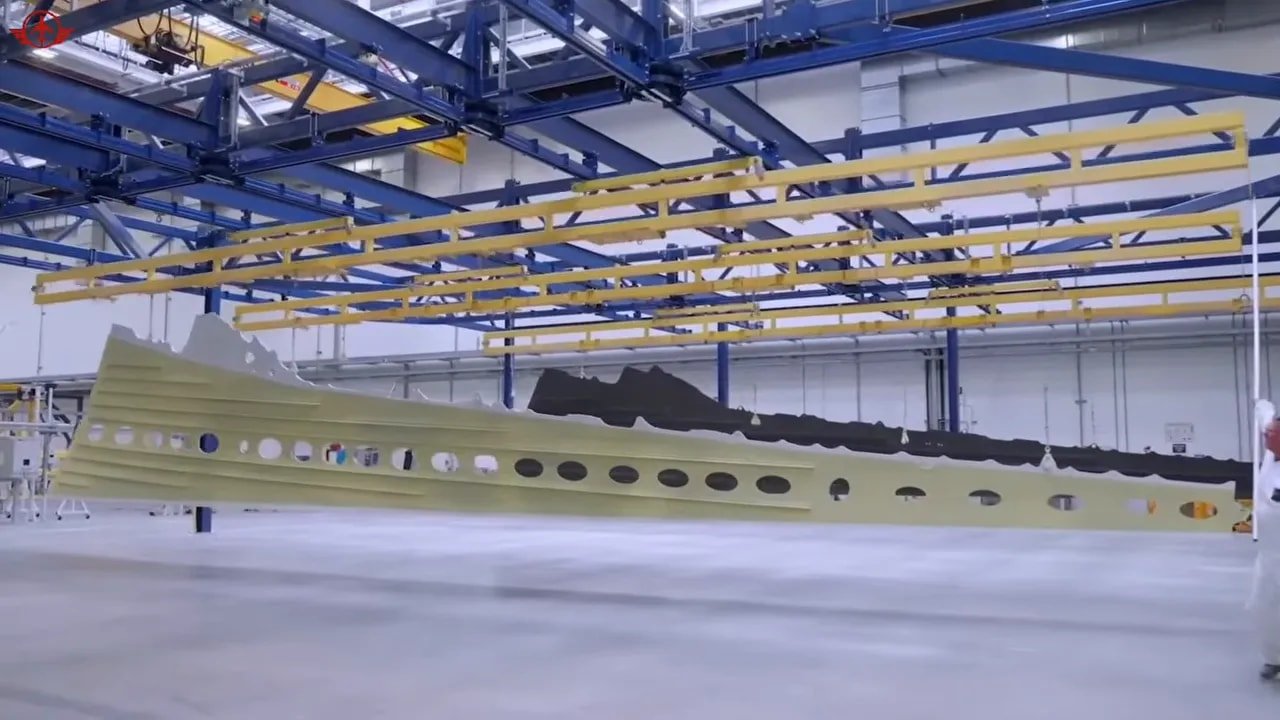
What is clear is that Boeing has been under immense pressure, financially and reputationally, in a way the company has rarely faced in its commercial history. That pressure does not make the 777X unsafe by itself. But it does create the kind of environment where optimism can outrun proof.
🧭 So what should we make of the 777X?
The 777X is not a simple story.
It is not enough to call it a disaster, because that ignores the genuine engineering accomplishment involved in building an aircraft of this scale and sophistication.
It is also not enough to call the delays routine, because that ignores the seriousness of what has already gone wrong.
The more honest conclusion sits in the middle.
The 777X is an advanced and potentially excellent aircraft whose path to service has exposed significant structural, certification, and program management problems. Some of those problems have been fixed. Some have been accepted as adequately fixed. The difference between those two things matters.
Ultimately, the final verdict will not come from press releases or investor calls. It will come from years of airline service, dispatch reliability, maintenance data, engine performance, and the absence or presence of recurring issues.
Until then, the most accurate posture is not panic and it is not blind confidence. It is scrutiny.
❓FAQ
Why has the Boeing 777X been delayed for so long?
The delays stem from a mix of serious technical findings, including a cargo door structural failure during pressurization testing and GE9X turbine blade cracking, plus a far tougher FAA certification environment after the 737 MAX crashes. Pandemic disruption played a role, but it does not fully explain the scale of the delay.
Did the 777X actually fail a structural test?
Yes. During a ground pressurization test in 2019, the rear cargo door blew out and damaged the fuselage. Boeing later changed the cargo door and surrounding structure, and regulators accepted those modifications.
Is the Boeing 777X unsafe?
It would be inaccurate to say that based on current evidence alone. What can be said is that the aircraft encountered serious pre service issues, and confidence in the fixes will only be fully earned through long term operational data once the jet enters airline service.
What is special about the GE9X engine?
The GE9X is the largest commercial jet engine ever built, with a 134 inch fan diameter. It uses advanced materials and manufacturing methods to improve efficiency, but it has also faced turbine blade cracking issues that required redesign work.
Why do airlines sound so calm about the 777X in public?
Airlines have strong incentives to avoid publicly signaling uncertainty about major aircraft programs. Openly expressing concern could affect investor confidence, customer perception, and their relationship with Boeing. Public statements are usually cautious, polished, and limited.
How is the FAA treating the 777X differently than earlier Boeing aircraft?
After the 737 MAX crisis, the FAA sharply reduced its willingness to rely on Boeing’s internal certification work without deeper review. That means more independent scrutiny, more evidence requirements, and less room for Boeing to move quickly on trust alone.