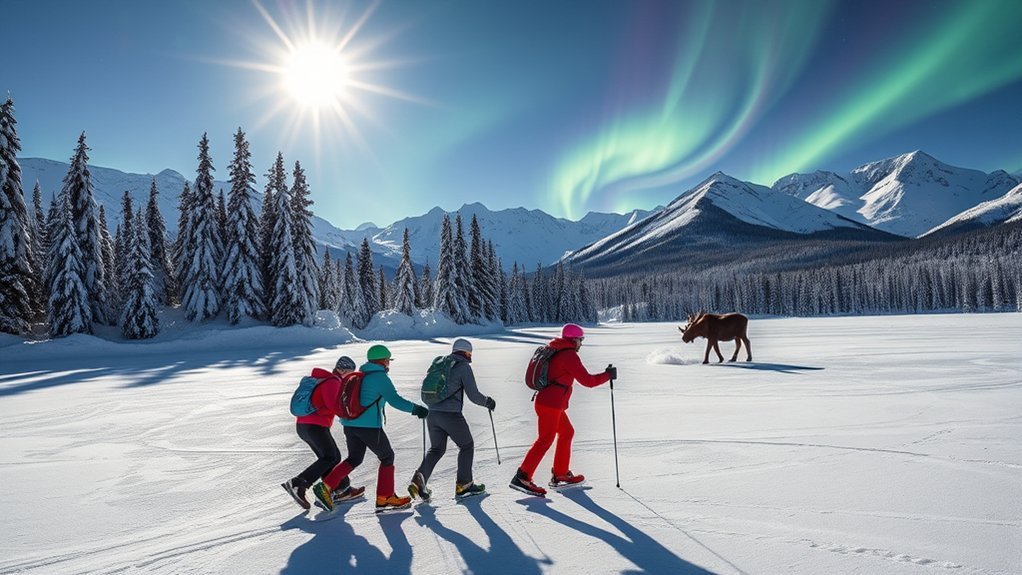
Alaska in winter is built for travelers who do not mind cold weather in exchange for snowy landscapes, dark skies, and experiences that are difficult to find at other times of year. You can go dog sledding, watch for the northern lights, ride the Alaska Railroad, ski, snowshoe, soak in hot springs, and explore winter festivals. The key is choosing activities that match your destination, skill level, and current weather conditions.
Quick Answer
The best things to do in Alaska in winter include northern lights viewing, dog sledding, snowmobiling, skiing, snowshoeing, ice fishing, scenic train rides, wildlife viewing, hot springs, and winter festivals. Fairbanks is especially useful for aurora trips, while Anchorage makes a convenient base for Southcentral Alaska adventures.
Key Takeaways
- Northern lights viewing season generally runs from late August through April, although clear skies and aurora activity are never guaranteed.
- Fairbanks is one of the most useful bases for aurora viewing, dog sledding, ice fishing, and other Interior Alaska winter activities.
- Anchorage offers easier air access plus skiing, winter trails, wildlife attractions, festivals, and road access to parts of Southcentral Alaska.
- Glacier travel, backcountry skiing, frozen-lake travel, and some snowmachine routes require extra safety planning and current-condition checks.
- Winter schedules are limited for some trains, attractions, cruises, restaurants, and remote communities, so verify operations before traveling.
Plan Your Alaska Winter Trip
Alaska is enormous, and winter conditions vary dramatically by region. A trip based in Fairbanks will feel very different from one based in Anchorage, Juneau, or a remote Interior community. Before filling your itinerary, decide which experiences matter most and choose a base that reduces unnecessary winter driving.
Choose the Right Winter Base
Fairbanks is a strong choice if northern lights viewing is your priority. Its Interior location also gives you access to dog sledding, snowmachine tours, ice fishing, cross-country skiing, and Chena Hot Springs.
Anchorage works well if you want a broader mix of city comforts and outdoor activities. You can reach ski areas, snowshoe trails, winter festivals, the Alaska Wildlife Conservation Center, and several Southcentral destinations from the city.
Juneau offers a different winter experience with Southeast Alaska scenery and skiing at Eaglecrest, but weather, transportation, and tour schedules differ from Interior Alaska.
Pro Tip: For a short winter trip, use one main base instead of trying to cover several distant parts of Alaska. Driving distances are long, daylight is limited, and winter weather can disrupt otherwise simple travel plans.
Understand Daylight, Weather, and Seasonality
Winter temperatures and daylight vary sharply across Alaska. Interior communities can experience prolonged periods below 0°F, while coastal Southcentral and Southeast Alaska are generally milder but can still see snow, ice, wind, and rapidly changing conditions.
Check the National Weather Service Alaska Region before heading outside or starting a long drive. Forecasts matter more than statewide averages when you are deciding what to wear or whether a particular outing is sensible.
For northern lights, Alaska’s official tourism site describes the general viewing season as late August through April, when skies become dark enough to see the aurora. Midwinter offers especially long nights, but clouds and low auroral activity can still spoil a viewing attempt.
Prepare for Winter Transportation
Do not assume every summer road, trail, attraction, boat tour, or visitor service operates normally in winter. Snow can close or change access to parks and trailheads, while remote communities may have few open businesses.
- Check road and weather conditions before every long drive.
- Keep the fuel tank comfortably above empty, particularly on remote highways.
- Carry warm clothing, water, food, a phone charger or power bank, and basic emergency supplies.
- Allow extra time instead of building a tight connection between winter activities.
- Confirm tour pickup points, cancellation policies, and minimum-weather requirements before departure.
Warning: Glacier travel, avalanche terrain, frozen lakes, and remote backcountry routes can become dangerous quickly. Do not treat summer trail descriptions as winter safety guidance. Check current conditions and use a qualified guide when the terrain is beyond your training or experience.
Experience Dog Sledding Adventures
Dog sledding is one of Alaska’s defining winter experiences. Instead of simply watching a demonstration, many winter tours let you visit a working kennel, meet the dogs, learn basic mushing commands, and ride across snowy trails with a musher.
Winter trips are available around destinations such as Fairbanks, the Mat-Su Valley, and other communities with active mushing kennels. Tour formats range from short introductory rides to longer backcountry outings.
You do not need previous mushing experience for a standard guided tour. The operator normally explains how to board the sled, where to stand or sit, and what to expect around the dogs. Dress much warmer than you would for an ordinary walk because sitting on a moving sled can feel significantly colder than actively hiking.
Alaska’s official travel site provides more information about dog sledding tours in Alaska.
Marvel at the Northern Lights
Watching the aurora borealis is one of the biggest reasons travelers visit Alaska during the darker months. When conditions cooperate, green bands can stretch across the sky, sometimes developing brighter rays, curls, or other colors during stronger displays.
The most important ingredients are darkness, clear skies, auroral activity, and patience. Move away from bright city lights when possible and give yourself more than one night rather than expecting a guaranteed show.
Fairbanks is a popular base because of its Interior location and access to dark-sky viewing areas. Coldfoot, Wiseman, and other northern communities can also offer excellent viewing, but they require more travel planning.
According to Travel Alaska, the general northern lights viewing season is late August through April.
Note: No tour operator can guarantee an aurora display. A guided tour can improve your access to dark locations and provide a warm place to wait, but weather and solar activity remain outside anyone’s control.
Go Snowmobiling Through Scenic Trails
Known locally as snowmachining, snowmobiling lets you cover much more ground than you could on foot. Guided tours operate in several regions and can take beginners onto established routes through forests, valleys, and open snowy terrain. For related tips and details, explore our Northern Lights in Alaska: When, Where & How to See the Aurora.
If you are new to riding, a guided trip is usually the simplest choice because the operator supplies the machine, helmet, route, and basic instruction. Follow speed limits and guide directions, and do not leave the established route simply because an untouched slope looks inviting.
Access is not automatic throughout the winter. Alaska State Parks opens some snowmachine areas only after sufficient snow accumulates to protect the ground. For example, Chugach State Park posts openings based on snow conditions.
Always check current trail status before hauling or renting a machine. Frozen waterways, avalanche terrain, poor visibility, and overflow can create hazards even when surrounding snow looks stable.
Enjoy Ice Fishing on Frozen Lakes
Ice fishing gives you a quieter way to experience Alaska in winter. Stocked and natural lakes around several Interior and Southcentral communities attract anglers once safe seasonal ice develops.
Basic gear normally includes:
- Insulated clothing and boots: Standing or sitting on ice can become cold quickly.
- An ice auger: Some public ice-fishing huts do not provide one.
- A suitable rod or tip-up: Match your setup to the target species and current regulations.
- Legal bait or artificial lures: Rules vary by location and species.
- Ice-safety equipment: Conditions can vary across the same lake.
Never assume a frozen surface is safe because you see other people on it. Thickness can vary around currents, springs, pressure ridges, inlets, outlets, or overflow.
Check current Alaska Department of Fish and Game sport-fishing regulations and emergency orders before fishing. Alaska’s statewide rules do not allow live fish to be used as bait for freshwater sport fishing, and area-specific rules can add further restrictions.
Take a Scenic Train Ride
A winter rail journey lets you see snowy Alaska without spending the day driving on icy highways. The Alaska Railroad’s Aurora Winter Train connects Anchorage and Fairbanks on scheduled winter departures.
Stunning Winter Landscapes
From the train, you can watch forests, rivers, mountain valleys, and isolated stretches of Interior and Southcentral Alaska pass outside the window. Snow changes familiar landscapes dramatically, and winter light can make the long journey part of the experience rather than simply transportation.
Wildlife sightings are possible, but they are never guaranteed. Keep your camera accessible without planning the trip around seeing a particular animal.
Historic Train Routes
The Aurora Winter Train travels between Anchorage and Fairbanks with stops that can include Wasilla, Talkeetna, Healy, and Nenana, plus flagstop service through remote areas on applicable departures.
The regular weekend pattern is generally northbound from Anchorage on Saturday and southbound from Fairbanks on Sunday, with selected additional departures. Check the official Alaska Railroad Aurora Winter Train schedule before building lodging or flight reservations around the train.
Winter onboard services can differ from summer trains, so review baggage and food information when booking.
Explore Glacier Hiking
Glacier hiking can be one of Alaska’s most memorable experiences, but winter changes the risk significantly. Snow can hide holes and crevasses, roads may close, avalanche danger can develop above approach routes, and trails that are ordinary summer hikes can become mountaineering terrain.
For most visitors, a guided glacier outing is a better winter choice than attempting independent travel on unfamiliar ice.
Best Glacier Hiking Spots
- Matanuska Glacier: One of the better-known road-accessible glacier areas in Southcentral Alaska. Guided glacier trips are available, but access is on private land and current operator requirements should be checked before driving out.
- Exit Glacier: Kenai Fjords National Park remains open year-round, but the road to Exit Glacier is normally inaccessible to automobiles from roughly late fall into spring. Winter recreation therefore requires very different planning than a summer visit.
- Root Glacier: A famous glacier near Kennecott in Wrangell-St. Elias National Park. Winter access is much more demanding because McCarthy Road conditions can be poor and services in McCarthy and Kennecott are extremely limited or unavailable.
- Seward Glacier: This remote glacier is not a typical casual visitor hike. Treat it as serious backcountry terrain rather than an easy winter sightseeing stop.
If you are visiting the Exit Glacier area, read the current Kenai Fjords National Park winter guidance before traveling.
Essential Gear and Safety
Glacier equipment depends on the route and conditions. A guided operator may provide traction devices, crampons, helmets, harnesses, or other specialized equipment where appropriate.
Your personal clothing should normally include moisture-managing base layers, insulating layers, a windproof and waterproof shell, insulated gloves, a warm hat, suitable boots, eye protection, and spare dry layers.
Do not assume crampons alone make glacier travel safe. Crevasse rescue, avalanche assessment, navigation, rope systems, and route selection require skills that cannot be replaced by equipment.
Warning: The National Park Service considers the Harding Icefield Trail a mountaineering route in winter, with steep snow, difficult route-finding, and avalanche hazards. Do not use a summer trail description as a winter route plan.
Guided Tour Options Available
A good guided glacier trip does more than supply equipment. Guides choose routes based on current ice and weather conditions, explain how to walk on the surface, identify hazards, and keep the group within terrain appropriate for its experience. For related tips and details, explore our Best Time To See Northern Lights In Alaska.
- Ask what equipment is included.
- Confirm minimum age and fitness requirements.
- Ask whether the trip actually walks on glacier ice or only approaches a viewpoint.
- Review cancellation policies for severe weather.
- Tell the operator about mobility or medical concerns before booking.
Visit the Iditarod Trail Sled Dog Race
The Iditarod Trail Sled Dog Race is one of Alaska’s best-known winter events. Mushers and their dog teams race from Southcentral Alaska toward Nome across an approximately 1,000-mile route, although exact mileage and trail placement vary by year and conditions.
The ceremonial start takes place in Anchorage, followed by the competitive restart outside the city. Spectators can experience the energy around the start, learn more about long-distance mushing, and follow teams as the race progresses toward western Alaska.
The official race site currently lists the next Iditarod for March 6, 2027. Check the Iditarod Race Center before making travel arrangements because routes, checkpoints, spectator logistics, and schedules can change.
Respect dogs, mushers, race staff, and restricted working areas. The best spectator experience comes from following event instructions rather than trying to approach teams without permission.
Go Skiing or Snowboarding
Alaska offers lift-served skiing, local community hills, Nordic trails, and serious backcountry terrain. Beginners can stay on groomed resort runs, while advanced travelers have options that extend far beyond conventional ski areas.
Best Ski Resorts
- Alyeska Resort: A major Southcentral ski destination near Girdwood with a broad range of lift-served terrain.
- Hilltop Ski Area: A convenient Anchorage option that works well for lessons, families, and shorter ski days.
- Eaglecrest Ski Area: Juneau’s community ski area, surrounded by Southeast Alaska mountain scenery.
- Arctic Valley Ski Area: A community-oriented ski area near Anchorage with a distinctly local feel.
Opening dates, lifts, terrain, and operating days depend on snow and weather. Always check the individual ski area’s current report before making the drive.
Snowboarding Hotspots
The same lift-served mountains also work for snowboarders. Alyeska provides the broadest resort-style experience among these options, while Hilltop is useful for beginners and shorter sessions. Eaglecrest combines lift-accessed terrain with Juneau’s coastal mountain setting.
The Chugach Mountains are also famous for advanced backcountry and helicopter-supported skiing and snowboarding. Those experiences should not be confused with normal resort riding. Avalanche terrain requires appropriate training, equipment, decision-making, and qualified professional support.
Discover Winter Wildlife Tours
Winter changes where animals feed, travel, and rest, making wildlife viewing very different from summer. Depending on location, you might see moose, caribou, eagles, owls, sea otters, or other animals adapted to Alaska’s cold season.
A guided wildlife trip can help because local guides know where animals are commonly seen and how to watch without crowding or disturbing them. Wildlife is never guaranteed, so avoid tours or itineraries that promise a specific encounter.
- Use binoculars or a telephoto lens rather than approaching animals.
- Never feed wildlife.
- Give moose especially generous space; they can be dangerous when stressed or blocked.
- Stay on designated routes when a guide or wildlife facility requires it.
For families or travelers who prefer predictable access, the Alaska Wildlife Conservation Center provides another way to learn about Alaska species without depending on a chance roadside sighting.
Relax in a Cozy Lodge
Not every winter day needs to be packed with outdoor activities. A lodge, cabin, or small inn can become part of the trip, particularly when darkness comes early or temperatures drop sharply.
Warm Fireplace Ambiance
Look for lodging with comfortable common areas, drying space for wet outerwear, reliable transportation or dining access, and enough room to organize bulky winter equipment. A fireplace is pleasant, but practical features such as boot storage and easy meal options can matter even more after several hours outside.
A slower evening gives you time to read, share a meal, organize photographs, dry equipment, and check the next day’s forecast.
Scenic Winter Views
A room outside the brightest part of town can give you snowy mountain, forest, or river views. In aurora country, a dark property can also make it easier to step outside when the sky clears.
Do not assume that a room marketed for northern-lights viewing guarantees an aurora. Cloud cover, solar activity, surrounding lights, and the direction of your view all matter.
Spa and Relaxation Options
Some Alaska resorts and hotels offer massages, saunas, pools, or other spa services. Availability can be seasonal, so book ahead if a treatment is an important part of your stay.
After skiing, snowshoeing, or a long outdoor tour, a quiet indoor afternoon can also prevent an itinerary from becoming exhausting. For related tips and details, explore our Best Places in Alaska to See the Northern Lights.
Try Your Hand at Snowshoeing
Snowshoeing is one of the simplest ways to explore a snowy trail without committing to skiing or snowmobiling. Rental shops and guided tours can supply equipment, and many beginners learn the basic movement quickly.
Choose a route that matches your fitness and winter-navigation skills. A flat, marked trail near town is very different from an untracked backcountry route.
Carry extra insulation, water, snacks, and a charged phone even on a short outing. Deep snow can make a mile considerably more tiring than the same distance on a dry summer trail.
Wildlife tracks are often easier to notice in fresh snow, but follow them from a respectful distance rather than trying to locate the animal that made them.
Experience the Chena Hot Springs
Chena Hot Springs Resort, outside Fairbanks, combines geothermal soaking with other winter activities. The contrast between hot water and cold Interior Alaska air makes it especially popular during the darker months.
A winter visit to Chena works best when you treat the hot springs as part of a larger Fairbanks-area day rather than assuming an aurora will appear while you soak.
Current attractions include the hot springs and indoor pool facilities, the Aurora Ice Museum, and winter aurora-viewing experiences. The resort operates year-round, but individual activities have their own schedules and age requirements.
The outdoor hot-springs lake is currently restricted to adults age 18 and older. Families should review the current pool rules before traveling.
Check the official Chena Hot Springs Resort website for current hours, activity availability, prices, and facility rules.
Attend the Fur Rendezvous Festival
Anchorage’s Fur Rendezvous, commonly called Fur Rondy, is one of the city’s signature winter celebrations. Events can include sled dog racing, snow sculpture, live entertainment, community competitions, a parade, fireworks, and the well-known Running of the Reindeer.
The exact lineup changes each year, so avoid planning from an old schedule. The 2026 festival ran from February 26 through March 8, but future dates and individual events should be verified independently.
If Fur Rondy is central to your trip, check the current official Fur Rondy schedule before reserving flights or nonrefundable lodging.
Popular downtown events can draw large crowds, so allow extra time for parking, street closures, and walking between venues.
Take a Winter Cruise
A winter cruise is possible in Alaska, but it is a much more specialized activity than the typical summer Alaska cruise. Most conventional cruise itineraries operate from spring through fall, with the main season concentrated from May through September and some departures extending into April or October.
Specialized winter small-ship itineraries and limited local boat trips may operate at other times. Availability can change substantially from one winter to another, so confirm the exact departure before treating a cruise as a guaranteed part of your itinerary.
A winter water trip may offer views of snowy coastal mountains, fjords, glaciers, and resident marine wildlife. Sightings of seals, sea lions, otters, whales, or other animals depend on the route and season and should never be treated as guaranteed.
Travel Alaska provides current information about Alaska cruise seasons and winter options.
Note: Do not build a winter itinerary around a summer cruise description. Confirm the operator, port, exact sailing date, weather policy, and transportation to the departure point.
Visit the Alaska Wildlife Conservation Center
The Alaska Wildlife Conservation Center in Portage Valley provides a more structured wildlife experience than searching for animals from the highway. The nonprofit sanctuary cares for Alaska wildlife and supports conservation, education, research, and animal care.
Visitors may see species such as moose, muskox, wood bison, wolves, bears, elk, and other animals depending on the current residents and conditions.
Winter gives the property a very different look from summer, but operating days and hours are reduced during parts of the season. Current published schedules show more limited opening days in January and February, followed by broader spring hours.
Check the Alaska Wildlife Conservation Center visitor information before driving from Anchorage or another Southcentral destination.
Frequently Asked Questions
What should I pack for a winter trip to Alaska?
Pack insulating base and mid-layers, a wind-resistant and waterproof outer layer, insulated boots, warm socks, gloves or mittens, a hat, and face protection. Add sunglasses or goggles, traction devices when appropriate, a power bank, spare batteries, snacks, and extra dry layers. Technical activities may require additional equipment supplied or specified by your guide.
Are winter activities in Alaska suitable for families?
Many are. Family-friendly choices can include short dog-sled rides, beginner ski areas, scenic train trips, wildlife attractions, easy snowshoe walks, and indoor museums or pools. Age, height, weight, and cold-weather restrictions vary by operator, so confirm requirements before booking children on snowmachine, glacier, or remote backcountry tours.
How cold does it get in Alaska during winter?
It depends heavily on the region and weather pattern. Interior Alaska can fall well below 0°F, while coastal areas such as Anchorage and Southeast Alaska are generally milder but still experience freezing temperatures, snow, ice, wind, and storms. Check the National Weather Service forecast for your exact destination rather than relying on a statewide average.
What are the best months to visit Alaska in winter?
December through March is a strong period for travelers who want dependable winter atmosphere, snow activities, and long dark nights. Northern lights viewing is possible over a broader season, generally from late August through April. March is especially attractive if you want major mushing events, while February and early March often feature winter festivals.
Do I need a guide for winter activities in Alaska?
Not for every activity. Resort skiing, maintained urban trails, and established attractions can often be enjoyed independently. A guide becomes much more valuable for glacier travel, unfamiliar snowmachine routes, technical backcountry skiing, remote winter trips, or any terrain where avalanche, navigation, crevasse, or severe-weather knowledge is important.
Can you see the northern lights every night in Alaska?
No. You need darkness, enough auroral activity, and sufficiently clear skies. Clouds can hide a strong aurora, while clear skies do not guarantee that the aurora will become bright. Staying several nights in a good viewing area improves your opportunities but never guarantees a display.
Is it safe to drive around Alaska in winter?
Winter driving is common, but conditions can include snow, black ice, wind, limited daylight, wildlife on roads, and long distances between services. Check current forecasts and road conditions, use a properly equipped vehicle, allow extra travel time, and carry warm clothing and emergency supplies. Avoid remote drives when conditions exceed your winter-driving experience.
What are the easiest Alaska winter activities for first-time visitors?
Good beginner options include a guided dog-sled ride, northern-lights tour, Aurora Winter Train journey, wildlife-center visit, beginner ski lesson, marked snowshoe trail, or Chena Hot Springs visit. These provide a winter experience without requiring independent glacier, avalanche, or remote-backcountry skills.
Sources
- Travel Alaska: Winter Activities — northern lights season and Alaska winter recreation.
- Alaska Railroad: Aurora Winter Train — winter train route and operating pattern.
- National Park Service: Kenai Fjords Winter Activities — Exit Glacier winter access and recreation guidance.
- Iditarod Trail Committee: Race Center — race timing, start information, and annual updates.
- Fur Rendezvous Festival — current Anchorage festival dates and events.
- Alaska Wildlife Conservation Center — current visitor hours and winter operating information.
Quick Overview
| Topic | Summary |
|---|---|
| Subject | 15 Best Things to Do in Alaska In Winter, Alaska |
| Focus | 15 Best Things To Do In Alaska In Winter, Alaska |
| Best For | Readers looking for clear, practical details and quick answers. |
Related Guides
- Alaska Travel Guide: Top Attractions, Itineraries & Tips
- Best Places To Visit In Alaska
- 15 Best Things to Do in Alaska, Alaska