Chapel Bridge, known locally as Kapellbrücke, is Lucerne’s best-known historic bridge and one of the city’s defining landmarks. The covered wooden footbridge crosses the Reuss River beside the octagonal Water Tower and combines medieval defensive history with a rare cycle of 17th-century triangular paintings. A major fire in 1993 destroyed much of the bridge, but it was rebuilt within months and remains a central pedestrian route through Lucerne today.
Quick Answer
Chapel Bridge is a roughly 204–205-meter covered wooden bridge in central Lucerne, Switzerland. Built around the mid-14th century, it is famous for its 17th-century paintings, adjoining Water Tower, and dramatic reconstruction after the 1993 fire. Walking across the bridge is free, and it can be visited year-round.
Key Takeaways
- Chapel Bridge was built around the mid-14th century. City of Lucerne research places its construction at about 1365, although the exact year is uncertain.
- The bridge is about 204–205 meters long today, substantially shorter than its original length because its ends were shortened during 19th-century riverbank construction.
- Its original cycle contained 158 triangular paintings created in the early 17th century to illustrate Lucerne, Swiss history, and religious themes.
- A major fire on August 18, 1993, destroyed roughly two-thirds of the bridge and badly damaged many paintings. The rebuilt bridge reopened on April 14, 1994.
- The Water Tower predates the bridge, dating to around 1290–1300. It has served as a lookout, archive, treasury, and prison, but it is not normally open to the public.
- Crossing Chapel Bridge is free, and the bridge can be visited throughout the year.
History of Chapel Bridge
Chapel Bridge was built as part of medieval Lucerne’s defenses while also providing a pedestrian connection across the Reuss River. Older travel sources sometimes give 1333 as the construction year, but more recent building-history research from the City of Lucerne places the bridge at around 1365. The City-backed Bridges of Lucerne project notes that the exact year is not known: the bridge was indirectly referenced in 1347, timber analysis indicates construction no earlier than 1356, and it was explicitly mentioned in 1367.
The bridge originally formed part of the city’s fortification system and connected the area near St. Peter’s Chapel on the right bank of the Reuss with the former Freienhof on the opposite bank. Its diagonal route across the river reflects that defensive and urban-planning role rather than simply providing the shortest possible crossing.
The original bridge was considerably longer than the structure visitors see today. Official historical sources place the earlier length at roughly 279–285 meters. During the 19th century, construction of quays and embankments along the Reuss led to several sections being removed. Today, the bridge measures about 204–205 meters.
The 1993 Chapel Bridge Fire and Reconstruction
Shortly after midnight on August 18, 1993, fire spread through a large section of Chapel Bridge. According to the City-backed history of the bridge, the blaze was probably caused by a carelessly discarded cigarette, although this should be described as the likely cause rather than a proven certainty.
The fire destroyed roughly two-thirds of the bridge’s upper structure and devastated many of its historic paintings. Lucerne Tourism reports that the bridgeheads and Water Tower survived, while the damaged wooden structure had to be extensively rebuilt.
Reconstruction moved quickly. The restored bridge reopened on April 14, 1994, only about eight months after the fire. Rather than trying to erase all evidence of the disaster, city authorities chose to leave some gable spaces empty. Those gaps remain a visible reminder of the works that were permanently lost.
Note: The bridge visitors cross today contains both historic material and later replacements. Chapel Bridge had already undergone repeated repairs and rebuilding long before the 1993 fire, so its historical importance lies in the continuity of its form, function, setting, and surviving artwork rather than every timber being medieval.
Architectural Features of Chapel Bridge
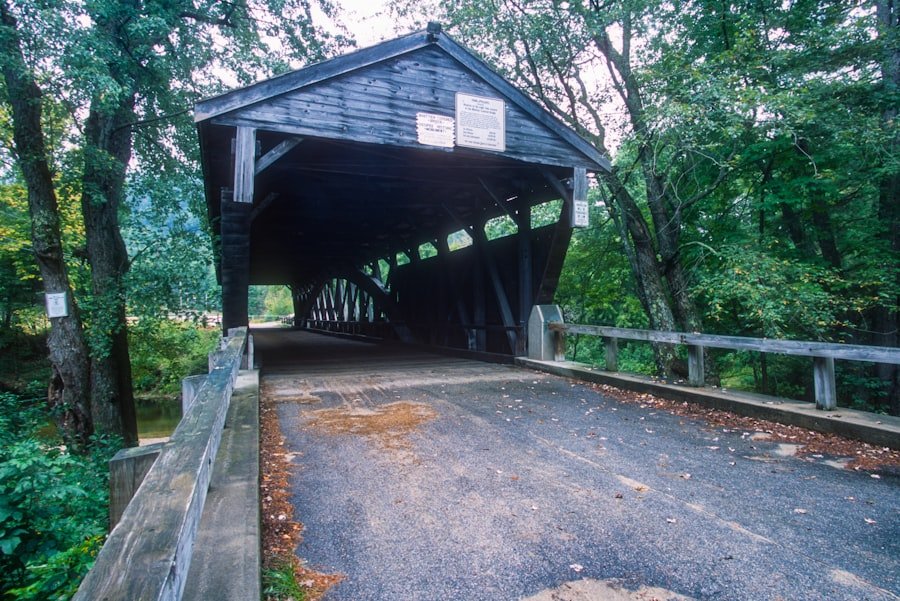
Chapel Bridge is a covered timber footbridge that crosses the Reuss at an angle. Its present length is about 204–205 meters. Wooden trusses support the pitched roof, while the spaces formed beneath the roof structure provide the distinctive triangular frames in which the historic paintings are displayed.
The covered design protected pedestrians and the bridge structure from the weather while also fitting its medieval defensive role. On the side that once faced a potential attack from the lake, the bridge historically formed part of a wider fortified line.
One of the most recognizable features is the way the bridge bends around the Water Tower rather than crossing the river in a straight line. Combined with the dark timber, flowers along the exterior in warmer months, triangular paintings overhead, and views along the Reuss, this gives Chapel Bridge a visual identity unlike a modern pedestrian crossing.
Famous Paintings on Chapel Bridge
The paintings beneath Chapel Bridge’s roof are one of its most important historical features. According to the official Lucerne Tourism history, the original cycle contained 158 panels. The concept was developed by Lucerne chronicler Renward Cysat, and work on the cycle began in the early 17th century.
The triangular pictures present episodes connected with Lucerne and Swiss history as well as religious traditions surrounding Lucerne’s patron saints, including St. Leodegar and St. Maurice. Wealthy citizens helped finance the paintings, making the series both a public historical narrative and a reflection of civic life in early modern Lucerne.
The original Chapel Bridge painting cycle contained 158 triangular panels, but floods, age, and especially the 1993 fire caused major losses over the centuries.
Different official sources give different figures when describing the surviving paintings because they are counting different stages of the collection. Lucerne Tourism states that 147 of the original 158 panels still existed before the 1993 fire, while 110 were directly affected by the blaze. Switzerland Tourism notes that 30 panels could later be fully restored.
Visitors should also notice the empty triangular spaces. They are not unfinished decoration. The City of Lucerne deliberately retained empty gables in places where historic paintings were lost so that the damage caused by the fire remains visible as part of the bridge’s history.
The Water Tower Beside Chapel Bridge
The octagonal Water Tower, or Wasserturm, is older than Chapel Bridge. Lucerne Tourism dates it to approximately 1290–1300.
Despite its English name, the structure was not built as a conventional water-storage tower. During its long history it served several civic and defensive purposes. It functioned as a lookout point, housed archives at different times, stored treasury valuables and war booty, and was also used as a prison.
The tower rises beside the bridge and is one of the most recognizable elements of the Lucerne skyline. Visitors can admire it from the bridge and riverbanks, but Switzerland Tourism notes that the Water Tower itself is not normally open to the public.
Chapel Bridge Visitor Information
| Admission | Free |
| Season | Accessible year-round |
| Location | Central Lucerne, crossing the Reuss between the Old Town side and the theater/station side |
| Time to allow | About 15–30 minutes for the bridge itself; longer if you stop to study the paintings and explore Old Town |
| Accessibility | Lucerne Tourism lists the bridge as wheelchair accessible; surrounding Old Town streets include cobblestone surfaces |
| Water Tower access | Normally closed to general public access |
Pro Tip: For a quieter crossing and cleaner photographs, visit early in the morning or later in the evening. Switzerland Tourism specifically recommends these times for avoiding larger visitor numbers.
Things to Do and See Near Chapel Bridge
| Attraction | Access from Chapel Bridge | Why Visit |
|---|---|---|
| Water Tower | Immediately beside the bridge | Historic medieval tower and classic Lucerne photo subject; exterior viewing only for most visitors |
| Old Town Lucerne | Directly at the bridge | Historic squares, painted façades, cafés, shops, and pedestrian streets |
| Jesuit Church | Short walk along the Reuss | Major Baroque church begun in 1666 |
| Lion Monument | Walk through central Lucerne | Famous rock-carved memorial to Swiss Guards who died in Paris in 1792 |
| Musegg Wall | Uphill walk from Old Town | Preserved medieval fortifications with nine surviving towers and elevated city views |
| Lake Lucerne waterfront | A few minutes east toward the lake | Lake views, promenade walks, and boat connections |
| Swiss Museum of Transport | Short public-transport trip from the center | Large interactive museum covering rail, road, aviation, navigation, space travel, energy, and mobility |
The easiest extension to a Chapel Bridge visit is Lucerne’s Old Town. Once across the bridge, visitors can wander through historic squares such as Weinmarkt, Hirschenplatz, Mühlenplatz, and Kapellplatz while exploring cafés, shops, and painted building façades.
The nearby Jesuit Church is another worthwhile stop. Construction began in 1666, and Lucerne Tourism describes it as Switzerland’s first major Baroque sacred building.
The Musegg Wall provides a different view of medieval Lucerne. Nine towers survive along the historic fortification. Access to the wall walkway and selected towers is seasonal rather than year-round. Current information is available from the official Musegg Wall website.
Travelers interested in museums can continue to the Swiss Museum of Transport, which covers railways, road transport, aviation, navigation, cableways, space travel, energy, and related subjects through extensive exhibitions.
Best Time to Visit Chapel Bridge
There is no single season when Chapel Bridge must be visited. The bridge is accessible throughout the year, so the best time depends more on the experience you want than on an official opening season.
For photography and a less crowded crossing, early morning and later evening are particularly useful. Switzerland Tourism specifically recommends these times for avoiding larger visitor numbers. Morning light can also make it easier to photograph the bridge from the riverbanks before central Lucerne becomes busier.
Spring and summer are appealing if you want longer daylight for exploring Lucerne on foot. Autumn can provide attractive color around the city and lakefront, while winter gives the Old Town a different atmosphere, especially during the Advent and holiday period. Weather can change quickly, so check the local forecast before planning a longer walking route.
Local Legends and Folklore About Chapel Bridge
Stories and legends naturally gather around a landmark as old and recognizable as Chapel Bridge, but it is important to separate documented history from later retellings.
Historical context: A story about the ghost of a bride who drowned in the Reuss and another tale claiming that divine intervention calmed the river during construction are sometimes repeated in informal travel-style accounts. However, these stories could not be confirmed in the official City of Lucerne, Lucerne Tourism, or City-backed Chapel Bridge histories reviewed for this article. They are best treated as unverified folklore rather than established historical tradition.
The bridge does have well-documented legends in a different sense: its historic paintings intentionally combine episodes from Swiss history with religious stories and traditions associated with Lucerne’s patron saints. Those surviving panels provide a more reliable connection to the stories Lucerne’s residents chose to preserve and display centuries ago.
Tips for Visiting Chapel Bridge
Visit when you have enough time to do more than simply cross the bridge. A quick walk from one bank to the other takes only a few minutes, but allowing 15–30 minutes gives you time to study the paintings, notice the empty gables left after the fire, look at the Water Tower, and photograph the Reuss.
For the clearest exterior photographs, walk onto the riverbanks rather than trying to capture the entire structure from inside the bridge. The combination of the bridge, Water Tower, river, Old Town façades, and distant mountains is easier to appreciate from outside.
Take care when stopping for photographs inside the bridge. It remains an active pedestrian route used by visitors and local residents, so avoid blocking the walkway for long periods.
After crossing, continue through Old Town rather than immediately turning back. The bridge forms part of a compact cluster of historic sights, and many of central Lucerne’s most interesting streets and squares are within easy walking distance.
If you plan to visit the Musegg Wall as part of the same walking route, check its seasonal opening information first. The wall walkway and publicly accessible towers do not operate on the same year-round basis as Chapel Bridge.
Nearby Restaurants and Shops to Explore
The streets around Chapel Bridge contain numerous restaurants, cafés, bakeries, shops, and places to stop beside the Reuss. One established option is Zunfthausrestaurant Pfistern, a traditional restaurant in a historic guild house beside the river. Its official information highlights Swiss dishes including fondue and raclette, and Lucerne Tourism notes its views toward Chapel Bridge.
Another option is Restaurant Des Alpes, located directly at Chapel Bridge on Rathausquai. Its riverfront setting provides views toward the bridge, Mount Pilatus, and the Jesuit Church.
Old Town also has numerous shops selling Swiss chocolate, watches, gifts, and locally themed souvenirs. Rather than limiting your visit to the stores immediately beside the bridge, walk a few streets into the pedestrian center, where you will find a wider range of independent shops and cafés.
Chapel Bridge remains one of the best places to begin exploring Lucerne because several layers of the city meet in one location: medieval defenses, early modern art, the Reuss River, the Water Tower, Old Town, and the modern city center. Its history is more complex than the simple claim that it is an untouched medieval bridge, but that ongoing cycle of damage, repair, preservation, and everyday use is part of what makes it significant.
If you’re also browsing the site’s food and ingredient guides, you can explore the existing article Exploring the Delightful World of Asian Melon.
Frequently Asked Questions
What is Chapel Bridge?
Chapel Bridge, or Kapellbrücke, is a covered wooden pedestrian bridge crossing the Reuss River in central Lucerne, Switzerland. It is known for its adjoining Water Tower and its series of historic triangular paintings.
When was Chapel Bridge built?
The exact construction year is uncertain. City of Lucerne research places the bridge at around 1365, while timber dating indicates that it was built no earlier than 1356. The bridge was explicitly mentioned in records in 1367.
How long is Chapel Bridge?
The bridge is about 204–205 meters long today. It was originally significantly longer, but sections were removed during 19th-century construction of embankments and quays along the Reuss.
What happened to Chapel Bridge in 1993?
A major fire broke out during the night of August 18, 1993. Roughly two-thirds of the bridge structure was destroyed and many historic paintings were lost or badly damaged. The bridge was rebuilt and reopened on April 14, 1994.
Why are there empty spaces where paintings should be?
Some empty gables were deliberately left after the 1993 fire. The City of Lucerne chose not to recreate every destroyed historical painting, allowing the missing panels to serve as visible reminders of the loss.
Is there an entrance fee to visit Chapel Bridge?
No. Walking across Chapel Bridge is free.
Can you visit Chapel Bridge at any time of year?
Yes. Switzerland Tourism lists Chapel Bridge as a year-round attraction. Weather and daylight vary by season, but the bridge itself does not have a normal seasonal admission period.
Can visitors go inside the Water Tower?
The Water Tower can be viewed from Chapel Bridge and the riverbanks, but it is not normally open to the general public.
Is Chapel Bridge wheelchair accessible?
Lucerne Tourism lists Chapel Bridge as wheelchair accessible. Visitors should be aware that some surrounding Old Town streets are paved with cobblestones and may be less smooth.
How much time should I spend at Chapel Bridge?
Allow about 15–30 minutes if you want to cross the bridge slowly, look at the paintings, see the Water Tower, and take photographs. Allow considerably longer if you combine it with Old Town, the Jesuit Church, Musegg Wall, or other central Lucerne sights.
What attractions are near Chapel Bridge?
Nearby sights include Lucerne Old Town, the Water Tower, Jesuit Church, Lake Lucerne waterfront, Lion Monument, Musegg Wall, Spreuer Bridge, and the city’s central shopping and dining streets.
Sources
- City of Lucerne: Chapel Bridge Through Time and the 1993 Fire — construction period, original/current length, fire damage, reconstruction, and preservation approach.
- Lucerne Tourism: Chapel Bridge — fire history, Water Tower history, painting cycle, location, and accessibility.
- Bridges of Lucerne: Chapel Bridge — construction chronology, dimensions, paintings, and fire history.
- Switzerland Tourism: Kapellbrücke — current length, free year-round access, restored paintings, Water Tower access, and visitor tips.
- Musegg Wall Official Website — current seasonal access information for the wall and publicly accessible towers.
- Swiss Museum of Transport — current museum scope and visitor information.