If you’re enthusiastic to witness the breathtaking Northern Lights in Alaska, timing is everything. The spectacle peaks during the long, dark nights of late September to mid-April, especially in December and January. But it’s not just about the dates; the right conditions and locations play an essential role too. Are you ready to uncover the best strategies for an unforgettable viewing experience?
Understanding the Aurora Borealis
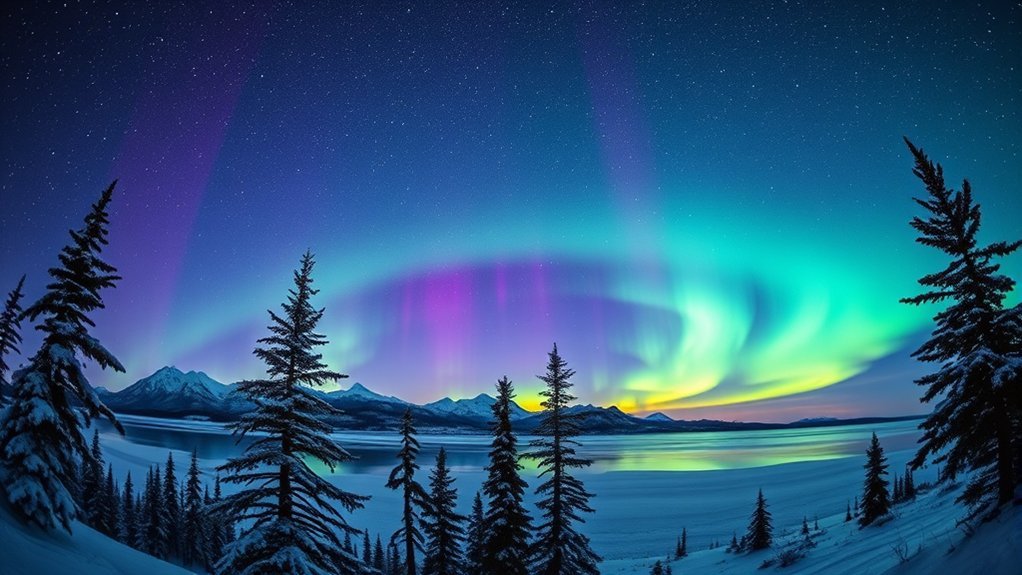
When you gaze up at the night sky, the mesmerizing dance of the aurora borealis captivates your senses, showcasing nature’s most stunning light show. This ethereal phenomenon occurs when charged particles from the sun collide with Earth’s magnetic field, creating vibrant displays of green, pink, and purple. As these particles spiral down into the atmosphere, they excite gas molecules, causing them to emit light. You might witness curtains of color swirling and shifting, a breathtaking spectacle that feels almost otherworldly. The aurora’s beauty isn’t merely visual; it’s a powerful reminder of our planet’s connection to the cosmos. Understanding this natural wonder deepens your appreciation, making each glimpse of the aurora a cherished experience that transcends the ordinary.
Best Months for Northern Lights Viewing
When it comes to catching the breathtaking Northern Lights, timing is everything. The best months for viewing often align with ideal conditions and seasonal weather patterns that enhance your experience. Get ready to plan your adventure during the prime months when the auroras dance in the night sky!
Optimal Viewing Conditions
The best months for witnessing the Northern Lights unfold from late September to mid-April, when the nights are longest and darkest. During this time, you’ll maximize your chances of seeing the vibrant displays of color dancing across the sky. For ideal viewing conditions, aim for clear, crisp nights away from city lights.
- A blanket of fresh snow reflecting the shimmering lights
- The icy breath of winter creating a magical stillness
- Star-studded skies serving as the perfect backdrop
- The sound of silence, broken only by the crunch of snow underfoot
- Warm, cozy layers keeping you comfortable as you gaze up
These elements combine to create an unforgettable experience as nature’s light show unfolds above you.
Seasonal Weather Patterns
Although winter months often bring chillier temperatures, they also offer the clearest skies ideal for Northern Lights viewing. From late September to early April, you’ll find the best chances to witness this breathtaking phenomenon. During these months, long nights and minimal light pollution create a perfect backdrop for the vibrant colors of the aurora borealis. December and January, in particular, provide the longest nights, giving you ample time to catch a glimpse of the swirling greens and purples dancing across the sky. Just remember to dress warmly, as temperatures can drop considerably. With a sprinkle of luck and a clear night, you’ll experience a magical display that’ll leave you in awe of nature’s beauty.
Ideal Weather Conditions
To truly experience the mesmerizing dance of the Northern Lights, you’ll want to seek out clear, dark skies free from light pollution. Ideal weather conditions enhance your chances of witnessing this celestial display. Look for nights when the air is crisp and calm, allowing the brilliant colors to shine through without obstruction.
- A blanket of stars twinkling above
- The soft crunch of snow underfoot
- The stillness of a frozen landscape
- The chill of the night air, revitalizing and invigorating
- The anticipation building as you await nature’s light show
Planning your adventure during periods of low moonlight and stable weather will guarantee you’re treated to an unforgettable spectacle.
Top Locations in Alaska for Aurora Viewing
Alaska boasts some of the best spots for witnessing the Northern Lights, with Fairbanks topping the list. This vibrant city sits under the auroral oval, offering ideal viewing opportunities. Head to Chena Lake or the nearby Murphy Dome for unobstructed views.
Next, consider the small town of Anchorage, where you can see the lights from various parks, including Kincaid Park.
Don’t overlook the remote beauty of Talkeetna, which combines charming town vibes with breathtaking landscapes.
For a uniquely Alaskan experience, venture to the Arctic Circle in places like Coldfoot, where the vast, dark skies truly shine.
Each of these locations promises unforgettable moments as you chase the ethereal dance of the auroras.
Tips for a Successful Northern Lights Experience
To truly witness the magic of the Northern Lights, you’ll want to focus on a few key factors. Finding the best viewing spots, checking the weather, and timing your visit can make all the difference. With a little planning, you can enhance your chances of experiencing this breathtaking natural wonder.
Optimal Viewing Locations
While the Northern Lights can be seen in various locations, some spots offer a better chance for an unforgettable experience. For the best views, consider heading to these prime locations:
- Fairbanks: Nestled in Alaska’s interior, it’s known for its clear skies and frequent auroras.
- Anchorage: With easy access to wilderness, you can catch stunning displays against city lights.
- Denali National Park: Experience serene landscapes while watching the sky dance with colors.
- Coldfoot: A remote location that promises minimal light pollution for clearer views.
- Chena Hot Springs: Soak in natural hot springs while witnessing the magical lights overhead.
These locations not only enhance your viewing chances but also immerse you in Alaska’s breathtaking beauty.
Ideal Weather Conditions
When planning your Northern Lights adventure, keep in mind that weather conditions play a significant role in your experience. Clear skies are essential for best viewing, so check the forecast before heading out. Aim for nights when the moon is less bright, as this will enhance visibility.
Here’s a quick guide to help you understand ideal conditions:
| Weather Condition | Impact on Viewing |
|---|---|
| Clear Skies | Excellent visibility |
| Cloudy Nights | Diminished visibility |
| Snow Cover | Reflects light, enhances view |
| Windy Conditions | May affect clarity |
| Moon Phase | Less bright is better |
Timing Your Visit
Timing your visit is essential for experiencing the Northern Lights at their best, especially since the phenomenon is most active during specific months. To maximize your chances of witnessing this breathtaking spectacle, consider these tips:
- Visit between September and April for longer nights and higher activity.
- Choose a clear night—cloud cover can obscure your view.
- Stay away from city lights to fully appreciate the vibrant colors.
- Be patient; sometimes, the lights take time to appear, so enjoy the serene Alaskan landscape.
- Check the aurora forecasts regularly for real-time updates on activity levels.
Planning Your Trip to Alaska
As you set your sights on witnessing the breathtaking spectacle of the Northern Lights in Alaska, it’s essential to contemplate not just the best viewing spots but also the ideal time to visit. Start by choosing the winter months, typically from late September to early April, when the nights are longest and darkest. Research local weather patterns to avoid cloudy nights that can obstruct your view. Consider booking accommodations in Fairbanks or Anchorage, known for their excellent aurora visibility. Don’t forget to pack warm clothing, as temperatures can plummet. Plan activities during the day, like dog sledding or visiting hot springs, to maximize your Alaskan experience. With thoughtful planning, you’ll create unforgettable memories beneath the dancing lights.
Frequently Asked Questions
Are There Specific Times During the Night for Better Viewing?
Yes, you’ll find the best viewing times are typically between 10 PM and 2 AM. During these hours, the sky’s darker, enhancing the chances of witnessing vibrant auroras dancing overhead. Keep your eyes peeled!
Can I See the Northern Lights From Anchorage?
Absolutely, you can catch the northern lights dancing through Anchorage’s night sky. With a sprinkle of luck and clear skies, you’ll witness nature’s brilliant show unfolding like an artist’s masterpiece in vibrant colors.
What Are the Best Camera Settings for Photographing the Aurora?
To capture the aurora, use a wide aperture (f/2.8), set your ISO between 800-3200, and adjust the shutter speed to 5-30 seconds. Experiment with focus to guarantee those vibrant colors pop beautifully!
Is It Safe to Travel in Alaska During the Winter Months?
Yes, it’s generally safe to travel in Alaska during winter. Just like brave explorers of old, you’ll encounter stunning landscapes. Dress warmly, stay informed about weather conditions, and enjoy the breathtaking beauty without worry!
Do the Northern Lights Appear Every Night?
No, the northern lights don’t appear every night. Their visibility depends on solar activity and weather conditions. You’ll need patience and a little luck to witness their breathtaking dance across the night sky.